
Close Menu
    Facebook X (Twitter) Instagram
    SciTechDaily
    • Biology
    • Chemistry
    • Earth
    • Health
    • Physics
    • Science
    • Space
    • Technology
    Facebook X (Twitter) Pinterest YouTube RSS
    SciTechDaily
    Home»Health»The Anatomy of the Human Gut: More Different Than We Thought
    Health

    The Anatomy of the Human Gut: More Different Than We Thought

    By North Carolina State UniversityMay 3, 20231 Comment4 Mins Read
    Facebook Twitter Pinterest Telegram LinkedIn WhatsApp Email Reddit
    Share
    Facebook Twitter LinkedIn Pinterest Telegram Email Reddit
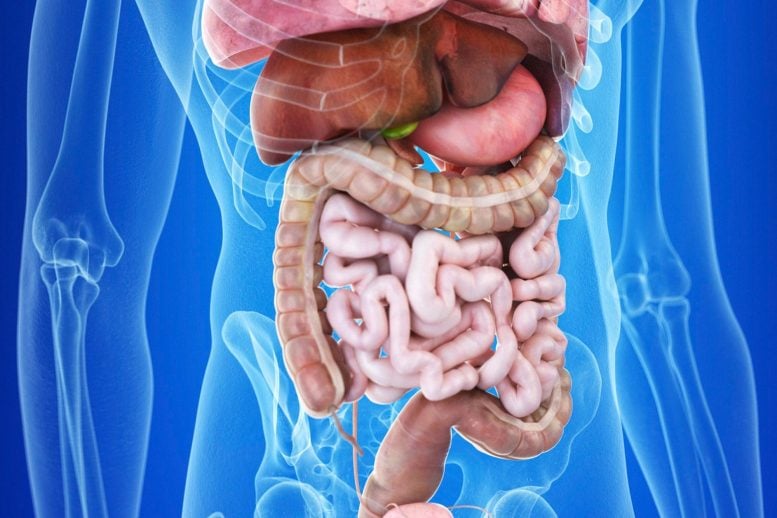
    Human Digestive Tract Gut Anatomy
    New research reveals significant variation in human digestive system anatomy among healthy individuals, impacting our understanding of its role in human health and offering insights into medical diagnoses and gut microbial ecosystems. The study emphasizes the importance of teaching anatomical variation to medical students, paving the way for individualized medicine to improve patient outcomes and overall well-being.

    Unexpected Variability in the Human Digestive System

    A recent study discovered substantial disparities in the structure of the human digestive system, with substantial variations possible even among healthy individuals. This discovery sheds light on the impact that the anatomy of the digestive tract can have on human health and provides potential avenues for medical diagnoses and a deeper understanding of the gut’s microbial ecosystem.

    “There was research more than a century ago that found variability in the relative lengths of human intestines, but this area has largely been ignored since then,” says Amanda Hale, co-first author of the study and a Ph.D. candidate at North Carolina State University. “When we began exploring this issue, we were astonished at the extent of the variability we found.”

    “If you’re talking to four different people, odds are good that all of them have different guts, in terms of the relative sizes of the organs that make up that system,” says Erin McKenney, corresponding author of the study and an assistant professor of applied ecology at NC State. “For example, the cecum is an organ that’s found at the nexus of the large and small intestine. One person may have a cecum that is only a few centimeters long, while another may have a cecum the size of a coin purse. And we found similar variability for many digestive organs.”
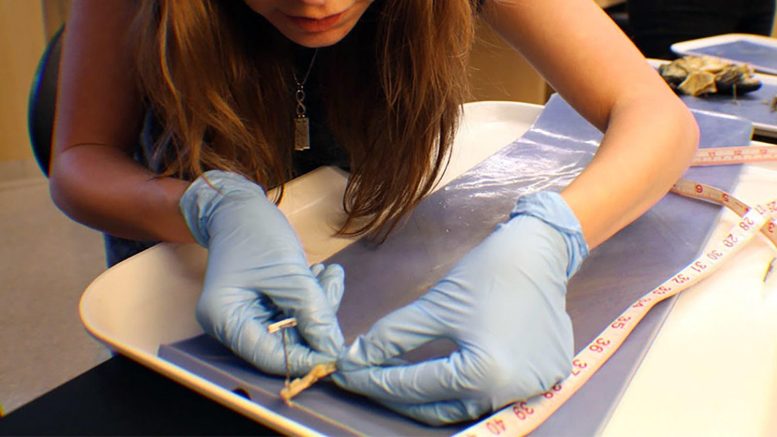
    Taking a Gut Measurement
    In this photo, a researcher takes a gut measurement in the lab. Credit: Lauren Nichols

    Gender Differences in Gut Anatomy

    In another striking example, the researchers found that women tend to have longer small intestines than men.

    “Because having a longer small intestine helps you extract nutrients from your diet, this finding supports the canalization hypothesis, which posits that women are better able to survive during periods of stress,” says Hale.

    “Given that there is more variation in human gut anatomy than we thought, this could inform our understanding of what is driving a range of health-related issues and how we treat them,” says McKenney. “Basically, now that we know this variability exists, it raises a number of research questions that need to be explored.”

    For this study, the researchers measured the digestive organs of 45 people who donated their remains to the Anatomical Gifts Program at the Duke University School of Medicine.

    In addition to shedding light on the unexpected variability in human anatomy, this project also led to rediscovering the importance of teaching anatomical variation to medical students.

    “It’s particularly important in medical training, because if students are only learning about a ‘normal’ or ‘average’ anatomy, that means they are not going to be familiar with the scope of human variation,” says Roxanne Larsen, co-author of the paper and an associate professor of veterinary and biomedical sciences at the University of Minnesota. “It’s increasingly clear that the medical field is moving toward individualized medicine to improve patient outcomes and overall health and well-being. Garnering experience in understanding anatomical variation can play a critical role in helping future doctors understand the importance of individualized medicine.”

    “We’re excited about this discovery and future directions for the work,” McKenney says. “It underscores just how little we know about our own bodies.”

    Reference: “Hidden diversity: comparative functional morphology of humans and other species” by Erin A. McKenney​​, Amanda R. Hale​, Janiaya Anderson, Roxanne Larsen, Colleen Grant and Robert R. Dunn, 24 April 2023, PeerJ.
    DOI: 10.7717/peerj.15148

    The study was funded by the National Science Foundation.

    Never miss a breakthrough: Join the SciTechDaily newsletter.
    Follow us on Google and Google News.

    Anatomy Digestion Guts Human Body Intestines North Carolina State University
    Share. Facebook Twitter Pinterest LinkedIn Email Reddit

    Related Articles

    Natural Component From Licorice Shows Promise for Treating Inflammatory Bowel Disease

    Popular Sweetener Linked to DNA Damage – “It’s Something You Should Not Be Eating”

    Anatomy Isn’t Finished: The Human Body Still Holds Secrets

    New Tick-Borne Bacteria Discovered in U.S. Dogs

    Scientists Create “Smart Underwear” To Measure How Often We Really Fart

    A Hidden Effect of Chemotherapy Could Help Block Metastasis

    This Immune Therapy Repaired Gut Damage for a Full Year

    Forget Fiber: The Surprising Foods That Actually Relieve Constipation, According to Science

    New Study Links Controversial Gut Organism to Reduced Body Fat

    1 Comment

    1. JmjUSA on May 3, 2023 1:57 pm

      In this photo, a researcher takes a gut measurement in the lab. Credit: Lauren Nichols…

      Impossible! Hair hanging down on the platform! No mask!

      Oh yeah,go have lunch right after that “researcher” is finished & both of you will be “finished”!!

      Reply
    Leave A Reply Cancel Reply

    • Facebook
    • Twitter
    • Pinterest
    • YouTube

    Don't Miss a Discovery

    Subscribe for the Latest in Science & Tech!

    Trending News

    First-of-Its-Kind Discovery: Homer’s Iliad Found Embedded in a 1,600-Year-Old Egyptian Mummy

    Beyond Inflammation: Scientists Uncover New Cause of Persistent Rheumatoid Arthritis

    A Simple Molecule Could Unlock Safer, Easier Weight Loss

    Scientists Just Built a Quantum Battery That Charges Almost Instantly

    Researchers Unveil Groundbreaking Sustainable Solution to Vitamin B12 Deficiency

    Millions of People Have Osteopenia Without Realizing It – Here’s What You Need To Know

    Researchers Discover Boosting a Single Protein Helps the Brain Fight Alzheimer’s

    World-First Study Reveals Human Hearts Can Regenerate After a Heart Attack

    Follow SciTechDaily
    • Facebook
    • Twitter
    • YouTube
    • Pinterest
    • Newsletter
    • RSS
    SciTech News
    • Biology News
    • Chemistry News
    • Earth News
    • Health News
    • Physics News
    • Science News
    • Space News
    • Technology News
    Recent Posts
    • Magnesium Magic: New Drug Melts Fat Even on a High-Fat, High-Sugar Diet
    • Weight-Loss Drugs Like Ozempic May Come With an Unexpected Cost
    • After Decades, MIT Researchers Capture the First 3D Atomic View of a Mysterious Material
    • Your Favorite Fishing Spot Is Turning Brown – and the Fish Are Changing
    • 380-Million-Year-Old Fish Fossil Reveals Secrets of Life’s First Steps Onto Land
    Copyright © 1998 - 2026 SciTechDaily. All Rights Reserved.
    • Science News
    • About
    • Contact
    • Editorial Board
    • Privacy Policy
    • Terms of Use

    Type above and press Enter to search. Press Esc to cancel.