
In a groundbreaking discovery that sheds new light on the prehistoric origins of art and human creativity, researchers from Aarhus University have identified the earliest known use of blue pigment in Europe.
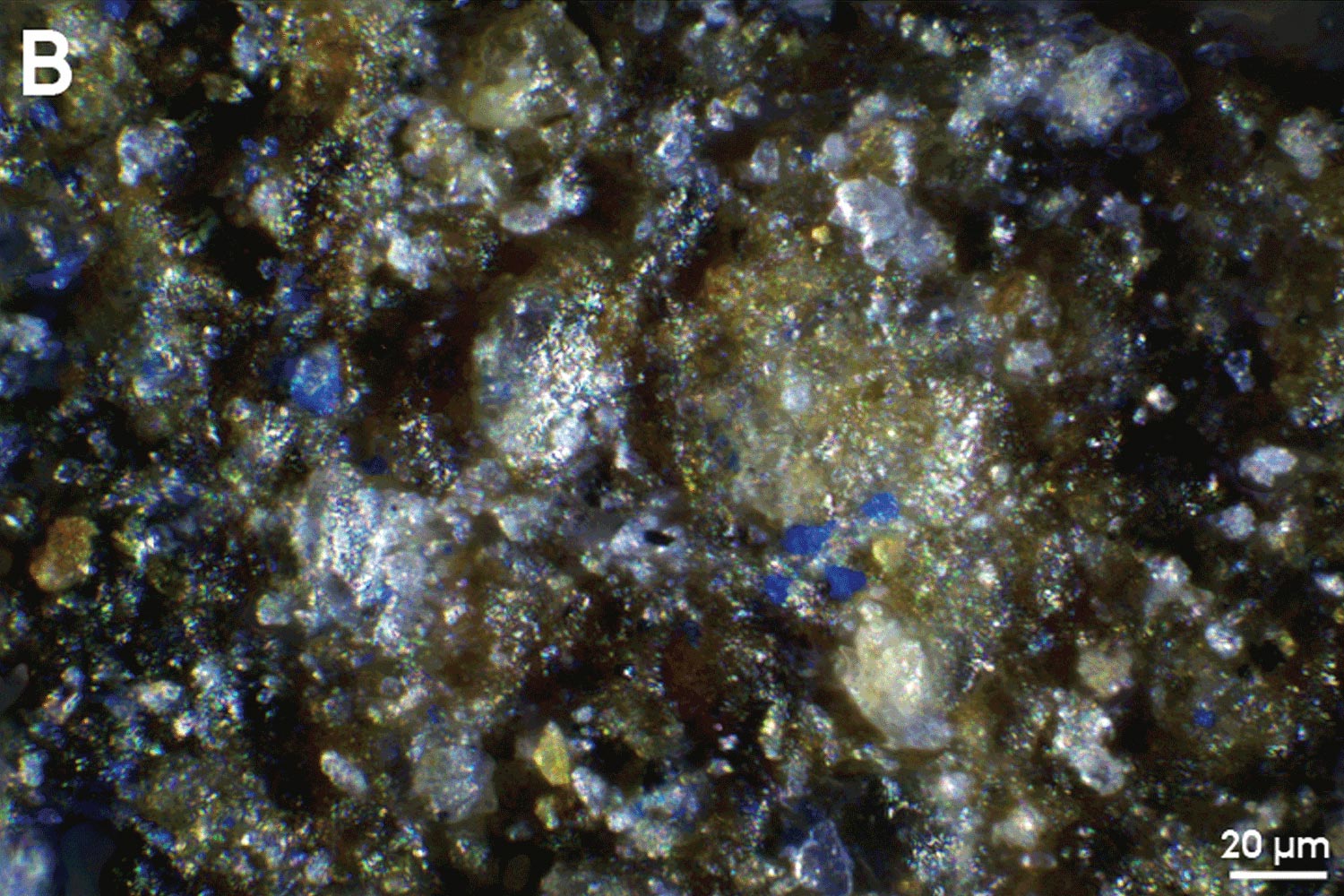
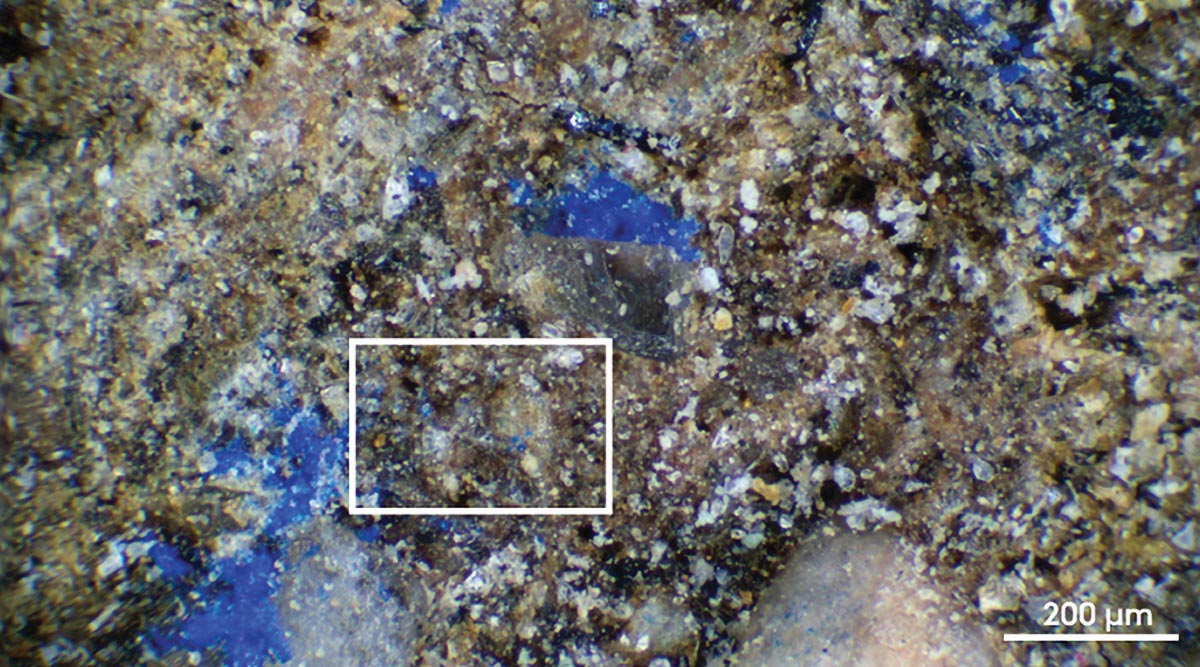
At the Final Paleolithic site of Mühlheim-Dietesheim in Germany, archaeologists from Aarhus University identified a faint blue residue on a stone artifact that is roughly 13,000 years old. After applying several advanced scientific techniques, the team determined that the material was the mineral pigment azurite, known for its intense blue color and not previously documented in Europe’s Paleolithic artistic record.
“This challenges what we thought we knew about Paleolithic pigment use,” sais Dr. Izzy Wisher, the lead author of the study.
Rethinking Paleolithic Color Traditions
Until recently, researchers assumed that Paleolithic artists relied almost entirely on red and black pigments, since virtually no other colors appear in surviving artworks from this era. Many experts attributed this pattern to either the scarcity of blue minerals or their limited appeal.
Because blue tones are missing from known Paleolithic art, the new finding raises the possibility that blue pigments were instead applied to the body or used to color textiles, activities that rarely preserve well in the archaeological record.
“The presence of azurite shows that Paleolithic people had a deep knowledge of mineral pigments and could access a much broader color palette than we previously thought – and they may have been selective in the way they used certain colors,” Izzy Wisher says.
A Stone Palette Reveals New Possibilities
The stone bearing the azurite traces was originally thought to be an oil lamp. Now, it appears to have been a mixing surface or palette for preparing blue pigments — hinting at artistic or cosmetic traditions that remain largely invisible today.
The findings urge a rethink of Paleolithic art and color use, opening new avenues for exploring how early humans expressed identity, status, and beliefs through materials far more varied and vibrant than previously imagined.
Reference: “The earliest evidence of blue pigment use in Europe” by Izzy Wisher, Thomas Birch, Rasmus Andreasen, Elyse Canosa, Sara Norrehed, Solenn Reguer, Quentin Lemasson, Ester Oras, Kristiina Johanson, Tim Kinnaird, Thomas Birndorfer, Jesper Borre Pedersen, James Scott, Christof Pearce and Felix Riede, 29 September 2025, Antiquity.
DOI: 10.15184/aqy.2025.10184
The study was conducted in collaboration with Rasmus Andreasen, James Scott and Christof Pearce at the Department of Geoscience, Aarhus University, as well as Thomas Birch who is affiliated with both the Department of Geoscience, AU, and the National Museum of Denmark, alongside colleagues from Germany, Sweden and France.
Never miss a breakthrough: Join the SciTechDaily newsletter.
Follow us on Google and Google News.
1 Comment
I would have been surprised if people were not using azureite for pigmentation only 13,000 YA. It is a beautiful color. I have several pieces of the mineral somewhere in my home that I picked up and took home. I would suspect it is relatively rare; it would have been expensive and thus reserved for the status signaling of the most prominent individuals, probably mostly as body pigmentation. but also clothing and jewelry.