
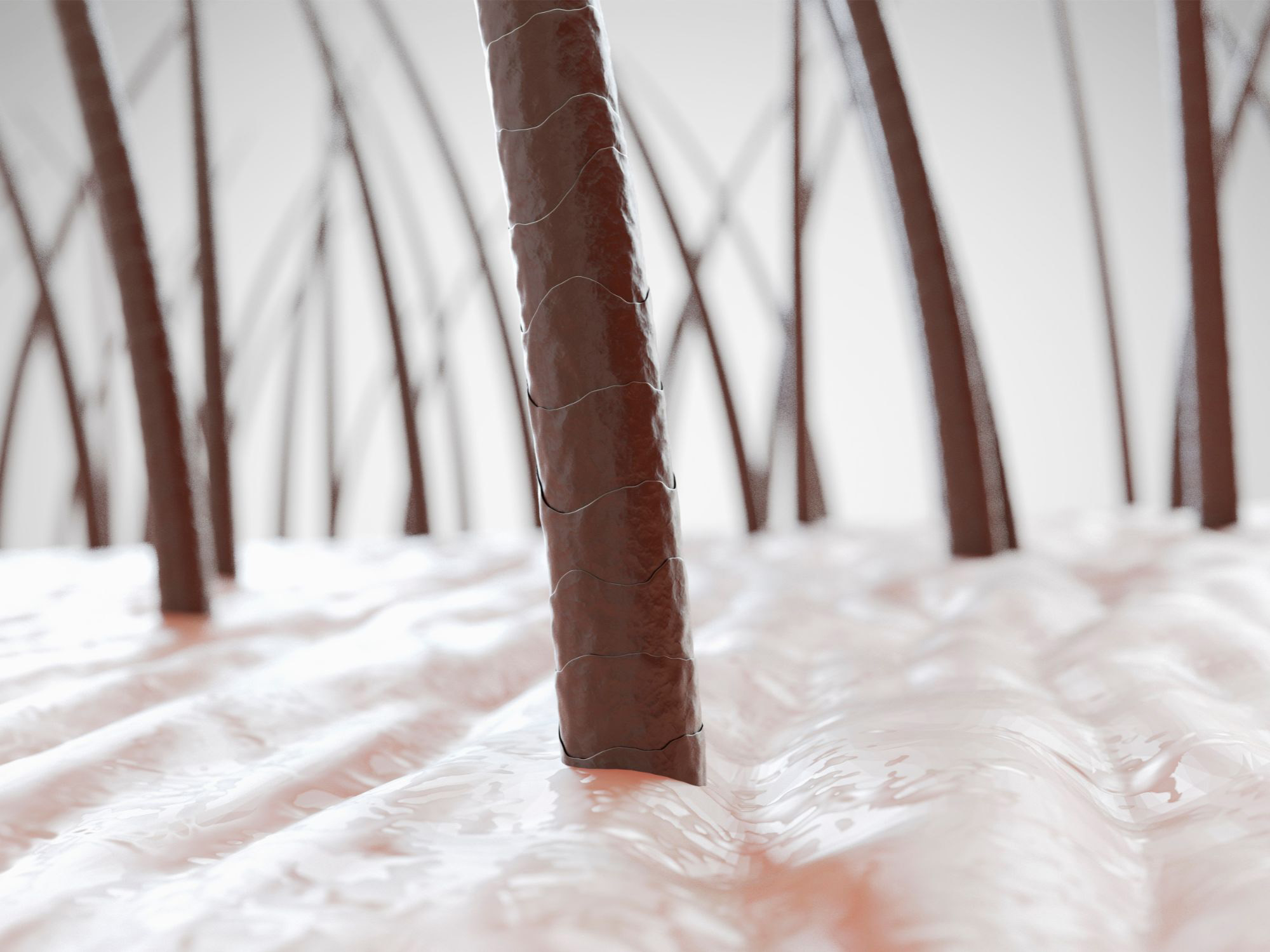
Advances in bioengineering could lead to more naturally appearing outcomes in reconstructive surgery, suggests an international team of researchers.
Researchers have discovered that fat tissue could play a pivotal role in 3D printing multi-layered living skin, and potentially even hair follicles. Utilizing fat cells and supporting structures obtained from human tissue through clinical processes, the team successfully achieved precise injury repair in rats. This breakthrough has the potential to significantly impact reconstructive facial surgery and hair growth therapies for humans.
The team’s findings were published in Bioactive Materials. The U.S. Patent and Trademark Office granted the team a patent in February for the bioprinting technology it developed and used in this study.
Advancements in Reconstructive Surgery
“Reconstructive surgery to correct trauma to the face or head from injury or disease is usually imperfect, resulting in scarring or permanent hair loss,” said Ibrahim T. Ozbolat, professor of engineering science and mechanics, of biomedical engineering and of neurosurgery at Penn State, who led the international collaboration that conducted the work. “With this work, we demonstrate bioprinted, full-thickness skin with the potential to grow hair in rats. That’s a step closer to being able to achieve more natural-looking and aesthetically pleasing head and face reconstruction in humans.”
While scientists have previously 3D bioprinted thin layers of skin, Ozbolat and his team are the first to intraoperatively print a full, living system of multiple skin layers, including the bottom-most layer or hypodermis. Intraoperatively refers to the ability to print the tissue during surgery, meaning the approach may be used to more immediately and seamlessly repair damaged skin, the researchers said. The top layer — the epidermis that serves as visible skin — forms with support from the middle layer on its own, so it doesn’t require printing. The hypodermis, made of connective tissue and fat, provides structure and support over the skull.
“The hypodermis is directly involved in the process by which stem cells become fat,” Ozbolat said. “This process is critical to several vital processes, including wound-healing. It also has a role in hair follicle cycling, specifically in facilitating hair growth.”
Breakthrough in Skin Bioprinting
The researchers started with human adipose, or fat, tissue obtained from patients undergoing surgery at Penn State Health Milton S. Hershey Medical Center. Collaborator Dino J. Ravnic, associate professor of surgery in the Division of Plastic Surgery at Penn State College of Medicine, led his lab in obtaining the fat for extraction of the extracellular matrix — the network of molecules and proteins that provides structure and stability to the tissue — to make one component of the bioink.
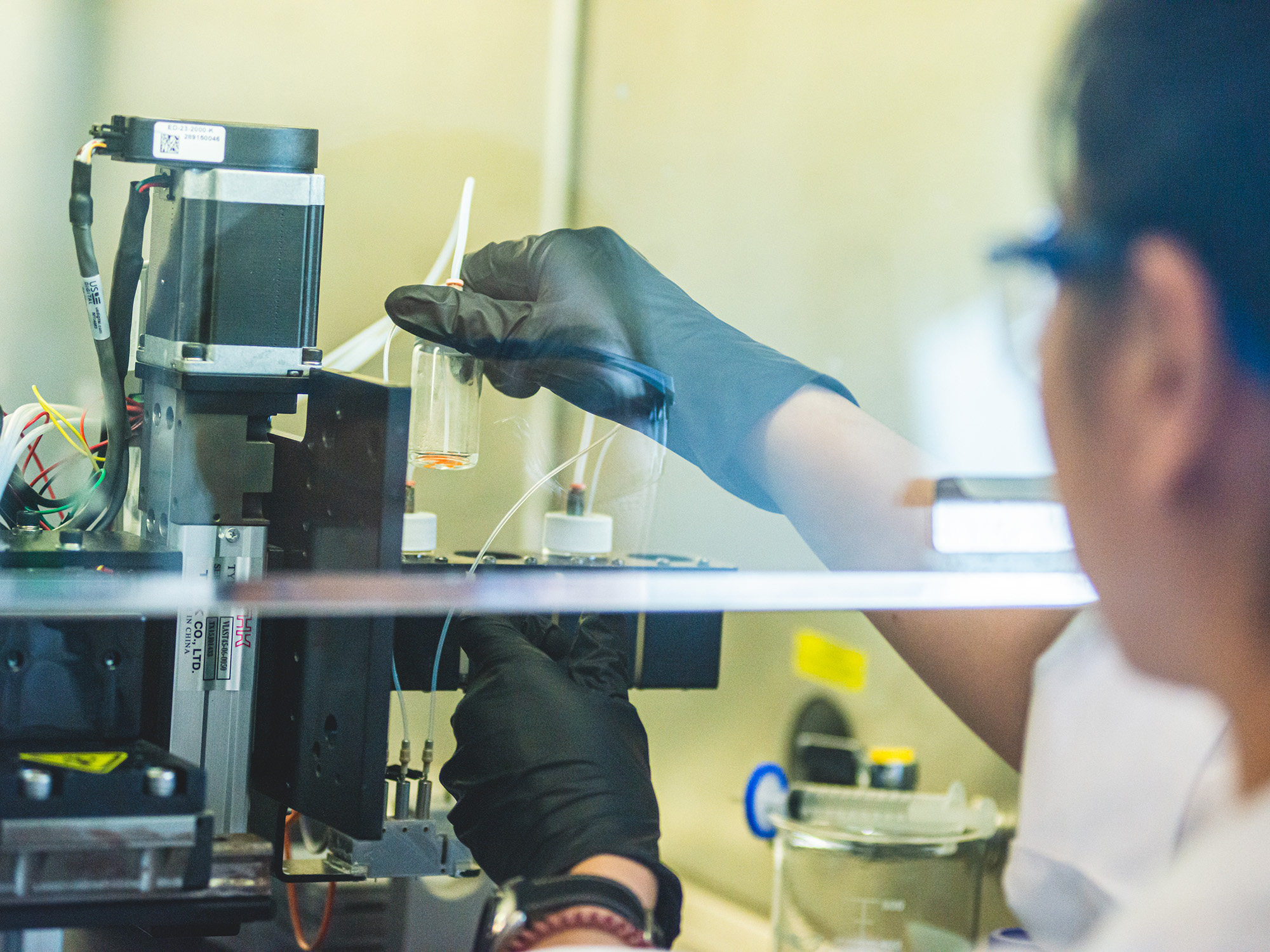
Ravnic’s team also obtained stem cells, which have the potential to mature into several different cell types if provided the correct environment, from the adipose tissue to make another bioink component. Each component was loaded into one of three compartments in the bioprinter. The third compartment was filled with a clotting solution that helps the other components properly bind onto the injured site.
“The three compartments allow us to co-print the matrix-fibrinogen mixture along with the stem cells with precise control,” Ozbolat said. “We printed directly into the injury site with the target of forming the hypodermis, which helps with wound healing, hair follicle generation, temperature regulation, and more.”
They achieved both the hypodermis and dermis layers, with the epidermis forming within two weeks by itself.
Critical Findings and Future Applications
“We conducted three sets of studies in rats to better understand the role of the adipose matrix, and we found the co-delivery of the matrix and stem cells was crucial to hypodermal formation,” Ozbolat said. “It doesn’t work effectively with just the cells or just the matrix — it has to be at the same time.”
They also found that the hypodermis contained downgrowths, the initial stage of early hair follicle formation. According to the researchers, while fat cells do not directly contribute to the cellular structure of hair follicles, they are involved in their regulation and maintenance.
“In our experiments, the fat cells may have altered the extracellular matrix to be more supportive for downgrowth formation,” Ozbolat said. “We are working to advance this, to mature the hair follicles with controlled density, directionality and growth.”
According to Ozbolat, the ability to precisely grow hair in injured or diseased sites of trauma can limit how natural reconstructive surgery may appear. He said that this work offers a “hopeful path forward,” especially in combination with other projects from his lab involving printing bone and investigating how to match pigmentation across a range of skin tones.
“We believe this could be applied in dermatology, hair transplants, and plastic and reconstructive surgeries — it could result in a far more aesthetic outcome,” Ozbolat said.
“With the fully automated bioprinting ability and compatible materials at the clinical grade, this technology may have a significant impact on the clinical translation of precisely reconstructed skin.”
Reference: “Intraoperative bioprinting of human adipose-derived stem cells and extra-cellular matrix induces hair follicle-like downgrowths and adipose tissue formation during full-thickness craniomaxillofacial skin reconstruction” by Youngnam Kang, Miji Yeo, Irem Deniz Derman, Dino J. Ravnic, Yogendra Pratap Singh, Mecit Altan Alioglu, Yang Wu, Jasson Makkar, Ryan R. Driskell and Ibrahim T. Ozbolat, 9 November 2023, Bioactive Materials.
DOI: 10.1016/j.bioactmat.2023.10.034
Ravnic and Ozbolat also are affiliated with the Huck Institutes of the Life Sciences and the Penn State Cancer Institute. Ozbolat has additional affiliations with the Penn State Materials Research Institute and the Department of Medical Oncology at Cukurova University in Turkey, where he is currently on sabbatical leave. Other contributors include Yogendra Pratap Singh, postdoctoral scholar, and Mecit Altan Alioglu, graduate student, both in the Penn State Department of Engineering Science and Mechanics; Youngnam Kang and Miji Yeo, both researchers, and Irem Deniz Derman, graduate student, in the Huck Institutes of the Life Sciences; Yang Wu, Harbin Institute of Technology in China; and Jasson Makkar and Ryan R. Driskell, College of Veterinary Medicine at Washington State University. Kang, Yeo, Singh, Alioglu and Derman also are affiliated with Penn State Department of Engineering Science and Mechanics.
The National Institutes of Health and the Scientific and Technological Research Council of Türkiye supported this work.
Never miss a breakthrough: Join the SciTechDaily newsletter.
Follow us on Google and Google News.