
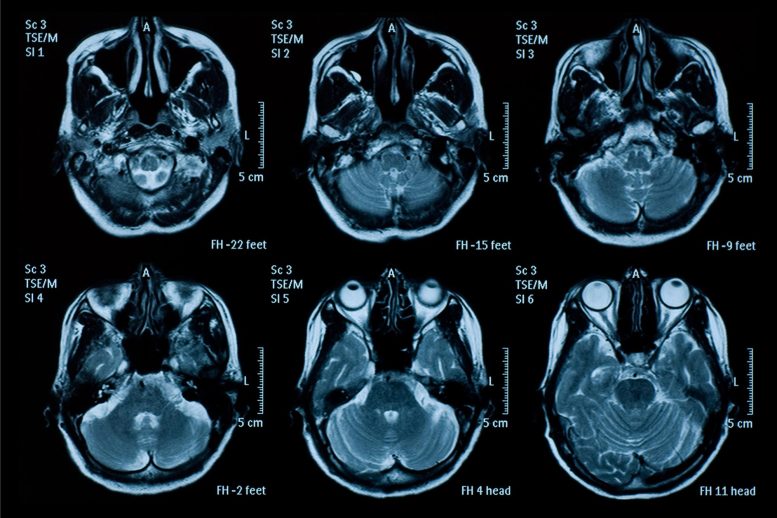
Even mild concussion can cause long-lasting effects to the brain, according to researchers at the University of Cambridge. Using data from a Europe-wide study, the team has shown that for almost a half of all people who receive a knock to the head, there are changes in how regions of the brain communicate with each other, potentially causing long term symptoms such as fatigue and cognitive impairment.
Mild traumatic brain injury – concussion – results from a blow or jolt to the head. It can occur as a result of a fall, a sports injury or from a cycling accident or car crash, for example. But despite being labelled ‘mild’, it is commonly linked with persistent symptoms and incomplete recovery. Such symptoms include depression, cognitive impairment, headaches, and fatigue.
“The combination of over-optimistic and imprecise prognoses means that some patients risk not receiving adequate care for their symptoms.” Emmanuel Stamatakis
While some clinicians in recent studies predict that nine out of 10 individuals who experience concussion will have a full recovery after six months, evidence is emerging that only half achieve a full recovery. This means that a significant proportion of patients may not receive adequate post-injury care.
Predicting which patients will have a fast recovery and who will take longer to recover is challenging, however. At present, patients with suspected concussion will typically receive a brain scan – either a CT scan or an MRI scan, both of which look for structural problems, such as inflammation or bruising – yet even if these scans show no obvious structural damage, a patient’s symptoms may still persist.
Dr Emmanuel Stamatakis from the Department of Clinical Neurosciences and Division of Anaesthesia at the University of Cambridge said: “Worldwide, we’re seeing an increase in the number of cases of mild traumatic brain injury, particularly from falls in our ageing population and rising numbers of road traffic collisions in low- and middle-income countries.
“At present, we have no clear way of working out which of these patients will have a speedy recovery and which will take longer, and the combination of over-optimistic and imprecise prognoses means that some patients risk not receiving adequate care for their symptoms.”
Dr Stamatakis and colleagues studied fMRI brain scans – that is, functional MRI scans, which look at how different areas of the brain coordinate with each other – taken from 108 patients with mild traumatic brain injury and compared them with scans from 76 healthy volunteers. Patients were also assessed for ongoing symptoms.
The patients and volunteers had been recruited to CENTER-TBI, a large European research project which aims to improve the care for patients with traumatic brain injury, co-chaired by Professor David Menon (head of the division of Anaesthesia) and funded by the European Union.
In results published today in Brain, the team found that just under half (45%) were still showing symptoms resulting from their brain injury, with the most common being fatigue, poor concentration and headaches.
The Role of the Thalamus in Persistent Symptoms
The researchers found that these patients had abnormalities in a region of the brain known as the thalamus, which integrates all sensory information and relays this information around the brain. Counter-intuitively, concussion was associated with increased connectivity between the thalamus and the rest of the brain – in other words, the thalamus was trying to communicate more as a result of the injury – and the greater this connectivity, the poorer the prognosis for the patient.
Rebecca Woodrow, a PhD student in the Department of Clinical Neuroscience and Hughes Hall, Cambridge, said: “Despite there being no obvious structural damage to the brain in routine scans, we saw clear evidence that the thalamus – the brain’s relay system – was hyperconnected. We might interpret this as the thalamus trying to over-compensate for any anticipated damage, and this appears to be at the root of some of the long-lasting symptoms that patients experience.”
By studying additional data from positron emission tomography (PET) scans, which can measure the regional chemical composition of body tissues, the researchers were able to make associations with key neurotransmitters depending on which long-term symptoms a patient displayed. For example, patients experiencing cognitive problems such as memory difficulties showed increased connectivity between the thalamus and areas of the brain rich in the neurotransmitter noradrenaline; patients experiencing emotional symptoms, such as depression or irritability, showed greater connectivity with areas of the brain rich in serotonin.
Dr Stamatakis, who is also Stephen Erskine Fellow at Queens’ College, Cambridge, added: “We know that there are already drugs that target these brain chemicals so our findings offer hope that in future, not only might we be able to predict a patient’s prognosis, but we may also be able to offer a treatment targeting their particular symptoms.”
Reference: “Acute thalamic connectivity precedes chronic post-concussive symptoms in mild traumatic brain injury” by Rebecca E Woodrow, Stefan Winzeck, Andrea I Luppi, Isaac R Kelleher-Unger, Lennart R B Spindler, J T Lindsay Wilson, Virginia F J Newcombe, Jonathan P Coles, CENTER-TBI MRI Substudy Participants and Investigators, David K Menon and Emmanuel A Stamatakis, 22 February 2023, Brain.
DOI: 10.1093/brain/awad056
Never miss a breakthrough: Join the SciTechDaily newsletter.
Follow us on Google and Google News.