
Close Menu
    Facebook X (Twitter) Instagram
    SciTechDaily
    • Biology
    • Chemistry
    • Earth
    • Health
    • Physics
    • Science
    • Space
    • Technology
    Facebook X (Twitter) Pinterest YouTube RSS
    SciTechDaily
    Home»Health»The Hidden Mathematics of Alzheimer’s Plaques Could Reveal New Treatment Strategies
    Health

    The Hidden Mathematics of Alzheimer’s Plaques Could Reveal New Treatment Strategies

    By Mississippi State UniversityOctober 1, 2026No Comments3 Mins Read
    Facebook Twitter Pinterest Telegram LinkedIn WhatsApp Email Reddit
    Share
    Facebook Twitter LinkedIn Pinterest Telegram Email Reddit
    Human Brain Math Formulas
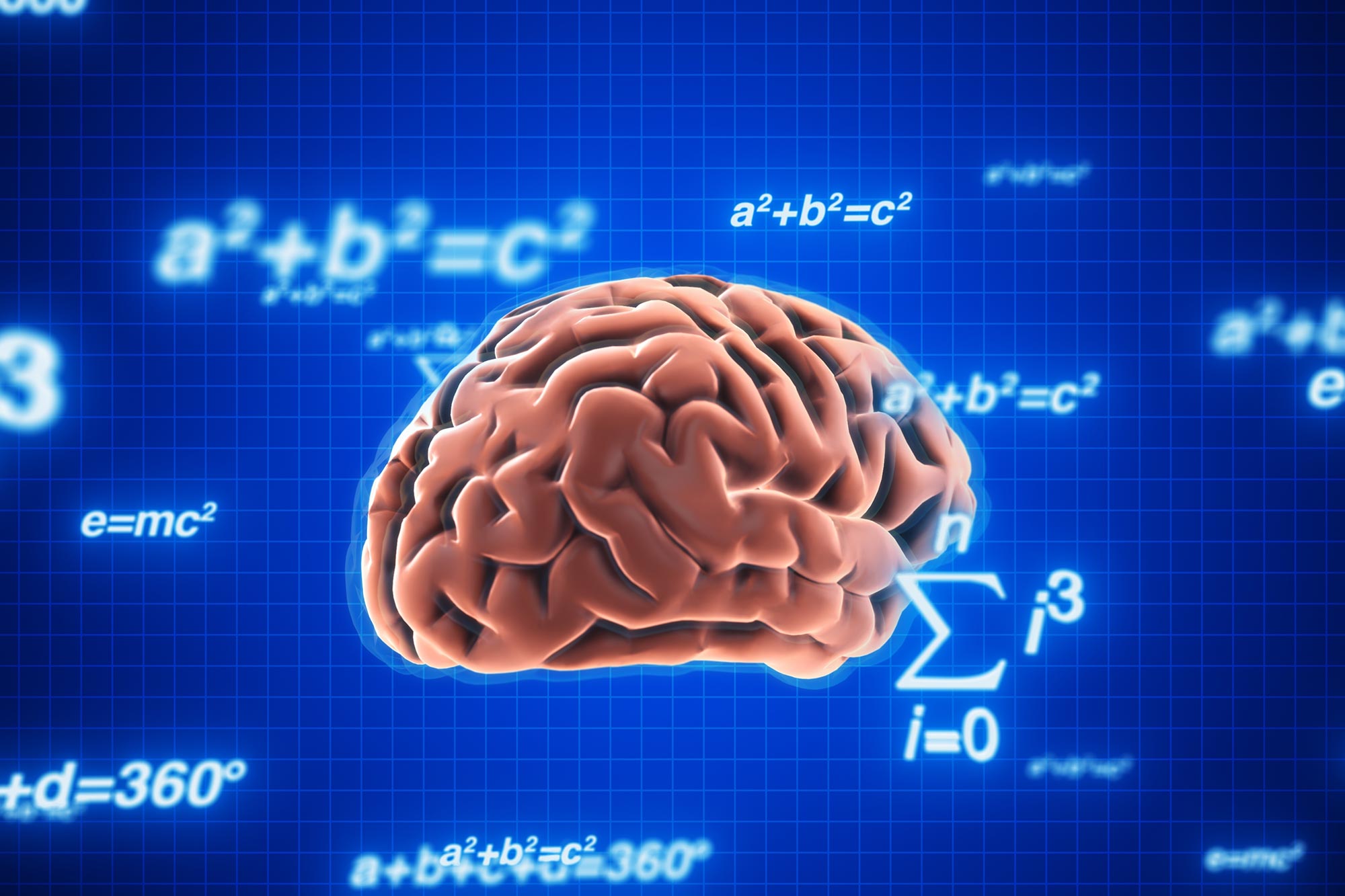
    A new mathematical model explores how metals such as copper and zinc may shape the aggregation of amyloid-beta, a protein linked to Alzheimer’s disease. Credit: Shutterstock

    Mathematics may offer a new way to investigate the complex chemistry behind Alzheimer’s-related plaque formation.

    Plaques associated with Alzheimer’s disease begin with molecular interactions that are difficult to observe directly as they unfold. Shantia Yarahmadian, an associate professor at Mississippi State University, is using mathematics to simulate part of that process, focusing on how metals such as copper and zinc may influence the behavior of amyloid-beta proteins.

    His latest model follows a chain of reactions that can lead amyloid-beta to aggregate, or clump together, and form plaque. It also allows researchers to test how two potential therapeutic approaches might interfere with those reactions. The work was published in Bulletin of Mathematical Biology and extends Yarahmadian’s earlier efforts to model Alzheimer’s disease mathematically.

    Shantia Yarahmadian
    Mississippi State Associate Professor Shantia Yarahmadian. Credit: Office of Public Affairs, Mississippi State University

    Turning Molecular Reactions Into Equations

    “Every biological phenomenon occurs in the physical world—in space and time—and involves changes in shape, quantity and matter,” said Yarahmadian, a faculty member in MSU’s Department of Mathematics and Statistics. “Because of its abstract power, mathematics allows us to uncover patterns, test hypotheses and make predictions that may not be possible through observation alone. Mathematics does not replace laboratory or clinical research; it complements it by helping us understand the larger system, identify the most influential mechanisms and guide future experiments.”

    In the new framework, the model represents how metal ions may affect amyloid-beta aggregation over time. Copper and zinc can interact with amyloid-beta, and the model is designed to examine how those interactions may alter the sequence of events that produces larger protein aggregates.

    The same system can simulate two possible ways of disrupting that process. One involves chelation, in which molecules bind metal ions and reduce their availability for other chemical interactions. The other examines inhibitory therapies intended to interfere with aggregation.

    Testing the Model Against Laboratory Data

    A mathematical model is useful only if its predictions correspond with measurable behavior. Yarahmadian and his collaborators therefore compared the model’s output with experimental observations made using atomic force microscopy, a technique capable of examining microscopic protein aggregates.

    The simulated patterns matched those observed in the laboratory. That agreement indicates that the model can reproduce key features of the aggregation process under the conditions studied, giving researchers a framework for testing how changes in metal interactions or potential therapies might alter the system.

    “What drew me to Alzheimer’s research is the combination of its profound human impact and its extraordinary biological complexity,” he said. “My goal is to use mathematical modeling to identify important mechanisms and generate insights that may help guide future experimental and therapeutic research.”

    Reference: “Metal-Ion-Mediated Amyloid-B Aggregation in Alzheimer’s Disease: A Mathematical Model of Chelation and Inhibitory Therapies” by Shantia Yarahmadian, Yasser Alzahrani and Vaghawan Prasad Ojha, 20 August 2026, Bulletin of Mathematical Biology.
    DOI: 10.1007/s11538-026-01732-1

    Never miss a breakthrough: Join the SciTechDaily newsletter.
    Follow us on Google and Google News.

    Aging Alzheimer's Disease Brain Mathematics Neurology
    Share. Facebook Twitter Pinterest LinkedIn Email Reddit

    Related Articles

    Scientists Discover Key Alzheimer’s “Tipping Point” That May Decide Who Gets Dementia

    This High-Fat Diet Could Be the Secret to Keeping Your Brain Young

    Scientists Discover Natural Compounds That Clear Alzheimer’s Proteins

    The Human Brain’s Fatal Flaw: A New Look at Alzheimer’s Origins

    New Anti-Aging Compounds Show Promise in Treating Alzheimer’s Disease

    Beyond Traditional Targets: New Protein Research Shakes Up Alzheimer’s Treatments

    Physical Exercise Improves Cognition in Alzheimer’s Disease

    Test for Alzheimer’s May Be Undermining Drug Trials

    Disrupted Sleep Patterns Linked to Alzheimer’s

    Leave A Reply Cancel Reply

    • Facebook
    • Twitter
    • Pinterest
    • YouTube

    Don't Miss a Discovery

    Subscribe for the Latest in Science & Tech!

    Trending News

    “Crawzilla” – Scientists Just Found North America’s Biggest Known Crayfish

    Scientist Reveals 7 of the Strangest Things Coffee Does to Your Body

    Great News From Enceladus: Saturn’s Icy Moon Just Became Even More Promising for Life

    Scientists Just Built the World’s Most Accurate Clock

    Scientists Find a “Pain Switch” That Could Shut Down Arthritis Pain

    Scientists Reveal What Could Happen if Yellowstone Erupted Now

    Scientists Discover a Molecular “Memory” That Could Make Lost Weight Come Back

    This Strange Planet Is Going Backwards – and Scientists Don’t Know Why

    Follow SciTechDaily
    • Facebook
    • Twitter
    • YouTube
    • Pinterest
    • Newsletter
    • RSS
    SciTech News
    • Biology News
    • Chemistry News
    • Earth News
    • Health News
    • Physics News
    • Science News
    • Space News
    • Technology News
    Recent Posts
    • The Hidden Mathematics of Alzheimer’s Plaques Could Reveal New Treatment Strategies
    • Copper Could Be a Secret Weapon Against Antibiotic-Resistant UTIs
    • The More Ultra-Processed Food People Ate, the Higher Their Risk of Disease and Death
    • NASA’s SpaceX Crew-13 Could Reach the ISS in Record Time – Watch Live
    • Researchers Uncover a Hidden Molecular Machine Parasites Need To Survive
    Copyright © 1998 - 2026 SciTechDaily. All Rights Reserved.
    • Science News
    • About
    • Contact
    • Editorial Board
    • Privacy Policy
    • Terms of Use

    Type above and press Enter to search. Press Esc to cancel.