
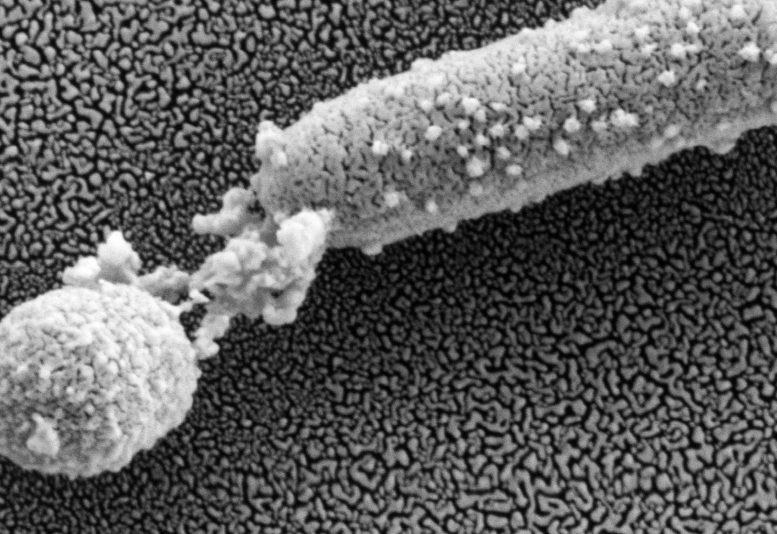
Researchers at Cal State Fullerton have found a lactic acid bacteria strain effective against the superbug Acinetobacter baumannii, offering potential for a new treatment approach.
Breakthrough in Superbug Treatment
Cal State Fullerton antibiotic-resistance researcher María Soledad Ramírez and her students have discovered a promising new therapeutic to treat Acinetobacter baumannii, a superbug commonly found in hospitals and resistant to many antibiotics.
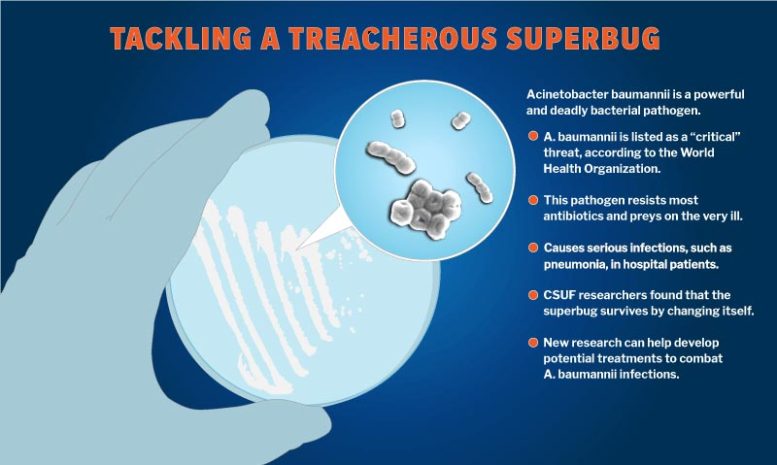
Carbapenem-resistant Acinetobacter baumannii, called CRAB, is a pathogen with limited antibiotic treatment options. It has gained attention recently due to its rapid prevalence in hospital and healthcare settings and global spread. The bacteria, listed as an urgent antibiotic resistant threat by the Centers for Disease Control and Prevention, causes severe infections in vulnerable patients with weakened immune systems.
Promising Treatment Option
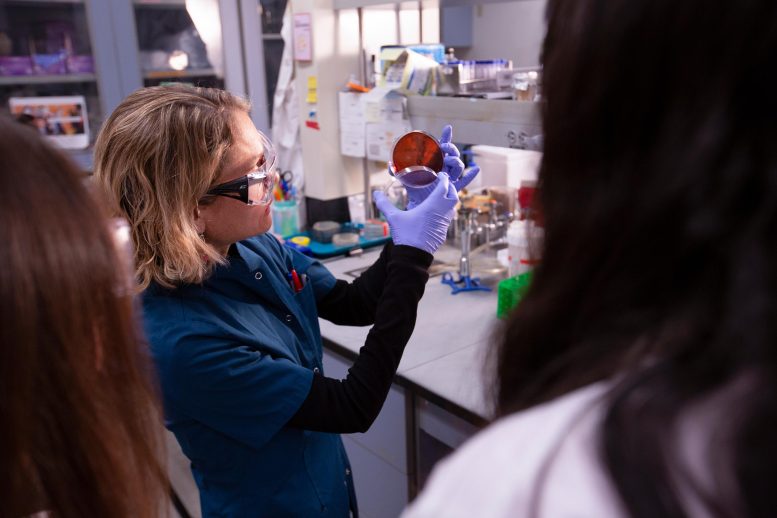
In their study, the researchers tested different lactic acid bacteria strains, known as LAB, to see how well they prevent A. baumannii growth. One strain, called Lacticaseibacillus rhamnosus CRL 2244, turned out to be effective at stopping A. baumannii from growing — and even causing the bacteria to die, said Ramírez, professor of biological science.
“Lactic acid bacteria are a type of bacteria that could be a promising treatment option. In this study, we looked at how different LAB strains can fight against CRAB using various tests and studying at the genetic level A. baumannii response,” Ramírez said.
Ramírez’s latest study outlining these findings as a possible solution has been published in the peer-reviewed journal Scientific Reports.
The researchers’ results show that Lacticaseibacillus rhamnosus CRL 2244 has the power to fight A. baumannii.
“These findings could be a new alternative to treat these infections, either on its own or alongside other treatments,” Ramírez added. “Our latest work is an exciting step in the right direction. However, we need to explore these findings further to make this a real option for treating carbapenem-resistant Acinetobacter baumannii infections.”
Contributors and Collaborators
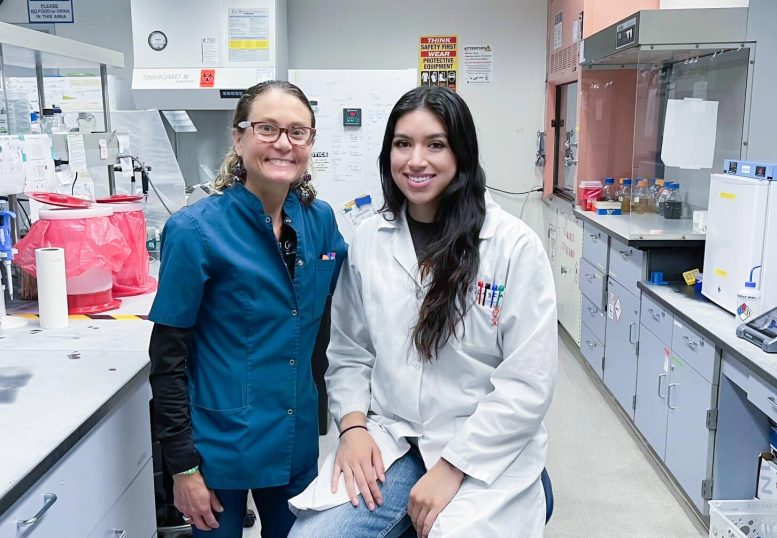
Co-authors of the paper include CSUF’s Nicholas Salzameda, chair and professor of chemistry and biochemistry; biological science undergraduates Briea Gasca and Nardin Georgeos, a Bridges to Stem Cell Research program scholar; and alumna Dema Ramlaoui ’23 (B.S. biological science-molecular biology and biotechnology), who is applying to medical school.
Salzameda is assisting with extracting the active chemical components and will contribute to upcoming experiments.
Gasca has worked alongside Ramírez the past year, studying molecular biology and biotechnology. The undergraduate research experience has expanded her knowledge, improved her laboratory skills, and boosted her confidence and drive toward a career in science.
“It has been the best opportunity of my academic career and has fueled my desire to keep contributing to discovering new ways to battle against multidrug-resistant pathogens to advance public health,” said Gasca, a past scholar in the university’s Research Careers Preparatory Program, which raises student awareness about research and mentoring opportunities.
While this is Gasca’s first published research paper, she is looking forward to future research experiences that will prepare her for graduate studies and a career in biotechnology.
“Being a co-author on this paper is such a big accomplishment, and I hope it goes to show my future employers the dedication and credibility I have for this kind of research.”
Research collaborator and first author Cecilia Rodriguez, a visiting scholar from Argentina from late 2021 to March 2022, also played a key role in the project.
Rodriguez, an assistant researcher at CONICET-CERELA (Centro de Referencia Para Lactobacilos), is an expert in working with lactic acid bacteria, including exploring various aspects of their functionality. Her research group at CONICET-CERELA provided the LAB strains to do the project.
“During her visit to Cal State Fullerton, we tested the activity of various LAB strains against resistant A. baumannii strains. She also contributed to RNA extraction experiments and helped write the paper,” Ramírez said.
The Importance of Continued Research
Ramírez underscored the importance of research to create new and effective antibiotics to fight infections caused by multidrug-resistant bacteria — and save millions of lives lost worldwide.
“It’s important to continue studying and developing LAB as a potential treatment to fight against CRAB infections to give us more options to deal with these difficult-to-treat infections,” she said.
Reference: “Antimicrobial activity of the Lacticaseibacillus rhamnosus CRL 2244 and its impact on the phenotypic and transcriptional responses in carbapenem resistant Acinetobacter baumannii” by Cecilia Rodriguez, Dema Ramlaoui, Nardin Georgeos, Briea Gasca, Camila Leal, Tomás Subils, Marisel R. Tuttobene, Rodrigo Sieira, Nicholas T. Salzameda, Robert A. Bonomo, Raúl Raya and María Soledad Ramirez, 31 August 2023, Scientific Reports.
DOI: 10.1038/s41598-023-41334-8
Never miss a breakthrough: Join the SciTechDaily newsletter.
Follow us on Google and Google News.