
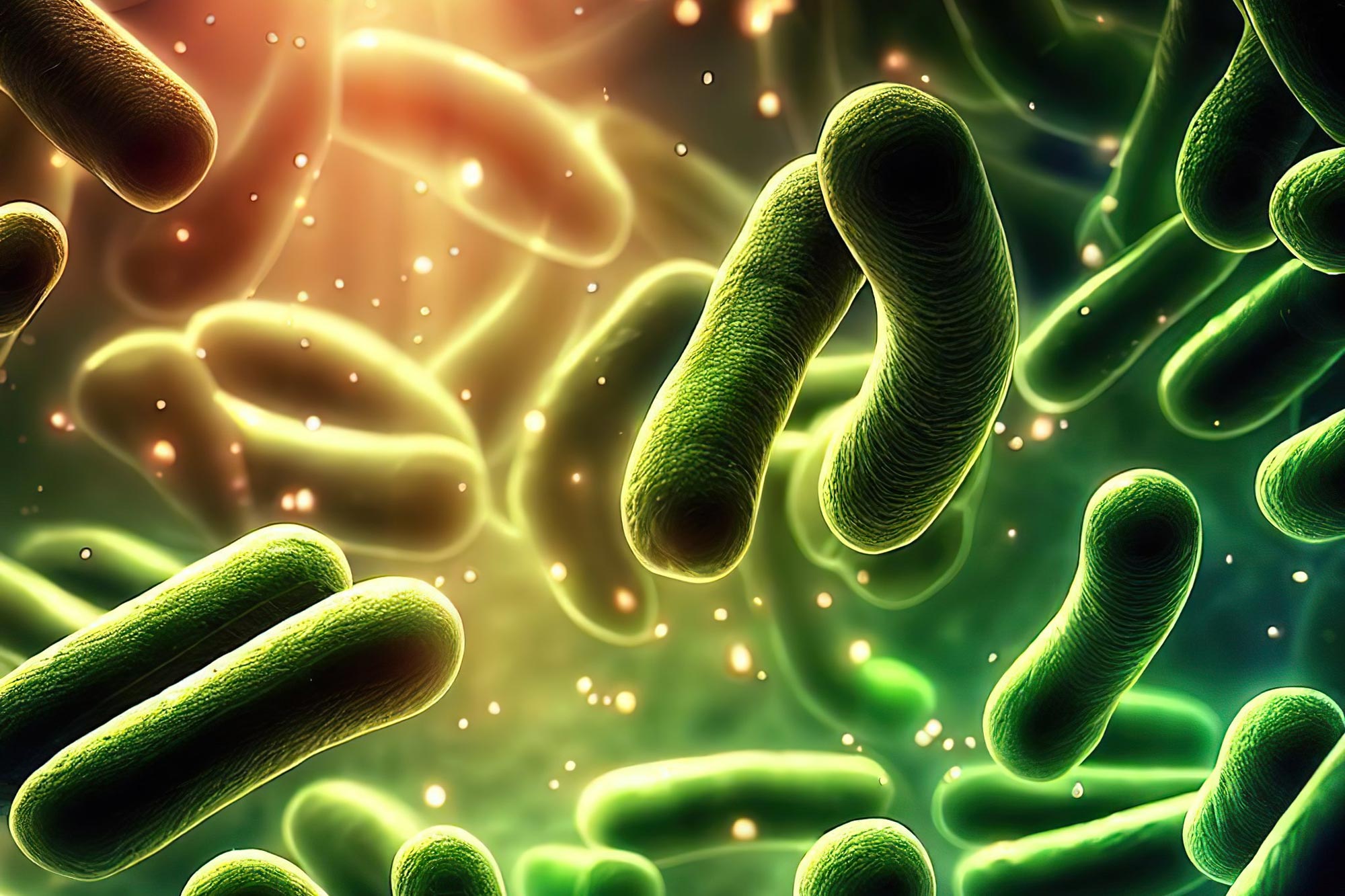
A team of scientists led by researchers at Bigelow Laboratory for Ocean Sciences have developed an innovative method to link the genetics and function of individual microbes living without oxygen deep below Earth’s surface.
Measuring both of these attributes — and, more importantly, linking them together — has long been a challenge in microbiology but is critical for understanding the role of microbial communities in global processes like the carbon cycle.
The new approach, developed at Bigelow Laboratory’s Single Cell Genomics Center, enabled researchers to discover that one species of sulfate-consuming bacterium was not only the most abundant but also the most active organism in a groundwater aquifer beneath Death Valley, almost half a mile below the surface. The findings, published in the Proceedings of the National Academy of Sciences, show how this method can be a powerful tool for measuring how active different organisms are in these extreme environments.
Insights into Microbial Community Dynamics
“Previously, we had to assume that all cells were operating at the same rate, but now we can see that there is a wide range of activity levels between individual members of the microbial communities,” said Research Scientist and lead author on the paper Melody Lindsay. “That helps us understand what these microbial communities are capable of and how that might influence global biogeochemical cycles.”
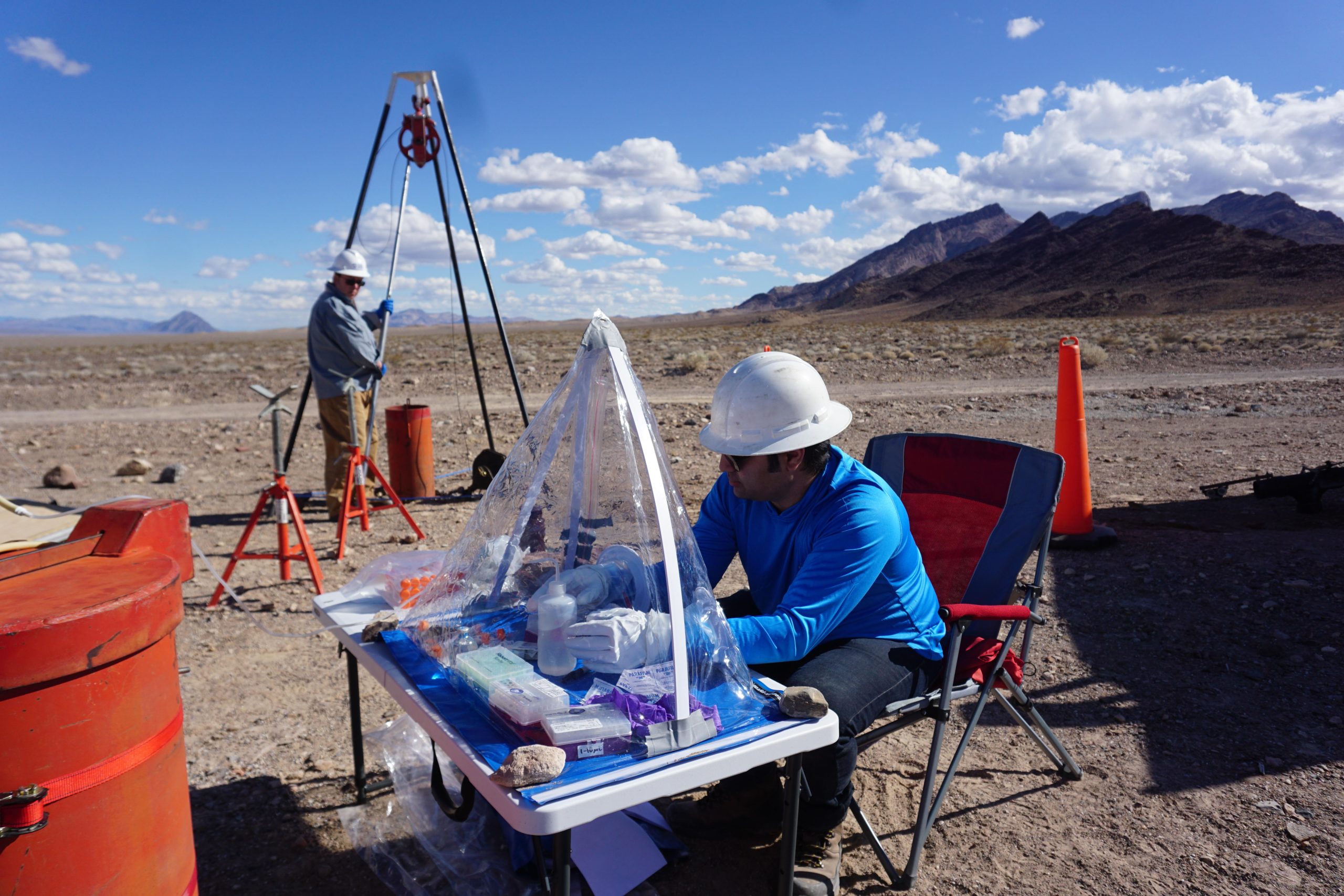
The recent study is a part of a larger project linking the genetic code of microbes — the blueprint of what they’re capable of — to what they’re actually doing at any given moment.
Methodological Advances
Funded by NSF’s EPSCoR program, the “Genomes to Phenomes” project is a joint venture between Bigelow Laboratory, the Desert Research Institute, and the University of New Hampshire. It leverages recent advances in single-cell genetic sequencing with a creative approach applying flow cytometry to estimate the rates of processes, such as respiration, happening within those cells.
Flow cytometry, a method for analyzing individual environmental microbes that was adapted at Bigelow Laboratory from the biomedical sciences, allowed the researchers to quickly sort out living microbes in the aquifer water samples. Those microbes were stained with a specially designed compound that lights up under the flow cytometry laser when certain chemical reactions are happening within the cell. The relationship between how much the cell fluoresces under the laser and the rate of those reactions was worked out experimentally with lab-grown cultures of cells by student interns at Bigelow Laboratory and then applied to the Death Valley samples.
Once the active cells were measured and isolated, the team sequenced their individual genomes. The researchers also used meta-transcriptomics, a method for determining which genes are being actively expressed, and radioisotope tracers, a more traditional method for measuring activity within a microbial community. This was done both to “double check” their results and to get even more information on the links between what these microbes are genetically capable of and what they’re actually doing.
The Single Cell Genomics Center is the only analytical facility in the world offering this new technique to researchers.
“This study was an exciting opportunity for our research team and the SCGC to help improve our understanding of the immense, enigmatic microbial ecosystems underground,” said Bigelow Laboratory Senior Research Scientist Ramunas Stepanauskas, the director of SCGC and principal investigator of the project.
This new study builds on the first demonstration of this approach for quantifying the activity of individual cells. In late 2022, the team published findings on microbes in seawater, showing that a small fraction of microorganisms is responsible for consuming most of the oxygen in the ocean. With this new paper, the team is expanding that method to show it can be used in low biomass environments with microbes that don’t rely on oxygen. In the samples drawn from the subsurface aquifer in California, for example, the scientists estimated that there were hundreds of cells per milliliter of water, compared to millions of cells in a typical milliliter of surface water.
“We started out with oxygen-respiring organisms in the ocean because they’re a little more active, a little easier to sort, and easier to grow in the lab,” Lindsay said. “But aerobic respiration is just one process that is possible in microbiology, so we wanted to branch out beyond that.”
Expanding the Scope of Microbial Research
The results confirmed that the bacterium Candidatus Desulforudis audaxviator was not only the most abundant microbe in this environment, but also the most active, reducing sulfate for energy. The overall activity rates the team measured were low compared to the seawater samples from the previous study, but there were large differences between how active individual microbes were.
The research team is now working to apply their method to measure other anaerobic reactions, such as nitrate reduction, and to new environments, including sediments along Maine’s coast. A related project funded by NASA is also enabling Lindsay and her colleagues to test the method in the deep subsurface below the ocean.
“Right now, we’re getting all of these point measurements around the world, and they do help us better understand what microbes are up to, but we need to scale it up,” Lindsay said. “So, we’re thinking about how to apply this method in new places, even potentially on other planets, in expanded ways.”
Reference: “Species-resolved, single-cell respiration rates reveal dominance of sulfate reduction in a deep continental subsurface ecosystem” by Melody R. Lindsay, Timothy D’Angelo, Jacob H. Munson-McGee, Alireza Saidi-Mehrabad, Molly Devlin, Julia McGonigle, Elizabeth Goodell, Melissa Herring, Laura C. Lubelczyk, Corianna Mascena, Julia M. Brown, Greg Gavelis, Jiarui Liu, D. J. Yousavich, Scott D. Hamilton-Brehm, Brian P. Hedlund, Susan Lang, Tina Treude, Nicole J. Poulton, Ramunas Stepanauskas, Duane P. Moser, David Emerson and Beth N. Orcutt, 4 April 2024, Proceedings of the National Academy of Sciences.
DOI: 10.1073/pnas.2309636121
Never miss a breakthrough: Join the SciTechDaily newsletter.
Follow us on Google and Google News.