
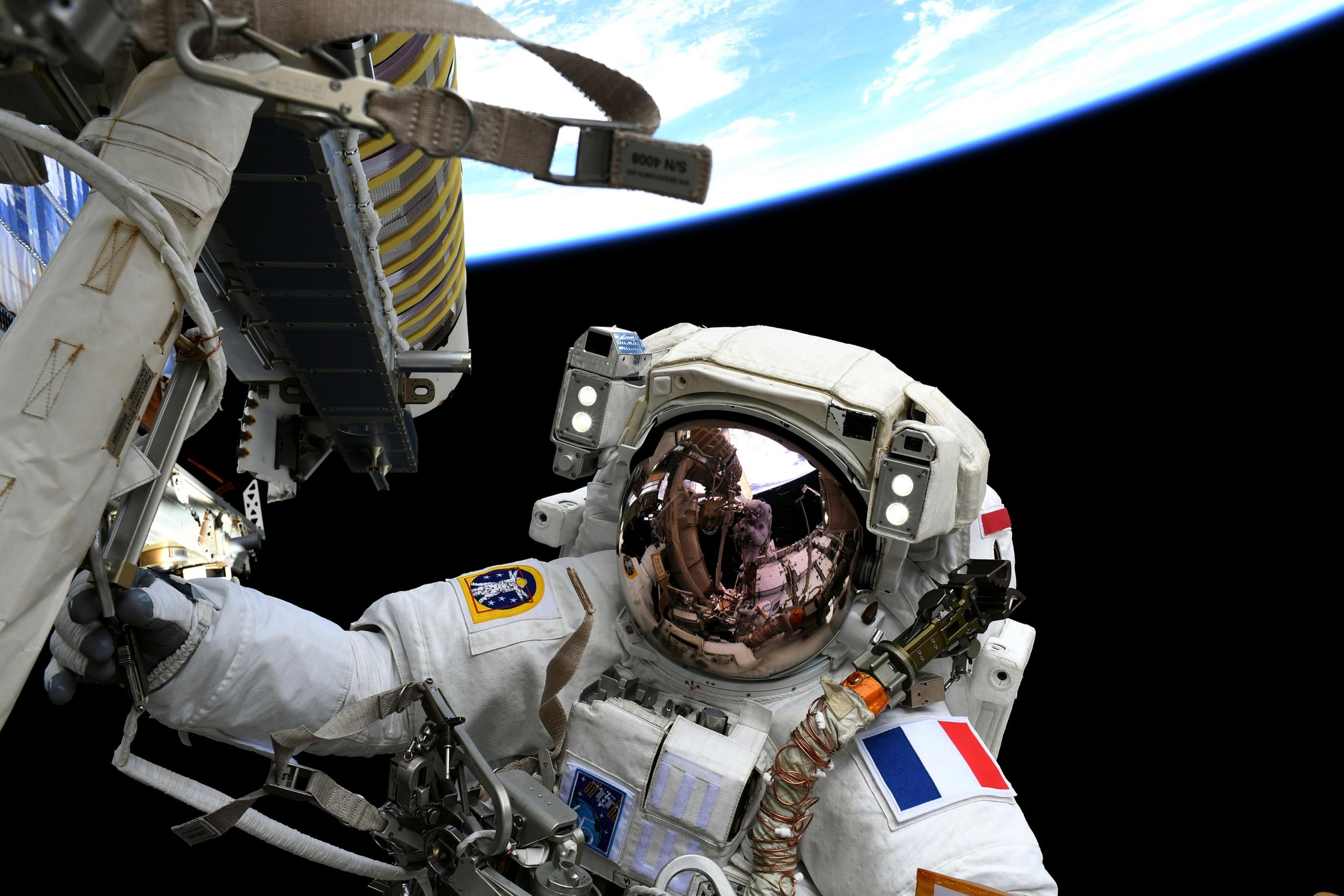
To shield astronauts from dangerous space radiation, researchers are developing 3D-printed hydrogels—materials that absorb and retain water without leaking.
Unlike traditional water-based shielding, hydrogels offer even distribution, flexibility, and enhanced safety for space missions.
Cosmic Radiation: A Constant Threat
Space is a harsh and dangerous environment, especially when it comes to radiation. During spaceflight, both astronauts and onboard equipment are exposed to high levels of radiation, which can cause serious health risks and lead to malfunctions in critical systems. To address this, researchers from Ghent University in Belgium are exploring the use of 3D-printed hydrogels — water-absorbing materials — as a potential solution for radiation shielding.
Despite its vast emptiness, space is filled with powerful streams of high-energy particles. These particles, traveling at nearly the speed of light, originate from solar flares on the Sun or distant cosmic explosions in deep space.
On Earth, our atmosphere and magnetic field provide natural protection from most of this radiation. However, beyond these protective layers, astronauts are exposed to significantly higher levels of radiation. In just one day, they can receive as much exposure as a person on Earth does in an entire year. Future missions to Mars and beyond will require new and effective shielding methods to keep astronauts safe.
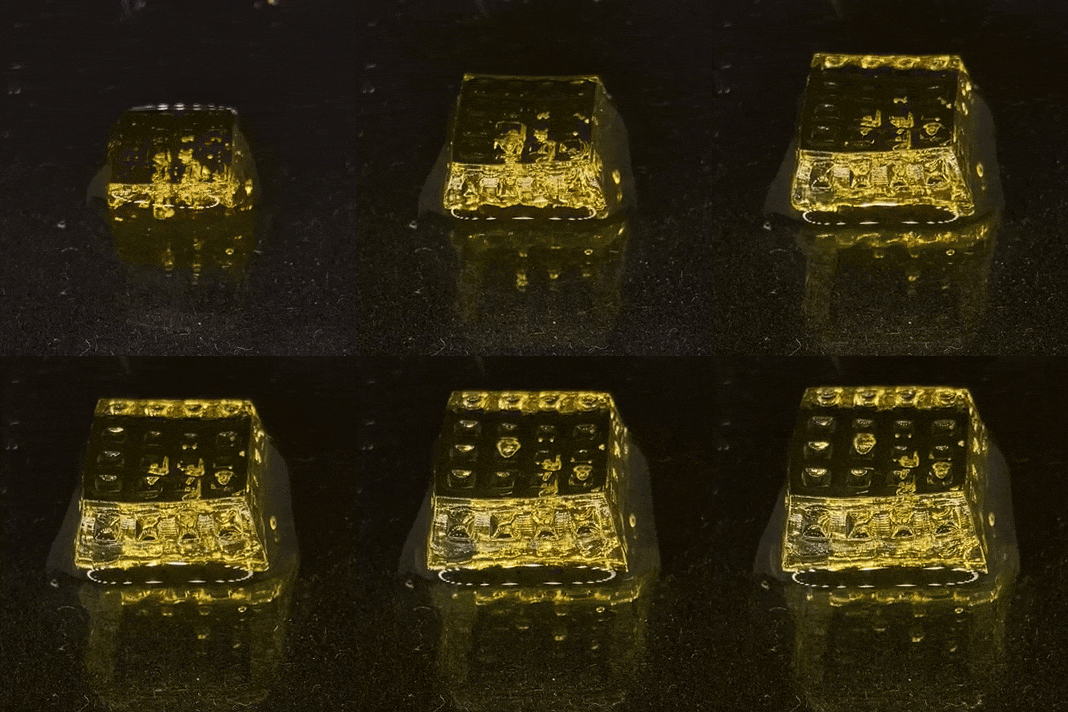
In a follow-up study to a successful Discovery activity, a research team from the Polymer Chemistry and Biomaterials Group (PBM) at Ghent University in Belgium is testing the potential of 3D-printed hydrogels – materials that can soak up large amounts of water – to serve as highly-effective radiation shields.
Credit: Lenny Van Daele
Water: A Natural Radiation Barrier
Water has long been recognized as an excellent radiation shield. It is dense and rich in hydrogen atoms, which can absorb and slow down harmful radiation particles. However, using free-flowing water as a protective barrier presents challenges, including containment, weight distribution, and the risk of leaks
Bulky containers embedded into spacesuits could limit astronauts’ movement, unequal water distribution would lead to incomplete protection, and the water could leak out if the container is punctured – which can be especially dangerous in an environment full of electronics.

Earth’s magnetic field and atmosphere protect us from the constant bombardment of galactic cosmic rays – energetic particles that travel at close to the speed of light and penetrate the human body.
A second source of space radiation comes from unpredictable solar particle events that deliver high doses of radiation in a short period of time, leading to ‘radiation sickness’ unless protective measures are taken.
Credit: ESA
Enter Superabsorbent Polymers (SAPs)
In a follow-up study to a successful Discovery activity, a research team from the Polymer Chemistry and Biomaterials Group (PBM) at Ghent University in Belgium is exploring the use of superabsorbent polymers (SAPs) as an alternative material for radiation shields, safer and more effective than water alone.
SAP is a material capable of absorbing up to several hundred times its weight in liquid, just like ‘grow monster’ toys that expand when submerged in water. In their swollen state, SAPs are referred to as ‘hydrogels’.
“The beauty of this project is that we are working with a well-known technology,” explains Lenny Van Daele. “Hydrogels are found in many things we use every day, from contact lenses to diapers and sanitary products. Our research group has experience with applications in the medical field – using hydrogels as a soft implantable material to repair damaged tissues and organs.”

These models were made by a team from the Polymer Chemistry and Biomaterials Group (PBM) at Ghent University in Belgium.
In a follow-up study to a successful Discovery activity, the researchers are testing the potential of 3D-printed hydrogels – materials that can soak up large amounts of water – to serve as highly-effective radiation shields.
Credit: Johan Dubruel
Safer Protection for Astronauts and Spacecraft
Hydrogels’ ability to retain water makes them a suitable radiation protection for habitats, as well as in spacesuits used for extravehicular activities (EVAs). The water retained in a hydrogel is not free-flowing, which allows for equal distribution and protection. This also means the water would not leak out if the patch was punctured, giving astronauts enough time to get to safety.
“The material could also potentially be applied to uncrewed missions – in radiation shields for spacecraft, or as water reservoirs once we have optimized the method of retrieving water from the hydrogel,” adds Malgorzata Holynska of European Space Agency’s Materials, Environments and Contamination Control Section.

3D Printing: Shaping the Future of Space Protection
“The superabsorbent polymer that we are using can be processed using multiple different techniques, which is a rare and advantageous quality amongst polymers,” adds Manon Minsart. “Our method of choice is 3D printing, which allows us to create a hydrogel in almost any shape we want.”
Lead of the project Peter Dubruel comments: “There is a constant search for lightweight radiation protection materials. In our Discovery activity we successfully demonstrated that hydrogels are safe to use under space conditions. In this follow-up project, we are applying different techniques to shape the material into a 3D structure and scale up the production process, so that we can come a step closer to industrialization.”
Never miss a breakthrough: Join the SciTechDaily newsletter.
Follow us on Google and Google News.