
Close Menu
    Facebook X (Twitter) Instagram
    SciTechDaily
    • Biology
    • Chemistry
    • Earth
    • Health
    • Physics
    • Science
    • Space
    • Technology
    Facebook X (Twitter) Pinterest YouTube RSS
    SciTechDaily
    Home»Earth»The Rann of Kutch: India’s White Desert
    Earth

    The Rann of Kutch: India’s White Desert

    By Kasha Patel, NASA Earth ObservatoryApril 18, 2021No Comments3 Mins Read
    Facebook Twitter Pinterest Telegram LinkedIn WhatsApp Email Reddit
    Share
    Facebook Twitter LinkedIn Pinterest Telegram Email Reddit
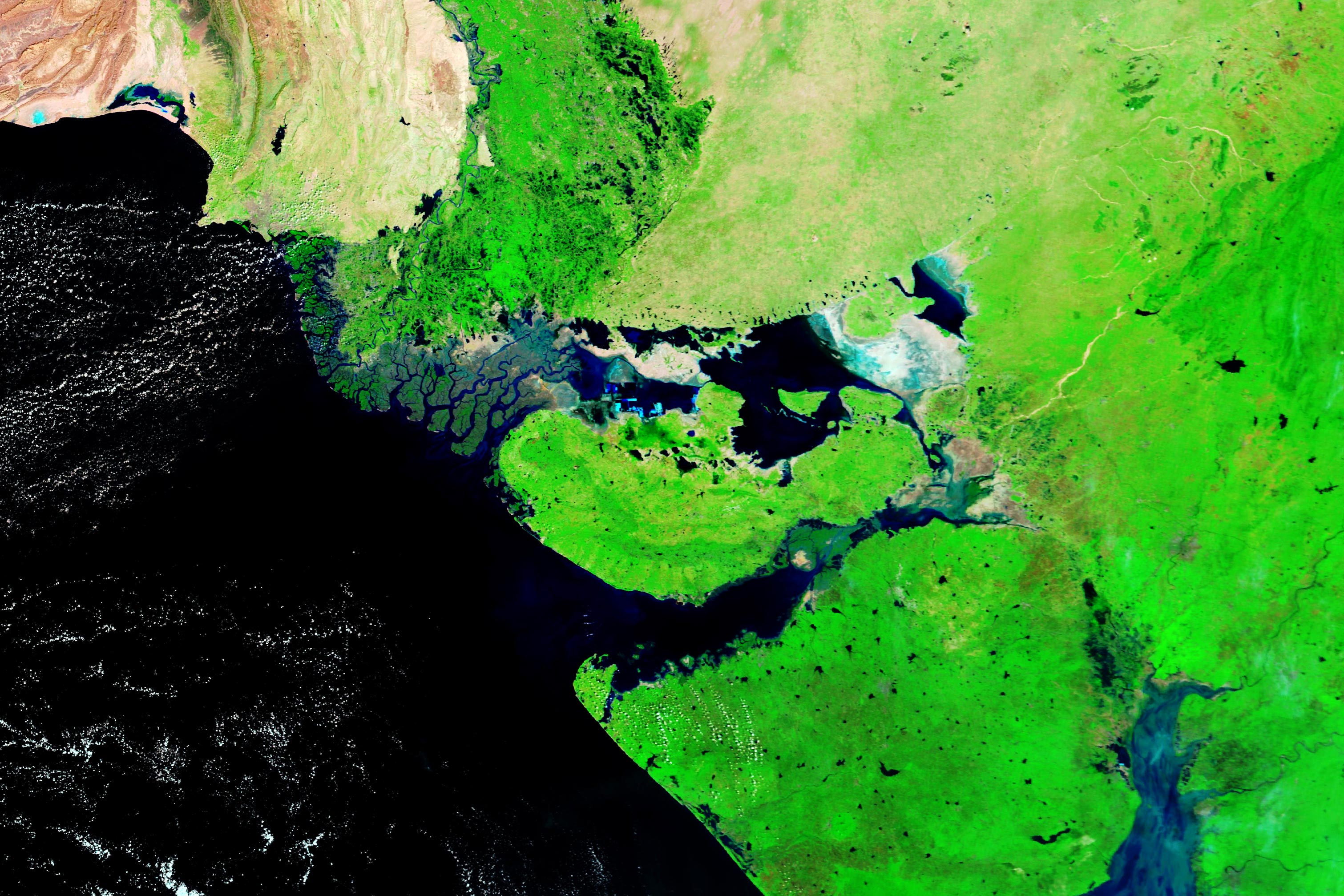
    Rann of Kutch 2020 Annotated
    October 7, 2020

    The Rann of Kutch can appear drastically different depending on the time of year.

    Located in northwest India, the Kutch district can appear drastically different depending on the time of year. For half the year, the district’s northern salt deserts are hot, dusty plains. During monsoon season, rains transform those deserts into wetlands with abundant wildlife.

    The images on this page show the Kutch district on October 7, 2020 (above), near the end of monsoon season, and on April 7, 2021 (below). These false-color images, acquired with the Moderate Resolution Imaging Spectroradiometer (MODIS) on NASA’s Aqua and Terra satellite, use a combination of infrared and visible light (bands 7-2-1) to make it easier to distinguish various features. Water appears navy blue and black; vegetation is bright green; the cyan and white are clouds and bright surfaces, most likely salt pans.

    The Kutch district contains one of the largest salt deserts in the world: the Rann of Kutch. (Rann means desert in Hindi.) Although the desert is largely in India’s Gujarat state, some parts extend into the Sindh province of Pakistan. Spanning 26,000 square kilometers (10,000 square miles), the Rann was a shallow arm of the Arabian Sea thousands of years ago. It evolved into an extensive saline mudflat due to centuries of silting. During the dry season, the area has one of the highest annual evaporation rates in the region.
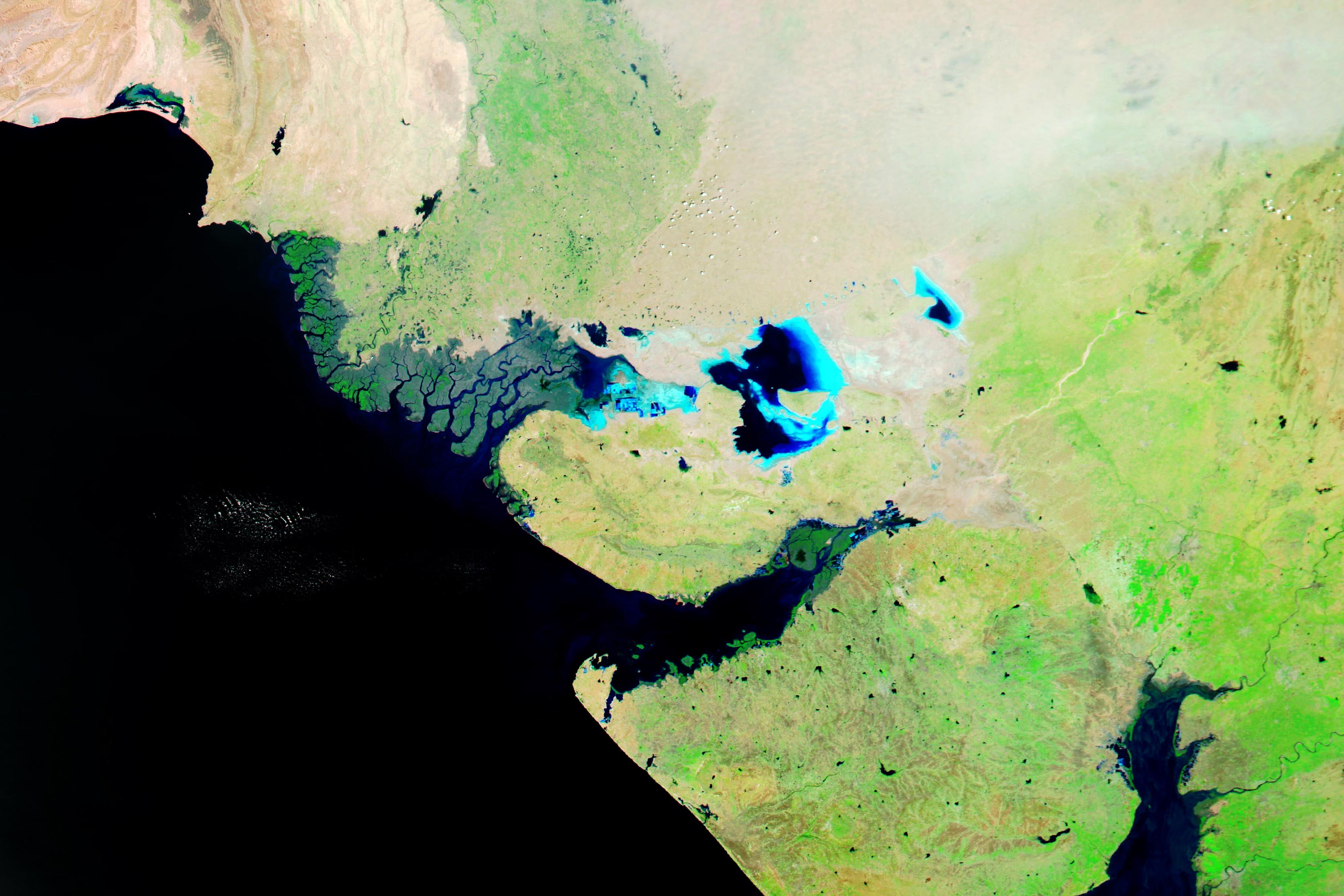
    Rann of Kutch 2021 Annotated
    April 7, 2021

    The Rann of Kutch and Gujarat state are the largest salt production areas in India. During monsoon months, the Arabian Sea floods Rann with sea water. When the water retreats around October, salt farmers dig wells and pump briny groundwater into square fields where white salt crystals are naturally evaporated out.

    The shallow wetland is divided into two sections: the Great Rann of Kutch and Little Rann of Kutch. The Great Rann is a vast span of salt and known for its white, snowy look, which also makes it a popular filming spot for Bollywood movies. The Little Rann, which lies to the southeast, is known for its wildlife; it is one of the few places to spot the Indian onager. The area is also a popular birdwatching spot where visitors can see eagles, flamingos, cranes, and more.

    During very wet years, the wetlands can extend to the Gulf of Kutch. Lined with mudflats and small islands, the Gulf of Kutch separates the Kutch district from the Kathiawar peninsula to the south. The gulf also includes the first marine conservatory in India: the Marine Sanctuary and Marine National Park. The park includes 42 islands, as well as coral reefs, sandy beaches, and diverse marine life.

    NASA Earth Observatory images by Lauren Dauphin, using MODIS data from NASA EOSDIS LANCE and GIBS/Worldview.

    Never miss a breakthrough: Join the SciTechDaily newsletter.
    Follow us on Google and Google News.

    Geography NASA NASA Earth Observatory
    Share. Facebook Twitter Pinterest LinkedIn Email Reddit

    Related Articles

    NASA Picturing Earth: Astronaut Photography In Focus [Video]

    Coloring the Great Salt Lake – Astronaut Takes Beautiful Photograph From Space Station

    Sea Ice in Denmark Strait – Drifted More Than 1,000 Km (600 Miles) From the Arctic Ocean

    NASA Scientists Map Beirut Blast Damage – Devastating Explosion Rocked Port Area

    NASA Advanced Rapid Imaging Satellite Maps Blast Damage: Beirut Explosion Aftermath

    NASA/NOAA Satellites Observe Surprisingly Rapid Increase in Scale and Intensity of Fires in Siberia

    Mars Terraforming: Cultivating Ideas for Mars on Earth

    Meandering Mississippi River: Photo Taken by Astronaut on Space Station Shows Divergence From State Boundaries

    Incredible Rare Peek at Patagonia in Winter

    Leave A Reply Cancel Reply

    • Facebook
    • Twitter
    • Pinterest
    • YouTube

    Don't Miss a Discovery

    Subscribe for the Latest in Science & Tech!

    Trending News

    Popular Sugar-Free Sweetener Linked to Liver Disease, Study Warns

    What Is Hantavirus? The Deadly Disease Raising Alarm Worldwide

    Scientists Just Discovered How the Universe Builds Monster Black Holes

    Scientists Unveil New Treatment Strategy That Could Outsmart Cancer

    A Simple Vitamin May Hold the Key to Treating Rare Genetic Diseases

    Scientists Think the Real Fountain of Youth May Be Hiding in Your Gut

    Ravens Don’t Follow Wolves, They Predict Them

    This Common Knee Surgery May Be Doing More Harm Than Good

    Follow SciTechDaily
    • Facebook
    • Twitter
    • YouTube
    • Pinterest
    • Newsletter
    • RSS
    SciTech News
    • Biology News
    • Chemistry News
    • Earth News
    • Health News
    • Physics News
    • Science News
    • Space News
    • Technology News
    Recent Posts
    • You May Have a Dangerous Type of Cholesterol Even if Your Tests Look Normal
    • Study Reveals Dangerous Flaw in AI Symptom Checkers
    • New MRI Breakthrough Captures Stunningly Clear Images of the Eye and Brain
    • Scientists Warn Sitting Too Much Can Harm Your Body in Surprising Ways
    • Your Blood Pressure Reading Could Be Wrong Because of One Simple Mistake
    Copyright © 1998 - 2026 SciTechDaily. All Rights Reserved.
    • Science News
    • About
    • Contact
    • Editorial Board
    • Privacy Policy
    • Terms of Use

    Type above and press Enter to search. Press Esc to cancel.