
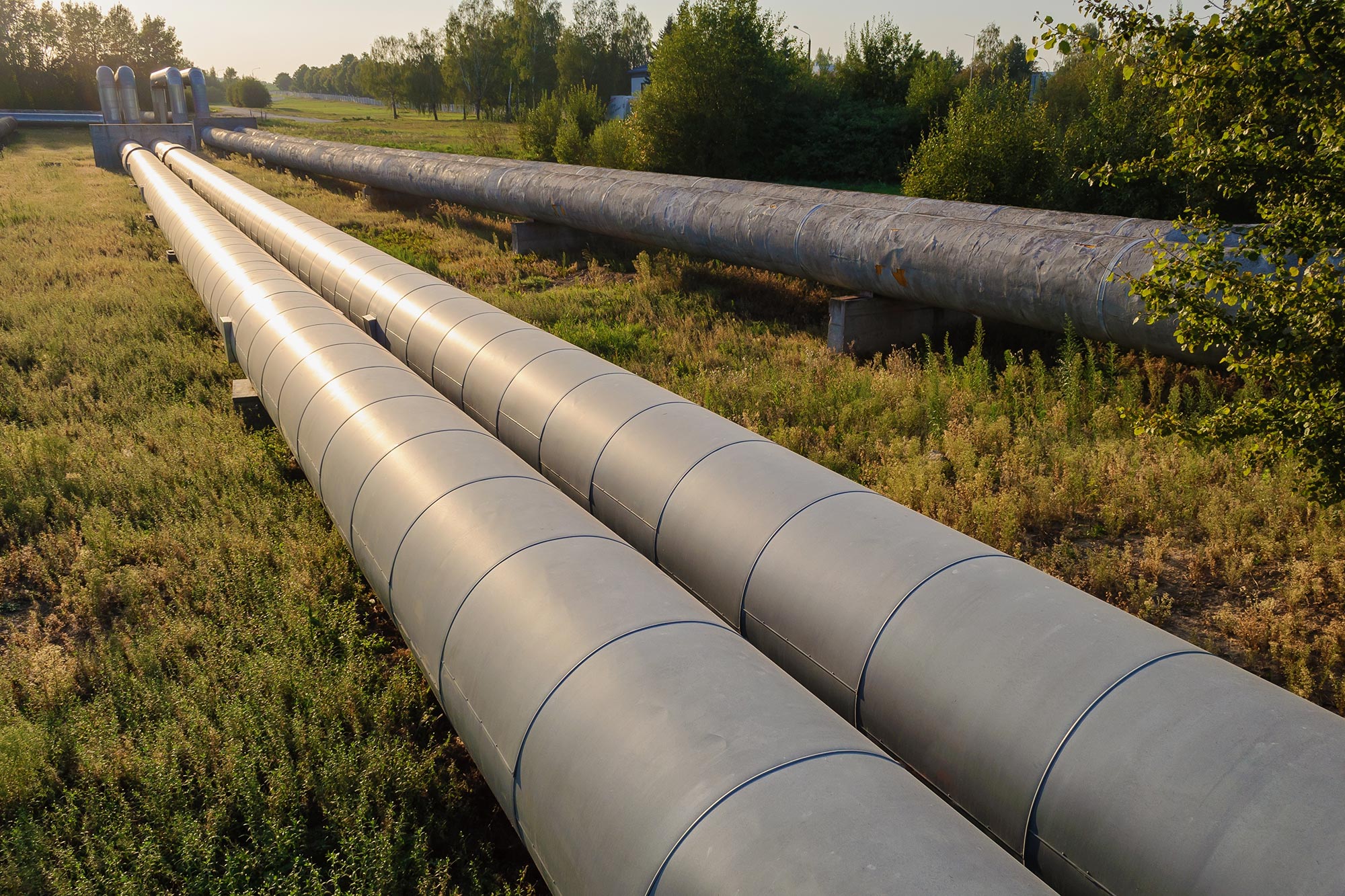
Millions of Americans live surprisingly close to fossil fuel infrastructure—not just oil wells and power plants, but also refineries, storage sites, and pipelines that make up a vast, mostly hidden energy network.
A new nationwide analysis shows that 46.6 million people reside within about a mile of at least one such facility. Many of these sites release pollutants, yet mid-supply chain health impacts have been largely unstudied.
Hidden Steps in the Fossil Fuel Supply Chain
Fossil fuels pollute the air during both extraction and combustion, but their path from the ground to a power plant involves much more than drilling equipment and visible smokestacks. Those familiar scenes represent only the beginning and end of a five-stage process that most people never witness.
After leaving the well site and before reaching a power facility, oil and gas are refined to remove contaminants, stored in specialized facilities, and moved across the country. These middle steps form an extensive network of infrastructure that stretches across the United States and typically operates out of public view.
A new analysis from Boston University provides the first nationwide assessment of how many people live within 1.6 km (roughly a mile) of any part of this infrastructure system. Published today (November 17) in Environmental Research Letters, the study reports that 46.6 million residents of the contiguous United States live within that distance of at least one component of the fossil fuel supply chain, amounting to 14.1% of the population.
Health Risks From Mid-Supply Chain Pollution
Previous research has shown that people living near extraction sites and end-use facilities face elevated risks of adverse birth outcomes and asthma, and emerging evidence is examining links to other health conditions, including leukemia. However, far less is understood about how the infrastructure that sits between these stages may affect nearby communities. Some of these mid-supply chain facilities have been found to release harmful pollutants such as volatile organic compounds.
“This study helps us get a general size of the potential problem, and really starts the process of doing a better job of understanding exactly what the hazards are and how many people are potentially exposed,” said Jonathan Buonocore, the paper’s first author, an assistant professor of environmental health at BU’s School of Public Health (SPH), and core faculty at BU’s Institute for Global Sustainability (IGS). “Especially for these more obscure pieces of energy infrastructure, this is the first step to tracking what emissions and stressors those are imposing on the communities.”
How Many Americans Live Near Each Infrastructure Type
Breaking down that 46.6 million figure, the team estimated how many people live near each type of infrastructure nationwide. Almost 21 million Americans live near end-use facilities, including power plants. More than 20 million are within a mile of extraction sites, like oil and gas wells. Storage facilities—like peak shaving facilities, underground gas storage facilities, and petroleum product terminals—have more than 6 million nearby residents. Fewer people live near refining and transportation. Many Americans, about 9 million, are counted toward several of those totals, as their homes are in proximity to multiple types of infrastructure.
“There is reason to believe that there could be air pollution coming from each of these stages, from consistent pollution, gas leaks, or blowouts, when gas or oil flows from a well uncontrollably,” said Mary Willis, the study’s senior author, an assistant professor of epidemiology at SPH, and core faculty at IGS. “All of these stages can reasonably impact a range of population health outcomes, yet the basic information of who is even near the infrastructure components has not been examined to date.”
Inequities in Fossil Fuel Exposure Nationwide
According to the study, infrastructure is not distributed evenly across the nation. Predominantly non-white groups are disproportionately exposed across all stages of the energy supply chain, a finding that aligns with previous research and indicates an environmental injustice.
Urbanites are also more exposed than their rural counterparts. Almost 90% of the population near end-use, transportation, refining, and storage infrastructure is found in urban areas.
Examining each infrastructure type helped the researchers reveal important trends that could guide policymaking. For instance, they found that a single piece of storage infrastructure has, on average, 2,900 residents within a mile, while a single piece of extraction infrastructure has an average of only 17 nearby inhabitants. This indicates that while there are more pieces of extraction infrastructure across the country, they are generally located in less populated spots. Pieces of storage infrastructure are less plentiful, but more likely to be found in dense urban areas.
“That means that if a local policymaker in an urban area were to take interest in reducing exposures, they may receive the most impact per piece of infrastructure if they focus on storage,” Buonocore said.
By identifying communities already hosting significant amounts of fossil fuel infrastructure, the researchers say their work can help guide more equitable siting of energy infrastructure in the future.
New Insights Enabled by the EI3 Database
The publication marks the first study based on the Energy Infrastructure Exposure Intensity and Equity Indices (EI3) Database for Public Health, launched by Buonocore and Willis in spring 2024 at the Power & People Symposium. Additional co-authors on this article include Fintan Mooney, Erin Campbell, Brian Sousa, Breanna van Loenen, Patricia Fabian, and Amruta Nori-Sarma.
Until EI3’s launch, data on fossil fuel energy infrastructure was scattered across local, state, and national agencies and jurisdictions, sometimes behind paywalls or password protection. With an IGS Sustainability Research Grant jointly funded by IGS and SPH, the team centralized all publicly available information for the first time into a single harmonized national tool. Their dataset is accessible on Harvard Dataverse. This grant also catalyzed the launch of the interdisciplinary SPH Energy and Health Lab, which Buonocore and Willis co-direct.
“The study really shows that there are big knowledge gaps across the supply chain, in terms of the hazards people are being exposed to, the consequent health impacts, and who is being exposed,” Buonocore said. “With a lot of these different types of infrastructure, the hazards have not been fully characterized. Characterizing hazards and understanding who is most heavily exposed should be the first steps of understanding the possible health impacts. This research takes the first steps down that path.”
Toward Better Zoning and Future Health Research
Some cities and states in the US have adopted zoning rules for fossil fuel operations, but many areas still allow these activities to occur close to homes, schools, and other community spaces. The researchers hope their findings will encourage additional studies that can guide policy decisions and support healthier environments. They explain that upcoming work may focus on more detailed monitoring of air, water, noise, and light pollution near these facilities, as well as expanding investigations into health effects by using new types of datasets, including Medicaid records or information on specific groups such as pregnancy planners.
“We’re really the first group thinking about this as an integrated system. By quantifying all of these factors at once, we’re potentially able to, down the line, directly compare: what are the health effects of living near an extraction site, compared to living near a storage site?” Willis said. “Having that in one database is the first step to doing any health studies in the future on this integrated system.”
Reference: “High populations near fossil fuel energy infrastructure across the supply chain and implications for an equitable energy transition” by Jonathan J Buonocore, Fintan A Mooney, Erin J Campbell, Brian Sousa, Breanna van Loenen, M Patricia Fabian, Amruta Nori-Sarma and Mary D Willis, 17 November 2025, Environmental Research Letters.
DOI: 10.1088/1748-9326/ae0da6
Never miss a breakthrough: Join the SciTechDaily newsletter.
Follow us on Google and Google News.
2 Comments
This articlle exposes the ignorance of most scientist and people that would like to beleive that our modern world can exist without petroleum. 80% of all chemicals come from petroleum based ingredients. Almost 70% of all manufactured goods are also from petroleum products. The rest are mined and because of the strict regulations from the EPA and state envciromental industries, we will not be freed from our dependance on oil based products.
This is very simple, the world operates (or fails) by its consumption of energy. If we wish to have perfectly clean energy sources, we have to create them. This will not be accomplished by complaining about the present situation.
Hydrogen and solar must be developed to be cost-free, non polluting in its production and use and made viably available.
Stop complaining and start inventing.