
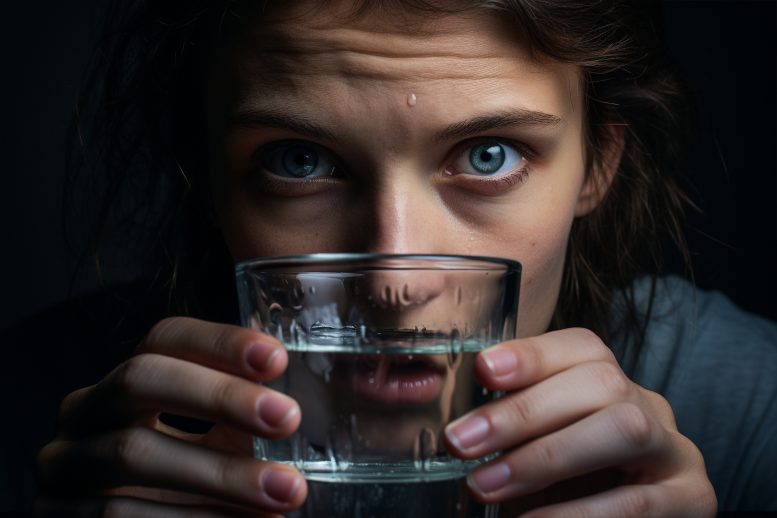
A new study measured manganese levels in the residential tap water of a Holliston, Massachusetts community and found that the manganese concentrations occasionally exceeded the maximum safety level recommended in state and federal guidelines.
Manganese is an unregulated contaminant often found in drinking water, but safe levels of this metal are currently unknown, and prior research has indicated that overexposure to manganese may be harmful to children.
Now, a new study led by researchers at Boston University School of Public Health (BUSPH) has found that concentrations of manganese in a Massachusetts community’s drinking water often surpassed the maximum recommended levels of manganese stated in current guidelines.
Published in the Journal of Exposure Science & Environmental Epidemiology, a Nature publication, the findings also suggest that the observed manganese levels may be high enough to pose a risk to children and other vulnerable communities who are exposed.
Manganese: Essential Nutrient or Health Hazard?
Manganese is a naturally occurring component of soil and rock, and it is both an essential nutrient and a toxic substance—so, too little or too much exposure can be harmful to health. Despite the fact that manganese is found in many communities’ drinking water across the US, it is not federally regulated. The US Environmental Protection Agency has developed guidelines that identify a maximum level of daily exposure to manganese for “aesthetic” purposes (i.e. color and taste), as well as for the overall health and safety of the general population. But these guidelines are only recommendations; they cannot be enforced in the way that established primary standards can.
“Some level of manganese is needed for health, but growing evidence suggests that excess levels of manganese can harm children’s brains,” says study lead and corresponding author Alexa Friedman, a doctoral student at BUSPH at the time of the study. “Our findings suggest that the level of manganese that is present in public drinking water exceeded, on average, the aesthetic guidelines 40 percent of the time, and health-based guidelines 9 percent of the time. These data support the need for a legally enforceable primary drinking water standard for manganese in order to better protect children’s health.”
The new study is among the first to examine manganese concentrations in drinking water across time and location in the United States.
For the study, Friedman and colleagues examined residential tap water samples collected between September 2018 to December 2019 in the suburban community of Holliston, Mass., as part of a community-initiated pilot study called ACHIEVE (Assessing Children’s Environmental Exposures). Holliston residents had reported concerns about the quality of their drinking water and the safety of children in the community after noticing that their tap water turned black or brown occasionally. Communities that receive tap water from shallow aquifers are especially vulnerable to being exposed to high levels of manganese, and Holliston residents rely on this source for almost all of their drinking water.
“Although average water manganese concentrations in Holliston were relatively low, our work showed that levels nonetheless often exceed the current aesthetic and health-based guidelines,” says study senior author Birgit Claus Henn, associate professor of environmental health at BUSPH. “While the existing guidelines may be helpful benchmarks, without an enforceable standard in place, there is a limit to what will be done to ensure the water is safe to drink and/or meets these guidelines.”
Manganese Overexposure: A Widespread Issue
The researchers also compared their community-level manganese samples to public data on state-wide manganese levels. They found comparable ranges, suggesting that overexposure to manganese is not an isolated issue within the Holliston community.
To better understand the health risks of exposure to manganese in drinking water, Claus Henn and Friedman recommend that policymakers and other researchers increase monitoring of manganese in water, conduct health studies on this exposure in communities, and consider an enforceable standard.
“If residents are concerned about the level of manganese in their drinking water, they should refer to these resources online from Massachusetts Department of Environmental Protection,” Friedman says. “It is also important to know that manganese cannot be removed by boiling the water, and many household filters are not effective for removing manganese from water,” she adds. “Residents should only use filters that are capable of removing manganese, and the filtration units should clearly state this capability.”
Reference: “Manganese in residential drinking water from a community-initiated case study in Massachusetts” by Alexa Friedman, Elena Boselli, Yelena Ogneva-Himmelberger, Wendy Heiger-Bernays, Paige Brochu, Mayah Burgess, Samantha Schildroth, Allegra Denehy, Timothy Downs, Ian Papautsky and Birgit Clauss Henn, 10 June 2023, Journal of Exposure Science & Environmental Epidemiology.
DOI: 10.1038/s41370-023-00563-9
Never miss a breakthrough: Join the SciTechDaily newsletter.
Follow us on Google and Google News.