
A newly uncovered feature of skin development is reshaping how scientists think about aging and repair.
A surprisingly small detail in the skin may play an outsized role in how young skin looks and how well it repairs scars. Researchers say the clue is a microscopic structure found in humans, pigs, and grizzly bears, but not in monkeys.
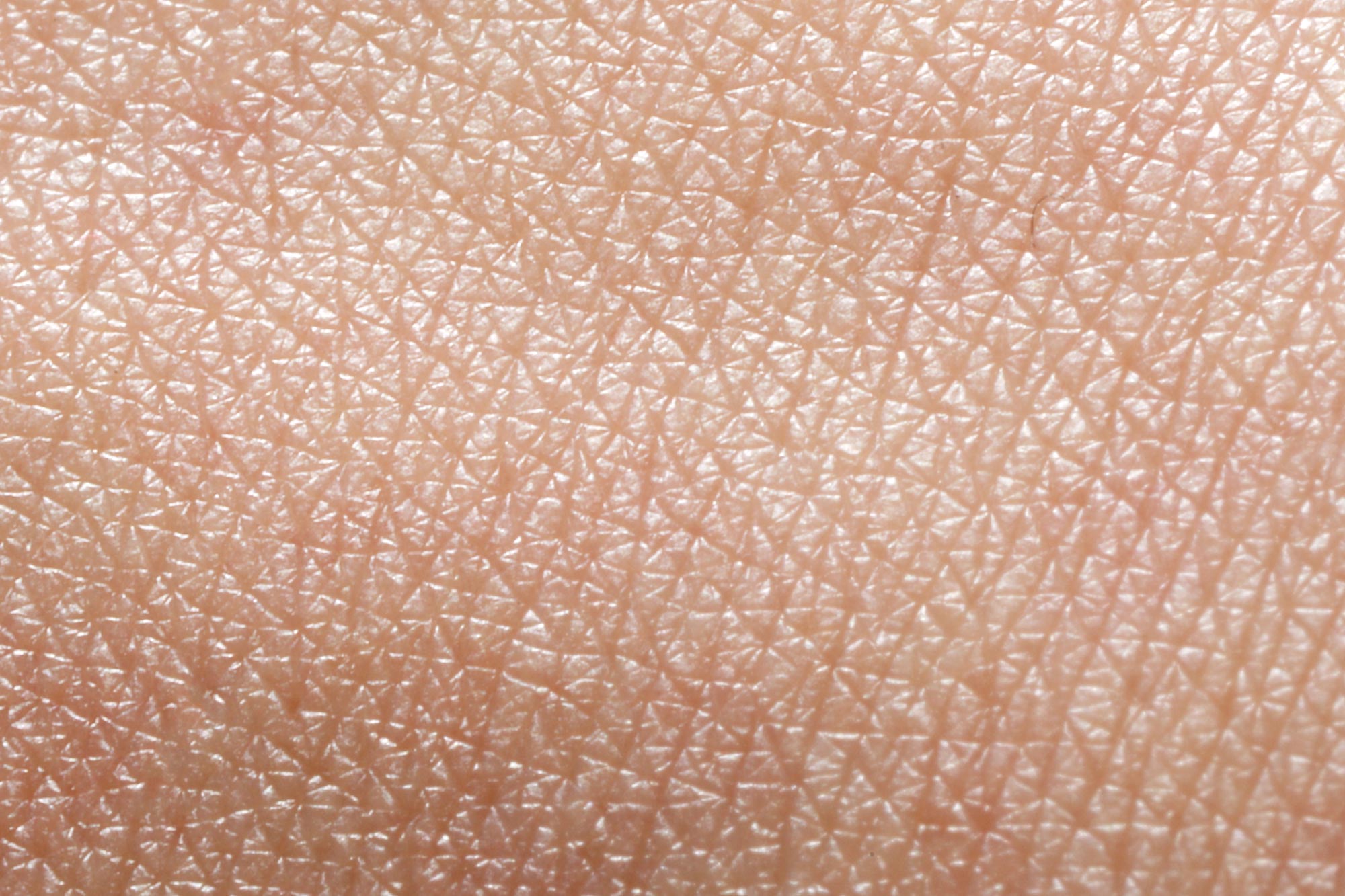
The structures are tiny waves at the boundary where the outer and inner layers of skin meet. They are called rete ridges, and for years scientists assumed they were built before birth during fetal development. A team at Washington State University’s College of Veterinary Medicine has now shown that these ridges appear shortly after birth instead. The researchers also pinpointed a key molecular signal that switches on the program that builds them.
Reported in Nature, the work points toward future treatments that could slow skin aging and improve wound healing and scar repair by restoring the architecture that younger skin naturally has.
“These structures degrade as we age; now we know how they form and have a blueprint to guide future work on restoring them,” said Ryan Driskell, an associate professor in the College of Veterinary Medicine’s School of Molecular Biosciences and senior author on the paper. “Most scientists assumed these skin ridges formed during early embryonic development, which explains why no one really understood their origin.”
Rete ridges function much like biological “Velcro,” Driskell said. They secure the epidermis, which is the outermost layer of skin, to the dermis beneath it and help maintain the skin’s strength and flexibility. As people grow older and these ridges gradually flatten, the skin becomes thinner, less resilient, and more likely to sag or suffer damage.
For years, progress in studying these structures was limited by a major problem: the wrong animal models.
The Problem with Traditional Animal Models
“When most people look at the skin of different animals, they see differences in fur. Rete ridges lie under the surface of skin, however, so it wasn’t until we looked closer that we discovered that animals with thicker skin, like pigs, grizzly bears, and dolphins, have rete ridges like we do,” said Sean Thompson, a doctoral student in Driskell’s lab who served as first author on the study. “In contrast, common biomedical models for humans like mice and non-human primates are furry and lack rete ridges.”
Although grizzly bears offered evolutionary clues suggesting that body size influences skin structure, their distinctive biology made it impractical to observe how rete ridges develop on a day-to-day basis. As a result, the researchers shifted their focus to pigs, whose development can be tracked more precisely.
Working with local farmers, the team gathered skin samples from pigs at different stages of development. Their analysis demonstrated that rete ridges form after birth rather than before it.
“We expected this structure to be established before birth, so seeing it emerge afterward was a surprise,” Driskell said. “That timing changes how we think skin architecture is built and why it may be possible to influence it later in life.”
A Molecular Pathway with Therapeutic Potential
Using advanced genetic mapping techniques, the team also identified a key biological pathway — bone morphogenetic protein (BMP) signaling — that activates to form these structures. This pathway serves as a set of molecular instructions, guiding how cells communicate and organize into complex tissue. Since rete ridges disappear with age, reactivating BMP signaling could help restore youthful skin and improve scar repair, in addition to possibly leading to new treatments for conditions like psoriasis.
“That BMP signaling drives rete ridges is exciting as it holds significant translational potential,” said Maksim Plikus, a professor at the University of California, Irvine and co-author on the paper. “Use of BMP proteins has already been FDA-approved for orthodontic applications, mapping the way for their use in aged skin and scars.”
The discovery also has the potential to help improve livestock health and adaptability to different climates. By understanding how these features form, researchers can explore ways to breed pigs and other livestock with skin traits suited for different conditions.
Reference: “Rete ridges form via evolutionarily distinct mechanisms in mammalian skin” by Sean M. Thompson, Violet S. Yaple, Gabriella H. Searle, Quan M. Phan, Jasson Makkar, Xiangzheng Cheng, Ruiqi Liu, Anna Pulawska-Czub, Corin Yanke, Natalie M. Williams, Isabelle V. Busch, Tommy T. Duong, Matteo V. Corneto, Zachary S. Jordan, Debarun Roy, Adam B. Salmon, Ov D. Slayden, Brian P. Hermann, David A. Stoltz, Michael J. Welsh, UW Birth Defects Research Laboratory, Ian A. Glass, Krzysztof Kobielak, Qing Nie, Suoqin Jin, Heiko T. Jansen, Michela Ciccarelli, Maksim V. Plikus, Iwona M. Driskell and Ryan R. Driskell, 4 February 2026, Nature.
DOI: 10.1038/s41586-025-10055-5
Driskell has filed a provisional patent related to his team’s discoveries.
The study was supported by the National Institutes of Health and the USDA Agricultural Research Service through the Resilient Livestock Initiative.
Never miss a breakthrough: Join the SciTechDaily newsletter.
Follow us on Google and Google News.