
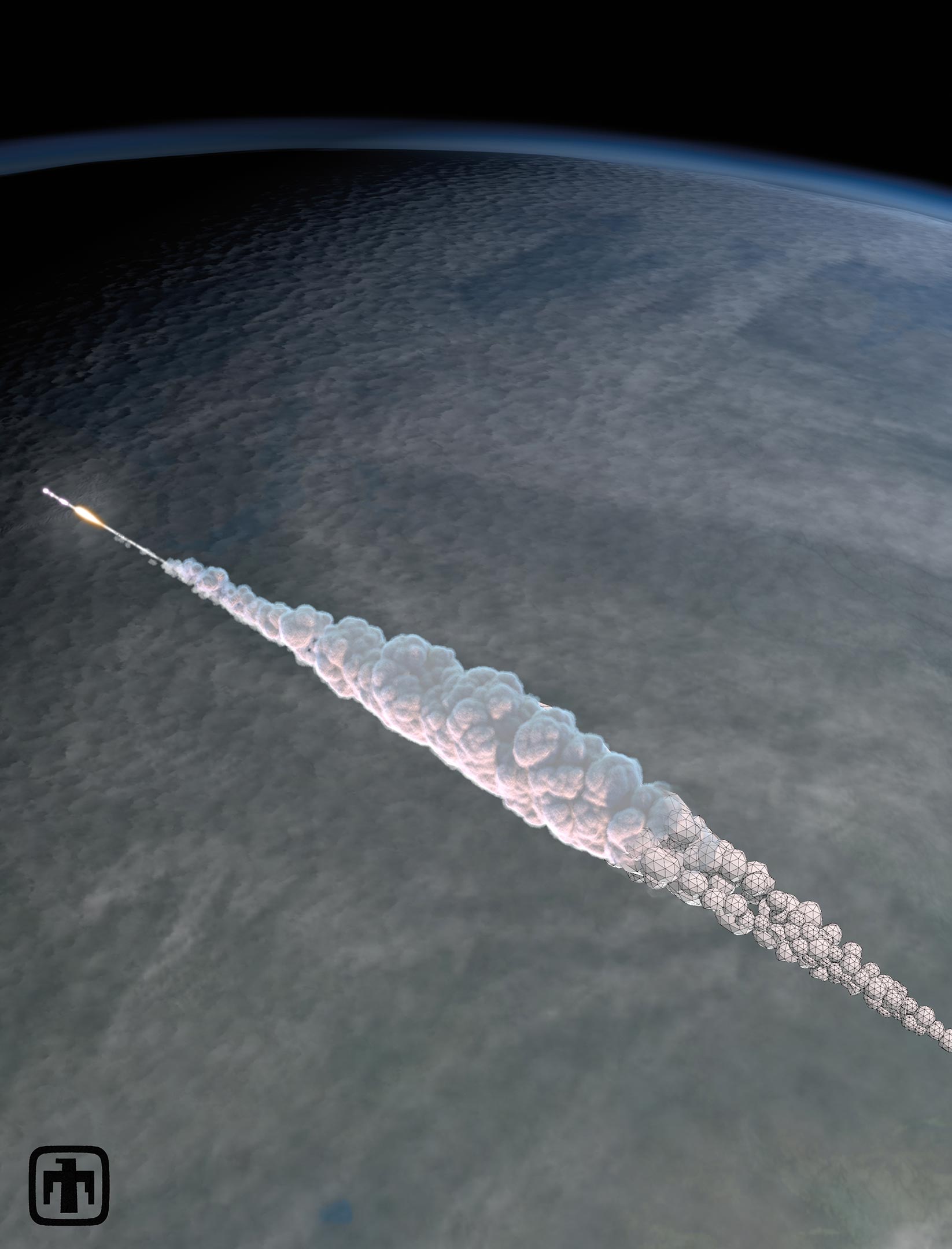
The Chelyabinsk event reveals the hidden risk of sunlit asteroids. ESA’s NEOMIR will enhance detection and enable deflection, preventing potential disasters.
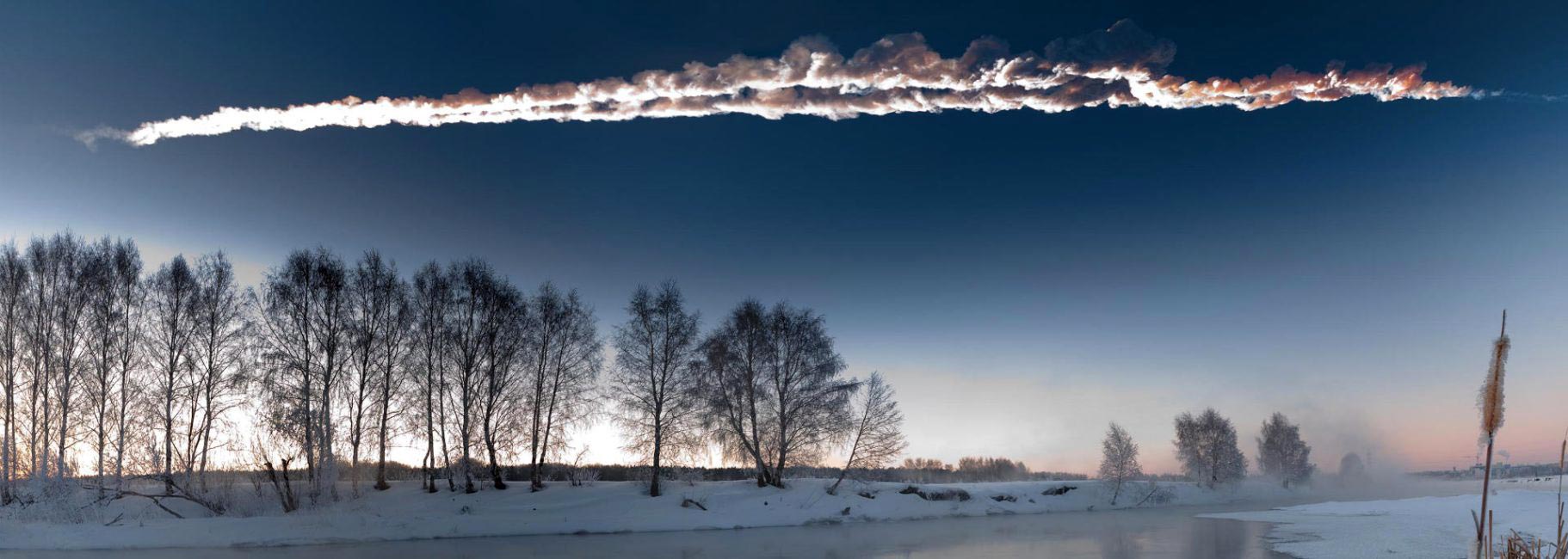
No one saw the Chelyabinsk meteor of February 15, 2013, coming – the largest asteroid to strike Earth in over a century. Just after sunrise on a sunny winter’s day, a 20-meter, 13,000-tonne asteroid struck the atmosphere over the Ural Mountains in Russia at a speed of more than 40,000 miles per hour (18 km/s).
The relatively small rock exploded in the atmosphere at an altitude of 30 km (19 mi), releasing about half a megaton of energy (equivalent to 35 Hiroshima-sized bombs). Two minutes later, the shockwave reached the ground damaging thousands of buildings, breaking windows, and injuring roughly 1500 people from flying shards of glass.
Hidden in the glare of our Sun are an unknown number of asteroids, on paths we do not know, many of which could be heading for Earth, and we just don’t know it.
“Asteroids the size of the Chelyabinsk meteor strike Earth roughly every 50-100 years,” explains Richard Moissl, ESA’s Head of Planetary Defence.
“Injuries caused by airbursts or similar events could be prevented if people are informed of an oncoming impact and its predicted effects. With advance warning, local authorities would be able to advise the public to keep well away from windows and glass.”
Richard adds, “ESA’s upcoming NEOMIR mission will detect asteroids like Chelyabinsk coming from the same region in the sky as the Sun, filling a vital gap in our current abilities to predict and plan for hazardous impacts.”
Of course, there is also the risk of an even bigger asteroid impacting Earth from the dayside. Such a scenario is less likely, as the larger the asteroid the fewer there are in the Solar System and the easier they are to detect. In fact, almost all asteroids larger than 1 km (0.6 mi) have already been discovered.
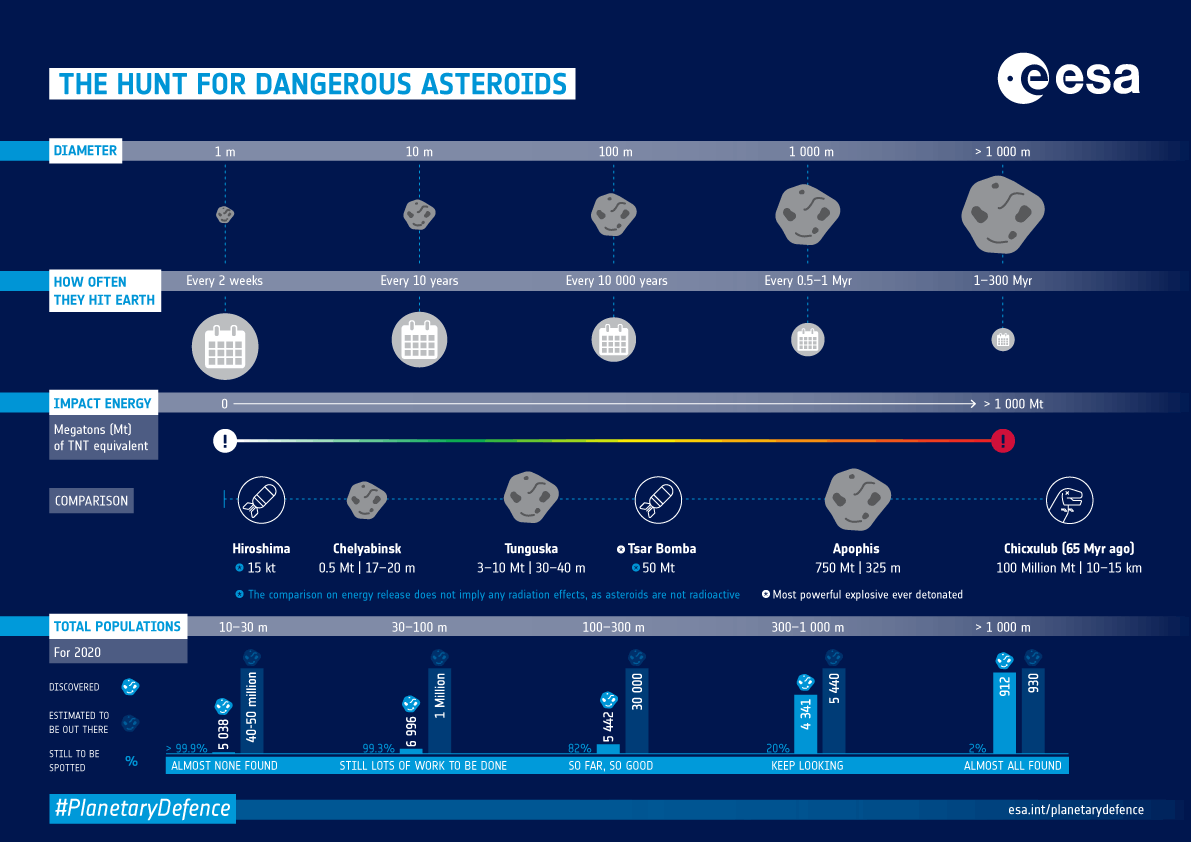
But as the dinosaurs would tell us, if they could, when a huge asteroid strikes it causes unimaginable damage. Fortunately, as NASA’s DART impact has shown and ESA’s Hera mission will build on, asteroid deflection is a real possibility.
So, how do we make sure we are prepared? NEOMIR will be located at the “L1” Lagrange point between Earth and the Sun. Undisturbed by Earth’s atmosphere, its infrared telescope will be able to spot asteroids 20 meters and larger currently lurking in the sunlight.
With enough warning, an asteroid impact is the only natural disaster we can prevent.
Never miss a breakthrough: Join the SciTechDaily newsletter.
Follow us on Google and Google News.
1 Comment
Recently, the journal Nature made public a series of articles on the results of the DART mission and with several dozen authors, without their official publication. This case is unprecedented, but it is quite possible that it has a logical explanation. Familiarity with the contents of these articles shows that the data interpretations given in them and the validity of the conclusions are not convincing without taking into account the results of direct ground-based observations of the collision process and the subsequent ejection of asteroid fragments of various sizes. Among the published results of such direct observations, the most informative data is contained in a video animation compiled from a large series of photographs that were obtained using the telescope of the University of Hawaii in South Africa – see the second part of the video around the 50th second:
https://www.youtube.com/watch?v=bfqVqOl9S9w
An analysis of this 500-fold time-compressed video animation provides evidence that the decrease in the asteroid’s orbital period declared by the authors of the above articles, which follows from photometric observations of asteroid mutual eclipses-occultations and radar data, may have an alternative explanation. Specifically, it can be a consequence of geometric-photometric distortions caused by the appearance of an asymmetric and optically dense “cloud” of mini-satellites in orbits around Dimorphos, into which relatively larger fragments ejected at lower velocities turned into. Since the brightness and scale of the background stars images did not change, the metamorphosis of the asteroid image cannot be attributed to inaccuracies or errors.
Also, on its basis, it is possible to estimate the value of the total ejection momentum, which turns out to be several times less than the impactor momentum. Such estimates contradict the statements of the authors of these articles, even without taking into account the problematic transfer of momentum by a wide cone-shaped ejection to a loose asteroid, consisting of unconnected rubble and stones of different sizes.
Thus, this generally complex and beautiful space experiment can be considered unsuccessful in terms of the main stated goals. Since it is impossible to give all the supporting arguments with the necessary numerical estimates “in a nutshell”, I suggest readers try to do it on their own.