
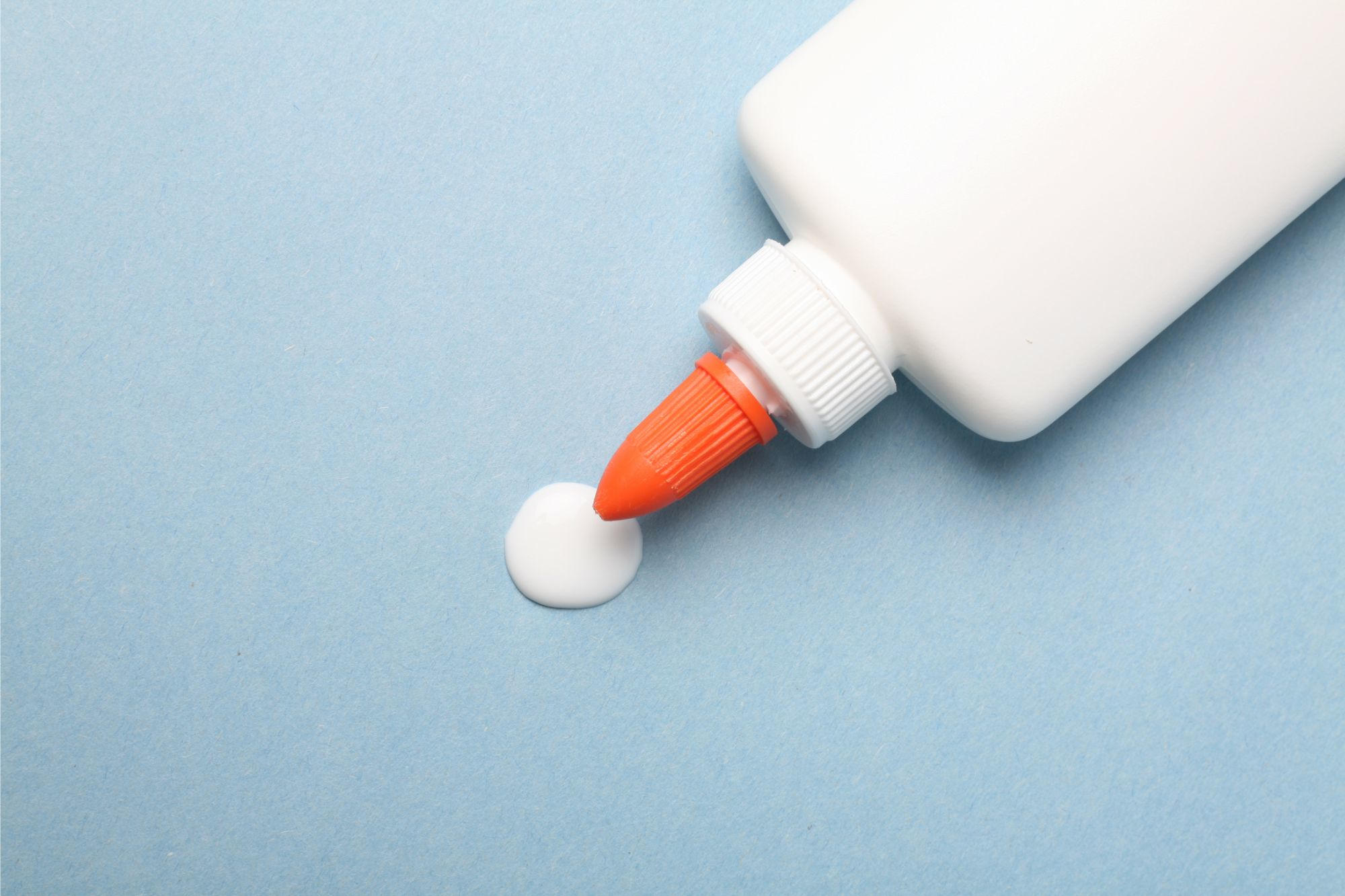
Researchers have found that a glue ingredient, PVA, can make cancer treatments safer and more effective.
When combined with a special boron compound, it helps target tumors more precisely and protects healthy cells. This discovery could improve a unique radiation therapy called BNCT.
Improving Head and Neck Cancer Treatment
Treating advanced and hard-to-manage head and neck cancers may become more effective with the help of polyvinyl alcohol (PVA), a compound commonly found in children’s glue. Researchers discovered that combining PVA with D-BPA, a boron-containing compound, significantly enhanced the performance of a specialized type of cancer radiation therapy. This combination made the drug more targeted toward tumor cells and increased its retention, reducing radiation exposure to healthy tissues.
In 2020, Japan became the first country to approve boron neutron capture therapy (BNCT), a precise form of radiotherapy for cancer. In this treatment, patients receive a boron-containing drug that selectively gathers in tumor cells. They are then exposed to low-energy neutrons, which interact with the boron to destroy cancer cells while leaving healthy cells unharmed.
The advantage of BNCT is that it targets only boron-containing cells, meaning that damage to healthy cells is less compared to many other treatments. It has also been found to be effective against some more challenging and recurring cancers. However, because low-energy neutrons are quite weak, their use is limited to certain areas of the body. Currently, they are approved for head and neck cancers, which are nearer the surface. Their effectiveness also depends on both the level and retention of boron within tumor cells for the duration of the treatment.
Breakthrough With PVA and D-BPA
In newly published research, special research student Kakeru Konarita and Associate Professor Takahiro Nomoto from the University of Tokyo found that adding PVA to the boron-containing compound greatly improved both its accumulation and retention in cancer cells.
“We discovered that PVA, which is used in liquid glue, dramatically improves the efficacy of a compound called D-BPA, that until now has been removed from drug ingredients because it was considered useless,” explained Nomoto.
Neither PVA nor D-BPA exhibit pharmacological activity when administered alone. However, combining these compounds resulted in remarkably elevated tumor accumulation, prolonged retention and potent therapeutic efficacy, even when compared with a clinically used drug.”
Leveraging the Potential of D-BPA
Currently, the chemical substance L-BPA is the only approved boron compound for BNCT. It accumulates well within cancer cells, but, depending on the location of the cancer, can also enter some healthy cells. This makes it unsuitable for treating certain tumors. D-BPA is the enantiomer of L-BPA, meaning that its molecular structure is the mirror image of L-BPA but it is otherwise chemically identical. D-BPA appealed to the researchers because it appears to be more selective of cancer cells. However, on its own it doesn’t accumulate, which is why it was considered useless.
The team previously found that mixing PVA with L-BPA improved its effectiveness. In this latest research, they combined PVA with D-BPA and were surprised to see even higher levels of boron accumulating and more prolonged retention.
Simplifying and Expanding Cancer Therapies
“There are many demands in the development of drugs for cancer treatment and much recent research and development has focused on complex combinations of expensive molecules,” said Nomoto. “However, we are concerned that such methods, when put into practice, will be so expensive that only a limited number of patients will benefit. In this study, we aimed to develop a drug with a simple structure and high functionality at a low cost.”
Now the team is promoting joint industry-academia collaboration to further this research and hope to apply this achievement to the treatment of other challenging cancers.
Reference: “Poly(vinyl alcohol) potentiating an inert d-amino acid-based drug for boron neutron capture therapy” by Kakeru Konarita, Kaito Kanamori, Minoru Suzuki, Daiki Tokura, Shota Tanaka, Yuto Honda, Nobuhiro Nishiyama and Takahiro Nomoto, 3 December 2024, Journal of Controlled Release.
DOI: 10.1016/j.jconrel.2024.11.017
Funding
This work was supported by the Japan Science and Technology Agency FOREST Program (JPMJFR215E to TN), Japan Agency for Medical Research and Development P-PROMOTE (JP24ama221236 to TN), Japan Agency for Medical Research and Development ACT-M Program (JP20im0210121 to TN), Japan Agency for Medical Research and Development TR-SPRINT Program (JP19lm0203023 to TN), Japan Society for the Promotion of Science KAKENHI (JP22H02916, JP20K20196, and JP18K18383 to TN; and 23KJ0923 to KKo), Joint research fund from Stella Pharma Corporation (NN, TN).
Conflicts of Interest
TN and NN report that the joint research fund and L-/D-BPA were provided by Stella Pharma Corporation. TN, KKa and NN are the inventors of joint patents of Tokyo Institute of Technology and Stella Pharma Corporation (CN111712524, EP3757137B1, JP7219925,TWI804579, US11555082B2). Stella Pharma Corporation provided some assistance in measuring tumor size. The views presented here should not be considered as endorsements of any specific product or company.
Never miss a breakthrough: Join the SciTechDaily newsletter.
Follow us on Google and Google News.
1 Comment
The “A” in PVA does not stand for alcohol, it stands for Acetate, so the acronym is PVA, the compound is Polyvinlyl Acetate