
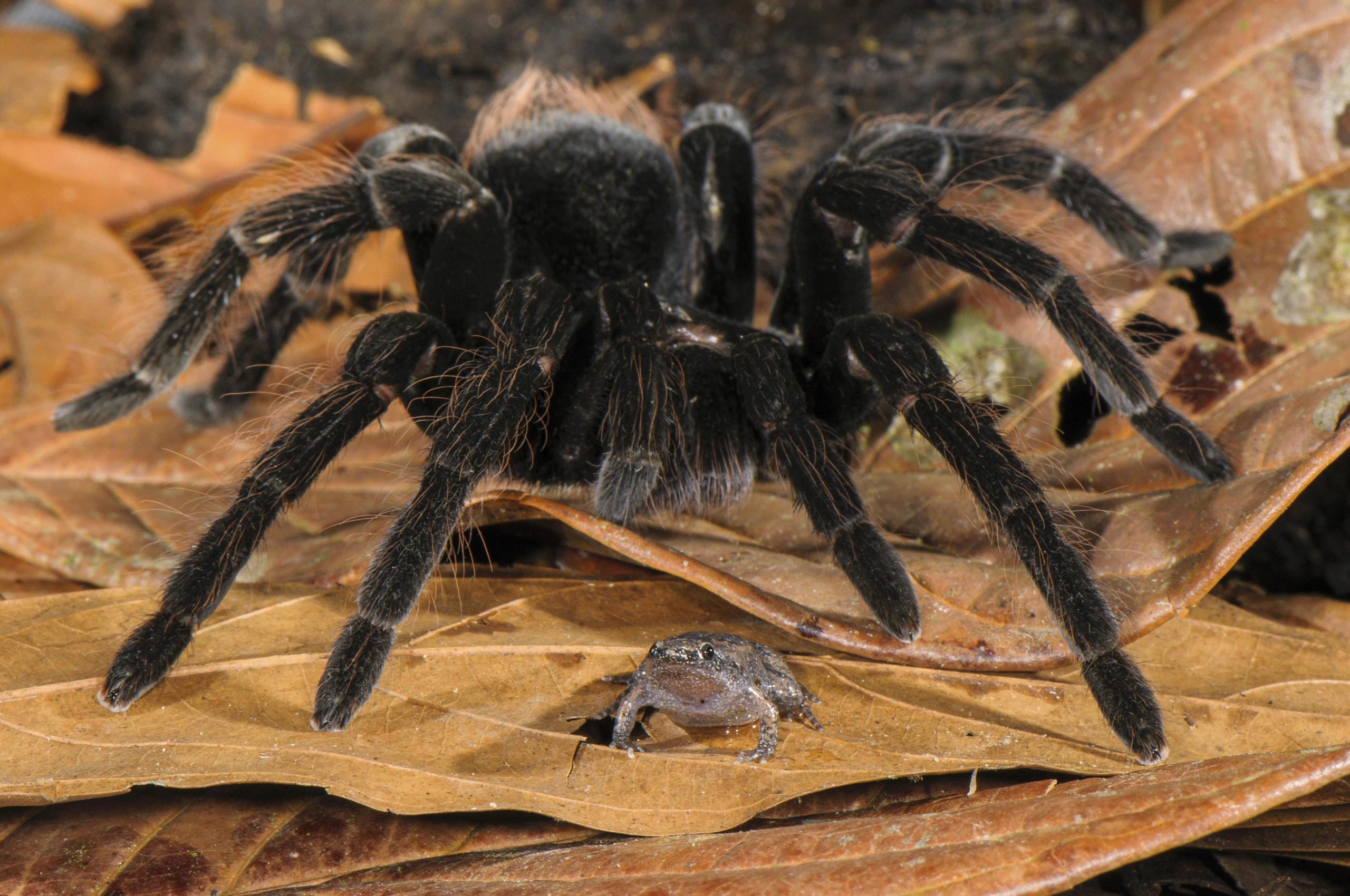
Tarantulas interact beneficially with many species, using their hair as a defense against predators. New findings suggest they may also use chemical secretions for protection.
An international team of researchers has discovered new insights into the mutually beneficial ecological relationships and evolutionary adaptations of tarantulas. In their study, the team conducted an extensive review of literature and studied how tarantulas interact with various other species.
The study is the first to report an association between tarantulas and snakes, whip spiders, and harvestmen, and it also identified over 60 new cases of partnerships between tarantulas and amphibians across ten different countries.
Mutual Benefits of Coexistence
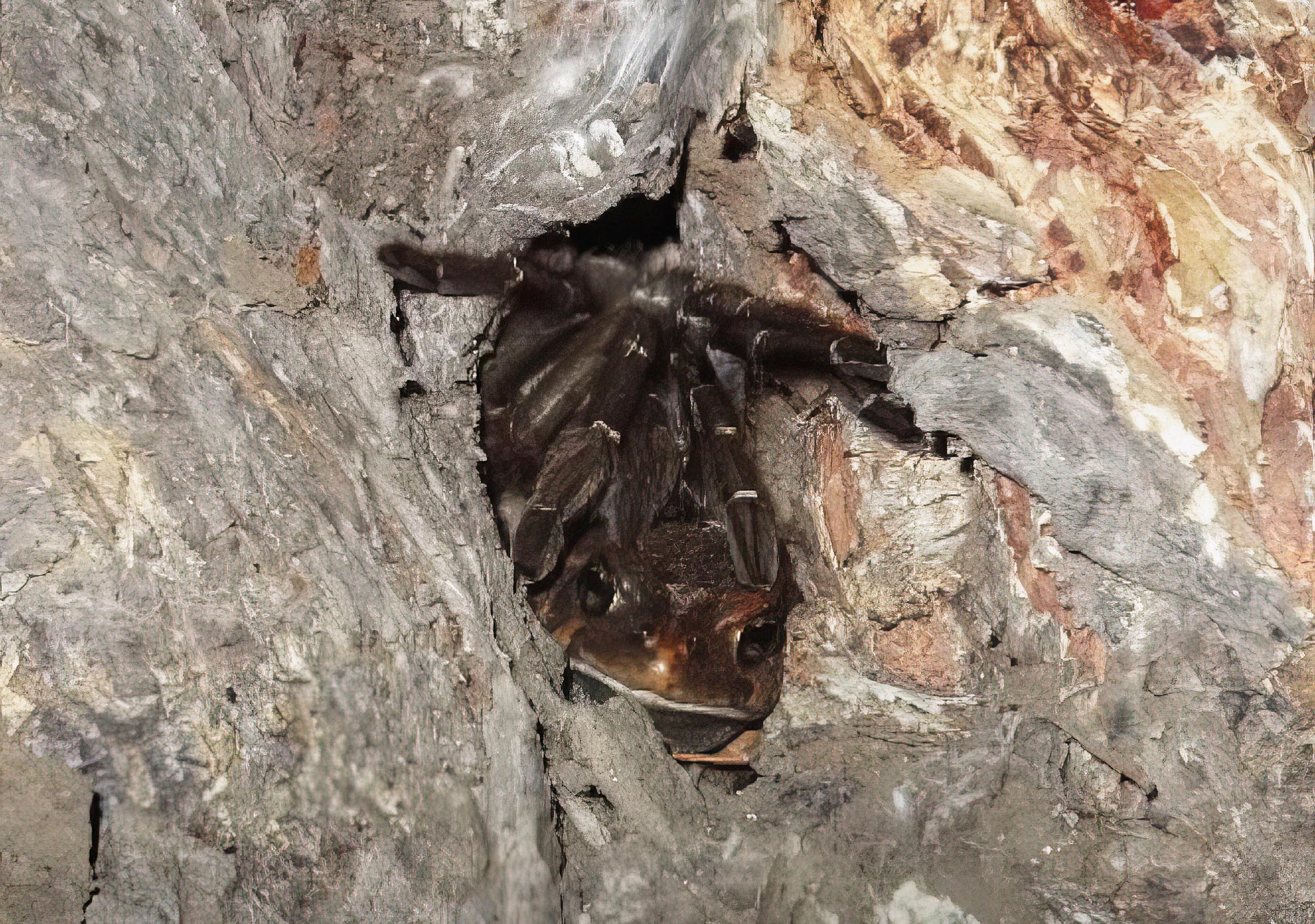
According to the researchers, the interaction, or even cohabitation, between the tarantulas and other species is often mutually beneficial.
First author and researcher Alireza Zamani from the University of Turku, Finland says: “Apparently, the frogs and toads that live within the retreats of tarantulas benefit from the shelter and protection against their predators. In turn, they feed on insects that could be harmful to the spider, its eggs, and its juveniles. It seems that tarantulas might not be as scary and threatening as their reputation suggests.”
One of the most significant findings of this study is the proposal of a new hypothesis on why tarantulas are so hairy. The researchers believe that the hirsuteness – or hairiness – of tarantulas may have evolved as a defense mechanism against predatory ants.
Defence Mechanisms of Tarantulas
“Observations indicate that army ants tend to ignore both adult tarantulas and spiderlings. This is quite interesting, since army ants are known to attack and feed on a wide variety of arthropods,” says Zamani.
In their interactions with tarantulas, the ants were observed to enter the tarantula’s burrow, gather food remains, and clean the burrow, which is beneficial for the tarantula. Only a few ants attempted to attack the spider. However, these attempts failed because the spider’s legs were protected by a fringe of stiff hairs.
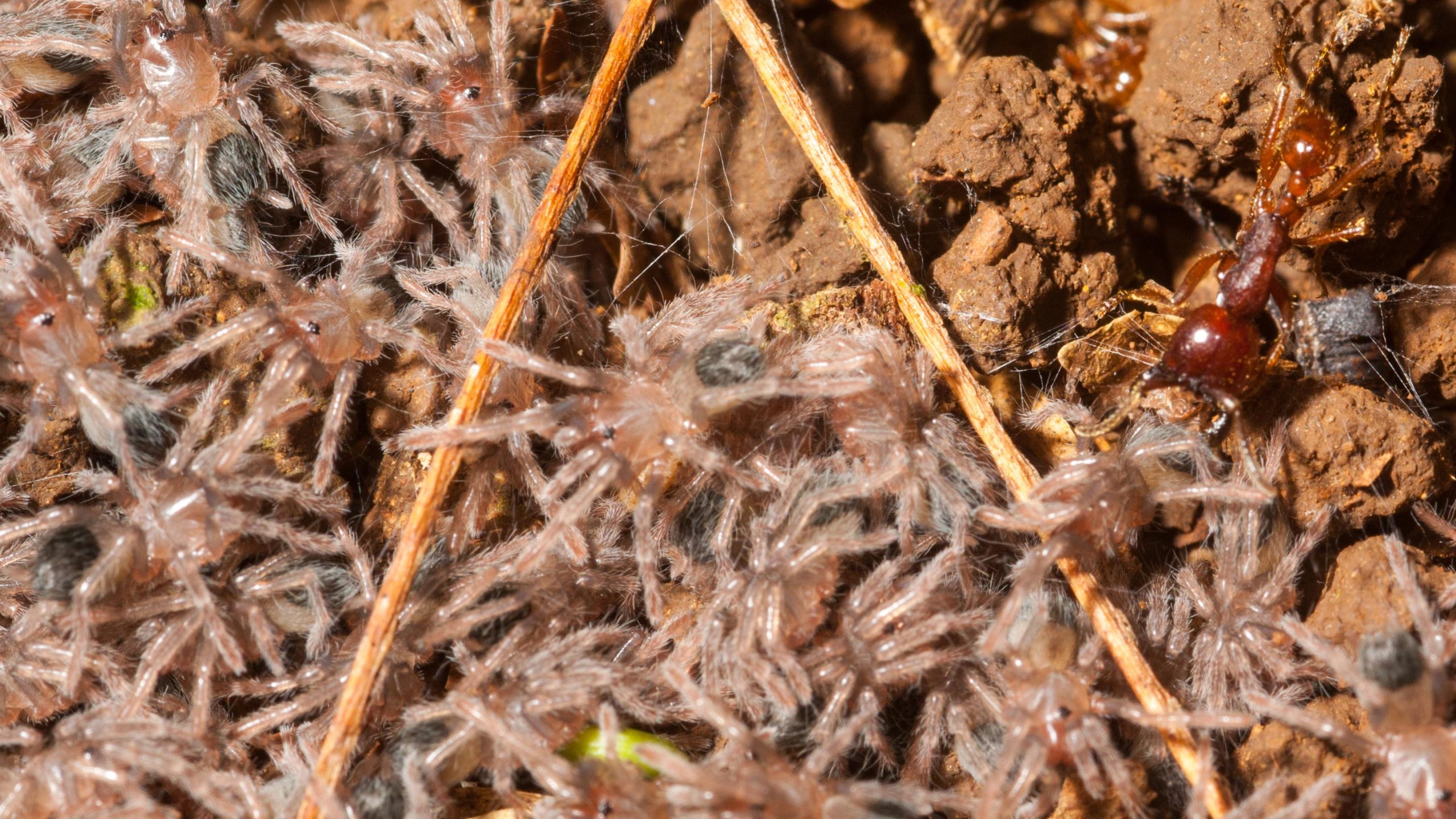
“The dense hair covering the tarantula’s body makes it difficult for the ants to bite or sting the spider. Therefore, we believe that the hairiness may have evolved as a defense mechanism. This hypothesis is supported by findings that many burrowing New World tarantulas cover their egg sacs with urticating hairs. The tarantulas typically release these barbed hairs as a defense mechanism, deterring and sometimes even killing their attackers. Covering their egg sacs with these hairs, however, effectively hinders the movement of small injurious arthropods, such as ants, that might try to attack the eggs,” explains Zamani.
Evolutionary Strategies and Future Research
However, the authors suggest that the hirsuteness could be an evolving character unique to certain tarantula species. Those species that have less dense body hair are left more vulnerable to attacks from predatory ants.
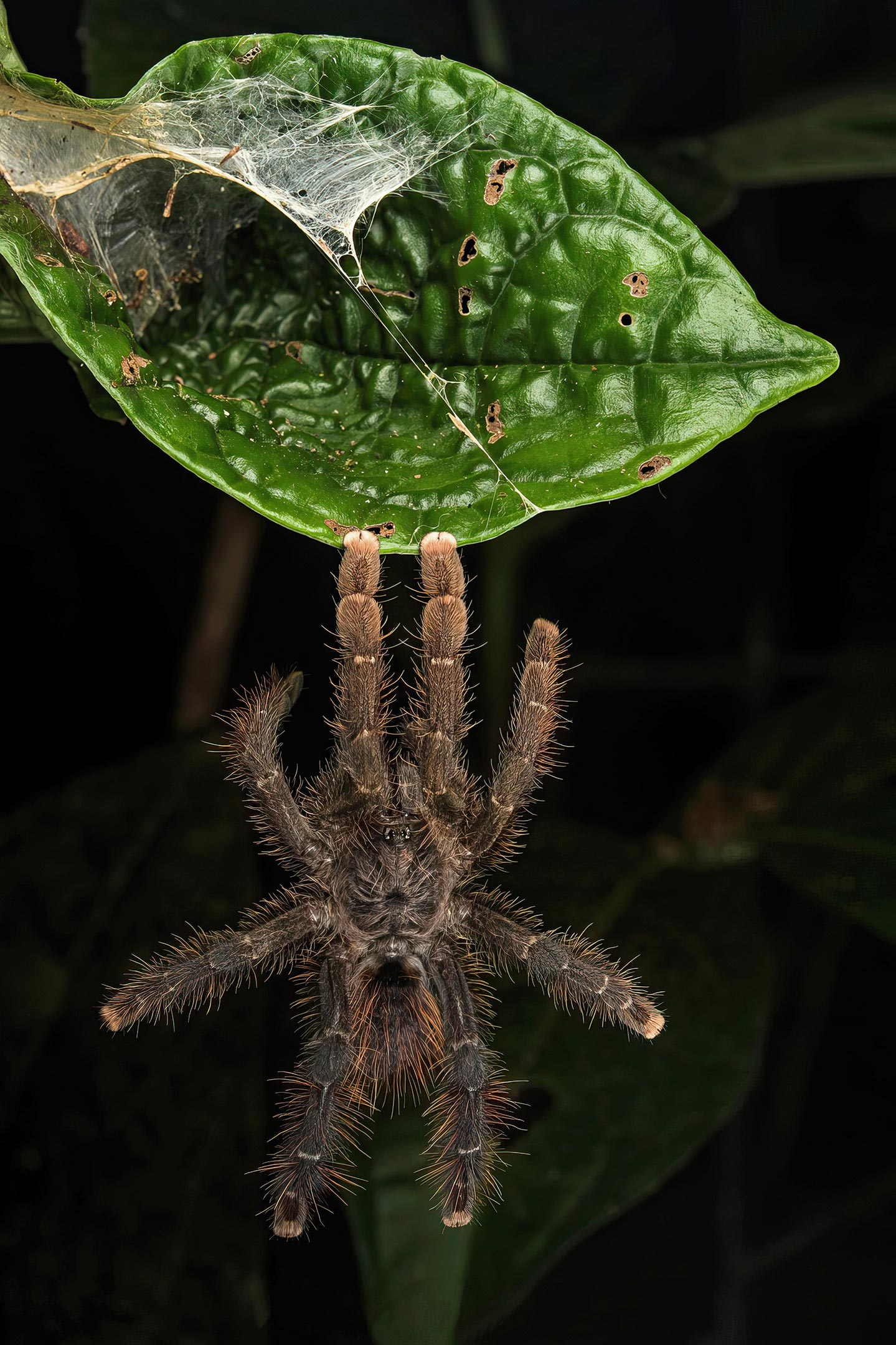
The researchers documented a unique escape strategy employed by New World arboreal tarantulas when threatened by ants.
“In a field study in Peru, a female Avicularia hirschii was observed leaving its silken retreat and hanging from the edge of a leaf by the tips of its front legs after sensing the approach of army ants in search of live prey,” says Zamani.
According to the authors, tarantulas may also have another defense strategy involving a previously unknown chemical mechanism. The researchers suggest that the spiders may have specialized epidermal glands in their cuticles that could secrete predator-repellent substances.
“This hypothesis is supported by the observation that cats and dogs, animals with highly developed sense of smell, tend to wince and move away after sniffing a tarantula. Tarantulas have slit-like epidermal gland openings of unknown function, which may produce defensive secretions responsible for this reaction,” says Zamani.
Although further evidence is needed to substantiate the hypothesis of the chemical defense mechanism, this study marks a significant step forward in understanding the behavior and the evolutionary strategies of tarantulas.
Reference: “An extensive review of mutualistic and similar ecological associations involving tarantulas (Araneae: Theraphosidae), with a new hypothesis on the evolution of their hirsuteness” by Alireza Zamani, Rick C. West and William W. Lamar, 6 August 2024, Journal of Natural History.
DOI: 10.1080/00222933.2024.2382404
Never miss a breakthrough: Join the SciTechDaily newsletter.
Follow us on Google and Google News.