
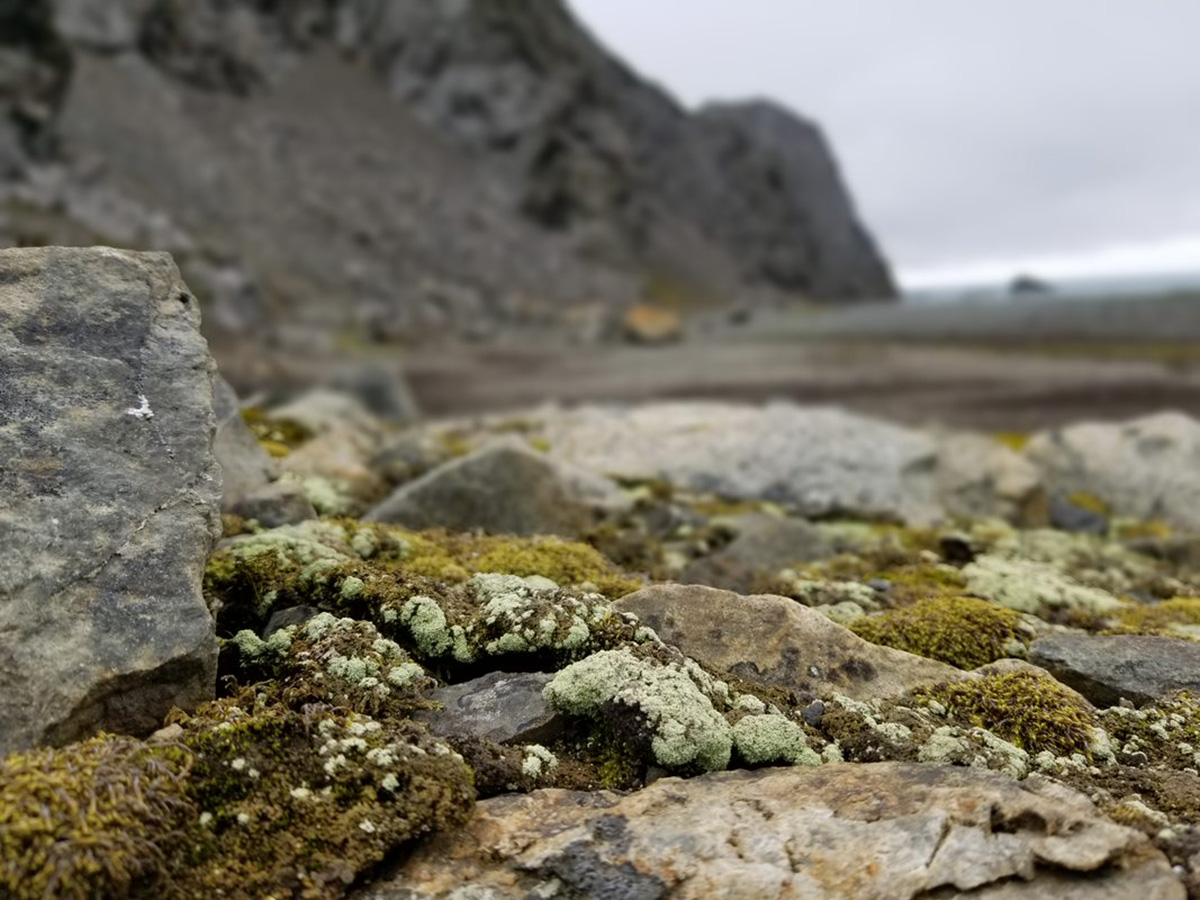
A study on Lepraria lichens found they possess genes for sexual reproduction despite being thought entirely asexual. This challenges long-held beliefs and raises questions about their reproductive strategies, offering new insights into lichen biology and evolution.
The patches of lichen you’ve probably seen on tree trunks and park benches might be easy to overlook, but they are actually some of the world’s strangest living things. Often mistaken for moss, lichens are miniature ecosystems made up of a fungus and an algae or bacteria that can produce energy from sunlight, living together in a single body.
They don’t seem to follow the same biological rules as many of their fellow organisms, and scientists are still discovering new things about them.
Case in point: in a new study in the journal BMC Genomics, researchers were shocked to find that a type of lichen called Lepraria, long assumed to be asexual, still has the genes that govern sexual reproduction. These lichens, contrary to what scientists have thought for decades, may have secret sex lives that no one has been able to observe.

“Lepraria looks basically like greenish, grayish, brownish dust. It’s probably what you would typically think of as a lichen growing on a bench or a rock—a little mossy, but not a moss,” says Meredith Doellman, a postdoctoral researcher in the Field Museum’s Grainger Bioinformatics Center and the paper’s lead author. “Scientists have spent over 200 years looking at these things, and they swear that none of the lichens that make up the genus Lepraria ever produce any structures for sexual reproduction at all. So they assumed that these lichens are asexual.”
The Role of Fungus in Lichen Reproduction
Fungus forms the majority of a lichen’s body, and lichens rely on their fungal parts to reproduce. Fungi can reproduce asexually through fragmentation or budding off of the parent body, but they are also capable of sexual reproduction. Fungus sex is… complicated.
The short version of it is that when the underground thread-like network of two compatible fungal parents-to-be fuse and share genetic material with each other, they come together to build an above-ground structure called a fruiting body. (Mushrooms are probably the best-known fungal fruiting bodies.) The fruiting body’s job is to disperse spores, which are like the fungal equivalent of seeds. These spores get dispersed by wind, water, and animals, eventually landing somewhere that they can grow into fungal networks and start the process anew.
Sexual reproduction in lichens follows a similar pattern. “A typically sexually reproducing lichen mates with another individual and produces fruiting bodies called ascomata. These ascomata release spores into the air, and they settle down to grow into new lichens,” says Doellman.

In two centuries’ worth of examination of Lepraria lichens, scientists have never found ascomata. And while there are lots of asexual lichens in the world, Lepraria has long been considered special as an entire genus of lichens without sexual reproduction—most of the time, there’s an asexual lichen species and a sexually reproducing sister species. Lepraria, as a genus made up entirely of asexual species, appeared to be unique.
This assumption led Doellman and her colleagues at the Field Museum’s research project. “We thought we had a situation where we could do some interesting comparative genomics and show that Lepraria, unlike its closest cousin, Stereocaulon, had lost the ability to have typical fungal sex,” says Doellman. Scientists at the Field Museum’s Pritzker Laboratory took DNA samples from Lepraria and Stereocaulon collected around the world, from the Chicago Botanic Gardens to Antarctica.
Genomic Insights
“We assembled their genomes, annotated the genes, and looked for genes that are typically known to be involved in the cellular process of meiosis that only happens during sexual reproduction. We looked for genes involved in the formation of the fruiting bodies,” says Doellman. “We expected to see that in Lepraria, these genes would be degenerating, no longer functional, or missing entirely. But instead, we found the entire complement, and they all appeared to be intact, functional, and almost exactly like their sisters in Stereocaulon.”
The evidence for sexual reproduction in Lepraria upends years of scientific observations. “I was very, very surprised,” says Felix Grewe, director of the Field Museum’s Grainger Bioinformatics Center and the paper’s senior author. “No lichenologist in the world would ever assume that these lichens have sex, and yet they have the genes for it.”
While the researchers found that Lepraria has the genes associated with sexual reproduction, they still haven’t found fruiting bodies. “If they occur, they’re very rare. They found a good way to hide from us,” says Grewe.
Another potential explanation is that Lepraria do indeed only reproduce asexually, but they’ve retained the genes for sex because those genes are useful for something else. “It’s possible that they are doing something like sexual reproduction, but isn’t. Some sort of parasexual reproduction where they still recombine genetic information, but in a different way,” says Doellman. “For future research, we could look to see if there are different types of mating happening, and we could look at the genetics of Lepraria on a population level to see if it’s consistent with asexual reproduction.”
The mystery of Lepraria’s sex life could help illuminate the bigger picture of lichens’ identity as a partnership between a fungus and algae or bacteria that can perform photosynthesis. For a fungal spore to grow into a new fungus, it needs to land in a hospitable environment.
For a lichen spore to grow into a new lichen, it both needs to land in a hospitable environment and capture the photosynthetic algae or bacteria that it requires for nourishment. (For most if not all lichens, the fungal partner has evolved such that it can no longer survive on its own without a photosynthetic partner to feed it.) Sexual reproduction, then, is a risk for lichens. It can have a big pay-off, in terms of genetic diversity and evolutionary potential, hence why just about every known lichen does it. But if the lichen spores don’t land in an environment where they can readily pick up a photosynthetic buddy, then they’re in trouble.
“I see the advantage for a lichen to reproduce asexually by splitting off from the parent. You may not be able to spread as far, but you get to take your photosynthetic partner along,” says Grewe. “But there are other advantages to sexual reproduction. There’s a lot of work showing that the cellular processes involved with sex contribute to the long-term stability of the genome, things like repairing breaks in genetic code.”
While it’s still not clear how Lepraria uses its unexpectedly sexy genes, this study is “another piece of the puzzle to understand how lichens work,” says Grewe. These humble, dust-like organisms could help scientists develop a better understanding of genes, sex, and evolution itself.
Reference: “Rethinking asexuality: the enigmatic case of functional sexual genes in Lepraria (Stereocaulaceae)” by Meredith M. Doellman, Yukun Sun, Alejandrina Barcenas-Peña, H. Thorsten Lumbsch and Felix Grewe, 26 October 2024, BMC Genomics.
DOI: 10.1186/s12864-024-10898-8
Never miss a breakthrough: Join the SciTechDaily newsletter.
Follow us on Google and Google News.
1 Comment
It was discovered a few years ago that most lichens are a symbiotic arrangement between TWO fungal species and one algae species.