
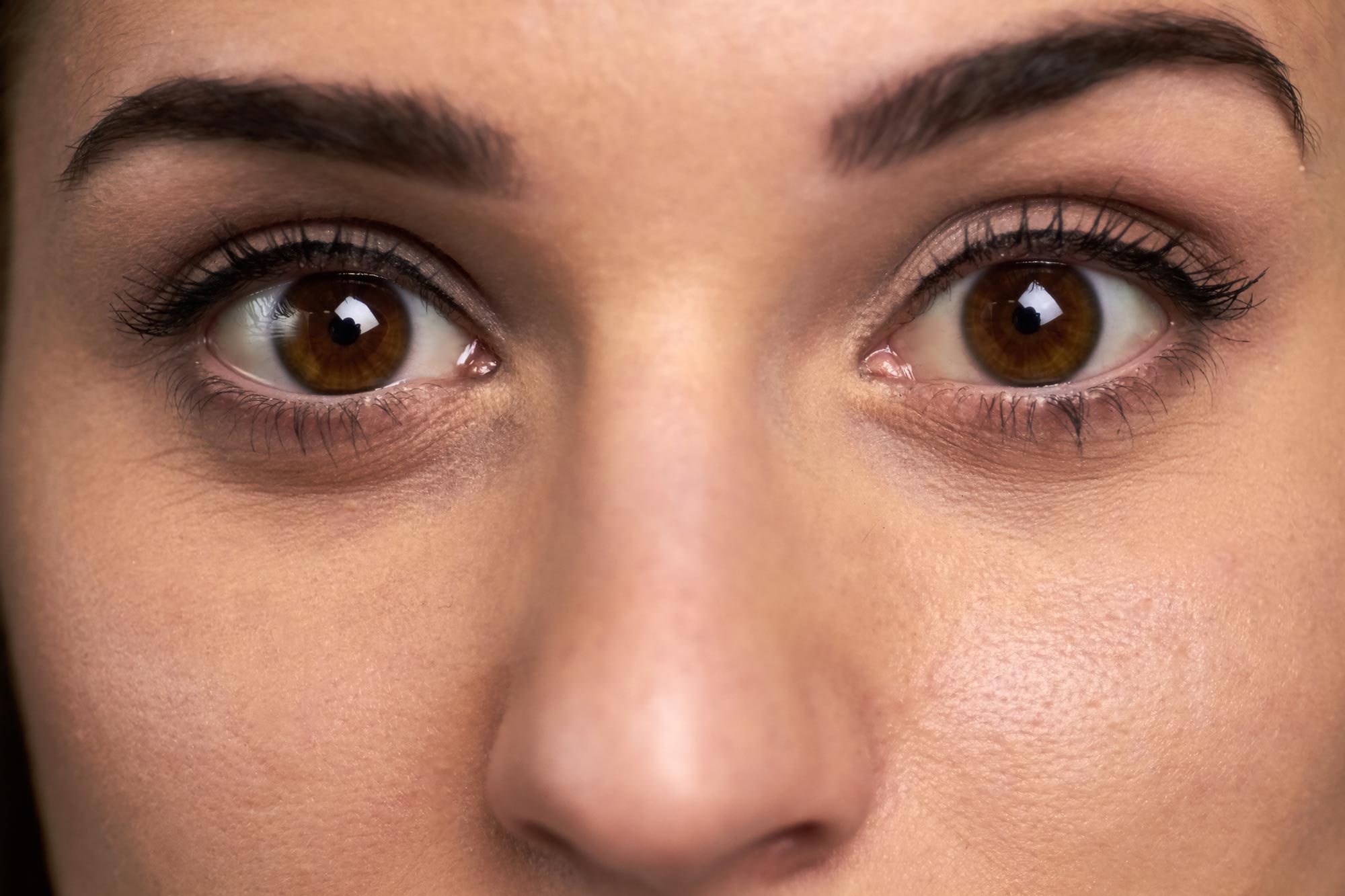
Blinking may seem like a mindless habit, but new research suggests it plays a role in how closely we listen.
Blinking happens automatically, much like breathing, and most people rarely notice it. Scientific studies of blinking have traditionally focused on vision, but new research from Concordia University looks at blinking from a different angle. The study explores how blinking relates to cognitive processes, including the brain’s ability to tune out background noise and focus on speech in busy environments.
The findings were published in the journal Trends in Hearing. In the paper, researchers describe two experiments designed to track changes in blinking behavior under different listening conditions.
Listening Harder Means Blinking Less
The researchers found that people blink less when they are putting more effort into understanding speech, particularly in noisy settings. This reduction in blinking suggests that blink patterns reflect how much mental effort is required during everyday listening. The study also showed that blinking did not change with lighting conditions — participants blinked at similar rates in bright, dim, and dark rooms.
“We wanted to know if blinking was impacted by environmental factors and how it related to executive function,” says lead author Pénélope Coupal, an Honours student at the Laboratory for Hearing and Cognition. “For instance, is there a strategic timing of a person’s blinks so they would not miss out on what is being said?”
The results showed that blinking does follow a strategic pattern.
“We don’t just blink randomly,” says Coupal. “In fact, we blink systematically less when salient information is presented.”
Tracking Blinks During Speech in Noise
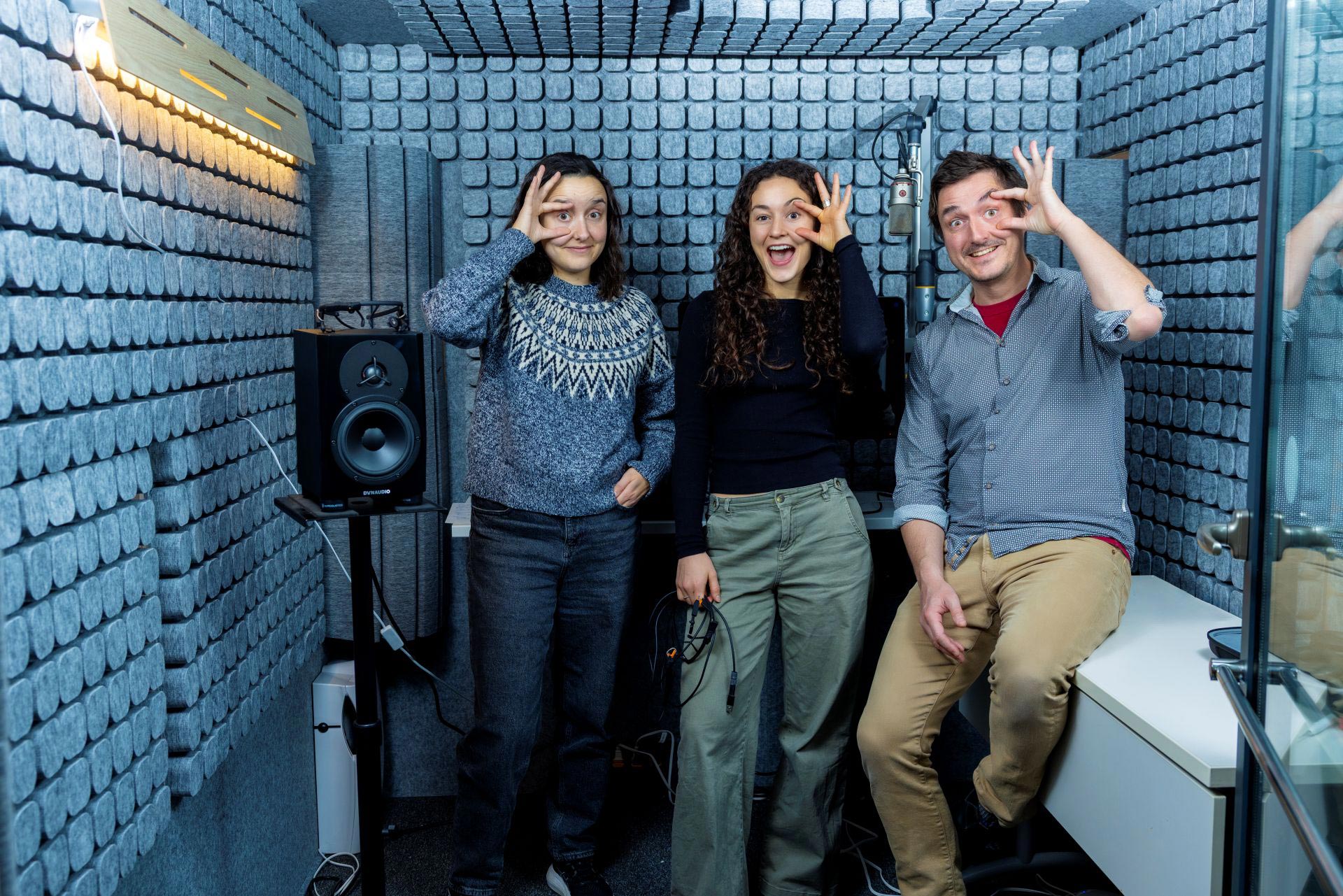
The first experiment involved nearly 50 adult participants. Each person sat in a soundproof room while focusing on a cross displayed on a screen. They listened to short spoken sentences through headphones as background noise levels changed. The signal-to-noise ratio (SNR) ranged from quiet to very loud.
Participants wore eye-tracking glasses that recorded every blink and captured the precise timing of each one. For analysis, each listening trial was divided into three periods: before the sentence, during the sentence, and after the sentence ended.
Blink rates dropped consistently while participants were listening to the sentences compared to the moments just before and after. The effect was strongest when background noise was highest and understanding speech required the most effort.
Lighting Conditions Do Not Change the Effect
In a second experiment, researchers tested blinking behavior again while varying room lighting. Participants completed the listening tasks at different SNR levels in dark, medium, and bright environments. The same blinking pattern appeared across all lighting conditions.
This showed that the changes in blinking were driven by cognitive demands rather than differences in light entering the eyes.
Although blink rates varied widely between individuals — some participant blinked as little as 10 times per minute, while others may have blinked 70 times per minute — the overall trend was clear and statistically significant.
Rethinking Blinks as a Measure of Brain Activity
Previous research connecting eye activity to mental effort has mostly focused on pupil dilation (pupillometry). In many cases, blinks were treated as unwanted interruptions and removed from the data. In contrast, this study revisited existing pupillometry data to examine blink timing and frequency directly.
The researchers say their results support using blink rate as a simple, low-effort way to assess cognitive function in both laboratory experiments and real-world settings.
“Our study suggests that blinking is associated with losing information, both visual and auditory,” says co-author Mickael Deroche, an associate professor in the Department of Psychology.
“That is presumably why we suppress blinking when important information is coming. But to be fully convincing, we need to map out the precise timing and pattern of how visual/auditory information is lost during a blink. This is the logical next step, and a study is being led by postdoctoral fellow Charlotte Bigras. But these findings are far from trivial.”
Reference: “Reduced Eye Blinking During Sentence Listening Reflects Increased Cognitive Load in Challenging Auditory Conditions” by Penelope Coupal, Yue Zhang and Mickael Deroche, 1 September 2025, Trends in Hearing.
DOI: 10.1177/23312165251371118
Yue Zhang contributed to this research.
Never miss a breakthrough: Join the SciTechDaily newsletter.
Follow us on Google and Google News.