
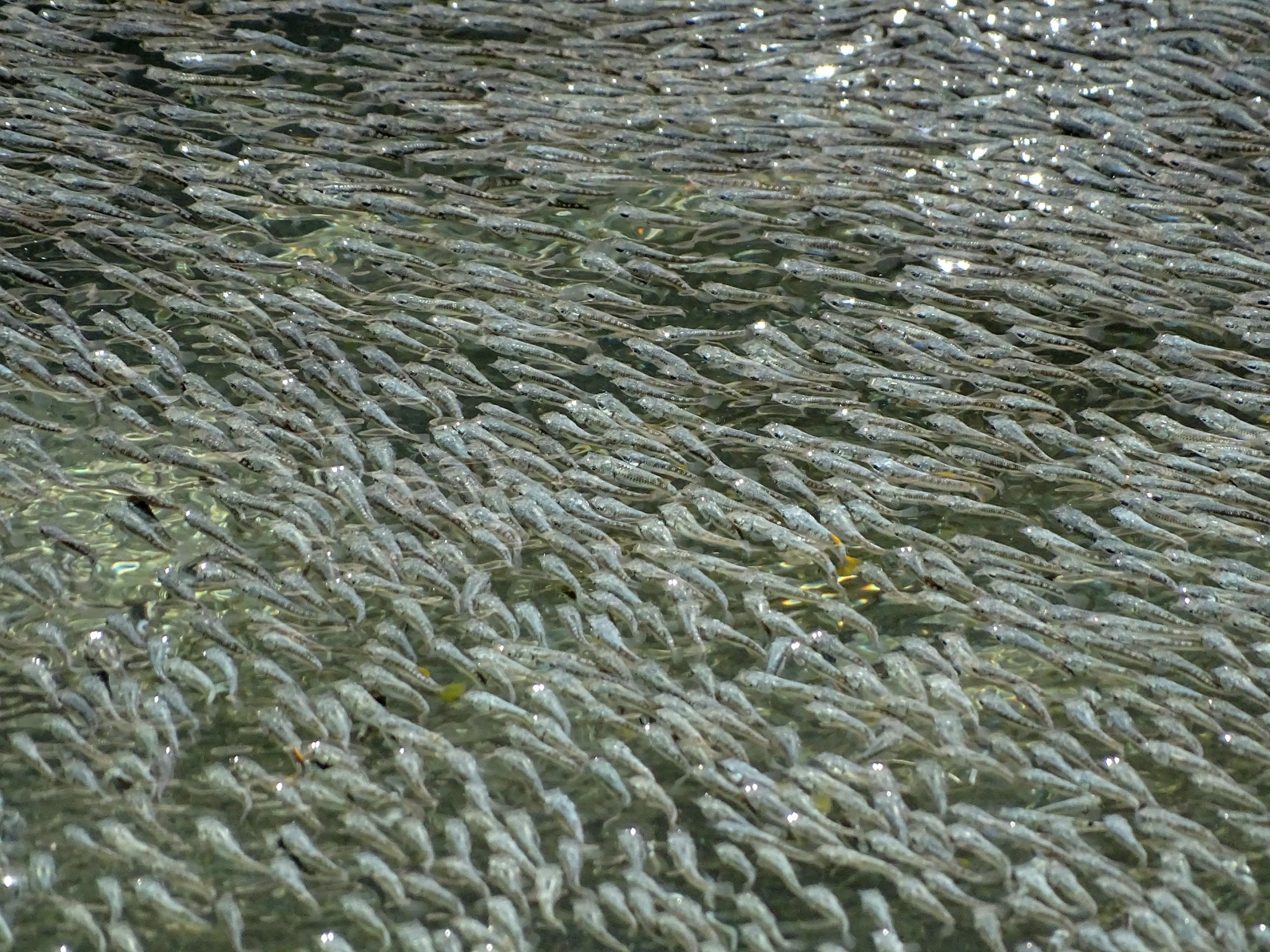
Sulfur mollies survive by making stadium waves.
In the sports arena, spectators sometimes create a spectacle known as a wave, as successive groups stand up in unison to yell with arms in the air. Now, researchers reporting in Current Biology on December 22, 2021, have shown that small freshwater fish known as sulfur mollies do a similar thing, and for life or death reasons. The collective wave action produced by hundreds of thousands of fish working together helps to protect them from predatory birds.
“The surprises came once we realized how many fish can act together in such repeated waves,” said Jens Krause of the Leibniz Institute of Freshwater Ecology and Inland Fisheries in Berlin and Cluster of Excellence Science of Intelligence. “There are up to 4,000 fish per square meter and sometimes hundreds of thousands of fish participate in a single fish wave. Fish can repeat these waves for up to two minutes, with one wave approximately every three to four seconds.”
When you’re in the vicinity of these unusual fish, found in sulphuric springs that are toxic to most fish, this behavior is hard to miss. That’s because the mollies do the same thing in response to a person nearby.
“At first we didn’t quite understand what the fish were actually doing,” said David Bierbach, co-first author along with Carolina Doran and Juliane Lukas, also at the Leibniz Institute of Freshwater Ecology and Inland Fisheries and Cluster of Excellence Science of Intelligence. “Once we realized that these are waves, we were wondering what their function might be.”
It reminded the researchers of La-Ola or Mexican waves known from football (soccer) stadiums. The presence of many fish-eating birds around the river made them think it likely that the fish waving behavior might be some sort of defense.
Waves as a Collective Defense Strategy
They decided to investigate the anti-predator benefits of the animals’ wave action. Their studies confirmed that the fish engaged in surface waves that were highly conspicuous, repetitive, and rhythmic. Experimentally induced fish waves also doubled the time birds waited until their next attack to substantially reduce their attack frequency.
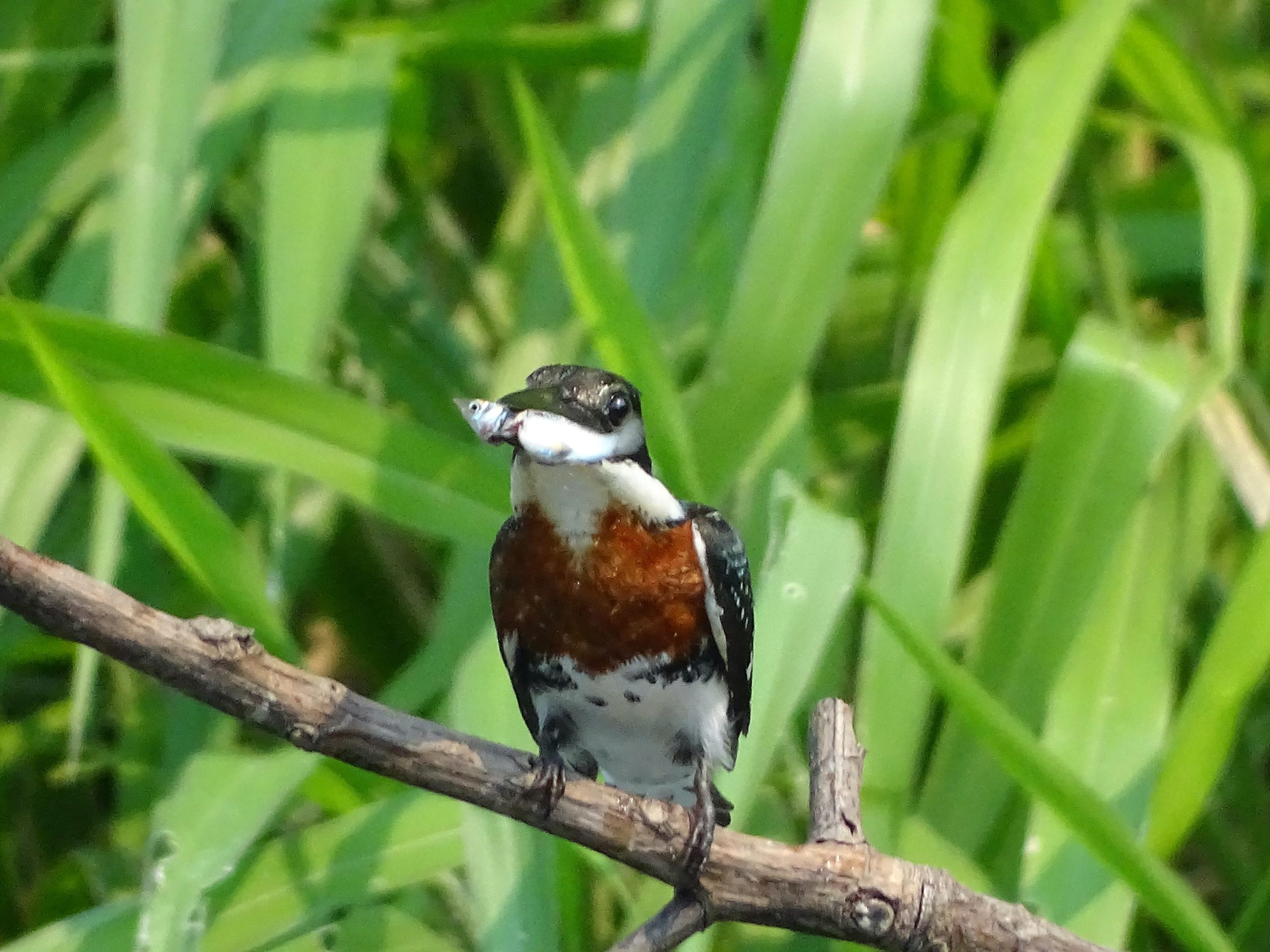
For one of their bird predators, capture probability, too, decreased with wave number. Birds also switched perches in response to wave displays more often than in control treatments, suggesting that they’d decided to direct their attacks elsewhere.
Taken together, the findings support an anti-predator function of fish waves. The findings are the first to show that a collective behavior is causally responsible for reducing an animal’s predation risk. As such, the researchers say that this discovery has important implications for the study of collective behavior in animals more broadly.
“So far scientists have primarily explained how collective patterns arise from the interactions of individuals but it was unclear why animals produce these patterns in the first place,” Krause said. “Our study shows that some collective behavior patterns can be very effective in providing anti-predator protection.”
It’s clear that the fish’s waving reduces birds’ chances of carrying out a successful attack on sulfur mollies. What’s not yet clear is exactly why that is. Do the birds get confused? Do the waves tell them they’ve been noticed and are less likely to succeed in capturing their prey as a result? In future studies, the researchers plan to explore such questions.
Reference: “Fish waves as emergent collective antipredator behavior” by Carolina Doran, David Bierbach, Juliane Lukas, Pascal Klamser, Tim Landgraf, Haider Klenz, Marie Habedank and Lenin Arias-Rodriguez, 22 December 2021, Current Biology.
DOI: 10.1016/j.cub.2021.11.068
The authors acknowledge funding from the Deutsche Forschungsgemeinschaft.
Never miss a breakthrough: Join the SciTechDaily newsletter.
Follow us on Google and Google News.
3 Comments
Interesting.
Survival of the Species.
Still Part of the five senses. Maybe the five senses work together to create the sixth sense we call Intuition based on data and information. Thinking Machines ahoy?
Group Communication between the same species in times of danger from predators.
Fish living on surface of Hydrogen Sulphide emitting the odorous stink in the Sulphurous Waters, live on Surface of water as Oxygen required for staying alive may not be available in the waters where they dwell.
Their sense of Sight and ability to Communicate betewene each other collectively must be extraordinarily well developed, as they take preventive actions to reduce the probability of attack by the Eagle eyed fish eating Predatory birds.
Theese are River based freshwater fish? Wonder if sea Based Fish exhibit such behaviour to avoid Sea Based Predators?
I guess no creature with life wants to be eaten. Raw or cooked.
In light of above behaviour suggest we revist the Darwin findings on the “origin and survival of species “.
Views expressed are personal and not binding on anyone
In addition to above.
Even Fish have learnt that ” In Unity there is Strengh ” !
More interesting is the behaviour of many other species, of the dangers of Earthquakes and Tsunamis, who based on data and information they have processed , flee inland , whereas we continue to build huge cities on the coasts as humans and are clueless about the arrival of massive forces at play deep within the planet which results in catostrophic events for many.
Maybe we need to learn to look for the data which these animals (who we consider inferior to humans) that they seem to have, as their survivavl instincts appear to be far superior to ours!
Views expressed are personal and not binding on anyone.
Actually, is it: “We don’t wan’t to know” (who will be next) or does it truly frighten predators?