

Even in a quiet dormant phase, a volcano can rapidly become active and its eruption can pose a previously unknown threat to the surrounding area.
Can a volcano erupt after tens of thousands of years of dormancy? If so, how can this be explained and what makes volcanic eruptions more dangerous, i.e. explosive? These are key questions in volcanic hazard assessment and can also draw attention to volcanoes that appear to be inactive. Even in a quiet dormant phase, a volcano can rapidly become active and its eruption can pose a previously unknown threat to the surrounding area. New research by Hungarian scientists is helping to reveal the signs before such a volcano erupts.
A team from the ELTE Eötvös Loránd University, Institute of Geography and Earth Sciences, and the HUN-REN-ELTE Volcanology Research Group, in cooperation with other scientists from Europe, studied Ciomadul, the youngest volcano in the Carpathian-Pannonian region.
Using high-resolution integrated mineral texture and chemical composition data, they quantified the conditions of magma evolution, reconstructed the architecture of the subvolcanic magma reservoir, identified the characteristics of the resident crystal mush and the recharge magmas, which triggered the eruptions, and explained why volcanic activity in the last active period became predominantly explosive.
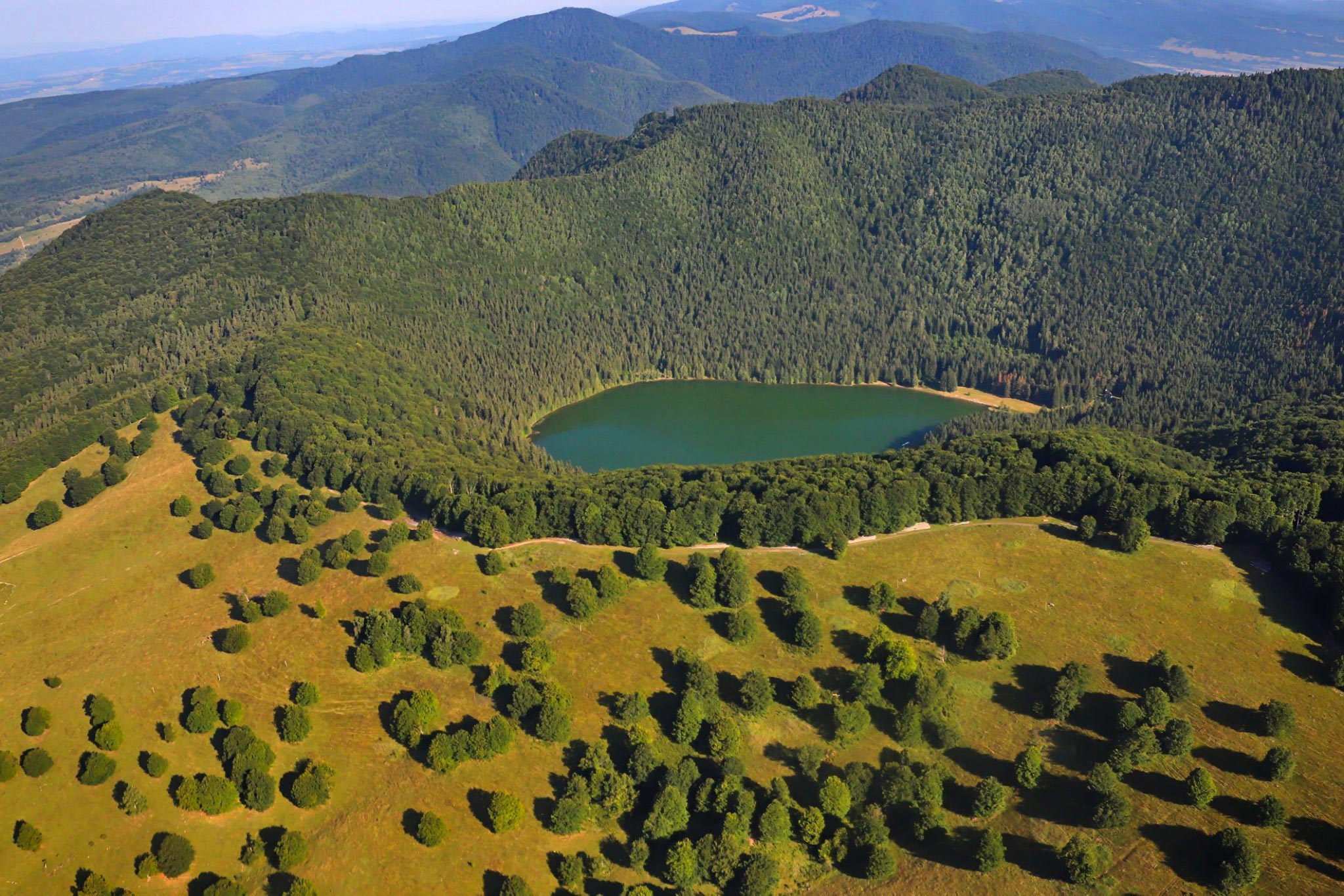
Credit: István Fodor
Ciomadul: A Typical Long Dormant Volcano
The eruptive history of Ciomadul was previously revealed by the research team using U-Th-Pb-He geochronology of a tiny crystal, zircon. Szabolcs Harangi, professor and leader of the research project, emphasized that “there have been several long periods of dormancy in the almost million-year life of the volcano, but even after tens of thousands, sometimes even more than 100,000 years of quiescence, volcanic eruptions started again!”
The most significant volcanism took place in the last 160,000 years, with lava domes extrusions between 160 and 95 thousand years ago, and then, after more than 30 thousand years of dormancy, eruptions resumed 56 thousand years ago.
Barbara Cserép, a PhD student at ELTE, is studying the youngest eruption products: “They were formed by more dangerous, explosive eruptions compared to the previous active episode. So, it is important to know what was the reason for this change in eruption style!” The last volcanic eruptions occurred 30,000 years ago, and since then the volcano has been dormant again.
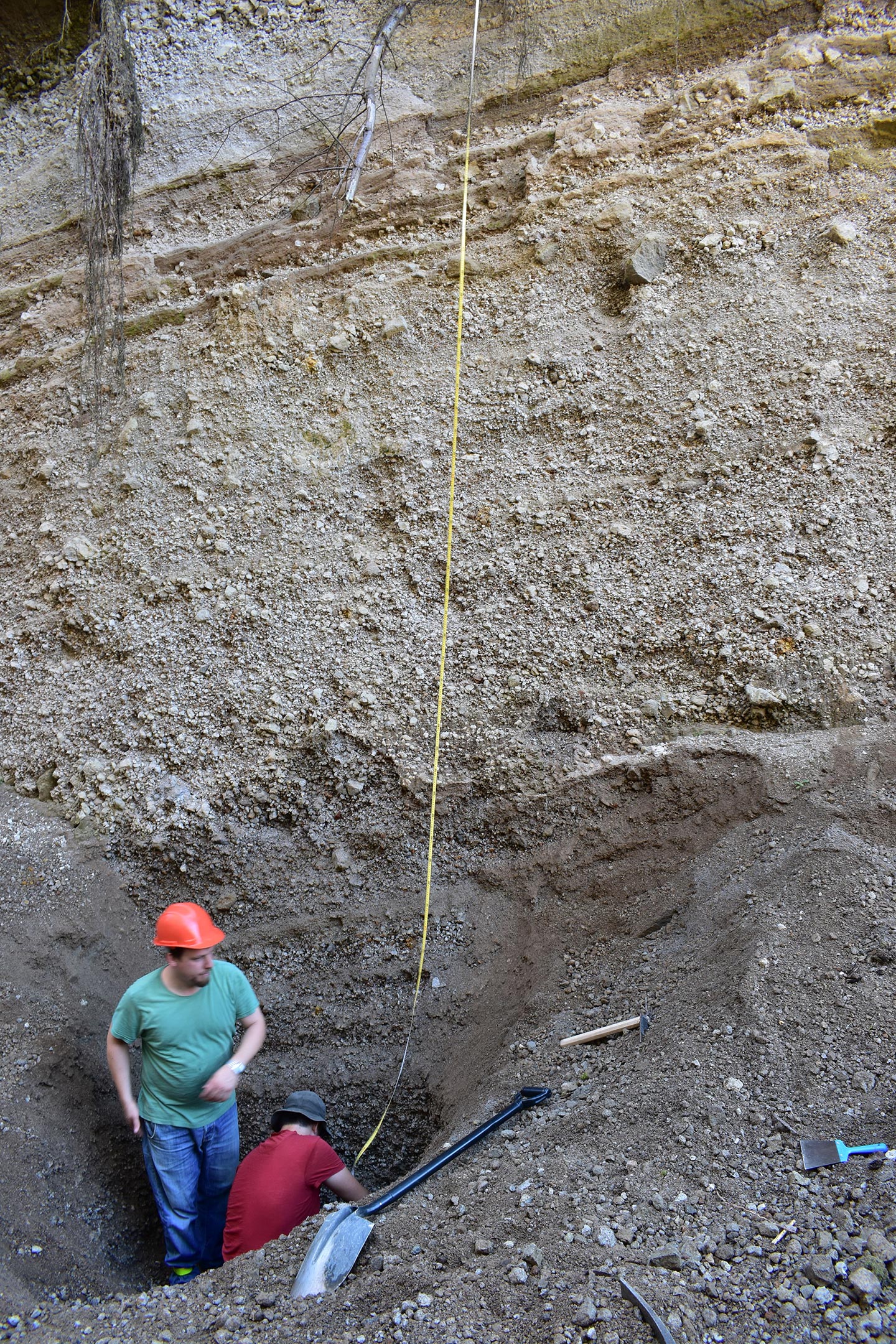
A Petrodetective Work
The cause of the volcanic eruption initiation and the processes that control the eruption style are hidden in the rocks formed during the volcanic activity. These can be revealed by the detailed study of the rock-forming minerals. The research team determined the chemical composition of all the mineral phases, often at high resolution from the crystal core to the rim, in the pumices formed during the explosive volcanism from 56 to 30,000 years ago.
They then critically evaluated the results of various methods for calculating crystallization temperature, pressure, redox state, melt composition and melt water content to quantify the magma conditions and also to constrain how these crystals were incorporated into the erupting magma. This helped to unravel the architecture of the magma reservoir system, the processes that lead to eruptions, and to explain the explosive eruptions.
The Key to Explosive Eruptions
The key player in this petrodetective study was a mineral, called amphibole. “Many elements can enter into the crystal lattice of amphibole, but the element substitutions are strongly controlled by the magma conditions” explains Barbara Cserép. The chemical composition of amphibole in the Ciomadul pumices shows a large variation even in single sample. Some amphiboles represent a low-temperature, highly crystalline magma reservoir at depths of 8-12 kilometers, but most of them were transported to this shallow magma storage by higher-temperature recharge magmas coming from greater depths.
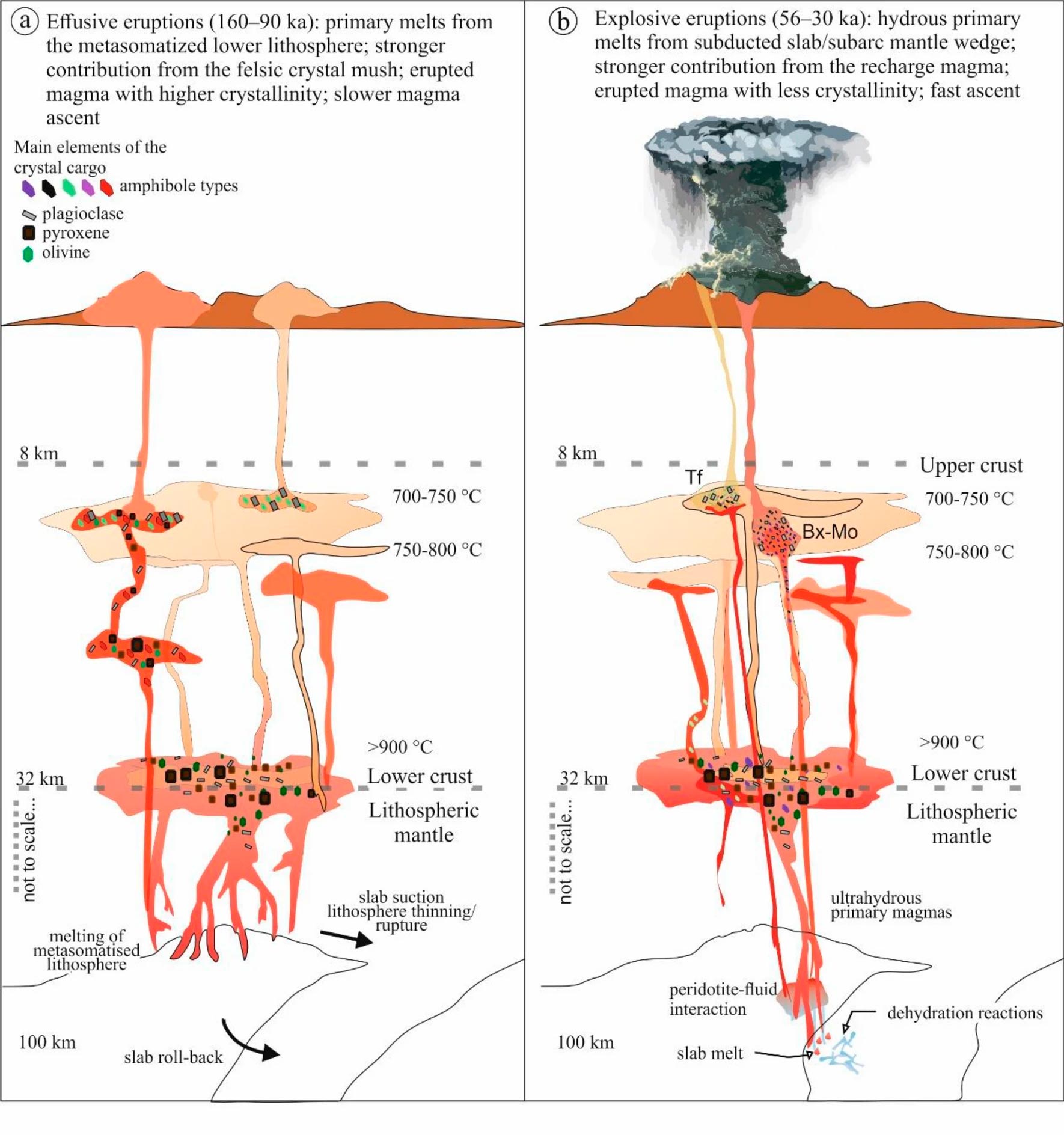
“Compared to the previous, lava dome-forming eruptive period, these fresh recharge magmas carried amphibole with a distinct composition, i.e. these magmas were slightly different, and this could play an important role in why the eruption became explosive,” Harangi points out.
“We identified several amphiboles with a chemical composition not reported in volcanic rocks from other volcanoes,” adds Cserép, as an important result of the research. They interpreted such amphibole as an early crystallization phase in ultra-hydrous magmas, and these water-rich recharge magmas may have played a key role in triggering the explosive eruptions.
The composition of the outermost rim of the crystals and of the iron-titanium oxides provided information about the magma condition just prior to the eruptions. Postdoctoral researcher Máté Szemerédi, another lead author of the study, said, “The composition of iron-titanium oxides equilibrates in a few days when the magma condition changes; they indicate that the erupted magma was at 800-830 degrees Celsius and was oxidized.”
The Importance of the Ciomadul Volcano
At present, the Ciomadul volcano shows no signs for reawakening. However, this study also points out that reactivation can occur rapidly, within weeks or months, in case of recharge by hot, hydrous magma. Quantitative volcano petrology studies are important to reconstruct the subvolcanic magma reservoir structure and the magma storage conditions, which can also help us in eruption forecasting to better understand the pre-eruption signals.
“This research is novel in the sense that it is performed in a long-dormant volcano, and as a result, the Ciomadul volcano is receiving an increasing international attention,” Szabolcs Harangi points out. This helps to highlight that, in addition to the 1500 or so potentially active volcanoes on Earth, long-dormant volcanoes can also pose a previously not recognized hazard, especially if there is still melt-bearing magma beneath them.
Reference: “Constraints on the pre-eruptive magma storage conditions and magma evolution of the 56–30 ka explosive volcanism of Ciomadul (East Carpathians, Romania)” by Barbara Cserép, Máté Szemerédi, Szabolcs Harangi, Saskia Erdmann, Olivier Bachmann, István Dunkl, Ioan Seghedi, Katalin Mészáros, Zoltán Kovács, Attila Virág, Theodoros Ntaflos, David Schiller, Kata Molnár and Réka Lukács, 28 November 2023, Contributions to Mineralogy and Petrology.
DOI: 10.1007/s00410-023-02075-z
Never miss a breakthrough: Join the SciTechDaily newsletter.
Follow us on Google and Google News.
2 Comments
This should be a cautionary tale about the abundant — but mostly unknown — volcanoes found around Western Antarctica, which is a link in the Pacific Ring of Fire.
“We identified several amphiboles with a chemical composition not reported in volcanic rocks from other volcanoes,”
An amphibole is actually a group or family of low-symmetry silicates with highly variable, complex chemical compositions. My optical petrology professor referred to them as the “mineralogical wastebasket.”