

Wheatgrass flavonoids can powerfully combat oxidative stress and extend fruit fly lifespans.
Scientists studying 228 varieties of modern Chinese wheat have discovered that flavonoids found in wheatgrass can neutralize harmful reactive oxygen species (ROS) and also increase the lifespan of fruit flies. The effect was dependent on both dosage and the sex of the flies.
Flavonoids are natural antioxidants known for their health-promoting properties, including reducing inflammation, fighting cancer, and protecting the nervous system. Although these compounds are commonly found in fruits and vegetables, wheatgrass stands out due to its rich concentration of flavonoids, chlorophyll, and vitamins. Previous research has shown that wheatgrass juice can improve immune function and lower inflammation in cancer patients, as well as improve memory in mice with amnesia.
Despite its potential, detailed information on how flavonoid levels vary among different wheat varieties has been lacking. This knowledge gap highlights the need to assess the flavonoid composition and biological activity of wheatgrass more thoroughly, both to support breeding programs and to develop functional foods with proven health benefits.
New Insights From a Landmark Study
In a study published on July 23, 2024, in Seed Biology, researchers led by Jin-Ying Gou at China Agricultural University introduced a practical method for increasing flavonoid levels in wheat. By combining the selection of high-flavonoid cultivars with treatment using jasmonic acid (JA), the team outlined a promising strategy to enhance the nutritional and supplemental value of wheatgrass.
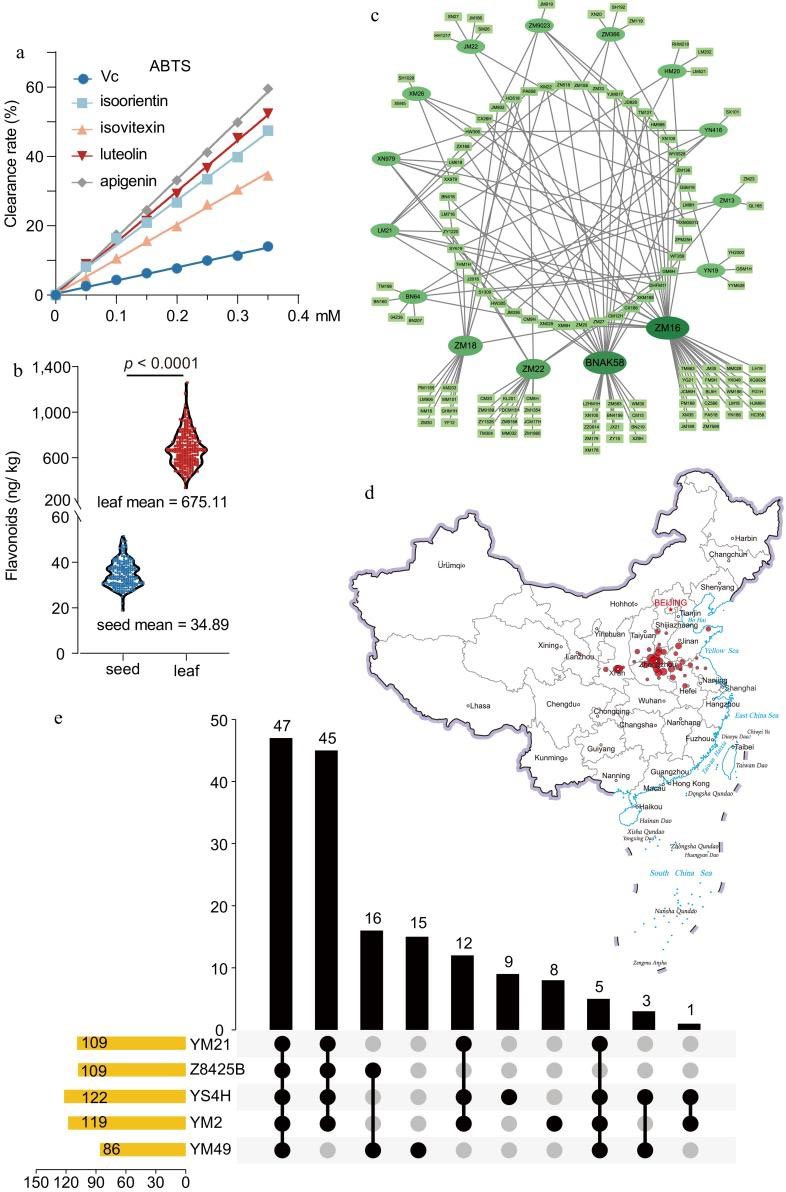
To evaluate the antioxidant potential and flavonoid composition of wheatgrass, researchers employed a multifaceted approach involving chemical assays, cultivar screening, metabolite profiling, bioactivity testing in fruit flies, and transcriptomic analysis under elicitor treatment. First, the antioxidant capacities of four major wheatgrass flavonoids were compared to vitamin C using ABTS, DPPH, and FRAP assays. Results revealed that isoorientin and luteolin had superior antioxidant activity to vitamin C, while wheatgrass overall contained nearly 20 times more flavonoids than mature wheat grains. UPLC-DAD-MS/MS identified ten major flavonoid glycosides, with modifications largely based on luteolin, apigenin, and chrysoeriol aglycones.
From a panel of 228 modern Chinese wheat cultivars, 62 were selected for detailed profiling, and strong correlations were found between total flavonoid content and antioxidant potential. Principal component and clustering analyses distinguished high-flavonoid (LIF) and low-flavonoid (LRF) groups, revealing that LIF cultivars—particularly Xiaoyan 269, Suixuan 101, and Zhoumai 30—possessed higher levels of luteolin and chrysoeriol derivatives and demonstrated significantly enhanced antioxidant activity.
Lifespan Extension in Fruit Flies
To assess bioactivity, flavonoid extracts from wheatgrass (FEW) were fed to Drosophila melanogaster, resulting in dose-dependent and male-specific lifespan extension at 1 mM concentration. Transcriptomic analysis of JA-treated seedlings revealed significant upregulation of key genes in the phenylpropanoid-flavonoid pathway (PAL, C4H, 4CL, CHS), validated by qRT-PCR, and JA treatment boosted both flavonoid content and antioxidant capacity by ~30%.
This integrated research highlights wheatgrass as a rich and underutilized source of health-promoting flavonoids and suggests practical strategies—such as cultivar selection and JA elicitation—to enhance its nutritional value.
This study paves the way for enhancing the nutritional value of wheatgrass-based products. With demonstrated lifespan-extending effects and superior antioxidant activity, FEW holds promise for use in functional foods targeting aging and oxidative stress-related diseases. However, gender-specific effects observed in fruit flies suggest the need for further dose optimization.
Future research will focus on identifying specific flavonoid compounds responsible for health benefits in both sexes and exploring their effects in mammalian models. Additionally, intercrossing high-flavonoid cultivars may yield specialized germplasms tailored to different consumer needs, enabling the safe incorporation of flavonoid-rich wheatgrass into mainstream diets without affecting crop yield.
Reference: “Enhancing the antioxidant potential of wheatgrass to improve nutrient value” by Chu-Yang Wang, Meng-Lu Wang, Qin-Quan Li, Yan Yan, Shuiyuan Hao and Jin-Ying Gou, 23 July 2024, Seed Biology.
DOI: 10.48130/seedbio-0024-0010
This study was supported by the National Natural Science Foundation of China (32372557), the Development of Mongolia through Science and Technology (NMKJXM202201), and Pinduoduo – China Agricultural University Research Fund (PC2023B02013).
Never miss a breakthrough: Join the SciTechDaily newsletter.
Follow us on Google and Google News.