

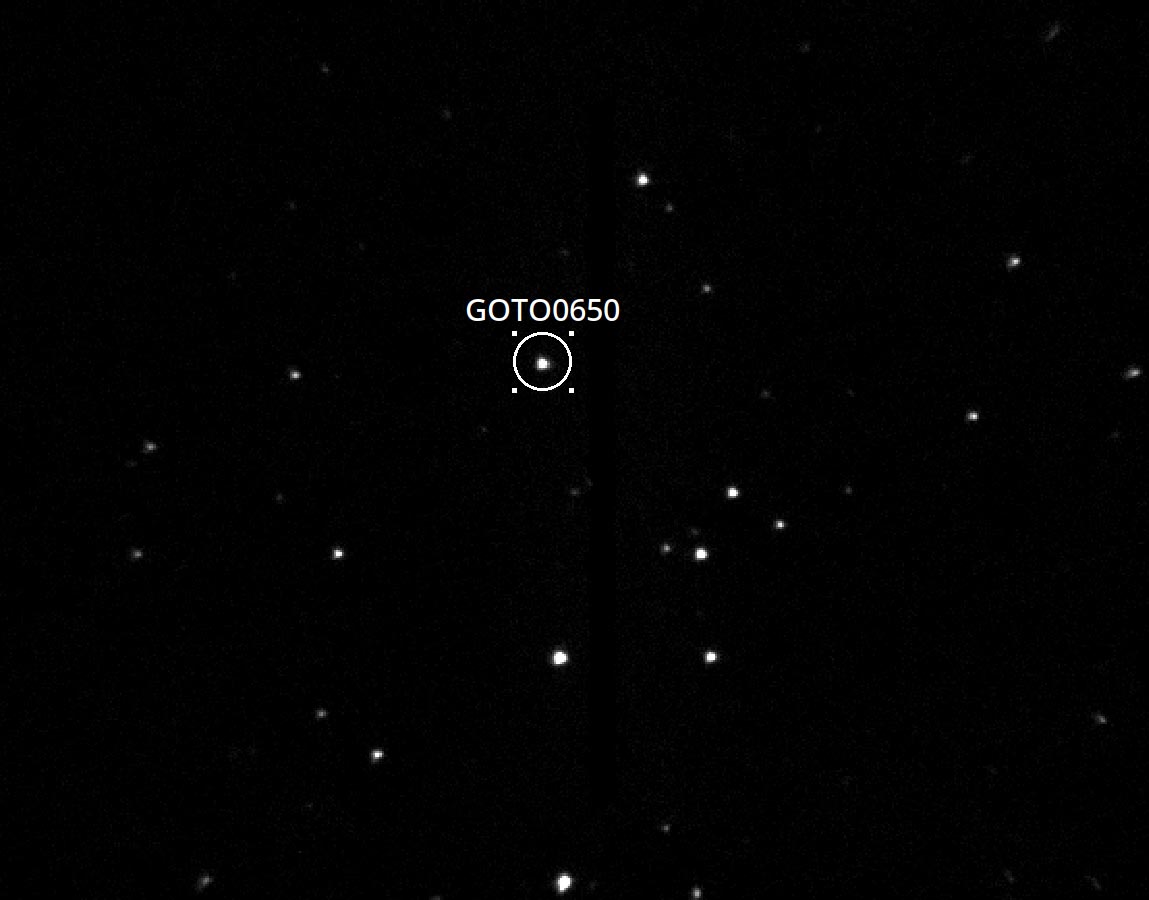
A dramatic cosmic event, a rare dwarf nova that suddenly brightened by a factor of 2,500, has been discovered with the help of everyday skywatchers through the Kilonova Seekers project.
Often described as playing astronomical “spot the difference,” Kilonova Seekers invites the public to scan and compare new telescope images of the night sky with earlier ones. The goal is to detect new stars or sudden changes in brightness that could signal something extraordinary happening in space.
Now, in a paper published in Astronomy & Astrophysics, the project has announced its first major peer-reviewed discovery: an outbursting cataclysmic variable star named GOTO0650.
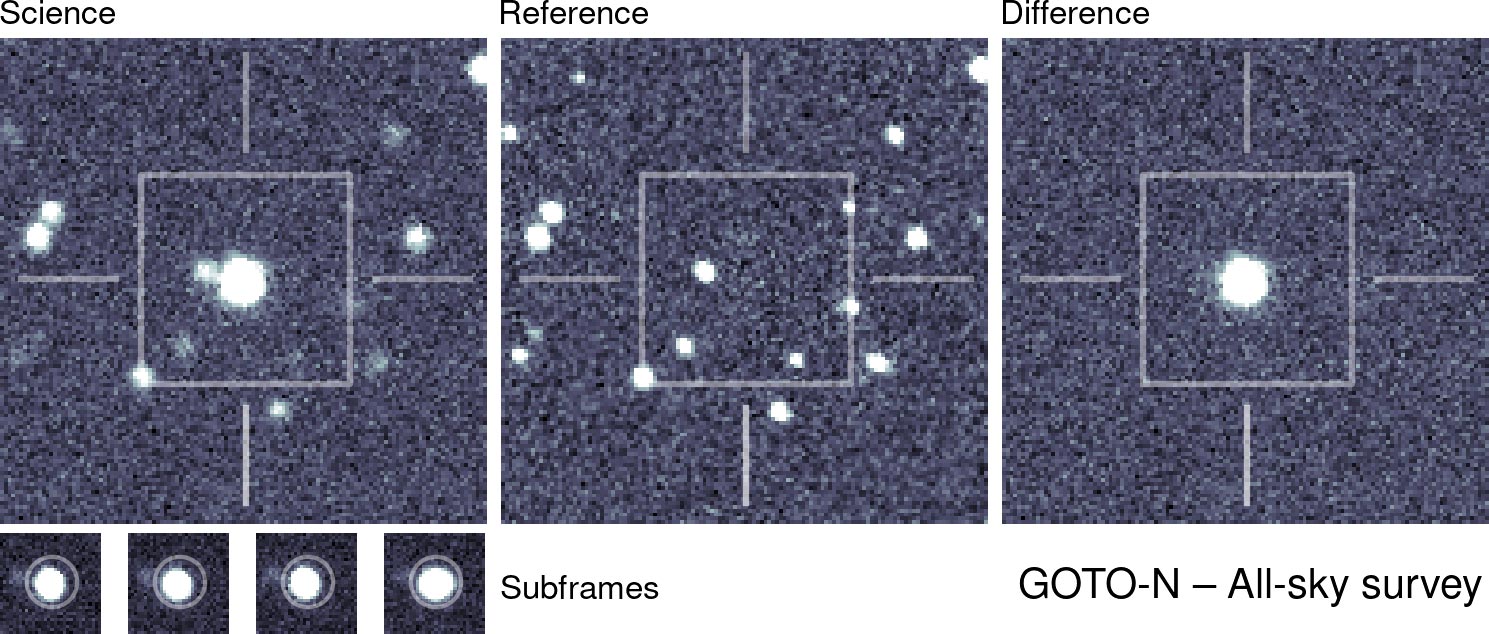
The bright flash was first noticed just two days after a previous image showed no sign of it. Thanks to the quick eyes of volunteers, the object was flagged only 3.5 hours after the initial image was taken—an impressive turnaround that allowed researchers to study it early in its outburst phase.
Rapid Discovery of GOTO0650
Co-lead of Kilonova Seekers, Dr. Tom Killestein, Warwick Prize Fellow in the Astronomy and Astrophysics group, University of Warwick, said: “Kilonova Seekers is a unique opportunity for members of the public to take part in true real-time astrophysics. Remarkably, public volunteers identified this star as an object of interest within 3 1/2 hours of the image being taken by the GOTO telescopes. This discovery could have been missed among many other objects without their efforts.
“The involvement of the volunteers didn’t stop there, as there was a huge follow-up response from the public. It was flagged for further observations from the Swift and Einstein Probe space observatories, and GOTO0650 was bright enough for amateur astronomers to take impressively high-quality observations of with their own equipment, which formed a key part of the paper and really helping us understand the object.”
Cataclysmic variable stars sporadically increase in brightness by large amounts before dropping back to normal levels. They are compact binary star systems, consisting of a white dwarf star stealing matter from its companion donor star. Periodically, material from the donor star hits a critical density and temperature within the disc of gas that surrounds the white dwarf, which causes an explosive outburst and bright flashes of light.
Unraveling a Rare Cataclysm
The fast response of the public enabled the team to get an unusually highly complete dataset on the star, including spectroscopy, X-ray, and UV measurements, supplemented by the impressively high-quality observations of the amateur astronomers. These observations suggest it is a period bouncer, the final state of a cataclysmic variable star, and a rare object to find even in the age of widespread wide-field imaging surveys.
Co-lead of Kilonova Seekers, Dr. Lisa Kelsey, Leverhulme Early Career Fellow, Institute of Astronomy and Kavli Institute for Cosmology, Cambridge, said: “Citizen science is a powerful way to make novel serendipitous discoveries in vast datasets that would normally need to be analyzed in depth by scientists.
“With over 2.8 million classifications so far, the discovery of GOTO0650 is really the pinnacle of 2 years of consistent hard work from our volunteers. Without the Kilonova Seekers volunteers flagging this object, rapid follow-up would not have been possible, and this object may have been missed entirely.”
Scaling Up Real-Time Sky Surveys
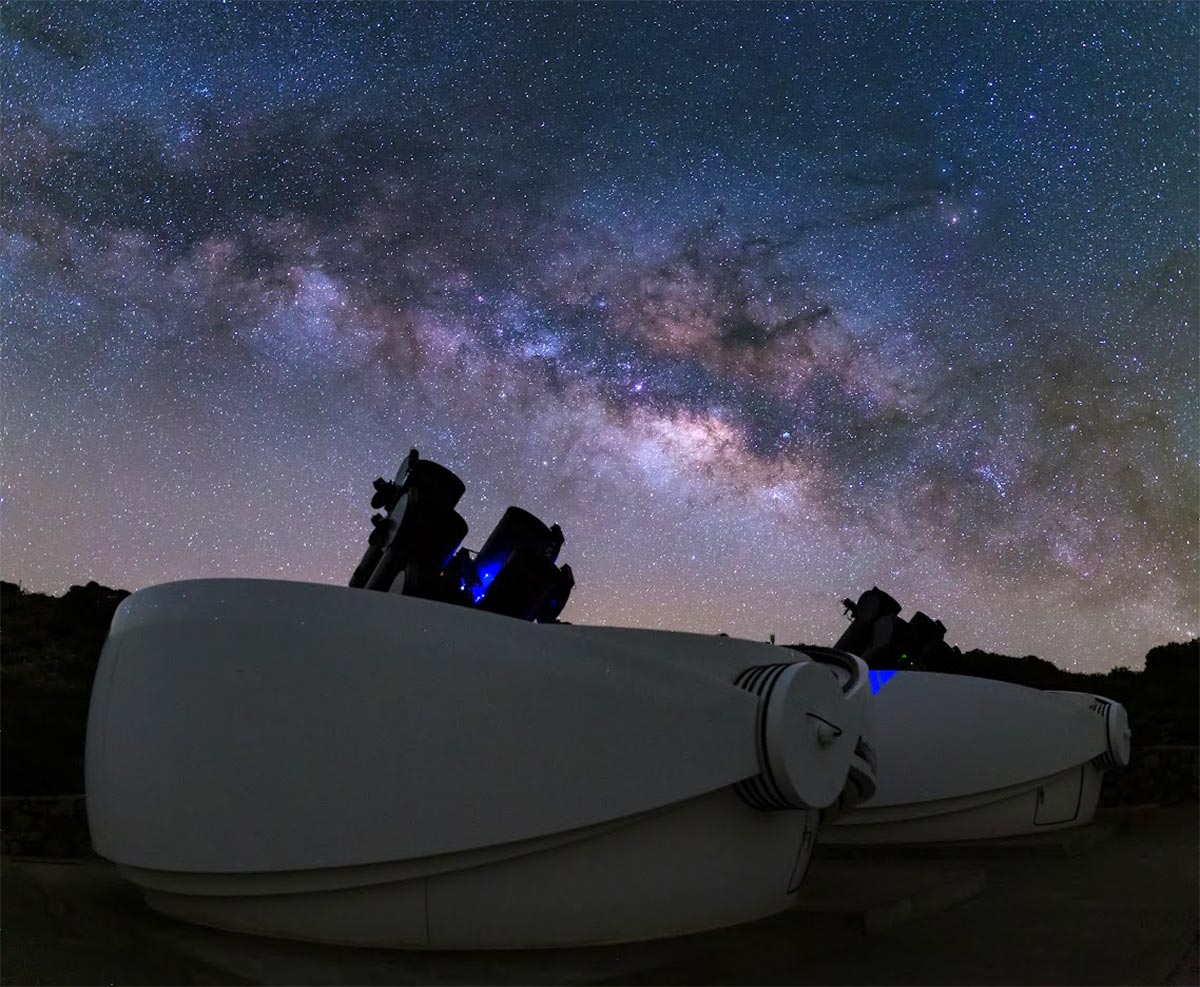
The Kilonova Seekers Project is approaching its two-year anniversary of inviting members of the public to analyze near-real-time data collected from the Warwick-led Gravitational-wave Optical Transient Observer (GOTO) project. This project utilizes all-sky survey images of space from two arrays of telescopes located on opposite sides of the planet, in Spain and Australia.
The vast numbers of observations taken in these imaging surveys will soon be beyond the capacity of individual and small teams of scientists to label and validate. Citizen Science is a viable, mutually beneficial solution to avoid objects like GOTO0650 being missed.
As a shining example of such efforts, Kilonova Seekers has provided over 3,500 members of the public with the opportunity to discover supernovae and variable stars using real data. With volunteers from around the world, there is almost always someone online looking at the data in real-time.
Global Volunteers Share the Thrill
Svetoslav Alexandrov, Kilonova Seekers Volunteer based in Bulgaria, said: “Traffic in Sofia, Bulgaria, is always awful during the mornings, so I have to pass time on the bus somehow, and contributing to citizen science is an excellent way to do that! Kilonova Seekers is on the top of my list because it’s mobile-friendly and, most importantly, it offers us fresh imagery almost every single day.
“I literally screamed with joy when I saw that I was going to be a co-author of the research paper. I’m certain that people on the street raised their eyebrows when they saw me screaming and dancing, but I didn’t care. I knew I was a co-discoverer of something significant, and this was all that mattered.”
Cledison Marcos da Silva, Kilonova Seekers Volunteer based in Brazil, said: “This discovery was very important to me, as I was going through a serious health problem, and the citizen science we do at Kilonova Seekers was distracting me from my situation. I never imagined that we would discover such a bright transient, so it was a huge surprise, and we were very happy when we found out. This discovery shows the importance of citizen science, both scientifically and personally. Even from your bed, or on the street with your cell phone, there is the possibility of making a very important discovery.”
Mayahuel Torres-Guerrero, Kilonova Seekers Volunteer based in Mexico, said: “The journey from the discovery of GOTO0650 to the publication of the paper in Astronomy & Astrophysics has been personally rewarding. I had the opportunity to learn how to download data from LCO telescopes and to produce light curves that allowed us to monitor echo outbursts. It was very exciting when GOTO0650 produced an echo outburst on Christmas Day and New Year’s Day! It was a great journey for someone who has studied social sciences like me!”
Reference: “GOTO065054+593624: An 8.5 mag amplitude dwarf nova identified in real time via Kilonova Seekers” by T. L. Killestein, G. Ramsay, M. Kennedy, L. Kelsey, D. Steeghs, S. Littlefair, B. Godson, J. Lyman, M. Pursiainen, B. Warwick, C. Krawczyk, L. K. Nuttall, E. Wickens, S. D. Alexandrov, C. M. da Silva, R. Leadbeater, K. Ackley, M. J. Dyer, F. Jiménez-Ibarra, K. Ulaczyk, D. K. Galloway, V. S. Dhillon, P. O’Brien, K. Noysena, R. Kotak, R. P. Breton, E. Pallé, D. Pollacco, A. Kumar, D. O’Neill, T. Butterley, R. Wilson, S. Mattila, A. Sahu, R. Starling, C. Y. Wang, Q. Liu, A. Li, Z. Dai, H. Feng, W. Yuan, R. Billington, A. G. Bull, S. Gaudenzi, V. Gonano, H. Krawczyk, M. T. Mazzucato, A. Pasqua, J. A. da Silva Campos, M. Torres-Guerrero, N. N. Antonov, S. J. Bean, E. T. Boeneker, S. M. Brincat, G. S. Darlington, F. Dubois, F. -J. Hambsch, D. Messier, A. Oksanen, G. Poyner, F. D. Romanov, I. D. Sharp, T. Tordai, T. Vanmunster and K. Wenzel, 1 July 2025, Astronomy & Astrophysics.
DOI: 10.1051/0004-6361/202553823
GOTO is a network of telescopes that is principally funded by the Science and Technology Facilities Council (STFC) and operated by the University of Warwick at the Roque de los Muchachos Observatory on La Palma, Spain, and Siding Spring Observatory in NSW, Australia, on behalf of a consortium including the University of Warwick, Monash University, Armagh Observatory & Planetarium, the University of Leicester, the University of Sheffield, the National Astronomical Research Institute of Thailand (NARIT), the University of Turku, the University of Portsmouth, the University of Manchester and the Instituto de Astrofisica de Canarias (IAC).
Never miss a breakthrough: Join the SciTechDaily newsletter.
Follow us on Google and Google News.
2 Comments
This is great ~ a collection of accessible articles that interested but casual browsers can peruse and greatly increase our awareness of celestial processes that are, for most of us, completely new. You’re taking what would otherwise be abstruse academics and astronomical research and making it popular. We all want to know where it all came from, and you’re feeding our curiosity in a very pleasant and rewarding way. As a corollary and a very salient point — it certainly justifies the continuance of funding for this research by all means! Thanks many times over.
I worked at Clark Lake Radio Observatory on a project of the University of Idaho and University of Maryland for six months back in 1973, and what I learned there about quasars and the solar wind of our own Sun have perked my lifelong interest in astronomy. Likewise, my mom on her Antioch College coop job worked for a semester at the Palomar Observatory, which has helped her to tune in to “cosmic consciousness.”
OK…“cosmic consciousness.” more 1980’s New Age non scientific BS!