
Close Menu
    Facebook X (Twitter) Instagram
    SciTechDaily
    • Biology
    • Chemistry
    • Earth
    • Health
    • Physics
    • Science
    • Space
    • Technology
    Facebook X (Twitter) Pinterest YouTube RSS
    SciTechDaily
    Home»Space»“Things We’ve Never Seen Before” – New Findings Unveil True Nature of Wild 2 Comet
    Space

    “Things We’ve Never Seen Before” – New Findings Unveil True Nature of Wild 2 Comet

    By Washington University in St. LouisJanuary 19, 2024No Comments3 Mins Read
    Facebook Twitter Pinterest Telegram LinkedIn WhatsApp Email Reddit
    Share
    Facebook Twitter LinkedIn Pinterest Telegram Email Reddit
    Comet Wild 2
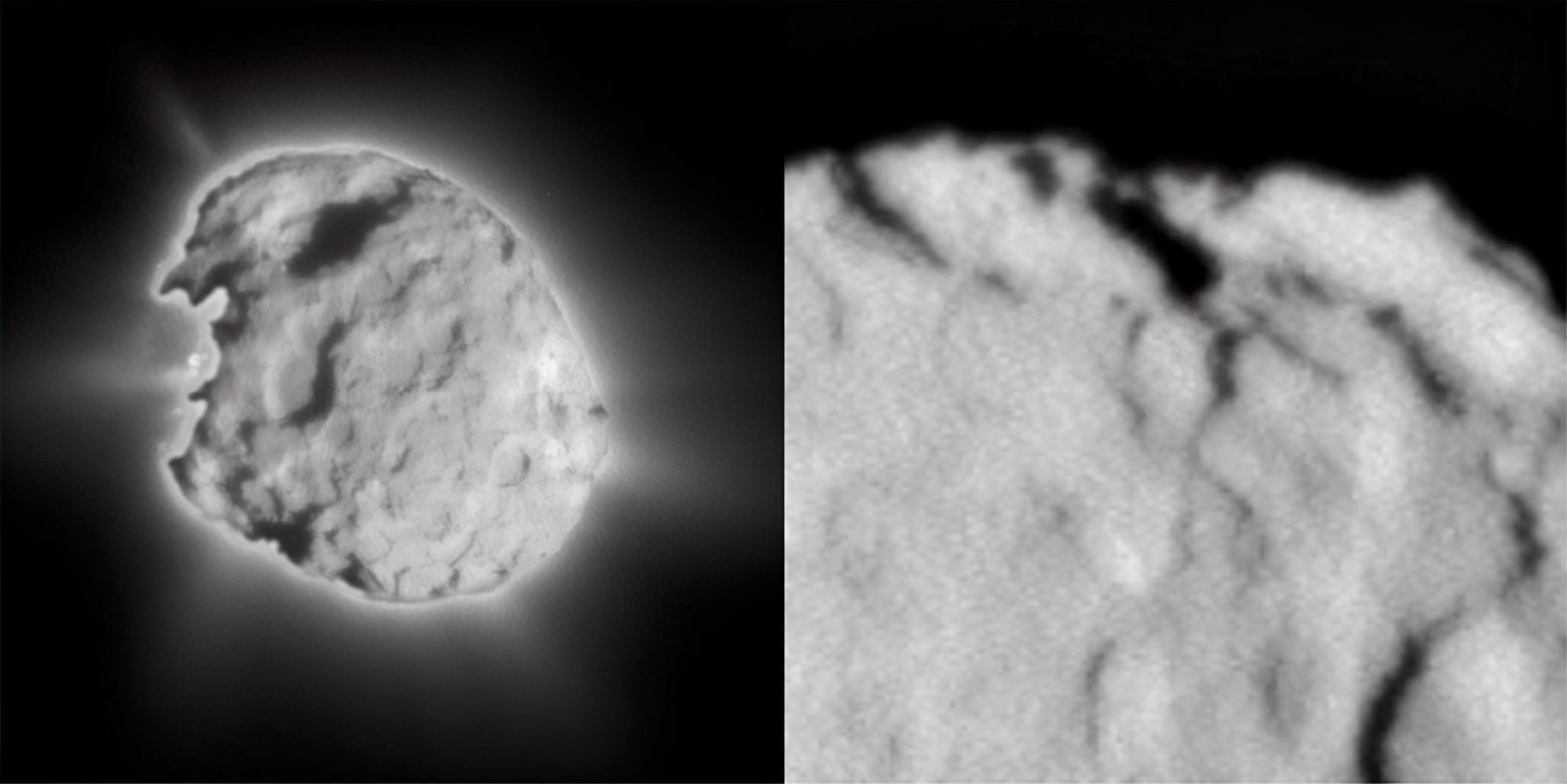
    Left: Composite image of a long-exposure and short-exposure image of the nucleus of comet Wild 2, showing surface features and jet activity. Right: Close-up view from a different image showing pinnacles, depressions, and ridges on Wild 2. Credit: Geochemistry

    Eighteen years following the return of NASA’s Stardust mission to Earth, which brought back the first samples from a known comet, the true nature of that icy object is coming into focus.

    Stardust collected material from Wild 2, a comet that likely formed beyond Neptune and currently orbits the sun between Mars and Jupiter. Painstaking analyses of the microscopic samples, recently described in the journal Geochemistry, have revealed a surprising truth about the comet’s origins and history, said Ryan Ogliore, an associate professor of physics in Arts & Sciences at Washington University in St. Louis who has been studying the Stardust samples for several years.

    When Stardust launched in 1999, many scientists expected the comet’s rocky material would be dominated by the primordial dust that built the solar system — the “stardust” that gave the mission its name.

    But the actual samples told a different story: Wild 2 contained a potpourri of dust that formed from different events early in the solar system’s history. For Ogliore, the discovery that Wild 2 contained a record of “local” events was exciting. “The comet was a witness to the events that shaped the solar system into what we see today,” he said.

    Kept in the cold storage of space for nearly its entire lifetime, the comet avoided alteration by heat and water seen in asteroid samples.

    Unique Composition of Wild 2

    “Comet Wild 2 contains things we’ve never seen in meteorites, like unusual carbon-iron assemblages, and the precursors to igneous spherules that make up the most common type of meteorite,” said Ogliore, who is a faculty fellow of the McDonell Center for the Space Sciences. “And all of these objects have been exquisitely preserved within Wild 2.”

    After nearly two decades, it may seem like scientists have had plenty of time to analyze the minuscule amount of material returned by the Stardust mission: less than one milligram (picture a grain of sand). However, this material is distributed over thousands of tiny particles on a collector the size of a pizza. “Nearly every Wild 2 particle is unique and has a different story to tell,” Ogliore said. “It is a time-consuming process to extract and analyze these grains. But the science payoff is enormous.”

    Most of the Wild 2 particles are still unstudied and certainly hold many more surprises. As time goes on, the samples can be studied using new techniques that did not exist when the mission launched.

    “The Stardust samples, microscopic grains from a body less than two miles wide, contain a record of the deep past covering billions of miles,” Ogliore said. “After 18 years of interrogating this comet, we have a much better view of the solar system’s dynamic formative years.”

    Reference: “Comet 81P/Wild 2: A record of the Solar System’s wild youth” by Ryan C. Ogliore, 28 November 2023, Geochemistry.
    DOI: 10.1016/j.chemer.2023.126046

    The study was funded by NASA Headquarters.

    Never miss a breakthrough: Join the SciTechDaily newsletter.
    Follow us on Google and Google News.

    Astrochemistry Astrophysics Comet Geochemistry Popular Washington University in St. Louis
    Share. Facebook Twitter Pinterest LinkedIn Email Reddit

    Related Articles

    New X-Ray Signals Reveal Wild Activity Around a Black Hole

    Asteroid, Comet…or Something Else? Mysterious Activity on “Oddball” Space Object Raises New Questions

    Cosmic Chameleons: Mysterious “Dark Comets” May Hold Clues to Life’s Origins on Earth

    Mysterious Voyagers: Are We Drinking Water Delivered by Dark Comets?

    Physics Beyond Known Laws: Neutron Star Collisions Shed Light on Dark Matter Mysteries

    Astronomers Uncover Surprising Activity on the Dwarf Planets Eris and Makemake

    Unexpected New Quest for Astronomers After Webb’s Mysterious Find in Rare Main Belt Comet

    Cracking the ’Oumuamua Code: Alien Spaceship or Natural Phenomenon?

    Polarized X-Rays Reveal Stunning New Details About Extremely Hot Matter Surrounding Black Hole

    Leave A Reply Cancel Reply

    • Facebook
    • Twitter
    • Pinterest
    • YouTube

    Don't Miss a Discovery

    Subscribe for the Latest in Science & Tech!

    Trending News

    The Universe Is Expanding Too Fast and Scientists Can’t Explain Why

    “Like Liquid Metal”: Scientists Create Strange Shape-Shifting Material

    Early Warning Signals of Esophageal Cancer May Be Hiding in Plain Sight

    Common Blood Pressure Drug Shows Surprising Power Against Deadly Antibiotic-Resistant Superbug

    Scientists Uncover Dangerous Connection Between Serotonin and Heart Valve Disease

    Scientists Discover a “Protector” Protein That Could Help Reverse Hair Loss

    Bone-Strengthening Discovery Could Reverse Osteoporosis

    Scientists Uncover Hidden Trigger Behind Stem Cell Aging

    Follow SciTechDaily
    • Facebook
    • Twitter
    • YouTube
    • Pinterest
    • Newsletter
    • RSS
    SciTech News
    • Biology News
    • Chemistry News
    • Earth News
    • Health News
    • Physics News
    • Science News
    • Space News
    • Technology News
    Recent Posts
    • Scientists Stunned After Finding Plant Thought Extinct for 60 Years
    • A Common Diabetes Drug May Hold the Key to Stopping HIV From Coming Back
    • Ancient “Syphilis-Like” Disease in Vietnam Challenges Key Scientific Assumptions
    • Drinking Alcohol To Cope in Your 20s Could Damage Your Brain for Life
    • Scientists Crack Alfalfa’s Chromosome Mystery After Decades of Debate
    Copyright © 1998 - 2026 SciTechDaily. All Rights Reserved.
    • Science News
    • About
    • Contact
    • Editorial Board
    • Privacy Policy
    • Terms of Use

    Type above and press Enter to search. Press Esc to cancel.