
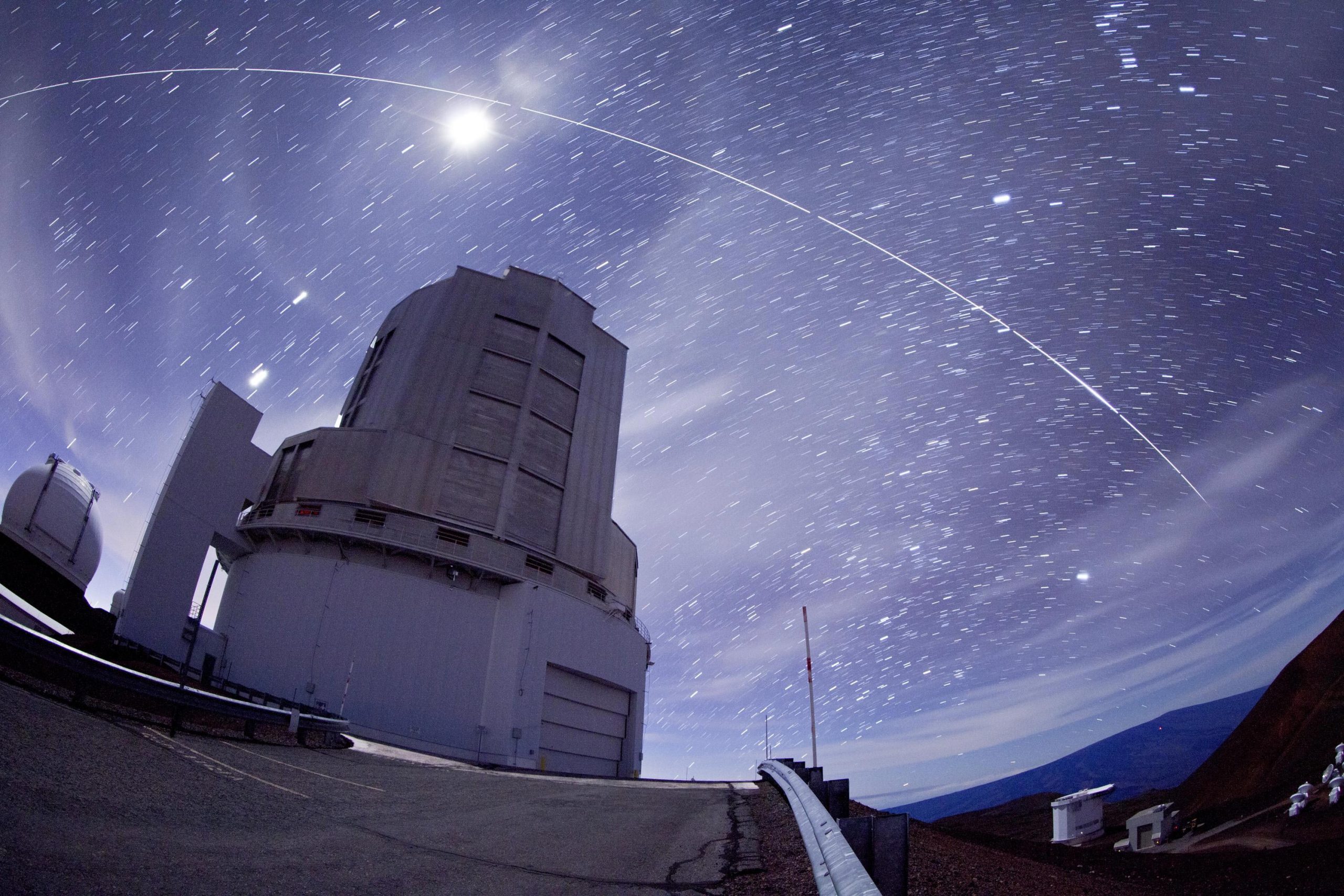
This is the first time the novel imaging technique has been applied to telescopes.
For the first time, astronomers have applied a new imaging method to a ground-based telescope, allowing a UCLA-led research team to capture the most precise view ever recorded of a star’s surrounding disk. This advancement revealed structural details that had never been seen before and introduced a powerful new tool for studying the intricate features of celestial objects. The achievement also paves the way for future discoveries that could deepen our understanding of the universe.
The sharpness of astronomical images largely depends on a telescope’s size. A larger viewing aperture gathers more light, enabling the observation of fainter objects and producing clearer, more detailed images.
The highest levels of detail are often achieved by connecting multiple telescopes into coordinated arrays. Throughout modern astronomy, the construction of bigger telescopes and the creation of these linked networks have been essential for capturing the fine-scale images that reveal the hidden structure of the cosmos.
The introduction of a device known as a photonic lantern now allows scientists to use collected starlight more efficiently to reach even higher levels of resolution. Full details of this breakthrough are presented in the journal Astrophysical Journal Letters.
The Power of the Photonic Lantern
“In astronomy, the sharpest image details are usually obtained by linking telescopes together. But we did it with a single telescope by feeding its light into a specially designed optical fiber, called a photonic lantern. This device splits the starlight according to its patterns of fluctuation, keeping subtle details that are otherwise lost. By reassembling the measurements of the outputs, we could reconstruct a very high-resolution image of a disk around a nearby star,” said first author and UCLA doctoral candidate Yoo Jung Kim.
The photonic lantern divides the light gathered by the telescope into several channels according to the shape of the incoming wavefront, similar to how a musical chord can be separated into individual notes. It then separates the light further by color, much like a rainbow. This advanced optical device was designed and built through a collaboration between the University of Sydney and the University of Central Florida.
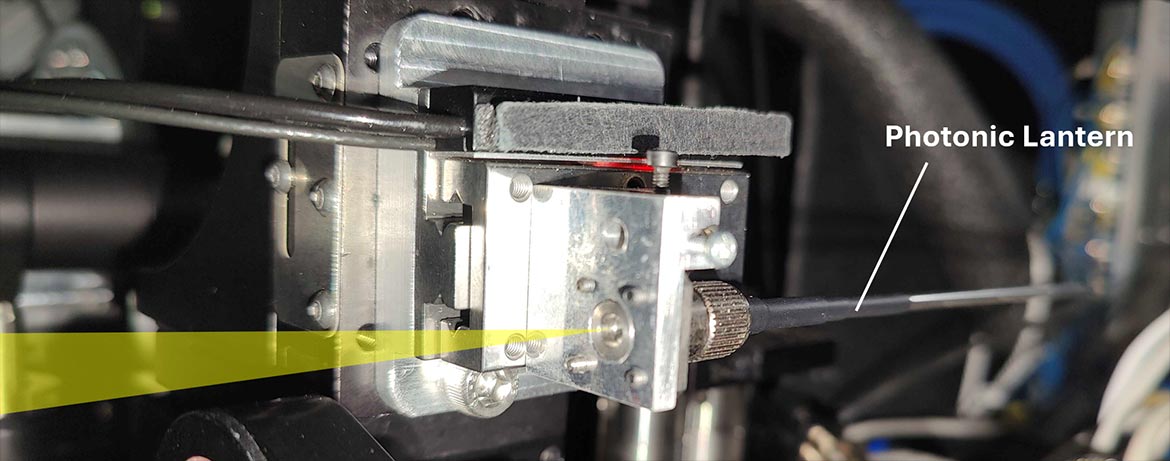
It forms part of a new system known as FIRST-PL, which was developed and led by the Paris Observatory and the University of Hawai’i. The instrument is installed on the Subaru Coronagraphic Extreme Adaptive Optics system at the Subaru Telescope in Hawai’i, which is operated by the National Astronomical Observatory of Japan.
“What excites me most is that this instrument blends cutting-edge photonics with the precision engineering done here in Hawai’i,” said Sebastien Vievard, a faculty member in the Space Science and Engineering Initiative at the University of Hawai’i who helped lead the build. “It shows how collaboration across the world, and across disciplines, can literally change the way we see the cosmos.”
The approach, splitting light into its different components, enables a novel imaging technique that can achieve finer resolution than traditional imaging methods.
Pushing Beyond the Diffraction Limit
“For any telescope of a given size, the wave nature of light limits the fineness of the detail that you can observe with traditional imaging cameras. This is called the diffraction limit, and our team has been working to use a photonic lantern to advance what is achievable at this frontier,” said UCLA professor of physics and astronomy Michael Fitzgerald.
“This work demonstrates the potential of photonic technologies to enable new kinds of measurement in astronomy,” said Nemanja Jovanovic, a co-leader of the study at the California Institute of Technology. “We are just getting started. The possibilities are truly exciting.”
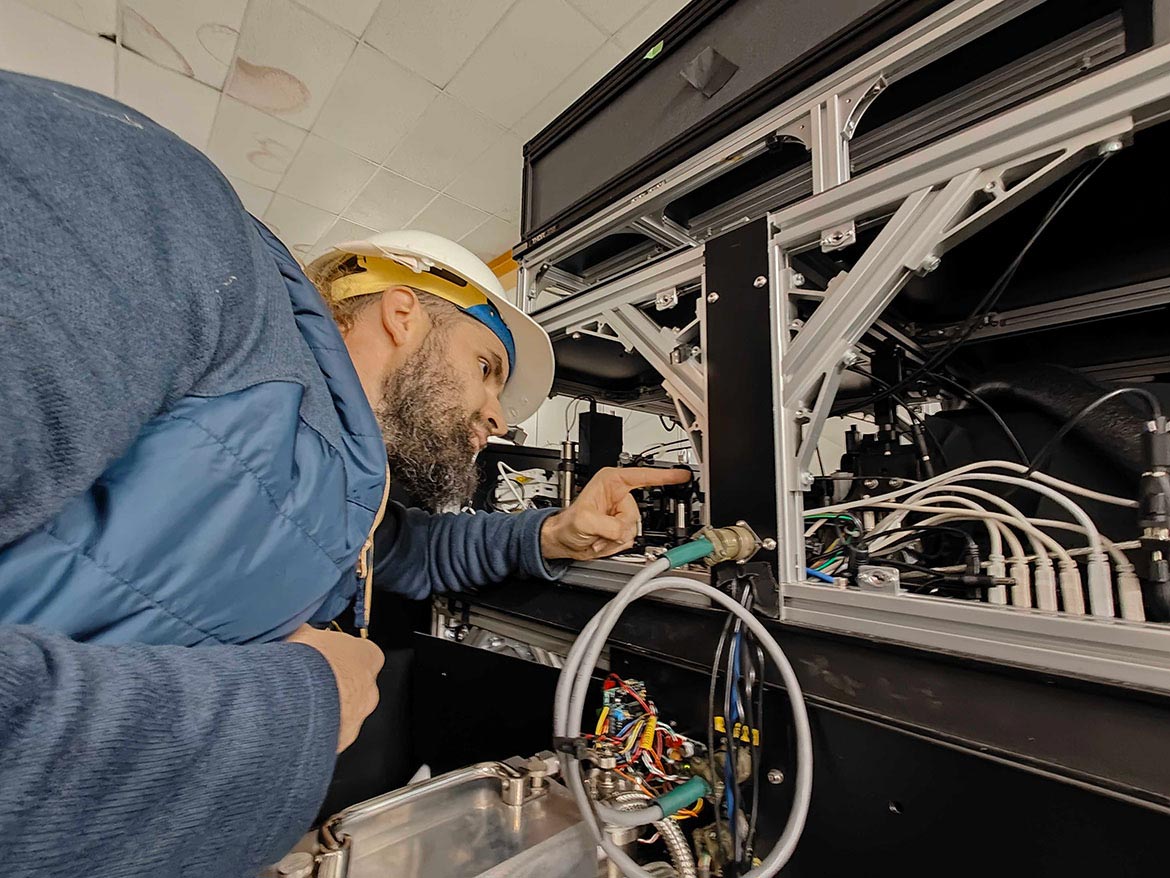
During the application of this new method, scientists were, at first, hampered by turbulence in the Earth’s atmosphere. The effect, which is similar to how the horizon sometimes appears wavy or watery on a hot summer day, causes objects viewed through the telescope to fluctuate and wiggle. To correct for these effects, the team at the Subaru Telescope used adaptive optics, which continuously cancel out the turbulence effects to stabilize the light waves in real time. Out of necessity, researchers went one step further, striving for clarity.
“We need a very stable environment to measure and recover spatial information using this fiber,” said Kim. “Even with adaptive optics, the photonic lantern was so sensitive to the wavefront fluctuations that I had to develop a new data processing technique to filter out the remaining atmospheric turbulence.”
A Lopsided Discovery
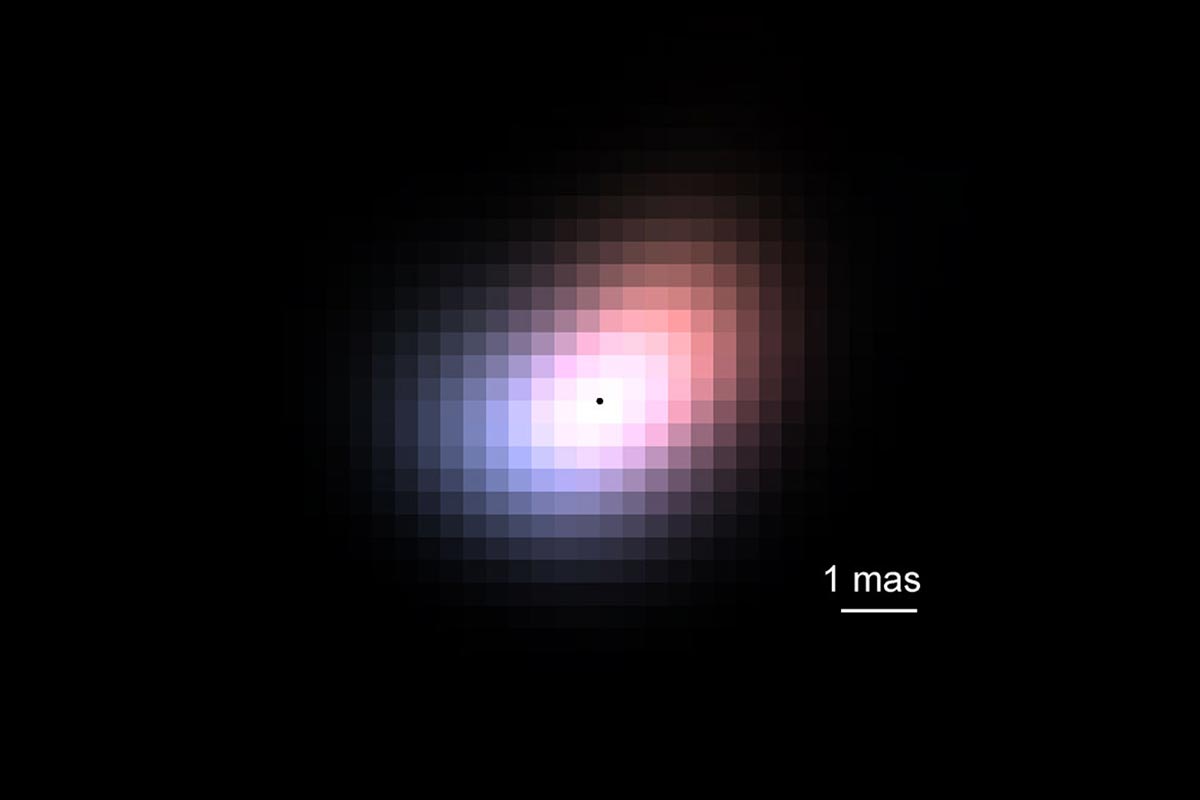
The team used the photonic lantern-equipped Subaru Telescope to observe a star called beta Canis Minoris (β CMi). This star, located in the constellation Canis Minor, is about 162 light-years from Earth and has a surrounding disc that consists of hydrogen. The disc rotates so quickly around the star that the gas moving toward us glows bluer, while the gas moving away appears redder. This is due to the Doppler effect, which describes phenomena like the higher pitch of an approaching car and the lower pitch of a receding car. This color shift causes the apparent position of the system’s light to move slightly with wavelength.
By applying new computational techniques, the team measured these color-dependent image shifts with about five times greater precision than was previously possible. Beyond confirming the disc’s rotation, they discovered that the disc is lopsided.
“We were not expecting to detect an asymmetry like this, and it will be a task for the astrophysicists modeling these systems to explain its presence,” said Kim.
The new approach to imaging will allow astronomers and astrophysicists to view details of objects that are smaller and more distant than ever before, unlocking answers to some mysteries, and, as in the case of the lopsided disc around β CMi, lead to new mysteries that need to be solved.
Reference: “On-sky Demonstration of Subdiffraction-limited Astronomical Measurement Using a Photonic Lantern” by Yoo Jung Kim, Michael P. Fitzgerald, Sébastien Vievard, Jonathan Lin, Yinzi Xin, Miles Lucas, Olivier Guyon, Julien Lozi, Vincent Deo, Elsa Huby, Sylvestre Lacour, Manon Lallement, Rodrigo Amezcua-Correa, Sergio Leon-Saval, Barnaby Norris, Mathias Nowak, Steph Sallum, Jehanne Sarrazin, Adam Taras, Stephanos Yerolatsitis and Nemanja Jovanovic, 22 October 2025, The Astrophysical Journal Letters.
DOI: 10.3847/2041-8213/ae0739
The international effort included researchers from the Space Science and Engineering Initiative group at the University of Hawai’i, the National Astronomical Observatory of Japan, the California Institute of Technology, the University of Arizona, the Astrobiology Center in Japan, the Paris Observatory, the University of Central Florida, the University of Sydney, and the University of California Santa Cruz.
Never miss a breakthrough: Join the SciTechDaily newsletter.
Follow us on Google and Google News.
1 Comment
Exciting work. I know one of the authors personally. Congratulations OG!