
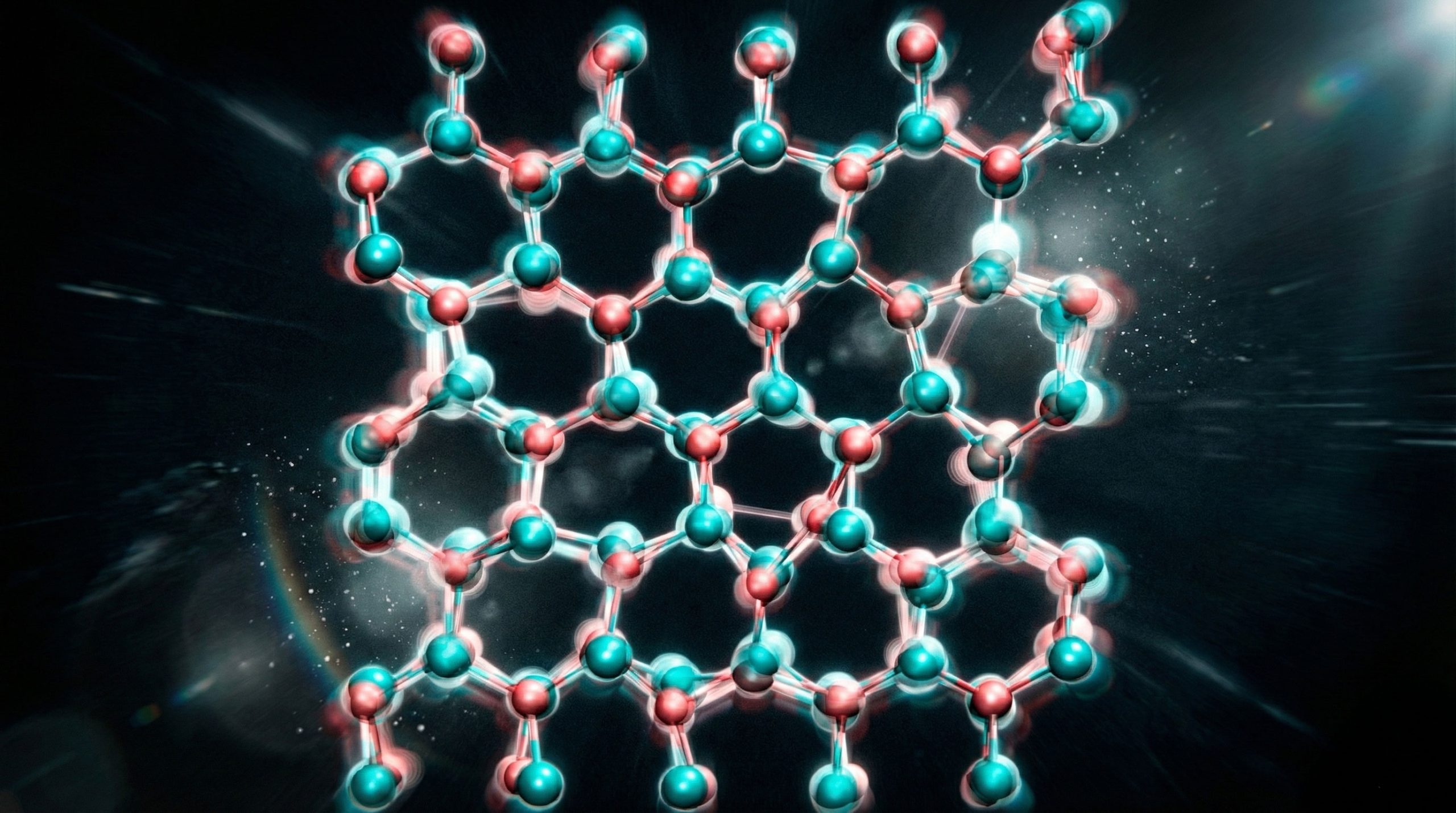
New research offers clearer insight into how phase transitions unfold at the atomic scale in real materials.
When ice turns into water, the change happens almost instantly. Once the melting temperature is reached, the rigid structure of the solid collapses and becomes a flowing liquid. This abrupt shift is typical for most materials in three dimensions. Extremely thin materials, however, behave very differently. Instead of switching directly from solid to liquid, they can pass through an unusual intermediate state known as the hexatic phase.
Researchers at the University of Vienna have now directly observed this rare state in an atomically thin crystal. By combining advanced electron microscopy with neural network analysis, the team recorded a silver iodide crystal, protected by graphene, as it melted. These ultra-thin, two-dimensional materials made it possible to watch atomic-scale melting as it unfolded. The results deepen scientific understanding of phase transitions and, unexpectedly, challenge earlier theoretical predictions. The work has now been published in Science.
In everyday experience, melting is sudden. Ice, metals, minerals, and other three-dimensional materials lose their orderly structure as soon as the melting point is reached, becoming disordered liquids almost immediately. This rapid transformation has long been considered a universal feature of melting in bulk materials.
That picture changes when materials are reduced to nearly two dimensions. At this extreme thinness, melting can proceed in stages. Between the solid and liquid states, a distinct intermediate form of matter can appear, called the hexatic phase. First proposed in the 1970s, this phase combines properties of both states. Particle spacing becomes irregular, similar to a liquid, while the angles between neighboring particles remain relatively well organized, resembling a solid.
Until now, evidence for the hexatic phase had been limited to large-scale model systems, such as tightly packed plastic spheres. Whether the same behavior could exist in real materials held together by strong chemical bonds was an open question. The international team led by the University of Vienna has now answered it.
By observing atomically thin silver iodide (AgI) crystals as they melted, the researchers demonstrated for the first time that the hexatic phase can occur in a covalently bonded material. This resolves a long-standing scientific puzzle and reveals new details about how melting works in two dimensions.
Melting atoms in a protective ‘graphene sandwich’
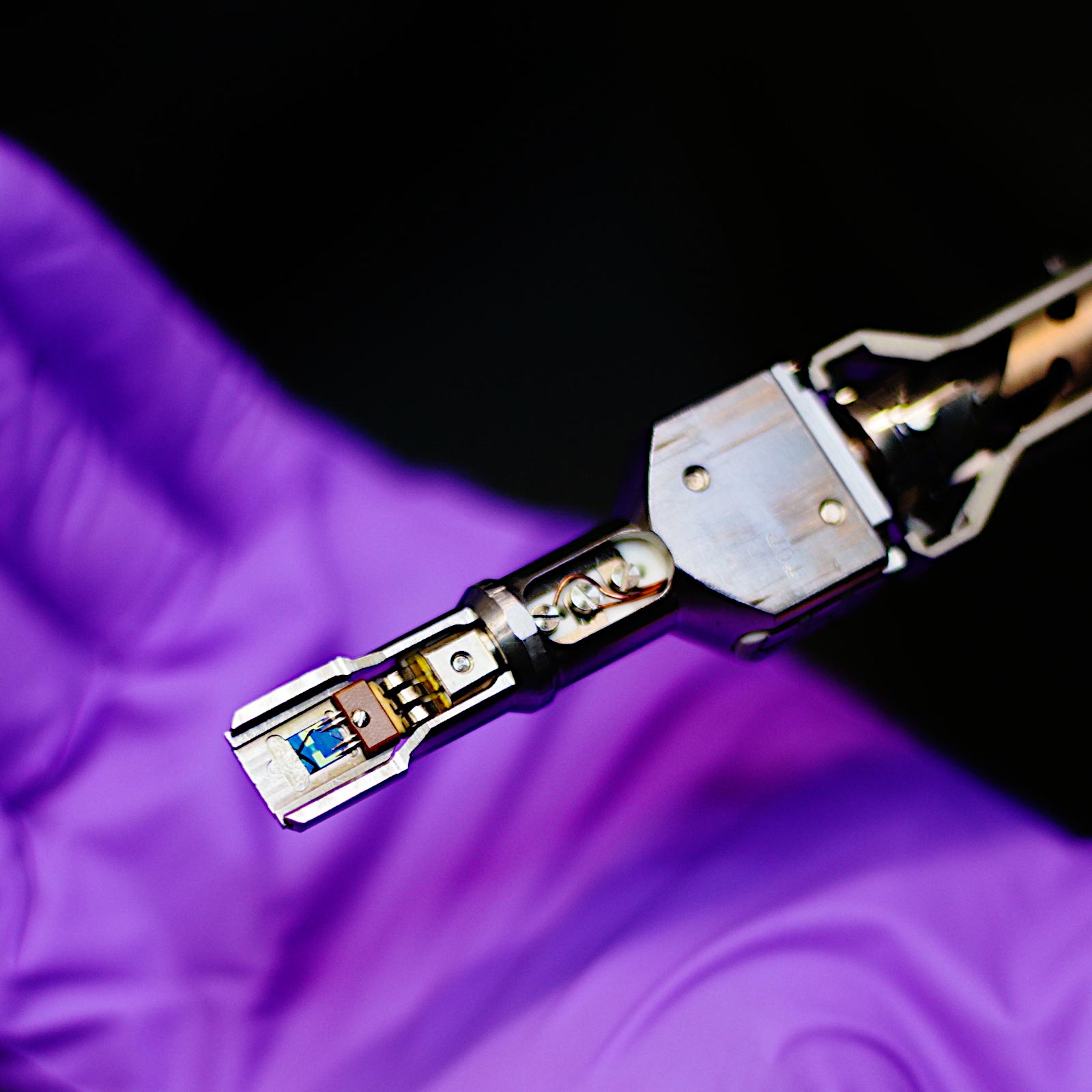
Using an advanced scanning transmission electron microscope (STEM) equipped with a heating stage, the team slowly raised the temperature to more than 1100 °C. This approach made it possible to record the melting process directly, capturing atomic-scale changes as they happened. By combining these high-resolution images with neural network analysis, the researchers were able to track how the solid crystal passed through the hexatic phase before fully becoming a liquid, offering a rare, real-time view of melting at the level of individual atoms.
“Without the use of AI tools such as neural networks, it would have been impossible to track all these individual atoms,” explains Kimmo Mustonen from the University of Vienna, senior author of the study. The team trained the network with huge amounts of simulated data sets before processing the thousands of high-resolution images generated by the experiment.
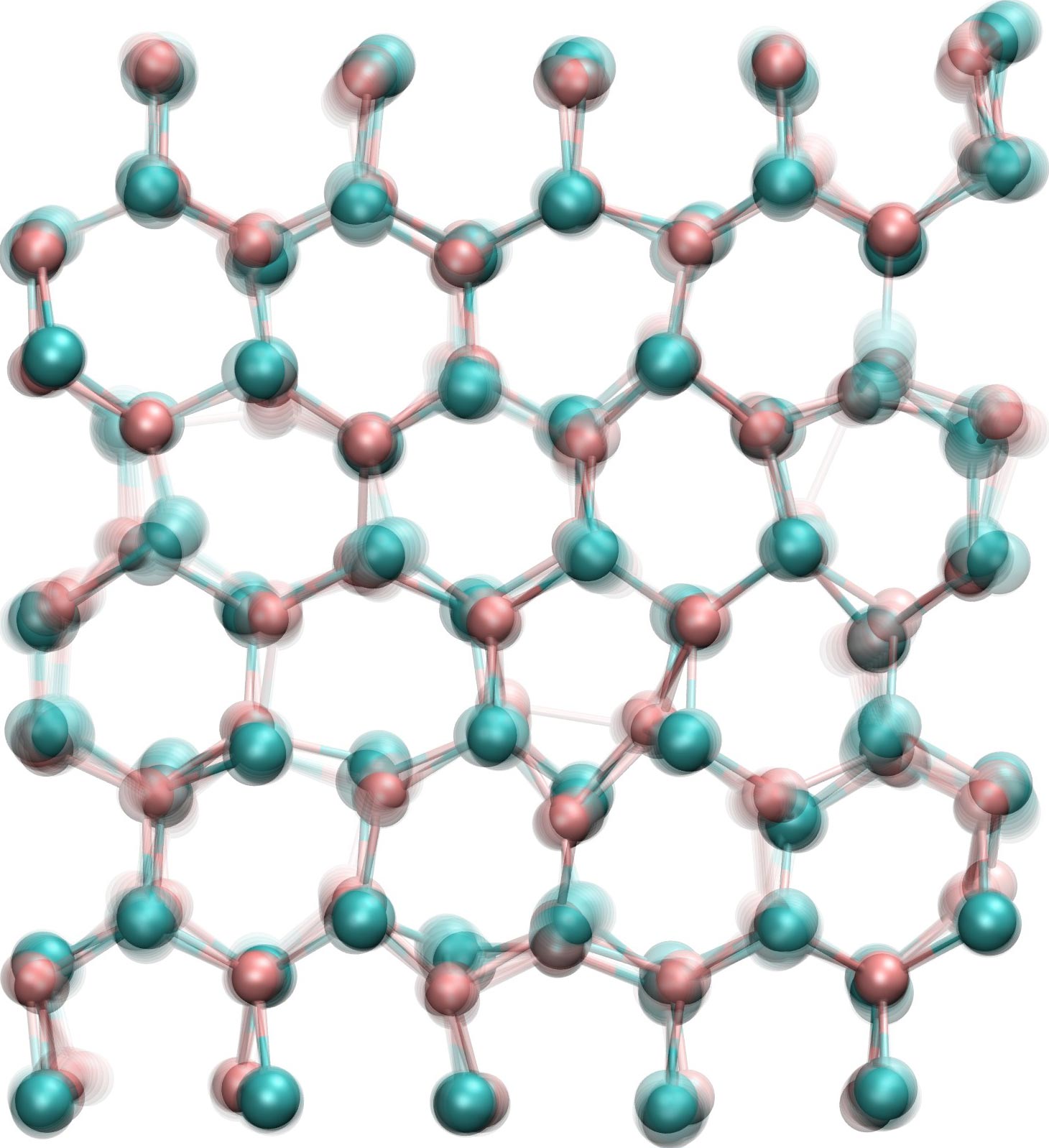
Their analysis yielded a remarkable result: within a narrow temperature window – approximately 25 °C below the melting point of AgI – a distinct hexatic phase occurred. Supplementary electron diffraction measurements confirmed this finding and provided strong evidence for the existence of this intermediate state in atomically thin, strongly bound materials.
A new chapter in the physics of melting
The study also revealed an unexpected twist. According to previous theories, the transitions from solid to hexatic and from hexatic to liquid should be continuous. However, the researchers observed that while the transition from solid to hexatic was indeed continuous, the transition from hexatic to liquid was abrupt, similar to the melting of ice into water.
This discovery not only challenges long-standing theoretical predictions, but also opens up new perspectives in the study of materials at the atomic level. “Kimmo and his colleagues have once again demonstrated how powerful atomic-resolution microscopy can be,” says Jani Kotakoski, head of the research group at the University of Vienna.
The results of the study not only deepen our understanding of melting in two dimensions, but also highlight the potential of advanced microscopy and AI in exploring the frontiers of materials science.
Reference: “Hexatic phase in covalent two-dimensional silver iodide” by Thuy An Bui, David Lamprecht, Jacob Madsen, Marcin Kurpas, Peter Kotrusz, Alexander Markevich, Clemens Mangler, Jani Kotakoski, Lado Filipovic, Jannik C. Meyer, Timothy J. Pennycook, Viera Skákalová and Kimmo Mustonen, 4 December 2025, Science.
DOI: 10.1126/science.adv7915
Never miss a breakthrough: Join the SciTechDaily newsletter.
Follow us on Google and Google News.
6 Comments
The results of the study not only deepen our understanding of melting in two dimensions, but also highlight the potential of advanced microscopy and AI in exploring the frontiers of materials science.
VERY GOOD!
Please ask the researchers to think deeply:
Are the atoms you are observing two-dimensional? WHY?
Topological Vortex Theory (TVT) proposes a novel paradigm for classifying states of matter based on the topological properties of energy bands. This theory conceptualizes space as a dynamic ideal fluid, where vortex structures emerge through topological phase transitions, providing a unified framework for understanding multiscale ordered structures from condensed matter physics to cosmology but also reveals the potential of topological order as a universal principle for categorizing matter.
The states of matter are essentially different manifestations of the topological structure of space. With deeper exploration of topological matter, especially strongly correlated topological systems and non-equilibrium topological states, the topological classification paradigm will be further refined. TVT is expected to become a key theoretical tool for understanding the grand chain from quantum entanglement to cosmic structure, ultimately enabling a fundamental reconstruction of the classification of the physical world.
——Extracted from https://zhuanlan.zhihu.com/p/1987696851428848667.
Topological Vortex Theory (TVT) proposes a novel paradigm for classifying states of matter based on the topological properties of energy bands. This theory conceptualizes space as a dynamic ideal fluid, where vortex structures emerge through topological phase transitions, providing a unified framework for understanding multiscale ordered structures from condensed matter physics to cosmology but also reveals the potential of topological order as a universal principle for categorizing matter.
The states of matter are essentially different manifestations of the topological structure of space. With deeper exploration of topological matter, especially strongly correlated topological systems and non-equilibrium topological states, the topological classification paradigm will be further refined. TVT is expected to become a key theoretical tool for understanding the grand chain from quantum entanglement to cosmic structure, ultimately enabling a fundamental reconstruction of the classification of the physical world.
——Extracted from https://zhuanlan.zhihu.com/p/1987696851428848667.
“Without the use of AI tools such as neural networks, it would have been impossible to track all these individual atoms,”
This is so because young physicists are young. The mind goes every which way when the prerogatives of life beckon. Worse: they believed what they were told and have become tunnel-visioned to compete. So they don’t have time (from their busy doings) to pay the necessary attention.
Thank you for your comment. They don’t have time (from their tunnel-visioned to compete) to pay the necessary attention. You are right.
Human cognition of nature’s essence is undergoing a profound shift from “universal gravitation” to “universal spin.” This transition not only addresses old theory limitations but philosophically reshapes our cosmic view. This cognitive leap marks a new stage in understanding nature’s essence, with impacts extending beyond physics to shape future scientific landscapes and civilization.
——Extracted from https://zhuanlan.zhihu.com/p/1943715764965188178.
thanks