
A new study reveals an unexpected connection between physical strength and brain activity.
A new study points to an unexpected player in healthy aging: a little-known structure deep in the brain that may help maintain physical strength over time. The findings suggest it may be possible to identify and address frailty before it develops.
Scientists at the University of California, Riverside, used functional MRI to track brain activity in older adults while they performed a straightforward but important task, squeezing a device as hard as they could. This measurement, called a maximum grip strength test, is widely used as an indicator of overall physical resilience and vulnerability.
“Grip strength is more than just muscle,” said Xiaoping Hu, a UCR bioengineering professor and senior study author. “It’s a marker of how well your body and your brain are functioning as you get older.”
The team found an unexpected pattern. Out of many brain regions examined, one stood out as the strongest predictor of grip strength: the caudate nucleus. This structure lies deep within the brain and is known for its role in movement and decision-making. Its connection to physical strength, however, has received little attention until now.
Amin Ghaffari, a doctoral researcher in Hu’s lab and first author of the study published in Frontiers in Neuroscience, said the researchers used advanced computational methods to compare each person’s grip strength with a detailed map of brain connectivity, known as a “functional connectome.”
“It’s like mapping out all the phone lines in your brain and seeing which ones are linked to how hard you can squeeze,” Ghaffari said. “And one of the clearest signals came from this network involving the caudate.”
Study Design and Key Findings
The study included 60 older adults from the Riverside area, with equal numbers of men and women. Each participant completed three functional MRI sessions while performing strength tests.
To focus specifically on brain-related effects, the researchers adjusted the data to account for differences in sex and muscle mass. This allowed them to separate neural influences from physical factors such as body size.
They found a clear statistical relationship between brain network activity and grip strength. Higher levels of blood flow and stronger connectivity in the caudate nucleus were linked to greater grip strength, regardless of gender.
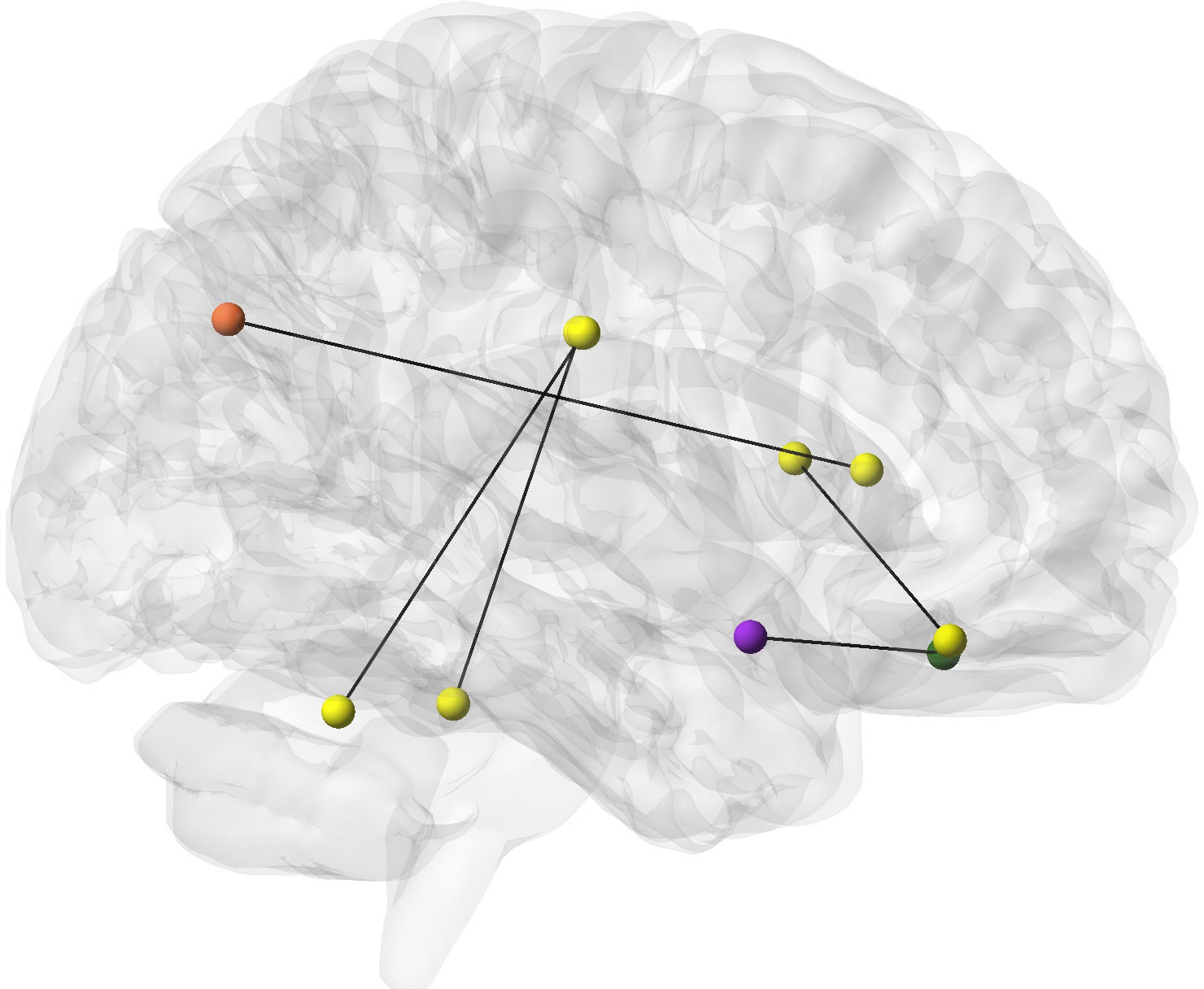
Other areas, including the tail of the hippocampus, which supports memory, and the anterior cingulate cortex, which plays a role in emotion and attention, also showed links to grip strength. However, the caudate nucleus showed the strongest association, suggesting it may serve as a central hub for maintaining physical capacity with age.
This research is among the first to study grip strength using real-time brain imaging during an active movement task. Earlier studies have focused on brain structure or resting activity, rather than capturing neural function during physical effort.
“This could eventually help clinicians spot frailty earlier, by identifying patterns in brain activity before people begin to lose strength,” Hu said.
Implications for Aging and Frailty
Frailty, defined as a reduced ability to recover from illness or injury, affects millions of older adults. It involves more than muscle loss and reflects a broader decline across physical, cognitive, and emotional systems. Grip strength has become one of the simplest and most reliable ways to assess this condition.
By linking grip strength to specific brain networks, the researchers aim to develop new diagnostic tools and possibly identify targets for therapies or training programs designed to slow age-related decline.
“Just as you might strengthen muscles with exercise,” Ghaffari said, “we could envision ways to strengthen these neural connections through targeted interventions.”
Although the findings need to be confirmed in larger and more diverse populations, they offer new insight into how changes in the brain may shape physical aging, and how those changes might be addressed.
“We’re trying to understand aging not as a single event, but as a process,” Hu said. “And of course we hope, long term, that more specific and accurate predictions about how people will age can reduce the worst effects of aging.”
Reference: “Connectome-based predictive modeling of grip strength: a marker of physical frailty” by Amin Ghaffari, Majd Abouzaki, Yasmine Romero, Andrew Sun, Aaron Seitz, Jason Langley, Ilana J. Bennett and Xiaoping Hu, 7 November 2025, Frontiers in Neuroscience.
DOI: 10.3389/fnins.2025.1697908
Never miss a breakthrough: Join the SciTechDaily newsletter.
Follow us on Google and Google News.