
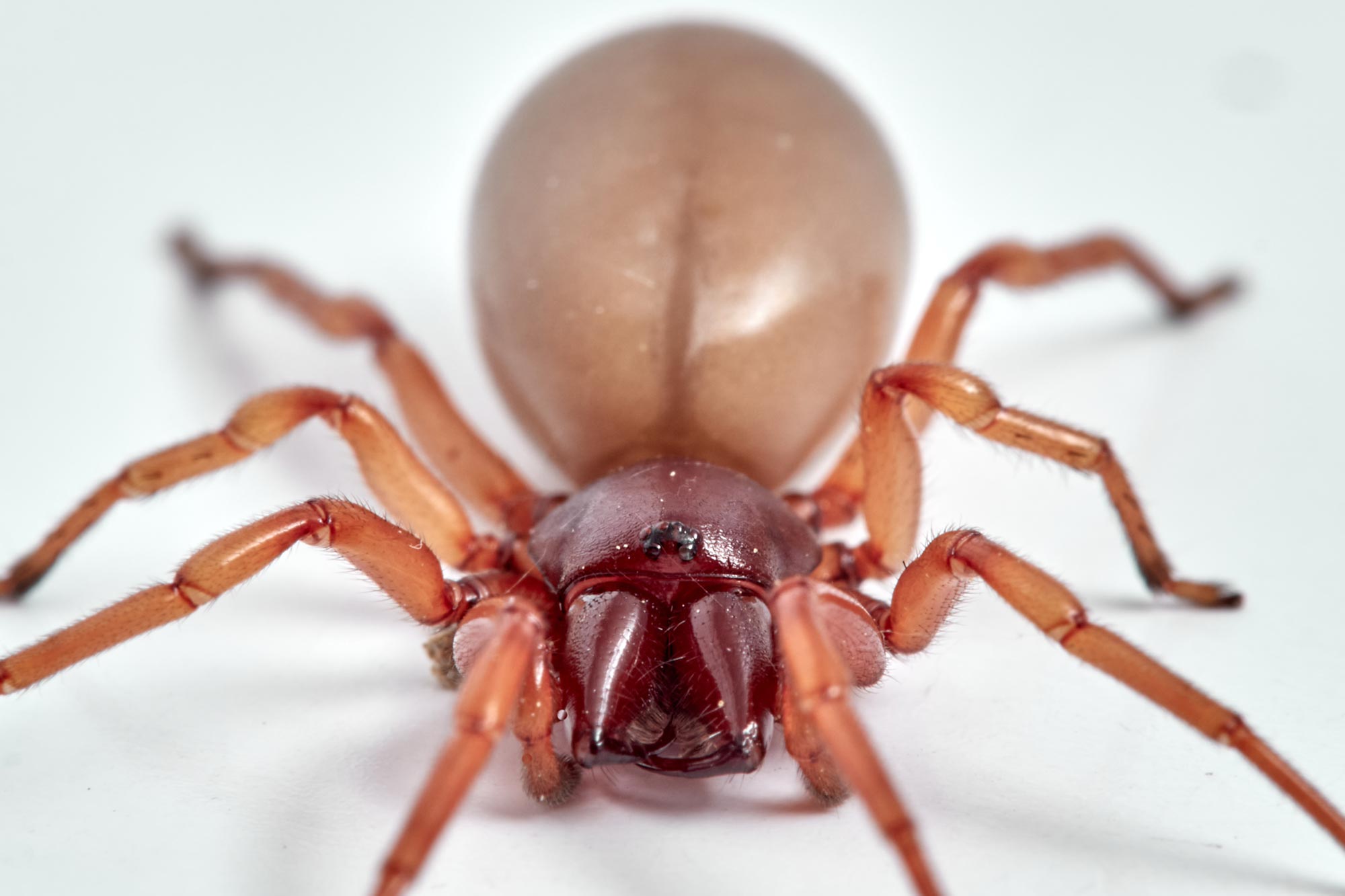
A reduced genome in an island species raises evolutionary questions.
Over the course of a few million years, the spider Dysdera tilosensis, which is found only in the Canary Islands, has cut the size of its genome by roughly half as it colonized the islands and adapted to its environment. This genome is not only smaller but also more tightly packed and shows greater genetic diversity than the genomes of closely related spider species found on the mainland.
Reported in the journal Molecular Biology and Evolution, the finding provides the first clear example of an animal species dramatically shrinking its genome during the process of colonizing an oceanic island.
The result challenges a long-standing assumption in evolutionary biology. Island species are often thought to evolve larger genomes that contain more repetitive DNA. By contrast, this case points in the opposite direction and adds new evidence to an ongoing debate over one of the field’s central questions: how and why genome size changes over evolutionary time.
The research was led by Julio Rozas and Sara Guirao from the Faculty of Biology and the Biodiversity Research Institute (IRBio) at the University of Barcelona. The study’s first author is Vadim Pisarenco (UB-IRBio), and the work also involved researchers from the University of La Laguna, the Spanish National Research Council (CSIC), and the University of Neuchâtel (Switzerland).
Together, the findings offer a fresh perspective on a problem that has puzzled scientists for decades. Genome size, defined as the total number of DNA base pairs that encode an organism’s genetic information, can vary enormously between species, even among those with similar levels of biological complexity.
A smaller genome in an island species: an evolutionary paradox?
Spiders in the genus Dysdera have undergone extensive diversification across the Canary Islands. The archipelago is often described as a natural laboratory for studying evolution under geographic isolation, and it has given rise to nearly 50 endemic Dysdera species. These island forms represent about 14 percent of all known species in the genus worldwide and have evolved since the islands emerged a few million years ago.
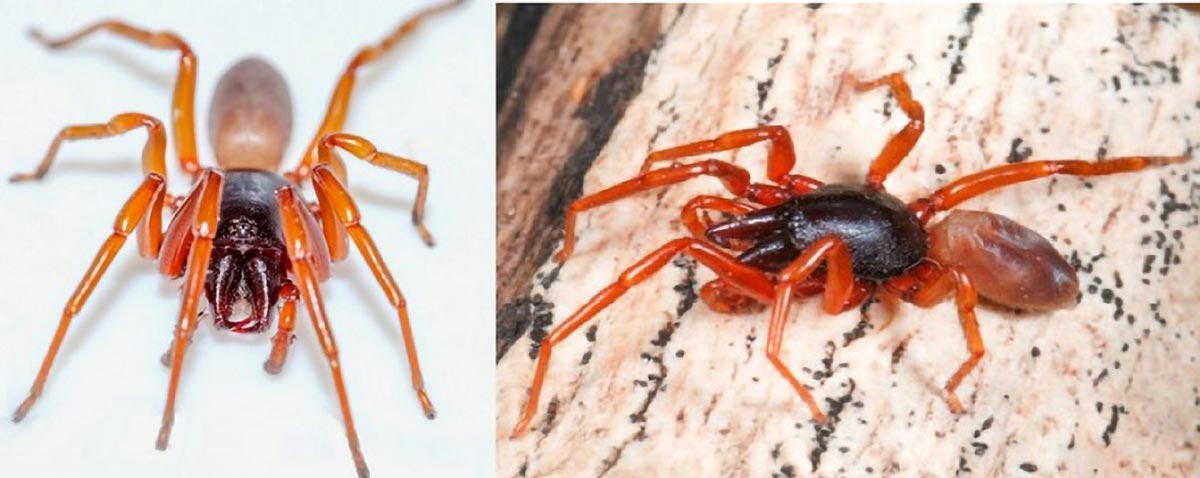
Using advanced DNA sequencing methods, the researchers compared the genomes of two closely related species. One is Dysdera catalonica, a continental spider found in northern Catalonia and southern France. The other is D. tilosensis, which lives exclusively on the island of Gran Canaria.
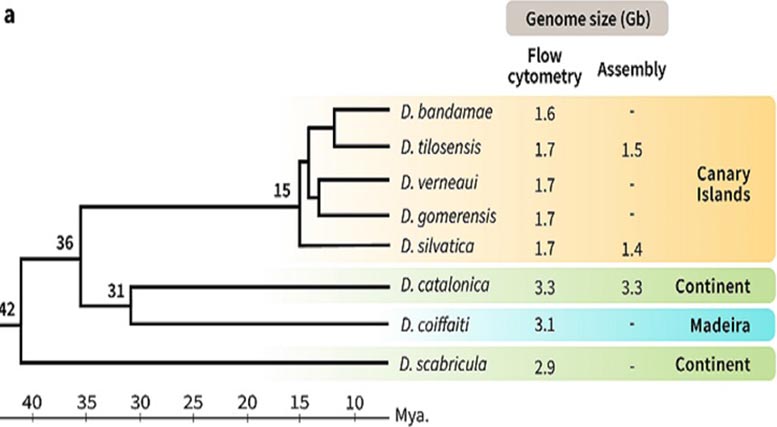
“The species D. catalonica has a genome of 3.3 billion base pairs (3.3 Gb, the letters of DNA), which is almost double that of the species D. tilosensis (1.7 Gb). Interestingly, despite having a smaller genome, the species from the Canary Islands shows greater genetic diversity,” says Julio Rozas, professor at the UB’s Department of Genetics, Microbiology and Statistics, director of the Evolutionary Genomics and Bioinformatics research group and member of the board of directors of the Bioinformatics Barcelona (BIB) platform.
Genomic sequencing also reveals that D. catalonica has a haploid chromosome number of four autosomes and one X sex chromosome, while D. tilosensis has six autosomes plus the X chromosome.
“The genome downsizing of the spider D. tilosensis, associated with the colonization process of the Canary Island, is one of the first documented cases of drastic genome downsizing using high-quality reference genomes,” says Professor Julio Rozas, director of the Evolutionary Genomics and Bioinformatics research group.
“This phenomenon is now being described for the first time in detail for phylogenetically closely related animal species,” he continues.
How can genome reduction be explained?
In such evolutionarily similar species, which share similar habitats and diet, “differences in genome size cannot easily be attributed to ecological or behavioral factors,” says Professor Sara Guirao. “Phylogenetic analysis — Guirao continues — combined with flow cytometry measurements, reveals that the common ancestor had a large genome (about 3 Gb). This indicates that the drastic genome reduction occurred during or after the arrival on the islands.”
This result is clearly paradoxical for two reasons. On the one hand, although less frequent in animals, the most common pattern is the increase in genome size via whole-genome duplications, especially in plants, where the appearance of polyploid species (with multiple chromosome endowments) is common. In contrast, such sharp reductions in genome size over a relatively short period of time are much rarer,” says Guirao.
Secondly, the findings contradict theories that argue that, on islands, the founder effect — the process of colonization by a small number of individuals — leads to a reduction in selective pressure and, as a result, genomes should be larger and richer in repetitive elements.
“In the study, we observed the opposite: island species have smaller, more compact genomes with greater genetic diversity,” says doctoral student Vadim Pisarenco. This pattern suggests the presence of non-adaptive mechanisms, “whereby populations in the Canary Islands would have remained relatively numerous and stable for a long time. This would have made it possible to maintain a strong selective pressure and, as a consequence, eliminate unnecessary DNA,” says Pisarenco.
Deciphering one of the great enigmas in evolutionary biology
It is still a mystery why, in similar species, some genomes accumulate numerous repetitive DNA sequences while others are more compact. The study could provide a fresh perspective on solving this open question in evolutionary biology.
According to some hypotheses, these changes in the genome are of direct adaptive value. Other explanations propose non-adaptive mechanisms, in which genome size is the result of a balance between the accumulation of repetitive elements (such as transposons) and their removal by purifying selection.
“This study supports the idea that, rather than direct adaptation, genome size in these species depends primarily on a balance between the accumulation and removal of this repetitive DNA,” the researchers conclude.
Reference: “How Did Evolution Halve Genome Size During an Oceanic Island Colonization?” by Vadim A Pisarenco, Adrià Boada-Figueras, Marta Olivé-Muñiz, Paula Escuer, Nuria Macías-Hernández, Miquel A Arnedo, Pablo Librado, Alejandro Sánchez-Gracia, Sara Guirao-Rico and Julio Rozas, 20 August 2025, Molecular Biology and Evolution.
DOI: 10.1093/molbev/msaf206
This work was supported by Ministerio de Ciencia e Innovación (MCIN/AEI/10.13039/501100011033) grants (PID2019-103947GB, PID2019-105794GB, PID2022-137758NB-I00, PID2022-138477NB, and an FPI fellowship to V.A.P. PRE2020-095592). Additional funding was provided through a predoctoral fellowship from the Universitat de Barcelona to M.O.-M. (PREDOCS-UB 2021), and by Comissió Interdepartamental de Recerca i Innovació Tecnològica (2021SGR00279, 2021SGR0689).
Never miss a breakthrough: Join the SciTechDaily newsletter.
Follow us on Google and Google News.
4 Comments
The super nice thing about evolution is that you’re completely free to explain observations and evidence by developing an infinite number of rules, and amendments to those rules, because no one will ever be able to sit around for millions of years to observe the accuracy with which any given rule predicts actual outcomes.
Yep.
I love all the new articles about “xxxx rewrites the rule/history/evolution/etc of xxxx”
LOL
Hello
These spiders your talking about I’ve seen in my garden when living in North London and in my home in the north of England.
First time I encountered them I got a stick to stir it as red means warning, it turned to me and raised its fangs and front body , it was no bigger than a house spider
The spiders you saw were from same family but were in fact Dysdera Crotale, known as the Woodlouse spider. Very common, sharp chelicerae/fangs able to pierce human skin so handle with care!