
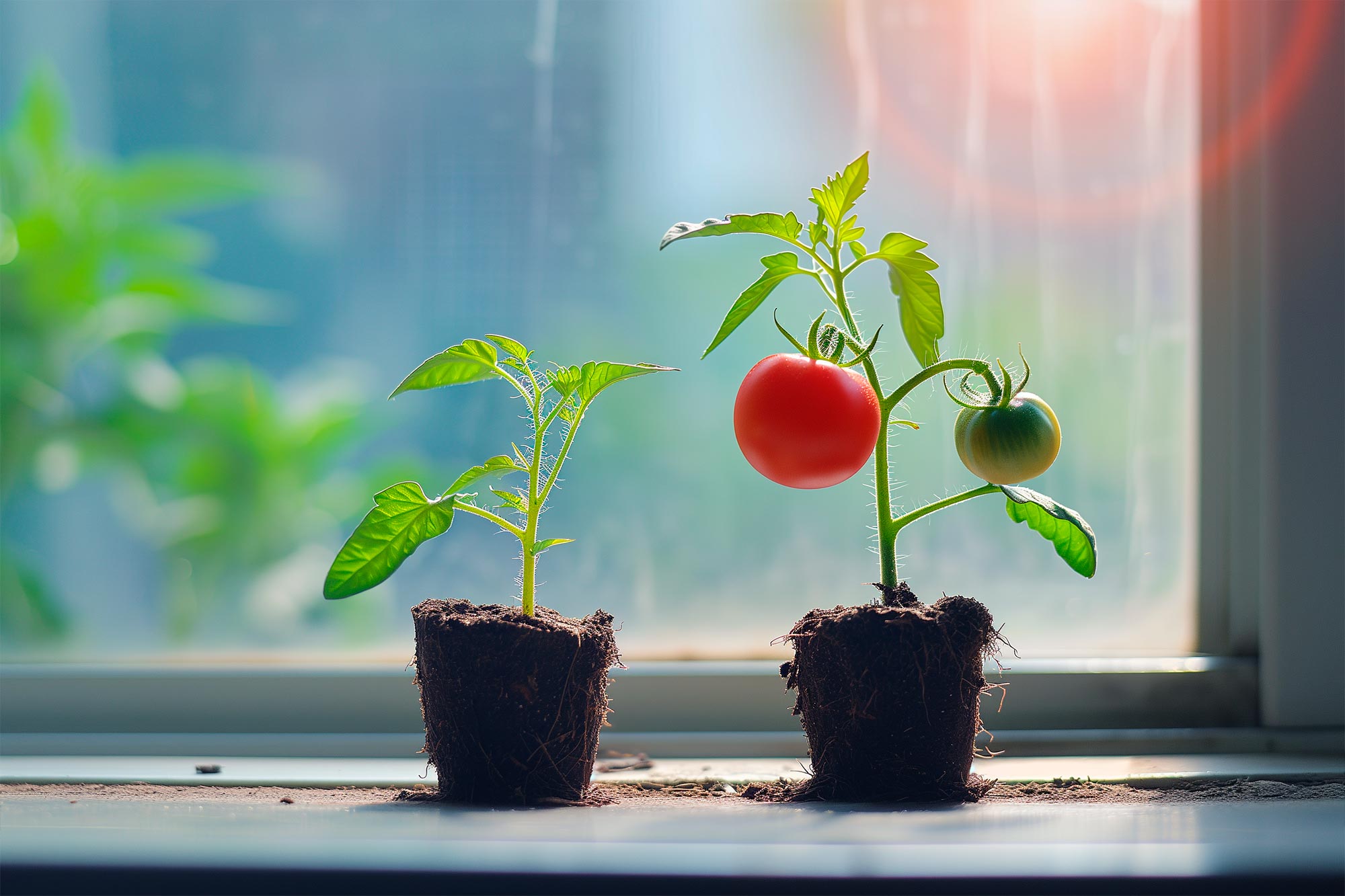
A tiny plant’s molecular “velcro” could help crops turn sunlight into food more efficiently.
An international team of scientists has identified a surprising molecular strategy used by a rare group of land plants. This discovery could eventually be applied to major crops like wheat and rice, helping them convert sunlight into food more efficiently.
The research, led by teams at the Boyce Thompson Institute (BTI), Cornell University, and the University of Edinburgh, tackles a major challenge in agriculture. At the center of the problem is Rubisco, the enzyme responsible for capturing carbon dioxide during photosynthesis—called Rubisco—which is known for being slow and inefficient.
Why Rubisco Limits Photosynthesis
Rubisco is essential for life, but it does not perform its job very well. It often reacts with oxygen instead of carbon dioxide, which wastes energy and reduces plant productivity.
“Rubisco is arguably the most important enzyme on the planet because it’s the entry point for nearly all carbon in the food we eat,” said BTI Associate Professor Fay-Wei Li, who co-led the research. “But it’s slow and easily distracted by oxygen, which wastes energy and limits how efficiently plants can grow.”
Some organisms have evolved ways to overcome this limitation. Many algae species place Rubisco inside tiny internal structures called pyrenoids—essentially microscopic bubbles that concentrate carbon dioxide around the enzyme, allowing it to operate more efficiently.
Scientists have long hoped to bring this kind of system into food crops, which do not naturally have pyrenoids. However, transferring the complex machinery from algae into crop plants has proven very difficult.
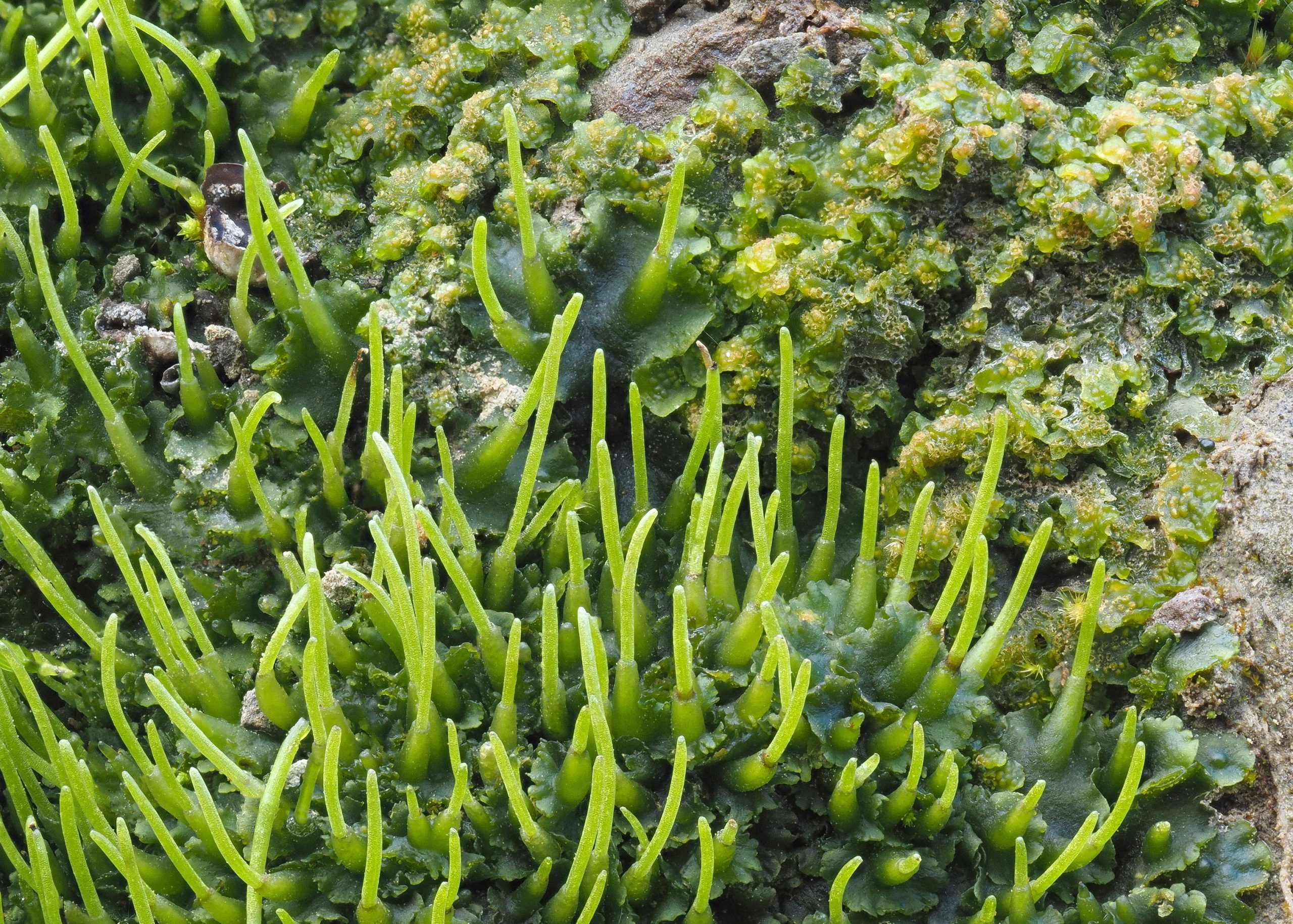
Hornwort Plants Offer a New Clue
A key breakthrough came from studying hornworts, the only land plants known to have CO2-concentrating compartments similar to those in algae. Because hornworts are more closely related to crop plants than algae are, researchers believed their biological mechanisms might be easier to adapt.
What they found was unexpected.
“We assumed hornworts would use something similar to what algae use—a separate protein that gathers Rubisco together,” said Tanner Robison, a graduate student working with Li and a co-first author of the paper. “Instead, we discovered they’ve modified Rubisco itself to do the job.”
The RbcS-STAR “Molecular Velcro”
The researchers identified a unique protein component called RbcS-STAR. Rubisco is made up of large and small protein parts. In hornworts, one version of the small part includes an added tail—the STAR region—that behaves like molecular velcro, causing Rubisco molecules to cluster together.
To see if this feature could work in other plants, the team carried out several experiments. They first introduced RbcS-STAR into a closely related hornwort species that does not form pyrenoids. As a result, Rubisco shifted from being spread throughout the cell to forming concentrated, pyrenoid-like structures.
The scientists then tested the same approach in Arabidopsis, a widely used model plant. Once again, Rubisco formed dense clusters inside the chloroplasts.
“We even tried attaching just the STAR tail to Arabidopsis’s native Rubisco, and it triggered the same clustering effect,” said Alistair McCormick, professor at the University of Edinburgh, who co-led the research. “That tells us STAR is truly the driving force. It’s a modular tool that can work across different plant systems.”
Toward More Efficient Crops
This ability to work across species makes the discovery especially promising for agriculture. It suggests that scientists may be able to trigger Rubisco clustering in crop plants by adding a single, universal velcro-like component, rather than recreating an entire complex system.
However, challenges remain. In addition to clustering Rubisco, plants must also efficiently deliver carbon dioxide to the enzyme.
“We have built a Rubisco house, but it won’t be an efficient house unless we update the HVAC,” said Laura Gunn, assistant professor at Cornell University, who co-led the research. The team is now working to solve this problem.
A Step Toward Higher Crop Yields
Even with these hurdles, the discovery represents a significant step forward. Improving photosynthesis, even slightly, could lead to higher crop yields and reduce the environmental impact of farming. This is an important goal as global demand for food continues to grow.
“This research shows that nature has already tested solutions we can learn from,” said Li. “Our job is to understand those solutions well enough to apply them where they’re needed most—in the crops that feed the world.”
Reference: “An unconventional Rubisco small subunit underpins the CO2-concentrating organelle in land plants” by Tanner A. Robison, Yuwei Mao, Zhen Guo Oh, Warren S. L. Ang, Dan Hong Loh, Yu-Heng Hsieh, Maddie Ceminsky, Nicky Atkinson, Declan Lafferty, Xia Xu, Laura H. Gunn, Alistair J. McCormick and Fay-Wei Li, 5 March 2026, Science.
DOI: 10.1126/science.aea0150
The study was published in Science, with equal contributions from four early-career scientists: Tanner A. Robison, Yuwei Mao, Zhen Guo Oh, and Warren S.L. Ang. The corresponding authors were Laura H. Gunn, Alistair J. McCormick, and Fay-Wei Li.
Never miss a breakthrough: Join the SciTechDaily newsletter.
Follow us on Google and Google News.