
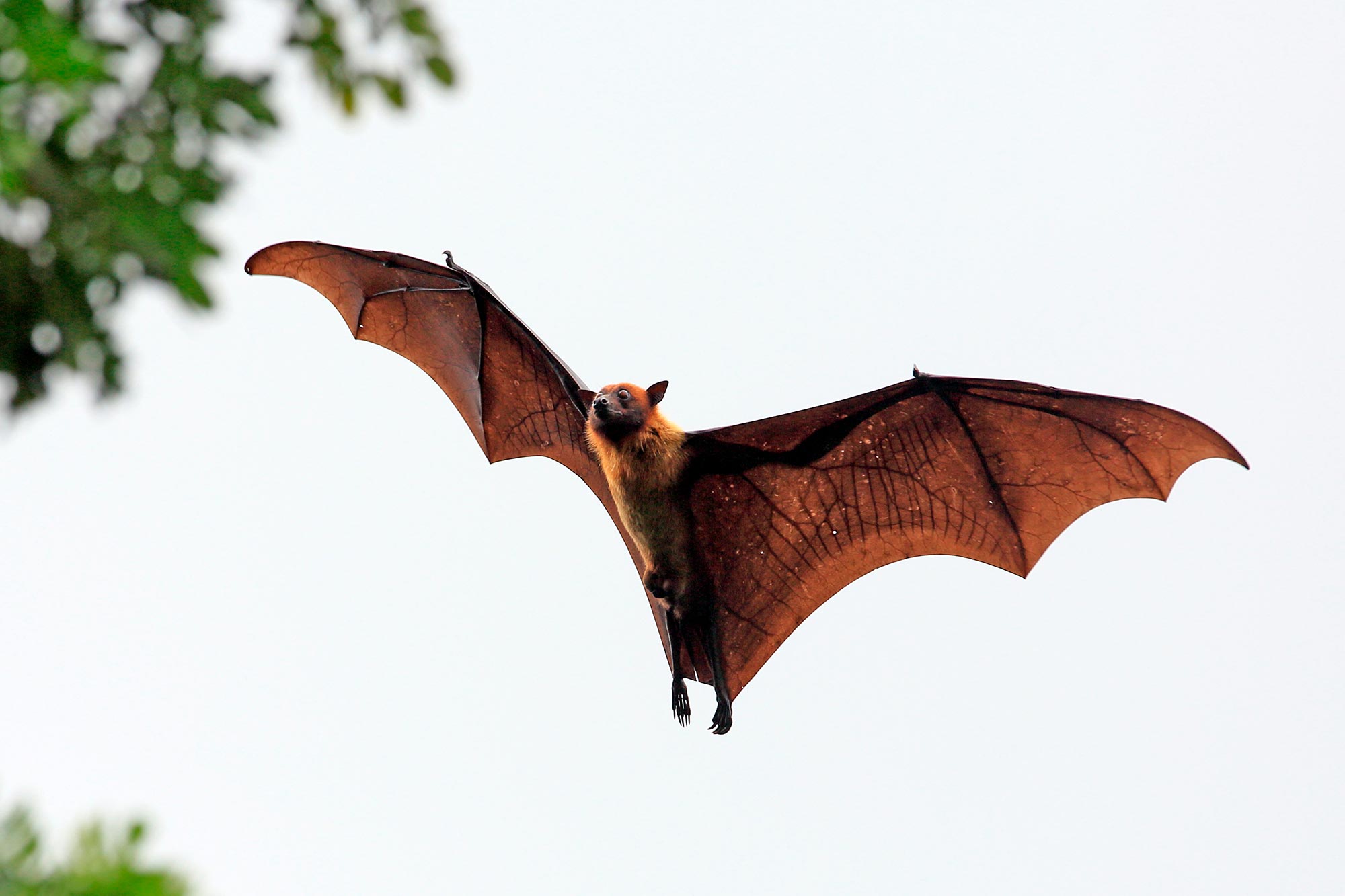
Research on Egyptian fruit bats revealed their capability for memory and planning, challenging the notion that these cognitive abilities are uniquely human.
A team of researchers from Tel Aviv University tracked free-ranging Egyptian fruit bats to investigate whether animals possess complex cognitive abilities, previously attributed only to humans. Their study, recently published in Current Biology, focused on episodic memory traits, mental time travel, planning ahead, and delayed gratification, leading to highly compelling findings.
Understanding Episodic Memory in Bats
“For many years the cognitive abilities to recall personal experiences (episodic memory) and plan ahead were considered exclusive to humans. But more and more studies have suggested that various animals also possess such capabilities, but nearly all of these studies were conducted under laboratory conditions, since field studies on these issues are difficult to perform,” said Professor Yossi Yovel from the School of Zoology and Sagol School of Neuroscience at Tel Aviv University, who co-led the research.
“Attempting to test these abilities in wild animals, we designed a unique experiment relying on the colony of free-ranging fruit bats based in TAU’s I. Meier Segals Garden for Zoological Research.”
Spatial and Temporal Tracking in Bats
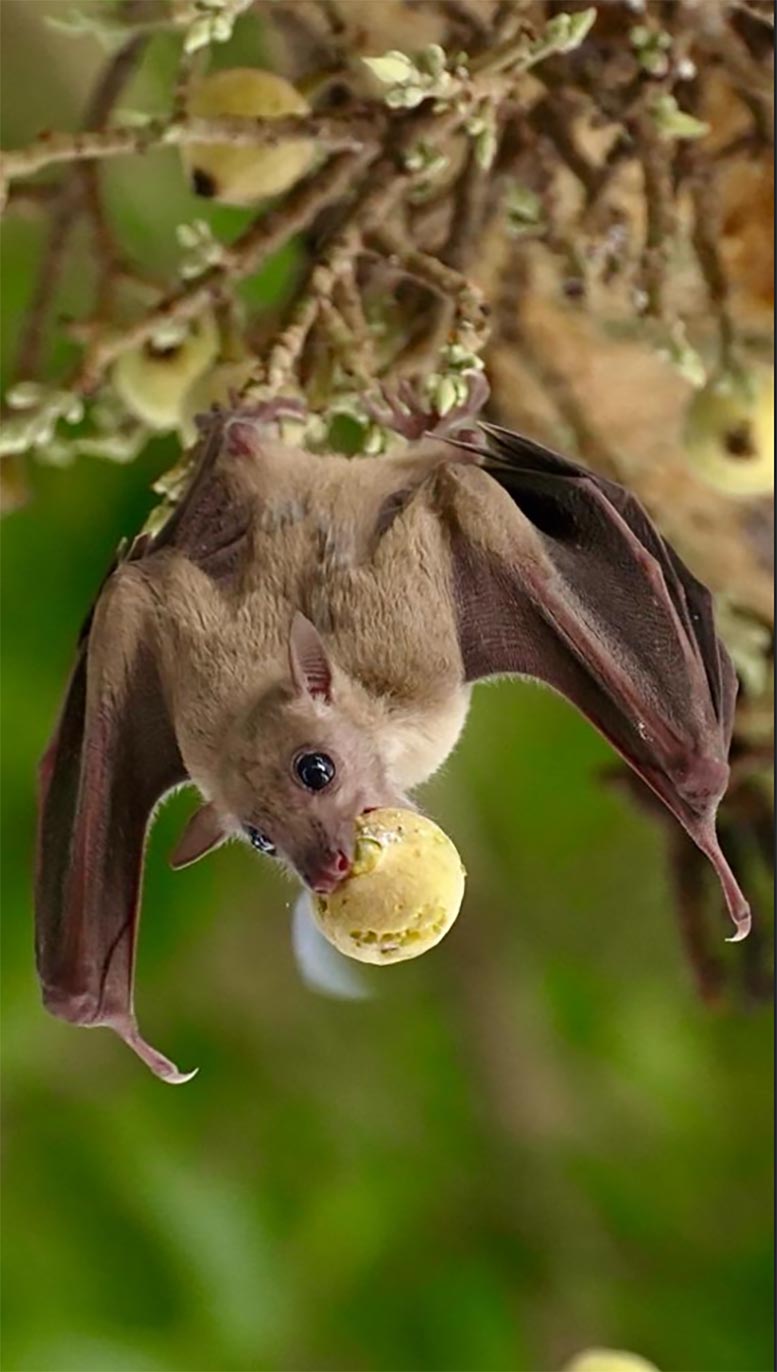
The researchers assumed that bats depending on fruit trees for their survival would need to develop an ability to track the availability of food both spatially (where are the fruit trees?) and over time (when does each tree give fruit?). Navigating through landscapes with numerous fruit and nectar trees, they would need to mentally track the resources in order to revisit them at the appropriate time.
To test this hypothesis, a tiny high-resolution GPS tracker was attached to each bat, enabling the documentation of flight routes and trees visited for many months. The vast data collected in this way were thoroughly analyzed, producing some amazing results.
Insights into Time Perception and Behavior
The first research question was: Do bats form a time map in their minds? To explore this issue, the researchers prevented the bats from leaving the colony for varying periods of time, from one day to a week.
“We wanted to see whether the bats could tell that time had elapsed and behave accordingly. We found that after one day of captivity, the bats would return to trees visited on the previous night. However, when a whole week had gone by, the older bats, based on past experience, avoided trees that had stopped bearing fruit in the interval. In other words: they were able to estimate how much time had passed since their last visit to each tree, and knew which trees bore fruit for a short time and were no longer worth visiting. Young, inexperienced bats were unable to do this, indicating that this is an acquired skill that must be learned,” said co-lead researcher Dr. Lee Harten from the School of Zoology and Sagol School of Neuroscience at Tel Aviv University.

Planning Ahead: Evidence of Future-Oriented Behavior
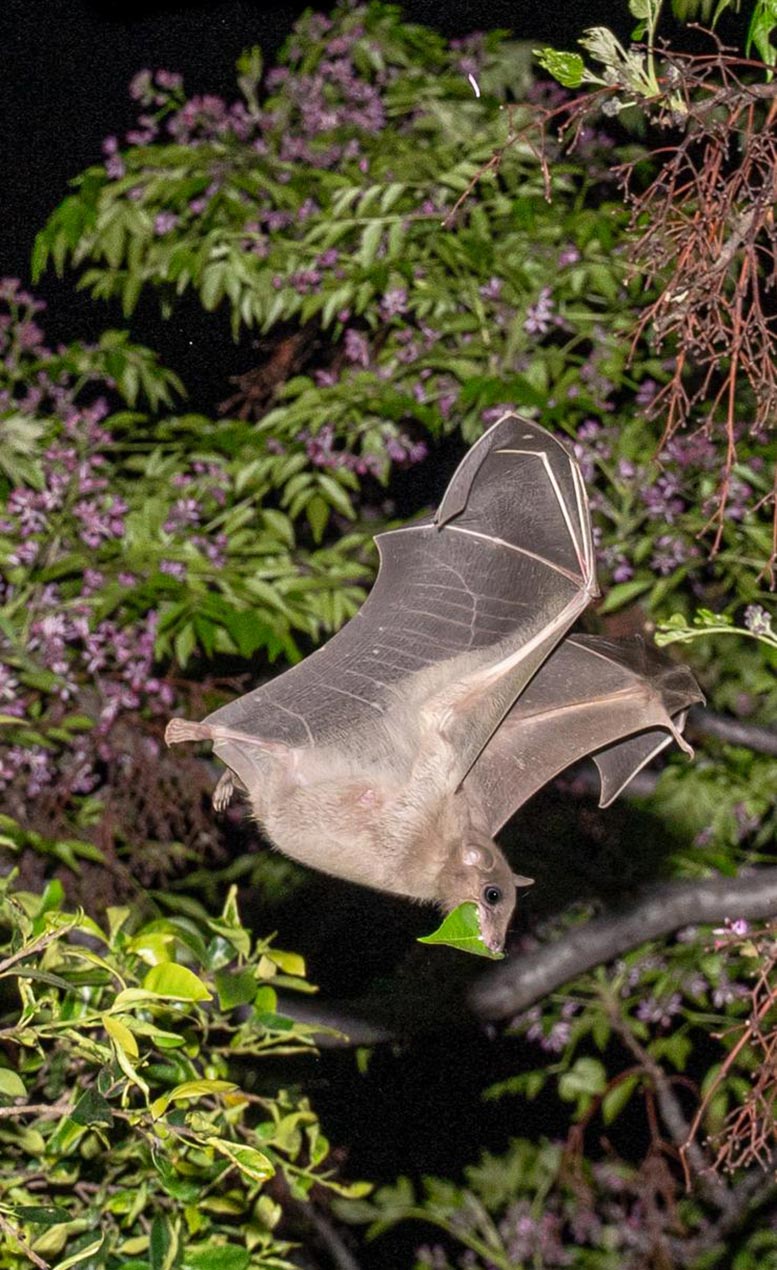
While the first research question looked at past experiences, the second dealt with the future: Do the bats exhibit future-oriented behaviors? Are they capable of planning ahead? To address this issue the researchers observed each bat’s route to the first tree of the evening, possibly indicative of plans made before leaving the colony.
“We found that usually the bats fly directly to a specific tree they know, sometimes 20 or 30 minutes away. Being hungry, they fly faster when that tree is further away, suggesting that they plan where they are heading. Moreover, focused on their chosen target, they will pass by other trees, even good sources visited just yesterday – indicating a capacity for delayed gratification. We also found that the first bats to leave the colony choose trees bearing fruits rich in sugar, while the bats that leave later seek proteins,” said Chen Xing, a researcher from the School of Zoology.
All these findings suggest that the bats plan their foraging before they leave the colony, and know exactly where they are flying and what kind of nourishment they are looking for.
Bridging the Cognitive Gap Between Humans and Animals
“The cognitive gap between humans and animals is one of the most fascinating issues in science. Our study demonstrates that fruit bats are capable of quite a complex decision-making process involving the three questions indicative of cognitive abilities: Where? (each tree’s location); When? (when the tree bears fruit); and What? (the nourishment it provides – sugar vs. proteins). Once again we find that the gap is not cleat-cut, and that humans are not as unique as some might think. Apparently, humans and animals are all located on a spectrum, with almost any human ability found in animals as well,” said Yovel.
Reference: “Time-mapping and future-oriented behavior in free-ranging wild fruit bats” by Lee Harten, Xing Chen, Lior de Marcas, Adi Rachum, Michal Handel, Aya Goldshtein, Maya Fenigstein Levi, Shira Rosencwaig and Yossi Yovel, 20 June 2024, Current Biology.
DOI: 10.1016/j.cub.2024.05.046
Never miss a breakthrough: Join the SciTechDaily newsletter.
Follow us on Google and Google News.
1 Comment
I don’t why these people are so surprised that other animals have similar (natural) abilities as humans. As a little girl I just knew everything is connected and that my darling cat couldn’t possibly be sitting there with a blank mind, like she’d been switched off. I always imagined their thoughts were more visual, pictures in their heads rather than words, but as we know other animals have a language, such as whales, dolphins and elephants, maybe they think in a similar way as we do…
So it’s time to stop the cruelty and torture of other creatures in labs and for their meat, etc. More respect, love and compassion is called for, including for our own kind.