
Close Menu
    Facebook X (Twitter) Instagram
    SciTechDaily
    • Biology
    • Chemistry
    • Earth
    • Health
    • Physics
    • Science
    • Space
    • Technology
    Facebook X (Twitter) Pinterest YouTube RSS
    SciTechDaily
    Home»Health»Threatening Mutations: Researchers Identify COVID-19 Variants With Potential To Escape Cellular Immune Response
    Health

    Threatening Mutations: Researchers Identify COVID-19 Variants With Potential To Escape Cellular Immune Response

    By PLOSFebruary 16, 2022No Comments3 Mins Read
    Facebook Twitter Pinterest Telegram LinkedIn WhatsApp Email Reddit
    Share
    Facebook Twitter LinkedIn Pinterest Telegram Email Reddit
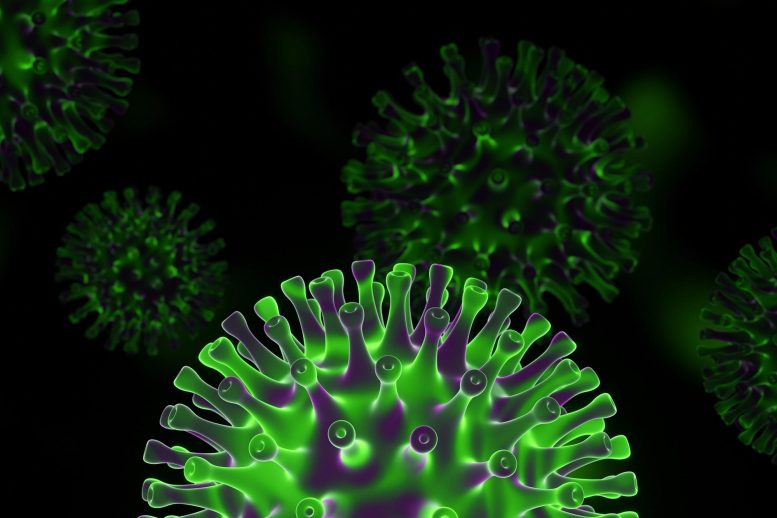
    COVID Virus Omicron Variant
    COVID Virus Omicron Variant

    Mutations in SARS-CoV-2 strains might evade the T cell response in some populations. Regional variations in mutations could pressure T cell responses in areas like sub-Saharan Africa.

    A number of existing strains of SARS-CoV-2, as well as other future variants that could arise, have the potential to escape the immune system’s cytotoxic T cell response in some portion of the population. That’s the conclusion of a new modeling study published on February 10th, 2022, in PLOS Computational Biology by Antonio Martín-Galiano of the Carlos III Health Institute, Spain, and colleagues.

    Genetic Basis of the Human Immune Response

    The T cell response in humans is genetically encoded by HLA molecules—this means different individuals have different HLAs, programmed to recognize invading pathogens based on different parts, or “epitopes” of the pathogens. With thousands of different HLA molecules in the human population and thousands of possible epitopes in any given virus, the experimental evaluation of the immune response of every human HLA allele to every viral variant is not feasible. However, computational methods can facilitate this task.

    In the new study, researchers first determined the full set of epitopes from an original reference strain of SARS-CoV-2 from Wuhan, China. The team discovered 1,222 epitopes of SARS-CoV-2 that were associated with major HLA subtypes, covering about 90% of the human population; at least 9 out of every 10 people can launch a T cell response to COVID-19 based on these 1,222 epitopes.
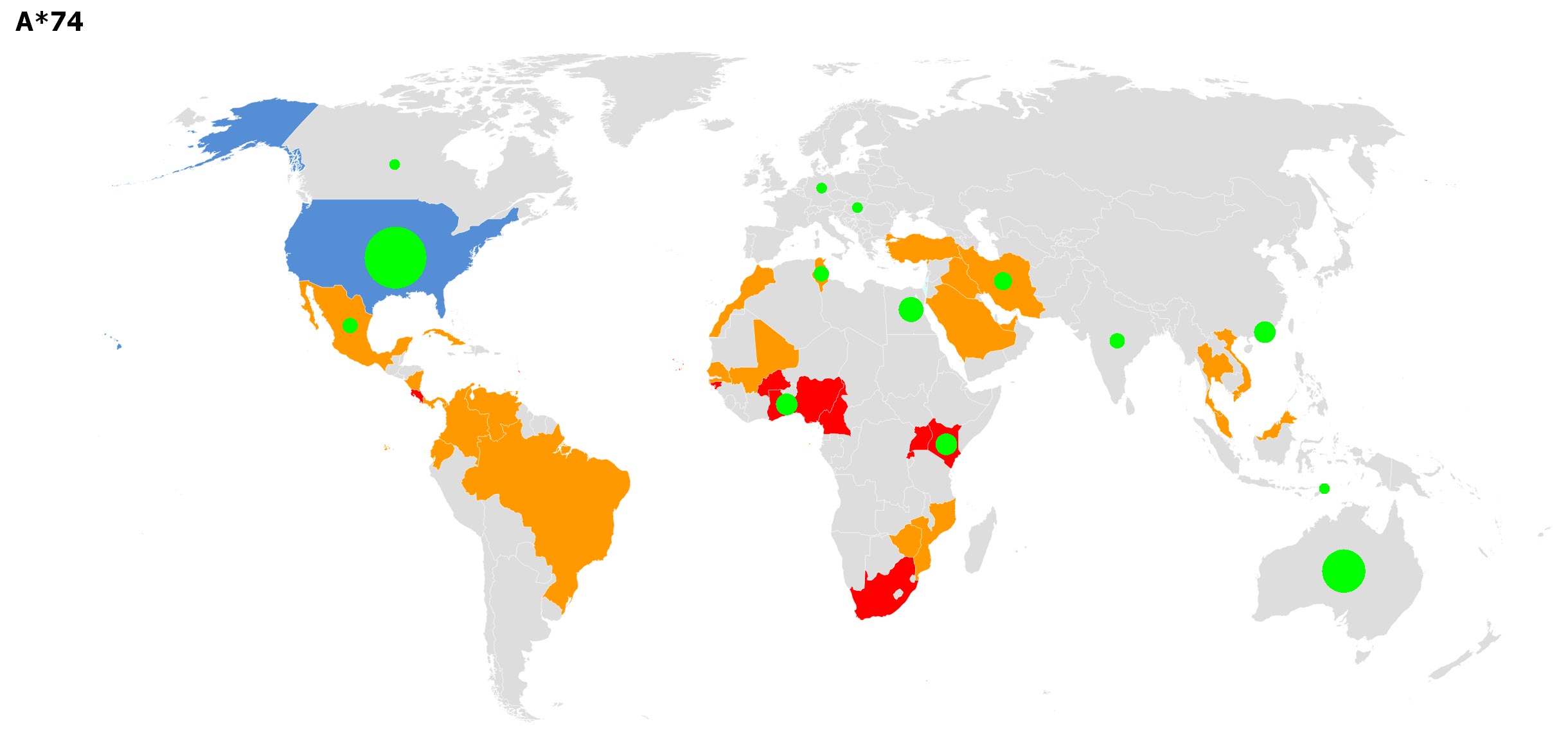
    COVID 19 Variants World Map A 74
    World map indicating the presence of population samples carrying alleles of the A*74 family and isolates with escape mutations for these family (green circles). Credit: Foix A et al., 2022, PLOS Computational Biology, CC-BY 4.0

    Then, the researchers computationally analyzed whether any of 118,000 different SARS-CoV-2 isolates from around the world, described in a National Center for Biotechnology Information (NCBI) dataset, had mutations in these epitopes. 47% of the epitopes, they showed, were mutated in at least one existing isolate. In some cases, existing isolates had mutations in multiple epitope regions, but cumulative mutations never affected more than 15% of epitopes for any given HLA allele type. When the team analyzed susceptible alleles and the geographic origin of their respective escape isolates, the team found that they co-existed in some geographical regions—including sub-Saharan Africa and East and Southeast Asia—suggesting potential genetic pressure on the cytotoxic T cell response in these areas.

    Global and Regional Implications for the Future

    “The accumulation of these changes in independent isolates is still too low to threaten the global human population,” the authors say. “Our protocol has identified mutations that may be relevant for specific populations and warrant deeper surveillance.”

    However, Martín-Galiano notes that “unnoticed SARS-CoV-2 mutations” might in the future “threaten the cytotoxic T response in human subpopulations.”

    Reference: “Predicted impact of the viral mutational landscape on the cytotoxic response against SARS-CoV-2” by Anna Foix, Daniel López, Francisco Díez-Fuertes, Michael J. McConnell and Antonio J. Martín-Galiano, 10 February 2022, PLoS Computational Biology.
    DOI: 10.1371/journal.pcbi.1009726

    Funding: This research was supported by Acción Estratégica en Salud from the ISCIII, grants MPY 380/18 (to MJM), 388/18 (to DL) and 509/19 (to AJM-G). AJM-G is the recipient of a Miguel Servet contract by the ISCIII. The funders had no role in study design, data collection and analysis, decision to publish, or preparation of the manuscript.

    Never miss a breakthrough: Join the SciTechDaily newsletter.
    Follow us on Google and Google News.

    COVID-19 Immunology Infectious Diseases PLOS Popular Public Health
    Share. Facebook Twitter Pinterest LinkedIn Email Reddit

    Related Articles

    Several FDA-Approved Drugs Could Be Repurposed To Treat People Infected With COVID-19

    New Research Finds Most People Are Naturally Armed Against the COVID-19 Coronavirus

    Testing Shows COVID-19 Lingered Longer Than Reported in Wuhan, China

    Antibodies Fade Quickly in Recovering COVID-19 Patients

    Researchers Identify Key Biomarker That Predicts Who Will Have Severe COVID-19

    Small Neutralizing Antibody Identified That May Prevent COVID-19 Infection

    Research Shows Exposure to Common Cold Coronaviruses Can Teach the Immune System to Recognize SARS-CoV-2

    Common Molecular Feature of Antibodies That Neutralize SARS-CoV-2 Discovered, Boosting COVID-19 Vaccine Prospects

    New Study Outlines a Roadmap for Effective Treatment of COVID-19

    Leave A Reply Cancel Reply

    • Facebook
    • Twitter
    • Pinterest
    • YouTube

    Don't Miss a Discovery

    Subscribe for the Latest in Science & Tech!

    Trending News

    Why Popular Diabetes Drugs Like Ozempic Don’t Work for Everyone: The “Genetic Glitch”

    Scientists Stunned After Finding Plant Thought Extinct for 60 Years

    Scientists Discover Tiny New Spider That Hunts Prey 6x Its Size

    Natural Component From Licorice Shows Promise for Treating Inflammatory Bowel Disease

    Scientists Warn: Popular Sweetener Linked to Dangerous Metabolic Effects

    Monster Storms on Jupiter Unleash Lightning Beyond Anything on Earth

    Scientists Create “Liquid Gears” That Spin Without Touching

    The Simple Habit That Could Help Prevent Cancer

    Follow SciTechDaily
    • Facebook
    • Twitter
    • YouTube
    • Pinterest
    • Newsletter
    • RSS
    SciTech News
    • Biology News
    • Chemistry News
    • Earth News
    • Health News
    • Physics News
    • Science News
    • Space News
    • Technology News
    Recent Posts
    • Trees Emit Tiny Lightning Flashes During Storms and Scientists Finally Prove It
    • Forget Chemicals. This Plant Removes Microplastics From Water
    • Breakthrough Crystal Lets Scientists “Write” Nanoscale Patterns With Light
    • Pomegranate Compound Could Help Protect Against Heart Disease
    • Your Blood Test Might Already Show Alzheimer’s Risk
    Copyright © 1998 - 2026 SciTechDaily. All Rights Reserved.
    • Science News
    • About
    • Contact
    • Editorial Board
    • Privacy Policy
    • Terms of Use

    Type above and press Enter to search. Press Esc to cancel.