
Close Menu
    Facebook X (Twitter) Instagram
    SciTechDaily
    • Biology
    • Chemistry
    • Earth
    • Health
    • Physics
    • Science
    • Space
    • Technology
    Facebook X (Twitter) Pinterest YouTube RSS
    SciTechDaily
    Home»Biology»Time Spent in Orbit May Alter Astronauts’ Genes
    Biology

    Time Spent in Orbit May Alter Astronauts’ Genes

    By SciTechDailyFebruary 1, 2012No Comments2 Mins Read
    Facebook Twitter Pinterest Telegram LinkedIn WhatsApp Email Reddit
    Share
    Facebook Twitter LinkedIn Pinterest Telegram Email Reddit
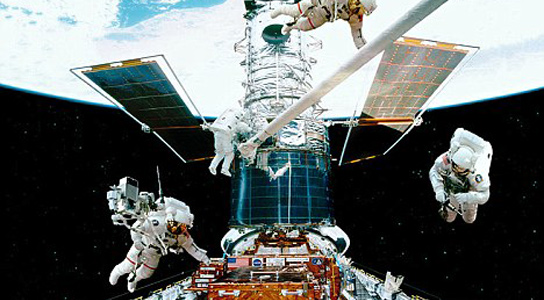
    astronauts-spacewalk
    Spending long periods of time in low-gravity environments might alter genes.

    Scientists discovered that spending long periods of time in low-gravity environments might alter genes. In order to complete their experiment, researchers used magnets on Earth to simulate the weightlessness of space.
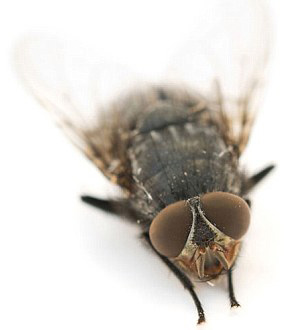
    fruit-fly

    Researchers studied fruit flies, which after having spent time in the artificially generated microgravity, experienced changes in crucial genes. While humans won’t necessarily respond the same way, it’s something that indicates what could happen as organisms spend longer amounts of time in free-fall.

    The researchers haven’t yet been able to separate the effects of microgravity and magnetism, states Raul Herranz, a molecular biologist at the Centro de Investigaciones Biológicas in Spain.

    The upcoming study was published in BMC Genomics and focused on using magnetic technology, since sending anything into space is extremely expensive ($10,000 per pound to get something into low-Earth orbit.) It’s already known that astronauts in space lose as much bone each month as they would in a year on Earth.

    Fruit flies raised in low gravity developed slowly and had difficulty reproducing. The researchers discovered 500 changes in the fruit flies’ genes, some of which regulated immune response, temperature, and even stress response.

    Weightlessness alone seemed to modulate nearly 200 genes, which could build up for an astronaut traveling to Mars, spending years in zero gravity.

    Reference: “Microgravity simulation by diamagnetic levitation: effects of a strong gradient magnetic field on the transcriptional profile of Drosophila melanogaster” by Raul Herranz, Oliver J Larkin, Camelia E Dijkstra, Richard JA Hill, Paul Anthony, Michael R Davey, Laurence Eaves, Jack JWA van Loon, F Javier Medina and Roberto Marco, 1 February 2012, BMC Genomics.
    DOI: 10.1186/1471-2164-13-52

    Never miss a breakthrough: Join the SciTechDaily newsletter.
    Follow us on Google and Google News.

    Astronaut Genetics
    Share. Facebook Twitter Pinterest LinkedIn Email Reddit

    Related Articles

    Genetically Modified Mosquitoes to Fight Diseases

    Researchers Study Regulatory Gene’s Role in Sperm Quality Control

    Mutations in TTN Gene Cause Idiopathic Dilated Cardiomyopathy (DCM)

    Researchers Discover that Prions Play Role in Yeast Survival and Evolution

    Researcher Studies Root Growth to Develop Hardier, Weather-resistant Crops

    Massages Change Gene Expression and Reduce Inflammation

    Researchers Complete Genome Sequence of a Denisovan Human Finger Bone

    Researchers May Be Able to Sequence Genomes of Any Microbes

    Researchers Identify Genetic Mutation While Studying Cold Urticarial

    Leave A Reply Cancel Reply

    • Facebook
    • Twitter
    • Pinterest
    • YouTube

    Don't Miss a Discovery

    Subscribe for the Latest in Science & Tech!

    Trending News

    Scientists May Have Found the Key to Jupiter and Saturn’s Moon Mystery

    Scientists Uncover Brain Changes That Link Pain to Depression

    Saunas May Do More Than Raise Body Temperature – They Activate Your Immune System

    Exercise in a Pill? Metformin Shows Surprising Effects in Cancer Patients

    Hidden Oceans of Magma Could Be Protecting Alien Life

    New Study Challenges Alzheimer’s Theories: It’s Not Just About Plaques

    Artificial Sweeteners May Harm Future Generations, Study Suggests

    Splashdown! NASA Artemis II Returns From Record-Breaking Moon Mission

    Follow SciTechDaily
    • Facebook
    • Twitter
    • YouTube
    • Pinterest
    • Newsletter
    • RSS
    SciTech News
    • Biology News
    • Chemistry News
    • Earth News
    • Health News
    • Physics News
    • Science News
    • Space News
    • Technology News
    Recent Posts
    • Ancient “Rock” Microbes May Reveal How Complex Life Began
    • Hidden “Trade Winds” Inside Cells Could Explain Cancer Spread
    • Humans Owe Their Eyes to a Tiny One-Eyed “Cyclops”
    • Researchers Capture Quantum Interference in One of Nature’s Rarest Atoms
    • Ancient DNA Reveals Irish Goats Have a 3,000-Year-Old Lineage Still Alive Today
    Copyright © 1998 - 2026 SciTechDaily. All Rights Reserved.
    • Science News
    • About
    • Contact
    • Editorial Board
    • Privacy Policy
    • Terms of Use

    Type above and press Enter to search. Press Esc to cancel.