
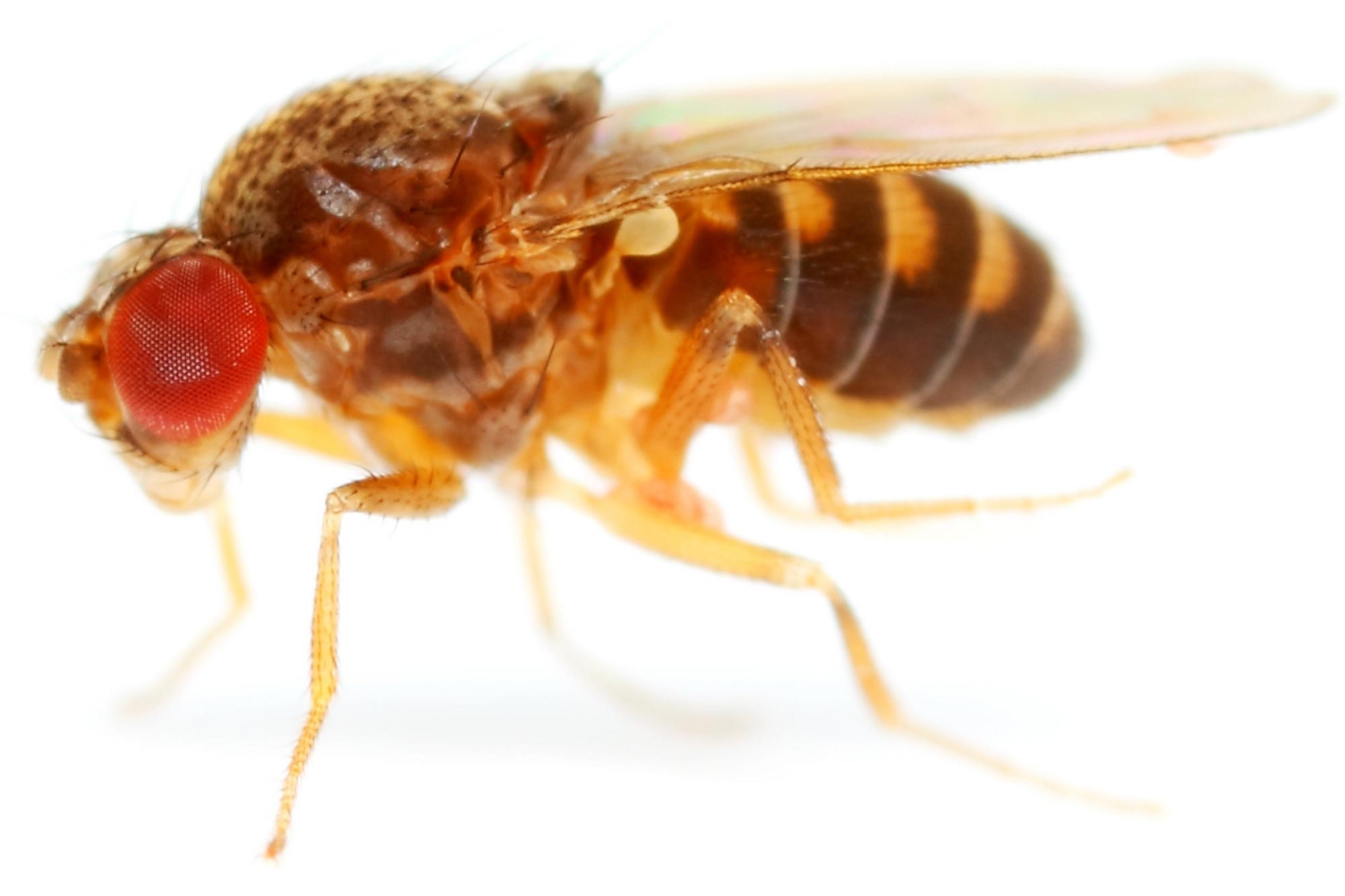
UC San Diego’s study shows fruit flies use a pre-processing mechanism in their sensory system to efficiently decode complex odors, offering insights into sensory system functions and potential technological applications.
The human sense of smell is complex, using billions of neurons to identify diverse odors. In contrast, insects like fruit flies have only 100,000 neurons but still effectively process complex scents for survival tasks like finding food, mating, and avoiding predators. In a new study, researchers from the University of California, San Diego reveal the simple, yet efficient systems flies have that allow them to overcome their limited sensory capabilities.
“Our work sheds light on the sensory processing algorithms insects use to respond to complex olfactory stimuli,” said Palka Puri, lead author of the study and physics Ph.D. student. “We showed that the specialized organization of insect sensory neurons holds the key to the puzzle — implementing an essential processing step that facilitates computations in the central brain.” Puri and his co-authors, Postdoctoral Scholar Shiuan-Tze Wu, Associate Professor Chih-Ying Su, and Assistant Professor Johnatan Aljadeff, have published these findings in the journal Proceedings of the National Academy of Sciences (PNAS).
New Insights Into Insect Sensory Processing
This new study challenges previous assumptions that the central brain is the primary site for odor processing in flies. Instead, it shows that the effectiveness of the insect’s sensory capabilities relies on a “pre-processing” stage in the periphery of their sensory system, which prepares the odor signals for computations that occur later in the central brain region.
Mechanisms of Odor Detection in Flies
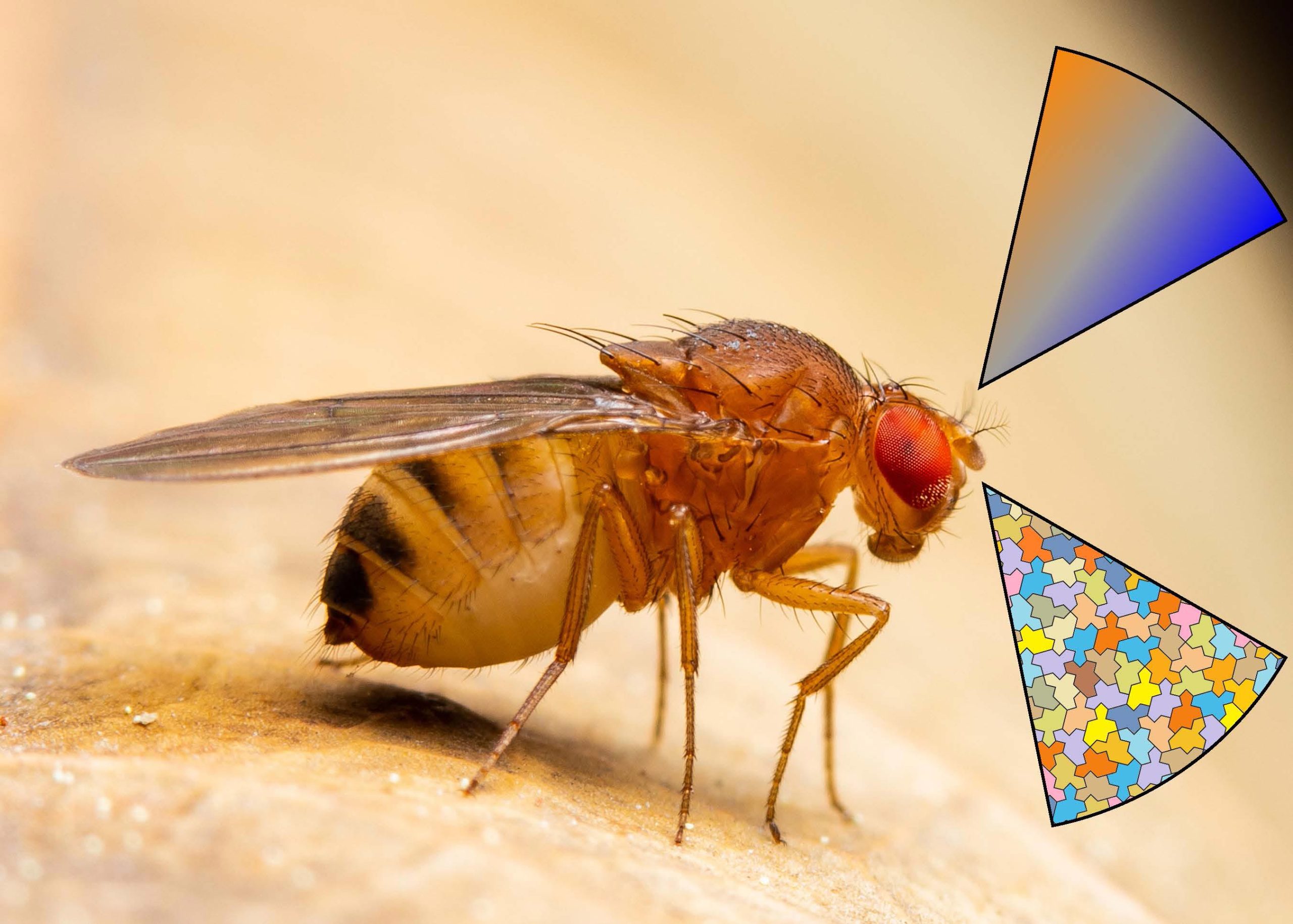
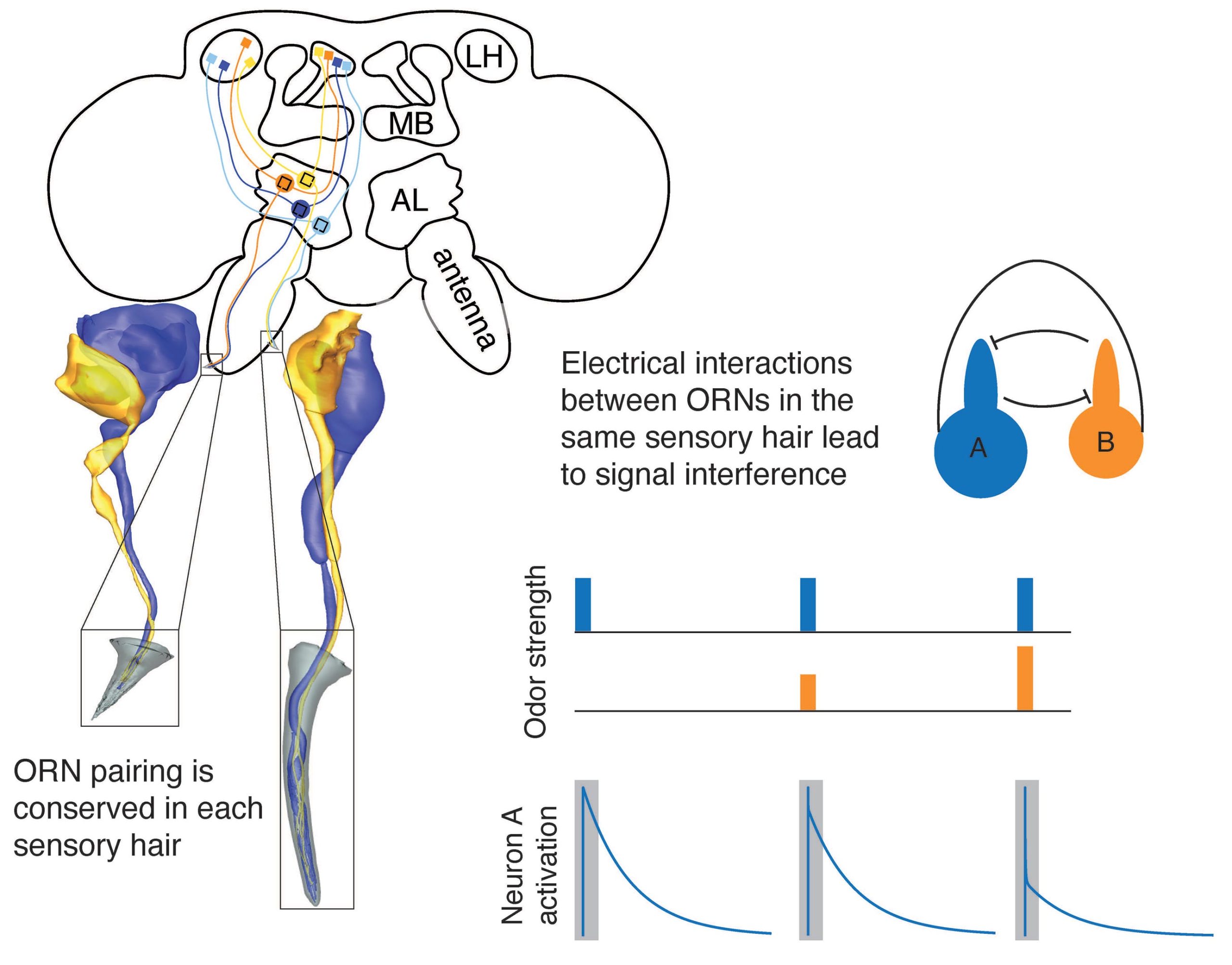
Flies smell through their antennae, which are replete with sensory hairs that detect elements of the environment around them. Each sensory hair usually features two olfactory receptor neurons, or ORNs, that are activated by different odor molecules in the environment. Intriguingly, ORNs in the same sensory hair are strongly coupled by electrical interactions.
“This scenario is akin to two current-carrying wires placed close together,” explained Puri. “The signals carried by the wires interfere with each other through electromagnetic interactions.”
In the case of the fly olfactory system, however, this interference is beneficial. The researchers showed that as flies encounter an odor signal, the specific pattern of interference between the receptors helps flies quickly compute the “gist” of the odor’s meaning: “Is it good or bad for me?” The result of this preliminary evaluation in the periphery is then relayed to a specific region in the fly’s central brain, where the information about odors present in the outside world is translated into a behavioral response.
Study Details and Results
The researchers constructed a mathematical model of how odor signals are processed by electrical coupling between ORNs. They then analyzed the wiring diagram (“connectome”) of the fly brain, a large-scale dataset generated by scientists and engineers at Howard Hughes Medical Institute’s research campus. This allowed the researchers to trace how odor signals from the sensory periphery are integrated into the central brain.
“Remarkably, our work shows that the optimal odor blend — the precise ratio to which each sensory hair is most sensitive — is defined by the genetically predetermined size difference between the coupled olfactory neurons,” said Aljadeff, a faculty member in the School of Biological Sciences. “Our work highlights the far-reaching algorithmic role of the sensory periphery for the processing of both innately meaningful and learned odors in the central brain.”
Aljadeff describes the system with a visual analogy. Like a specialized camera that can detect specific types of images, the fly has developed a genetically driven method to distinguish between images, or in this case, mixtures of odors. “We discovered that the fly brain has the wiring to read the images from this very special camera to then initiate behavior,” he said.
To arrive at these results, the research was integrated with previous findings from Su’s lab that described the conserved organization of ORNs in the fly olfactory system into sensory hairs. The fact that signals carried by the same odor molecules always interfere with each other, in every fly, suggested to the researchers that this organization has meaning.
“This analysis shows how neurons in higher brain centers can take advantage of balanced computation in the periphery,” said Su. “What really brings this work to another level is how much this peripheral pre-processing can influence higher brain function and circuit operations.”
Future Research and Applications
This work may inspire research into the role of processing in peripheral organs in other senses, such as sight or hearing, and help form a foundation for designing compact detection devices with the ability to interpret complex data.
“These findings yield insight into the fundamental principles of complex sensory computations in biology, and open doors for future research on using these principles to design powerful engineered systems,” said Puri.
Reference: “Peripheral preprocessing in Drosophila facilitates odor classification” by Palka Puri, Shiuan-Tze Wu, Chih-Ying Su and Johnatan Aljadeff, 16 May 2024, Proceedings of the National Academy of Sciences.
DOI: 10.1073/pnas.2316799121
Never miss a breakthrough: Join the SciTechDaily newsletter.
Follow us on Google and Google News.