

Millions of years before the asteroid impact that ended the reign of the dinosaurs, mammals were already beginning to shift from tree-dwelling to ground-based lifestyles.
A groundbreaking study uncovered this evolutionary trend by analyzing tiny limb bone fragments from marsupials and placental mammals in Western North America. These subtle fossil clues reveal that mammals may have been responding to a changing world, especially the spread of flowering plants that transformed habitats on the ground. Surprisingly, this terrestrial transition appears to have played a bigger role in mammalian evolution than direct interactions with dinosaurs.
Early Ground-Dwellers Before Dinosaurs’ Demise
New research led by the University of Bristol shows that many mammals had already begun living on the ground several million years before the asteroid impact that caused the mass extinction of the dinosaurs.
Published today (April 1) in the journal Palaeontology, the study presents new evidence that mammals were shifting toward a more ground-based lifestyle well before the end of the Cretaceous period.
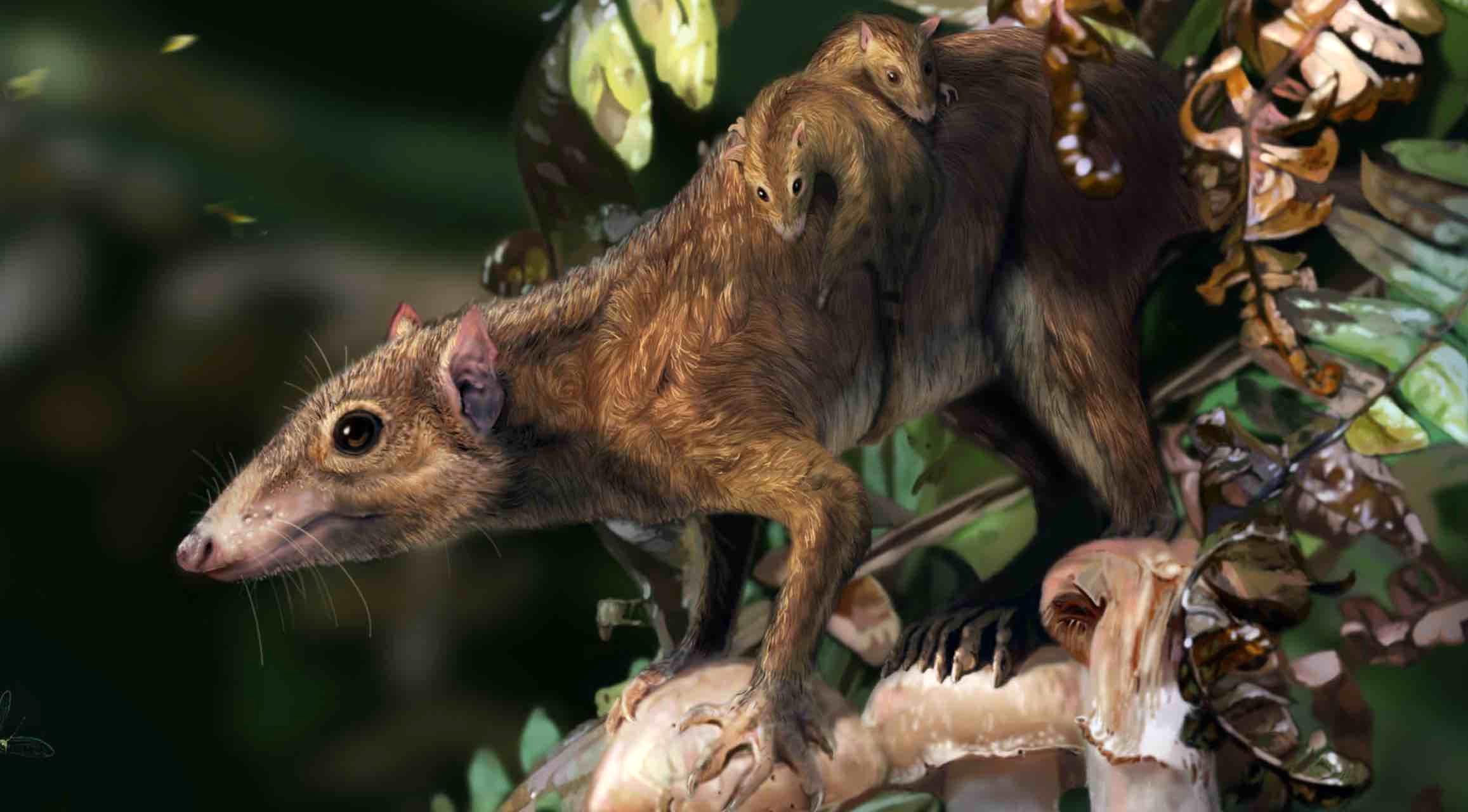
The team analyzed tiny fossilized bone fragments, specifically the ends of limb bones, from marsupial and placental mammals found in Western North America. This is the only region with a well-preserved terrestrial fossil record from that time. These bones carry structural clues about how animals moved, allowing researchers to compare them statistically with the limb bones of modern mammals.
Tree-Dwellers Struggled After the Impact
Lead author Professor Christine Janis, from the University of Bristol’s School of Earth Sciences, explained: “It was already known that plant life changed toward the end of the Cretaceous, with flowering plants, known as angiosperms, creating more diverse habitats on the ground. We also knew that tree-dwelling mammals struggled after the asteroid impact. What had not been documented, was whether mammals were becoming more terrestrial, in line with the habitat changes.”

A New Way to Study Evolution
While previous studies used complete skeletons to study ancient mammal movement, this research is one of the first to use small bone elements to track changes within an entire community. The team have used statistical data from museum collections in New York, California, and Calgary to analyze these tiny fossils.
Professor Janis added: “The vegetational habitat was more important for the course of Cretaceous mammalian evolution than any influence from dinosaurs.”
The evidence was gathered from bone articular fragments of therian mammals, which includes marsupials and placentals. The team’s methods were not applied to more basal mammals such as multituberculates, which were common at the time, because their bones were different.
Bone Fragments Tell a Bigger Story
Professor Janis said: “We’ve known for a long time that mammalian long bone articular surfaces can carry good information about their mode of locomotion, but I think this is the first study to use such small bone elements to study change within a community, rather than just individual species.”
While this research marks the end of the project, the findings offer new insights into how prehistoric mammals responded to changing environments – a few million years before the asteroid impact reshaped life on Earth.
Reference: “Down to earth: therian mammals became more terrestrial towards the end of the Cretaceous” by Christine M. Janis, Alberto Martín-Serra, Jessica M. Theodor and Craig S. Scott, 1 April 2025, Palaeontology.
DOI: 10.1111/pala.70004
Never miss a breakthrough: Join the SciTechDaily newsletter.
Follow us on Google and Google News.
3 Comments
There WAS NO asteroid impact! It has been proven and accepted as fact that an asteroid impact would have either been far too localized to do the damage required or far too devastating and would have been a global killer. Please stop perpetuating this preposterous lie. There IS a preponderance of evidence that there was a global flood, which would be the ONLY way that could preserve (by burying under mud;wave after wave) biological matter. It’s true. Deal with it.
even worse… it’s not even a globe.
haha April Fool’s. Almost got me. 😉