
Utilizing zooplankton’s feeding habits, researchers aim to boost oceanic carbon sequestration by introducing clay particles to their diet, significantly speeding up the biological carbon pump.
A study led by Dartmouth introduces a new method for recruiting trillions of microscopic sea creatures known as zooplankton to combat climate change. The approach involves converting carbon into food that these animals can eat, digest, and subsequently release as carbon-filled feces deep in the ocean.
This method takes advantage of the zooplankton’s insatiable appetites to accelerate the ocean’s natural process of removing carbon from the atmosphere, a process referred to as the biological pump. This finding is detailed in a paper published in Nature Scientific Reports.
Enhancing the Biological Pump
It begins with spraying clay dust on the ocean’s surface at the end of algae blooms. These blooms can grow to cover hundreds of square miles and remove about 150 billion tons of carbon dioxide from the atmosphere each year, converting it into organic carbon particulates. But once the bloom dies, marine bacteria devour the particulates, releasing most of the captured carbon back into the atmosphere.
The researchers found that the clay dust attaches to carbon particulates before re-entering the atmosphere, redirecting them into the marine food chain as tiny sticky pellets the ravenous zooplankton consume and later excrete at lower depths.
“Normally, only a small fraction of the carbon captured at the surface makes it into the deep ocean for long-term storage,” says Mukul Sharma, the study’s corresponding author and a professor of earth sciences. Sharma also presented the findings on Dec. 10 at the American Geophysical Union annual conference in Washington, D.C.
“The novelty of our method is using clay to make the biological pump more efficient—the zooplankton generate clay-laden poops that sink faster,” says Sharma, who received a Guggenheim Award in 2020 to pursue the project.
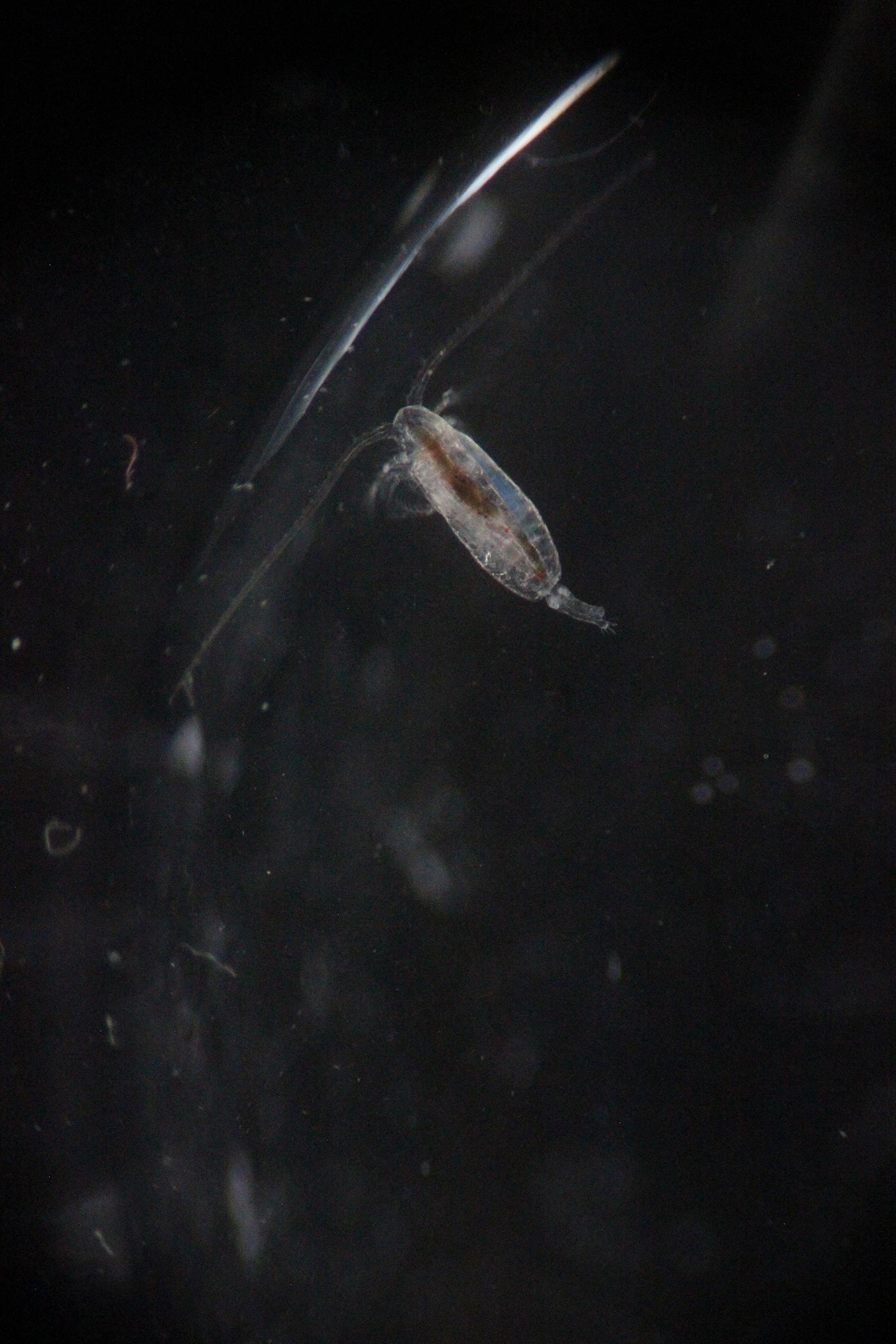
“This particulate material is what these little guys are designed to eat. Our experiments showed they cannot tell if it’s clay and phytoplankton or only phytoplankton—they just eat it,” he says. “And when they poop it out, they are hundreds of meters below the surface and the carbon is, too.”
In lab experiments, the researchers found clay dust captured as much as 50% of organic carbon particulates before they could oxidize into carbon dioxide. This video shows that the sticky heavy flocs of clay and carbon (upper right) sink quickly, collecting more organic carbon as they fall through the water column. Credit: Mukul Sharma/Dartmouth
Experimental Findings and Marine Impact
The team conducted laboratory experiments on water collected from the Gulf of Maine during a 2023 algae bloom. They found that when clay attaches to the organic carbon released when a bloom dies, it prompts marine bacteria to produce a kind of glue that causes the clay and organic carbon to form little balls called flocs.
The flocs become part of the daily smorgasbord of particulates that zooplankton gorge on, the researchers report. Once digested, the flocs embedded in the animals’ feces sinks, potentially burying the carbon at depths where it can be stored for millennia. The uneaten clay-carbon balls also sink, increasing in size as more organic carbon, as well as dead and dying phytoplankton, stick to them on the way down, the study found.
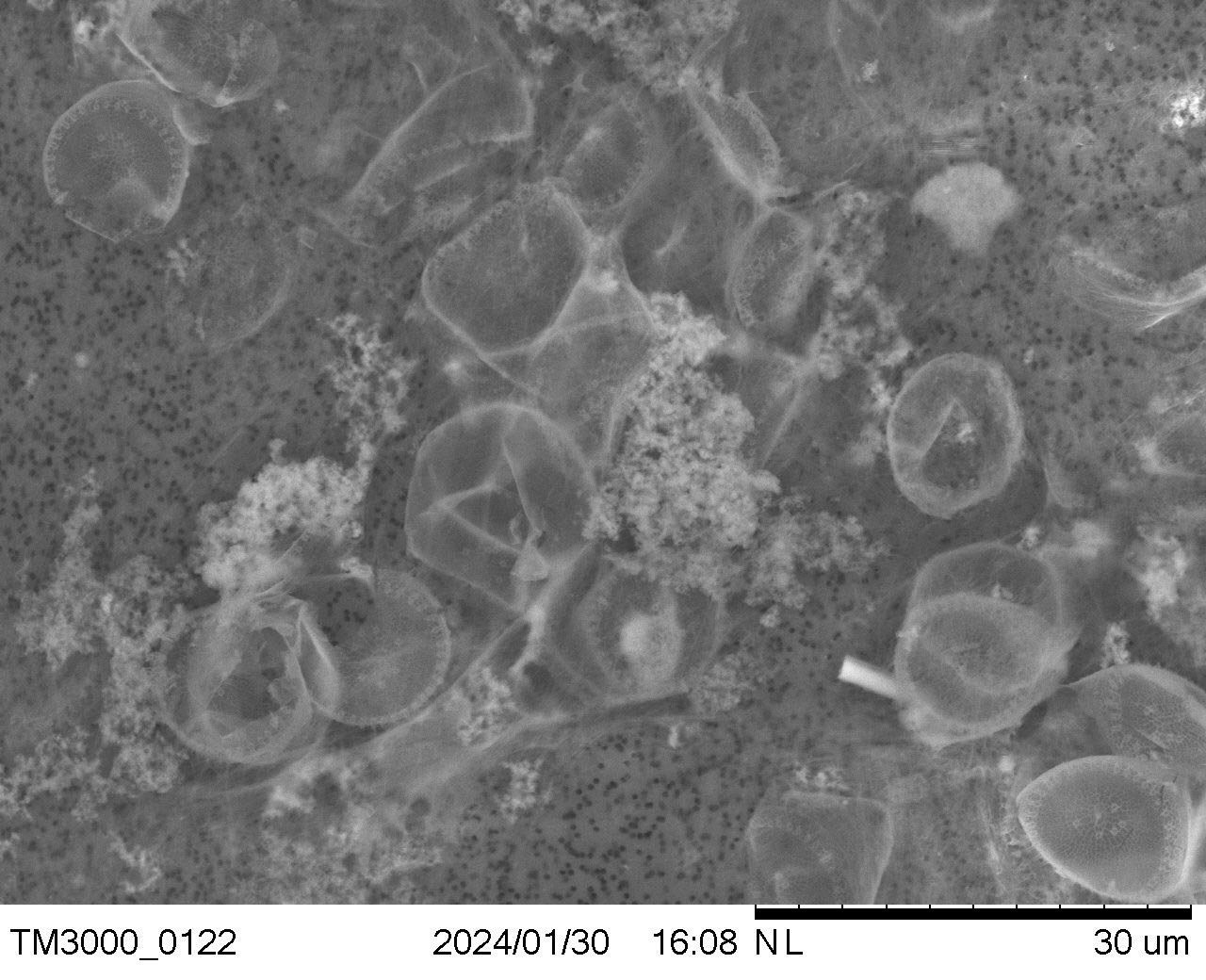
In the team’s experiments, clay dust captured as much as 50% of the carbon released by dead phytoplankton before it could become airborne. They also found that adding clay increased the concentration of sticky organic particles—which would collect more carbon as they sink—by 10 times. At the same time, the populations of bacteria that instigate the release of carbon back into the atmosphere fell sharply in seawater treated with clay, the researchers report.
In the ocean, the flocs become an essential part of the biological pump called marine snow, Sharma says. Marine snow is the constant shower of corpses, minerals, and other organic matter that fall from the surface, bringing food and nutrients to the deeper ocean.
“We’re creating marine snow that can bury carbon at a much greater speed by specifically attaching to a mixture of clay minerals,” Sharma says.
Prospects and Challenges for Field Application
Zooplankton accelerate that process with their voracious appetites and incredible daily sojourn known as the diel vertical migration. Under cover of darkness, the animals—each measuring about three-hundredths of an inch—rise hundreds, and even thousands, of feet from the deep in one immense motion to feed in the nutrient-rich water near the surface. The scale is akin to an entire town walking hundreds of miles every night to their favorite restaurant.
When the day breaks, the animals return to deeper water with the flocs inside them, where they are deposited as feces. This expedited process, known as active transport, is another key aspect of the ocean’s biological pump that shaves days off the time it takes carbon to reach lower depths by sinking.
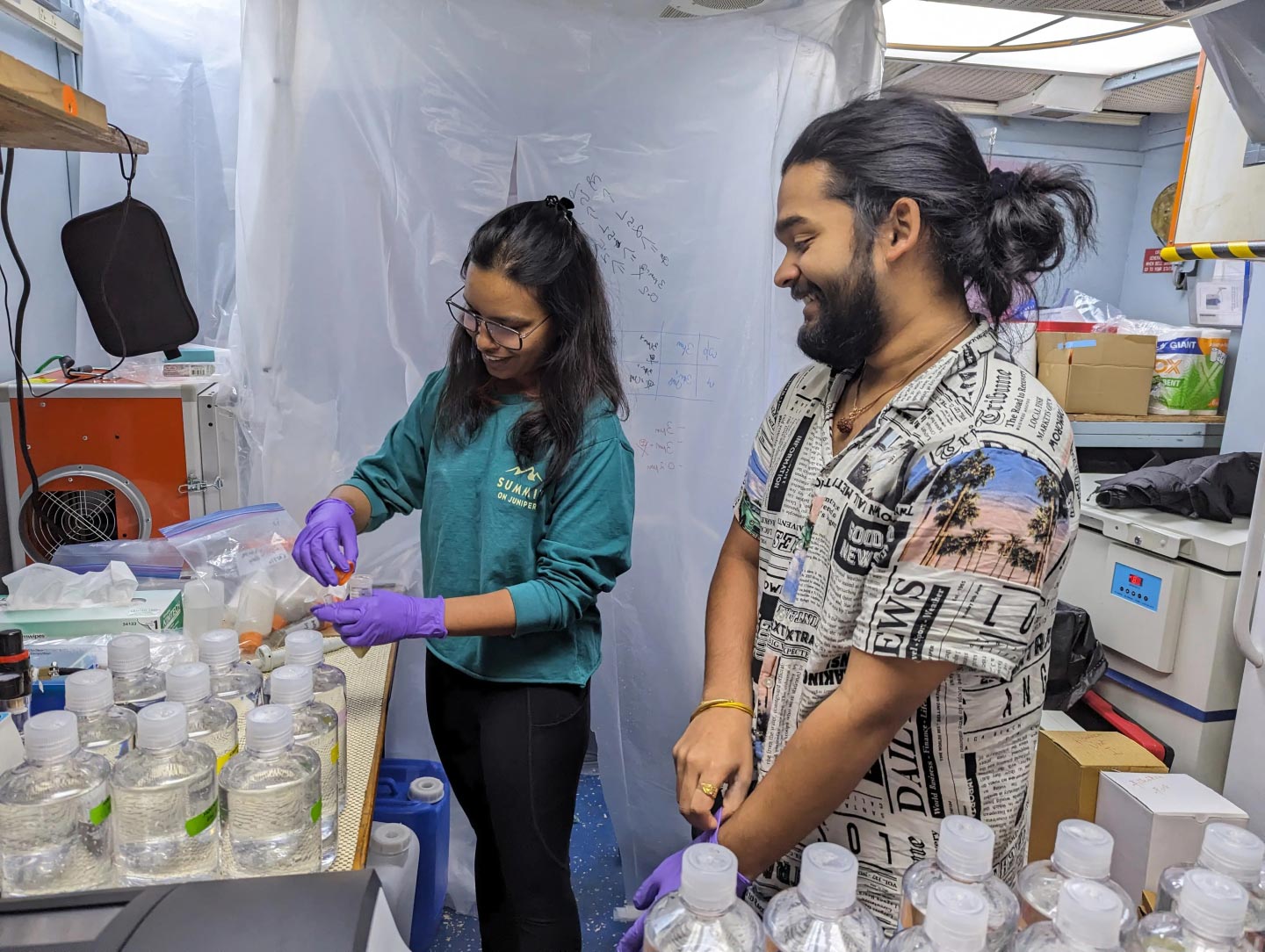
Earlier this year, study co-author Manasi Desai presented a project conducted with Sharma and fellow co-author David Fields, a senior research scientist and zooplankton ecologist at the Bigelow Laboratory for Ocean Sciences in Maine, showing that the clay flocs zooplankton eat and expel do indeed sink faster. Desai, a former technician in Sharma’s lab, is now a technician in the Fields lab.
Sharma plans to field-test the method by spraying clay on phytoplankton blooms off the coast of Southern California using a crop-dusting airplane. He hopes that sensors placed at various depths offshore will capture how different species of zooplankton consume the clay-carbon flocs so that the research team can better gauge the optimal timing and locations to deploy this method—and exactly how much carbon it’s confining to the deep.
“It is very important to find the right oceanographic setting to do this work. You cannot go around willy-nilly dumping clay everywhere,” Sharma says. “We need to understand the efficiency first at different depths so we can understand the best places to initiate this process before we put it to work. We are not there yet—we are at the beginning.”
Reference: “Organoclay flocculation as a pathway to export carbon from the sea surface” by Diksha Sharma, Vignesh Gokuladas Menon, Manasi Desai, Danielle Niu, Eleanor Bates, Annie Kandel, Erik R. Zinser, David M. Fields, George A. O’Toole and Mukul Sharma, 10 December 2024, Scientific Reports.
DOI: 10.1038/s41598-024-79912-z
Never miss a breakthrough: Join the SciTechDaily newsletter.
Follow us on Google and Google News.
1 Comment
“When the gods wish to punish us, they grant us our wishes.”
How much CO2 will be generated in mining clay, sizing it, transporting it to Antarctica, making a slurry, and flying planes around to disperse it? One has to look at the costs involved, and the net reduction, not just the amount sequestered.
The clay particles will impact the net reflectivity, probably increasing it. However, that means most of the absorption that does take place will be near the surface instead of distributed throughout the water column. That may mean less pack ice with warmer surface water. ALL of this should be investigated, not JUST the biological activity.