
Close Menu
    Facebook X (Twitter) Instagram
    SciTechDaily
    • Biology
    • Chemistry
    • Earth
    • Health
    • Physics
    • Science
    • Space
    • Technology
    Facebook X (Twitter) Pinterest YouTube RSS
    SciTechDaily
    Home»Biology»Toxic Masculinity: DNA Repeats on Y Chromosome Contribute to a Shorter Lifespan in Male Flies
    Biology

    Toxic Masculinity: DNA Repeats on Y Chromosome Contribute to a Shorter Lifespan in Male Flies

    By PLOSApril 22, 20211 Comment2 Mins Read
    Facebook Twitter Pinterest Telegram LinkedIn WhatsApp Email Reddit
    Share
    Facebook Twitter LinkedIn Pinterest Telegram Email Reddit
    Y Chromosome Contributes to a Shorter Lifespan in Male Flies
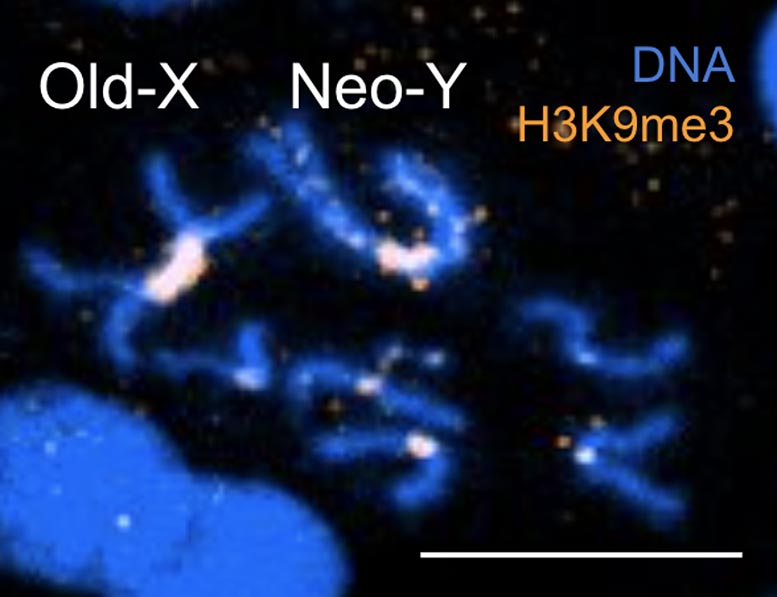
    Heterochromatin enrichment across chromosomes. Immunofluorescence staining for H3K9me3 in male mitotic chromosomes. Scale bar is 50μm. Credit: Nguyen AH et al., 2021, PLOS Genetics

    DNA repeats on the Y chromosome become more active and toxic as male flies age.

    Males may have shorter lifespans than females due to repetitive sections of the Y chromosome that create toxic effects as males get older. These new findings appear in a study by Doris Bachtrog of the University of California, Berkeley published today (April 22, 20210 in PLOS Genetics.

    In humans and other species with XY sex chromosomes, females often live longer than males. One possible explanation for this disparity may be repetitive sequences within the genome. While both males and females carry these repeat sequences, scientists have suspected that the large number of repeats on the Y chromosome may create a “toxic y effect” that shortens males’ lives. To test this idea, Bachtrog studied male fruit flies from the species Drosophila miranda, which have about twice as much repetitive DNA as females and a shorter lifespan. They showed that when the DNA is in its tightly packed form inside the cells of young male flies, the repeat sections are turned off. But as the flies age, the DNA assumes a looser form that can activate the repeat sections, resulting in toxic side effects.

    Linking Repeat DNA to Lifespan and Damage

    The new study demonstrates that Y chromosomes that are rich in repeats are a genomic liability for males. The findings also support a more general link between repeat DNA and aging, which currently, is poorly understood. Previous studies in fruit flies have shown that when repeat sections become active, they impair memory, shorten the lifespan and cause DNA damage. This damage likely contributes to aging’s physiological effects, but more research will be needed to uncover the mechanisms underlying repeat DNA’s toxic effects.

    Reference: “Toxic Y chromosome: Increased repeat expression and age-associated heterochromatin loss in male Drosophila with a young Y chromosome” by Alison H. Nguyen and Doris Bachtrog, 22 April 2021, PLOS Genetics.
    DOI: 10.1371/journal.pgen.1009438

    Funding: This work was supported by NIH grants (nos. R01GM076007, R01GM101255 and R01AG057029) to DB. The funders had no role in study design, data collection and analysis, decision to publish, or preparation of the manuscript.

    Never miss a breakthrough: Join the SciTechDaily newsletter.
    Follow us on Google and Google News.

    Aging Genetics PLOS Popular
    Share. Facebook Twitter Pinterest LinkedIn Email Reddit

    Related Articles

    Affecting Longevity: Early Life Experiences Can Have Long-Lasting Impact on Genes

    Anti-aging Protein in Red Blood Cells Helps Prevent Mental Decline, Poor Memory and Hearing Deficits

    New Research Shows How to Boost Muscle Regeneration and Rebuild Tissue

    Genetic Mutations Add Up to Very High Blood Cancer Risk in Three Popular Dog Breeds

    Researchers Solve Anti-aging Mystery – Identify Gene Responsible for Cellular Aging

    New Type of Multi-Tasking Taste Cells Discovered in Taste Buds

    Shocking Research Finds DNA From an Ancient, Unidentified Ancestor Was Passed Down to Humans Living Today

    Synergistic Cellular Pathways Identified That Extend Lifespan by 500%

    BubR1 Protein Could Fight Cancer & Aging

    1 Comment

    1. brian r brown on April 24, 2021 8:31 pm

      Males are juiced up versions of females. A lot of traits are additive. The findings of additional repeats isn’t surprising. Dying younger isn’t surprising either. The males have higher metabolisms and burn hotter.

      Reply
    Leave A Reply Cancel Reply

    • Facebook
    • Twitter
    • Pinterest
    • YouTube

    Don't Miss a Discovery

    Subscribe for the Latest in Science & Tech!

    Trending News

    Could Low Vitamin D Be Making Your Pain Worse?

    Scientists Discover Once-Weekly Workout That Melts Belly Fat Surprisingly Effectively

    Scientists Just Tested a Thruster Powerful Enough for Human Missions to Mars

    Doctors Say Your Ice Pack Might Be Making Injuries Worse

    Scientists Discover 43-Foot Sea Reptile Twice the Size of a Great White Shark

    Bees and Birds Are Drinking Alcohol From Flowers

    Scientists Discover How Obesity May Trigger Alzheimer’s Disease

    Scientists Confirm Alcohol Causes Widespread Health Damage

    Follow SciTechDaily
    • Facebook
    • Twitter
    • YouTube
    • Pinterest
    • Newsletter
    • RSS
    SciTech News
    • Biology News
    • Chemistry News
    • Earth News
    • Health News
    • Physics News
    • Science News
    • Space News
    • Technology News
    Recent Posts
    • Just Minutes of Intense Exercise Could Slash Disease Risk by 50%
    • People Who Stop Ozempic Often Don’t Gain the Weight Back
    • Why More People in Their 30s Are Suddenly Getting Colon Cancer
    • Scientists Discover Sperm Seem To Bypass a Fundamental Law of Physics
    • The Secret Behind Indigenous Andeans’ “Digestive Superpower” May Be Potatoes
    Copyright © 1998 - 2026 SciTechDaily. All Rights Reserved.
    • Science News
    • About
    • Contact
    • Editorial Board
    • Privacy Policy
    • Terms of Use

    Type above and press Enter to search. Press Esc to cancel.