
Close Menu
    Facebook X (Twitter) Instagram
    SciTechDaily
    • Biology
    • Chemistry
    • Earth
    • Health
    • Physics
    • Science
    • Space
    • Technology
    Facebook X (Twitter) Pinterest YouTube RSS
    SciTechDaily
    Home»Health»Tracking COVID-19 Trends in Hard-Hit States Using Computational Models
    Health

    Tracking COVID-19 Trends in Hard-Hit States Using Computational Models

    By Louisiana State UniversityNovember 26, 20201 Comment3 Mins Read
    Facebook Twitter Pinterest Telegram LinkedIn WhatsApp Email Reddit
    Share
    Facebook Twitter LinkedIn Pinterest Telegram Email Reddit
    Tracking COVID-19 Trends
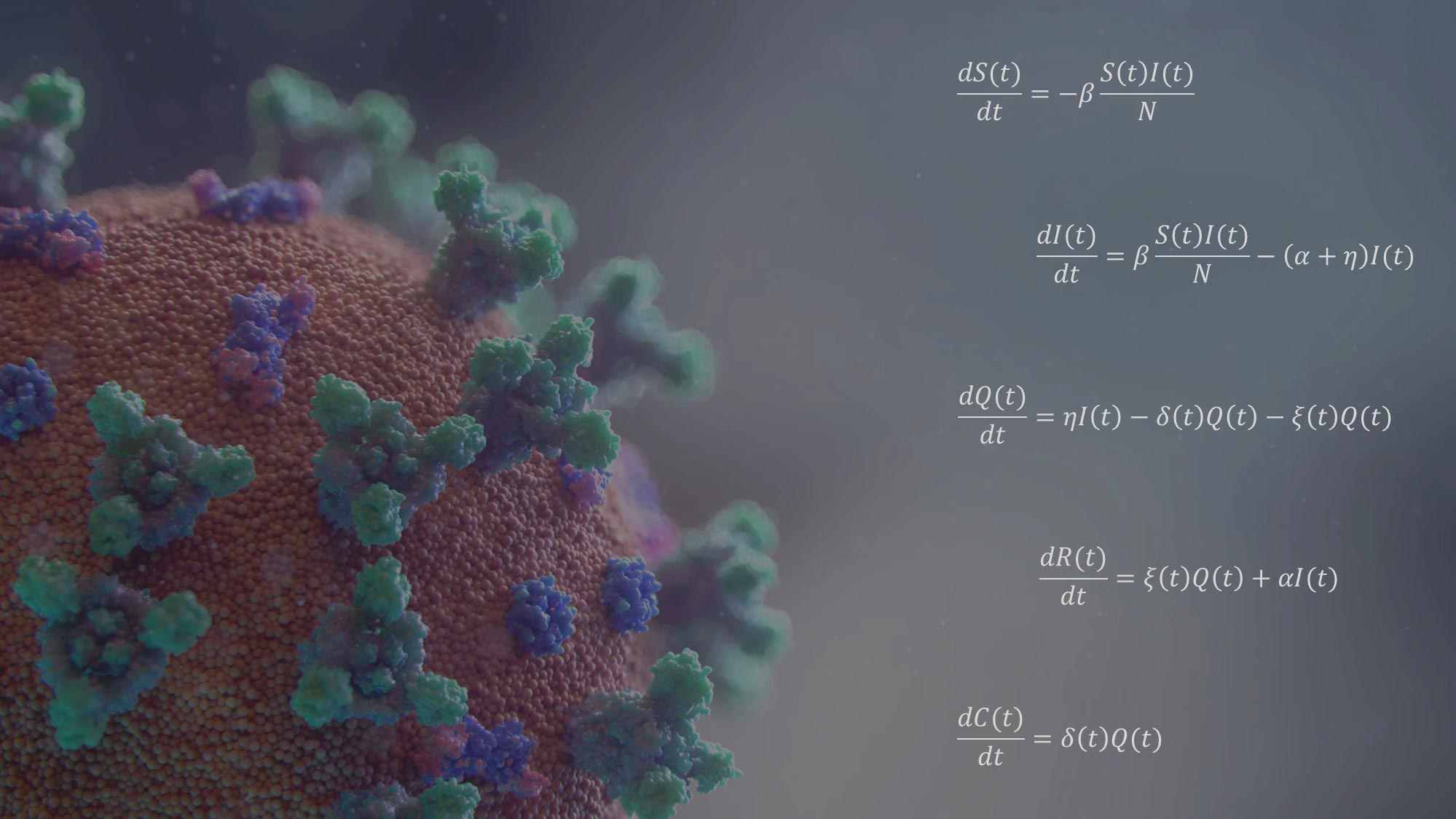
    Researchers at Louisiana State University have applied computational models to investigate infection rates in relation to social distancing measures. Credit: Nicholas Walker, LSU

    Currently, there are over 10 million confirmed cases and more than 240,000 casualties attributed to COVID-19 in the U.S. LSU researchers have applied computational models to investigate infection rates in relation to social distancing measures. Their paper, “Effect of mitigation measures on the spreading of COVID-19 in hard-hit states in the U.S.,” was recently published in PLOS ONE.

    This research compiles the data for each state in the U.S. and calculates the change in the infection rate before and after social distance measures were imposed last spring.

    “We investigate the change in the infection rate due to mitigation efforts and project death and infection counts through September 2020 for some of the most heavily impacted states: New York, New Jersey, Michigan, Massachusetts, Illinois, and Louisiana,” said co-author Juana Moreno, LSU Department of Physics & Astronomy and the Center for Computation & Technology associate professor.

    Many of the current predictive models of the development of COVID-19, especially after mitigation efforts, partially rely on extrapolations from data collected in other countries. However, understanding the effects of mitigation efforts based on local data is important, since data extrapolated from other areas may not be reliable. As states and countries have implemented different degrees of social distancing measures, the effects on controlling the pandemic simply cannot be translated between regions.

    “The interactions among people are complicated and often difficult to model at the individual level. The challenge is similar to the study of a large ensemble of particles where monitoring the motion of each particle is virtually impossible. Mean field approximation is often used to study large populations by coarse graining the individual, or microscopic, details to the population, or macroscopic, averaged quantity,” said lead author Ka-Ming Tam,  LSU Department of Physics & Astronomy research assistant professor.

    With the current mitigation efforts, five of those six states with the exception of Illinois, have reduced their base reproduction number to a value less than one, stopping the exponential growth of the pandemic.

    “The infection rate is an important indicator of the evolution of an epidemic. If it is larger than one, the number of infections is exponentially increasing,” said Nicholas Walker, LSU Department of Physics & Astronomy alumnus and current postdoctoral fellow. “We found that the infection rate is substantially suppressed by social distancing measures. Almost all states had the infection rate dropped below one by the end of April.”

    The analyses by the researchers clearly show a drop in infection rates following public policy measures such as social distancing and stay-at-home orders.

    “We are currently working on the effects of reopening and how the reopening policies in different states have affected the number of fatalities,” Moreno said. “Our current analysis suggests that the face mask mandate is the most important policy for lowering the death count.”

    Reference: “Effect of mitigation measures on the spreading of COVID-19 in hard-hit states in the U.S.” by Ka-Ming Tam, Nicholas Walker and Juana Moreno, 3 November 2020, PLOS ONE.
    DOI: 10.1371/journal.pone.0240877

    Never miss a breakthrough: Join the SciTechDaily newsletter.
    Follow us on Google and Google News.

    Computer Science COVID-19 Infectious Diseases Louisiana State University Public Health
    Share. Facebook Twitter Pinterest LinkedIn Email Reddit

    Related Articles

    New Research Explains Multipronged SARS-CoV-2 Attack and Widepread COVID-19 Infection

    Doctors Shocked by Heart Damage in COVID-19 Patients – Unique Pattern of Cell Death Revealed by Autopsies

    Russia Creates Custom “Humanized” Mice to Test COVID-19 Drugs and Vaccines

    How Effective Are Cloth Masks Against Coronavirus? [Video]

    Hunt for an Effective Treatment for COVID-19 Leads to Llamas & Their Special Antibodies

    New Model to Track COVID-19’s Spread – Very Accurately Forecasts the Timing, Intensity and Geographic Distribution of Outbreak

    New Clues on How to Treat COVID-19 From T Cell Counts and Cytokine Storms

    Key Insights on How Coronavirus Spreads From Chinese Megacity of Shenzhen

    Study Unveils COVID-19 Transmission Patterns and Safety-Conscious Reopening Plans

    1 Comment

    1. xABBAAA on November 26, 2020 8:52 am

      …Who SIR?, what, when, where who…

      Models are all wrong, but just useful, also wonder for what…

      Reply
    Leave A Reply Cancel Reply

    • Facebook
    • Twitter
    • Pinterest
    • YouTube

    Don't Miss a Discovery

    Subscribe for the Latest in Science & Tech!

    Trending News

    Popular Sugar-Free Sweetener Linked to Liver Disease, Study Warns

    What Is Hantavirus? The Deadly Disease Raising Alarm Worldwide

    Scientists Just Discovered How the Universe Builds Monster Black Holes

    Scientists Unveil New Treatment Strategy That Could Outsmart Cancer

    A Simple Vitamin May Hold the Key to Treating Rare Genetic Diseases

    Scientists Think the Real Fountain of Youth May Be Hiding in Your Gut

    Ravens Don’t Follow Wolves, They Predict Them

    This Common Knee Surgery May Be Doing More Harm Than Good

    Follow SciTechDaily
    • Facebook
    • Twitter
    • YouTube
    • Pinterest
    • Newsletter
    • RSS
    SciTech News
    • Biology News
    • Chemistry News
    • Earth News
    • Health News
    • Physics News
    • Science News
    • Space News
    • Technology News
    Recent Posts
    • Popular Supplement Ingredient Linked to Shorter Lifespan in Men
    • Scientists May Have Found a Way To Repair Nerve Damage in Multiple Sclerosis
    • GLP-1 Weight Loss Linked To Dramatically Lower Risk of Sleep Apnea, Kidney Disease and More
    • Scientists Uncover the Surprising Source of Strange Clouds Near the Milky Way’s Supermassive Black Hole
    • This Dazzling Green Snake Was Hiding in Plain Sight for Decades
    Copyright © 1998 - 2026 SciTechDaily. All Rights Reserved.
    • Science News
    • About
    • Contact
    • Editorial Board
    • Privacy Policy
    • Terms of Use

    Type above and press Enter to search. Press Esc to cancel.