
Close Menu
    Facebook X (Twitter) Instagram
    SciTechDaily
    • Biology
    • Chemistry
    • Earth
    • Health
    • Physics
    • Science
    • Space
    • Technology
    Facebook X (Twitter) Pinterest YouTube RSS
    SciTechDaily
    Home»Science»Twitter Data Accurately Tracked the Haiti Cholera Outbreak: Social Media with a Twist
    Science

    Twitter Data Accurately Tracked the Haiti Cholera Outbreak: Social Media with a Twist

    By SciTechDailyJanuary 10, 20121 Comment3 Mins Read
    Facebook Twitter Pinterest Telegram LinkedIn WhatsApp Email Reddit
    Share
    Facebook Twitter LinkedIn Pinterest Telegram Email Reddit
    stacks-cases-haiti-cholera
    Online social media and news feeds were quicker and more accurate than official records in detecting the epidemic’s start and early progress.

    The real-time social networking service Twitter has yielded data that would have tracked the deadly cholera outbreak in Haiti, which began in October 2010, faster than any other traditional methods. The results appeared today in a special section of The American Journal of Tropical Medicine and Hygiene.

    It’s well known that these types of real-time networking services and feeds have allowed citizen journalists to report the news in some countries where the media isn’t always allowed to report accurately what is going on. The study has found that online social media and news feeds were faster and more accurate than official records, when it came time to detect the start and early progress of the epidemic.

    bottled-water-haiti-cholera

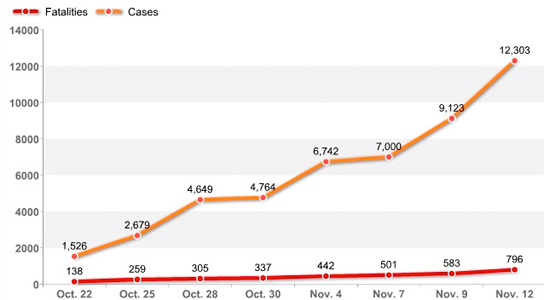
    The researchers used HealthMap, an automated surveillance platform, to measure the volume of news items generated during the first 100 days of the cholera outbreak. They also looked at the trending topics on Twitter to see the number of cholera mentions, hashtags, and posts. They discovered a correlation between the official number of infected patients and the volume of these informal types of media.

    Rumi Chunara, a research fellow at HealthMap and the Harvard Medical School, is the lead author of this study, emphasized that these reports were available online up to two weeks before the official government reports were published. This could imply that researchers could use these types of new media to gain early insight into evolving epidemics. This could entail a more rapid response from health officials.

    Chunara stated that these media are cost-effective, rapid, and can be easily used to reach populations in isolated areas, who don’t have access to healthcare or who wouldn’t seek it. Chunara also highlighted that this method included a finer temporal and spatial resolution.

    James Wilson warns that social media reports were often inaccurate due to the geographic bias of the journalists, since most of them were clustered in the capital, Port-au-Prince, not on the ground. Chunara has recognized that the feeds could be biased towards urban or developed areas, certain age groups, and might contain false alerts. All of these issues will have to be considered if these methods were to be used in an official capacity.

    Reference: “Social and News Media Enable Estimation of Epidemiological Patterns Early in the 2010 Haitian Cholera Outbreak” by Rumi Chunara, Jason R. Andrews and John S. Brownstein, 1 January 2012, The American Journal of Tropical Medicine and Hygiene.
    DOI: 10.4269/ajtmh.2012.11-0597

    Never miss a breakthrough: Join the SciTechDaily newsletter.
    Follow us on Google and Google News.

    Cholera Disease Epidemic Haiti Outbreak Twitter
    Share. Facebook Twitter Pinterest LinkedIn Email Reddit

    Related Articles

    Cell-Squeezing Device Opens New Possibilities for Cell-Based Vaccines

    Drug Candidate SR9009 Increases Exercise Endurance

    Silk Implants May Help Stop the Progression of Epilepsy

    Stem Cell Study Reveals the Brain-Protective Powers of Astrocytes

    Human Caused Air Pollution Results in Over Two Million Deaths Annually

    Scientists Reveal the Structure of the Typhoid Toxin

    Naturally Occurring Nanoparticles Harnessed to Target Disease

    Brain Disruption Shows That Mental Illnesses Have Biological Similarities

    Glymphatic System May Hold a Key to Treating Alzheimer’s

    1 Comment

    1. luckenvin on August 26, 2020 5:07 am

      Now a lot of social media data can give a lot of answers to questions. Now they are not only tools for entertainment and communication, but also tools for business and politics. Learning about social media algorithms can give you a better understanding of how it works and what results can be achieved. Thank you for the article

      Reply
    Leave A Reply Cancel Reply

    • Facebook
    • Twitter
    • Pinterest
    • YouTube

    Don't Miss a Discovery

    Subscribe for the Latest in Science & Tech!

    Trending News

    Scientists Uncover Potential Brain Risks of Popular Fish Oil Supplements

    Scientists Discover a Surprising Way To Make Bread Healthier and More Nutritious

    After 60 Years, Scientists Uncover Unexpected Brain Effects of Popular Diabetes Drug Metformin

    New Research Uncovers Hidden Side Effects of Popular Weight-Loss Drugs

    Scientists Rethink Extreme Warming After Surprising Ocean Discovery

    Landmark Study Links Never Marrying to Significantly Higher Cancer Risk

    Researchers Discover Unknown Beetle Species Just Steps From Their Lab

    Largest-Ever Study Finds Medicinal Cannabis Ineffective for Anxiety, Depression, PTSD

    Follow SciTechDaily
    • Facebook
    • Twitter
    • YouTube
    • Pinterest
    • Newsletter
    • RSS
    SciTech News
    • Biology News
    • Chemistry News
    • Earth News
    • Health News
    • Physics News
    • Science News
    • Space News
    • Technology News
    Recent Posts
    • Early Warning Signals of Esophageal Cancer May Be Hiding in Plain Sight
    • Researchers Have Discovered a THC-Free Cannabis Compound That May Replace Opioids
    • Common Blood Pressure Drug Shows Surprising Power Against Deadly Antibiotic-Resistant Superbug
    • Students Build Dark Matter Detector and Set New Experimental Limits
    • Scientists Discover Caffeine Can Repair Key Memory Circuits After Sleep Loss
    Copyright © 1998 - 2026 SciTechDaily. All Rights Reserved.
    • Science News
    • About
    • Contact
    • Editorial Board
    • Privacy Policy
    • Terms of Use

    Type above and press Enter to search. Press Esc to cancel.