
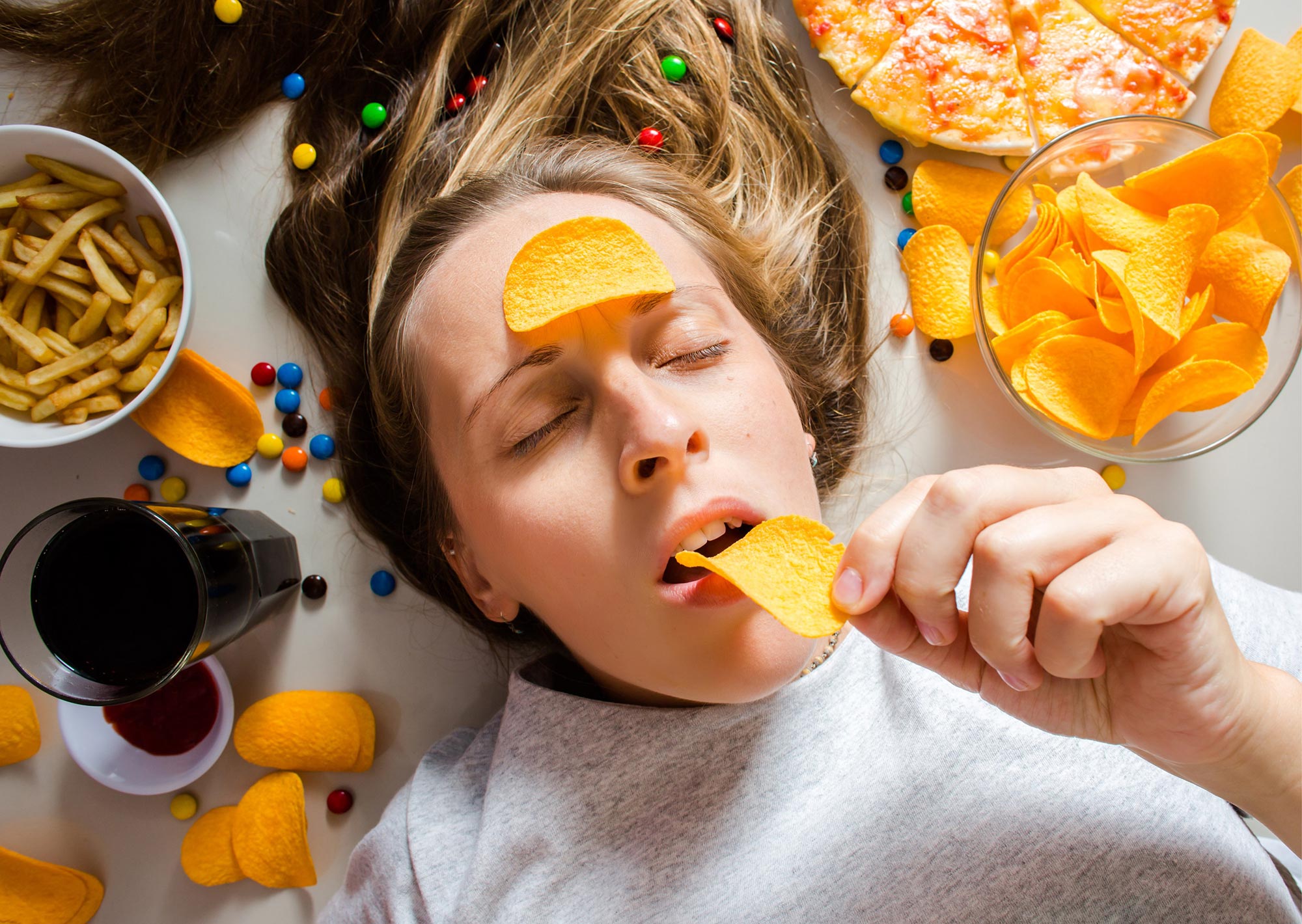
Middle-aged adults, particularly women over 50, are showing high rates of addiction to ultra-processed foods.
Researchers link this trend to aggressive marketing of “diet” snacks in the 1980s and the long-term impact of growing up in a processed food environment.
The Processed Food Generation
The first Americans to grow up surrounded by ultra-processed foods were Generation X and the younger Baby Boomers. As kids and young adults, they were immersed in products engineered to be irresistible, often packed with extra fat, sugar, salt, and artificial flavorings.
New research reveals that this early exposure has left a lasting mark. About 21% of women and 10% of men in this age group, now in their 50s and early 60s, meet the criteria for addiction to ultra-processed foods.
That figure is much higher than among people who are a decade or two older, who first encountered these products in adulthood. In adults aged 65 to 80, only 12% of women and 4% of men qualify as having ultra-processed food addiction.
The findings, published in the journal Addiction by University of Michigan researchers, draw on nationally representative survey data from more than 2,000 older Americans through the U-M National Poll on Healthy Aging.
The poll, conducted at the U-M Institute for Healthcare Policy and Innovation with support from Michigan Medicine (U-M’s academic medical center), expands on earlier work by exploring generational differences and health-related connections in greater detail.
Measuring Food Addiction in Older Adults
The researchers used the modified Yale Food Addiction Scale 2.0 (mYFAS 2.0), a standardized tool adapted from the criteria used to diagnose substance use disorders. The scale asks about 13 experiences with ultraprocessed foods and drinks that define addiction, such as strong cravings, repeated unsuccessful attempts to cut down, withdrawal symptoms, and avoiding social activities because of fear of overeating.
In this case, the “substance” is not alcohol or nicotine, but highly rewarding ultra-processed foods such as sweets, fast food, and sugary beverages. By applying clinical addiction criteria to ultra-processed foods, the study highlights the ways in which such foods can “hook” people.
“We hope this study fills a gap in knowledge about addiction to ultra-processed foods among older adults, as measured by a well-studied and standardized scale,” said Lucy K. Loch, a graduate student in the U-M Department of Psychology. “Today’s older adults were in a key developmental period when our nation’s food environment changed. With other research showing clear links between consumption of these foods and risk of chronic disease and premature death, it’s important to study addiction to ultra-processed foods in this age group.”
Women Hit Harder Than Men
Unlike traditional substance use disorders — which historically have been more common in older men — ultra-processed food addiction shows the opposite pattern: higher prevalence in older women.
One explanation may be the aggressive marketing of “diet” ultra-processed food to women in the 1980s.
Low-fat cookies, microwaveable meals, and other carbohydrate-heavy products were promoted as weight-control solutions, but their engineered nutrient profiles may have reinforced addictive eating patterns.
Women now aged 50 to 64 may have been exposed to ultraprocessed foods during a sensitive developmental window, which may help explain the poll’s findings for this age group, said senior author Ashley Gearhardt, Ph.D., a professor of psychology at U-M and member of IHPI. Gearhardt leads the U-M Food and Addiction Science & Treatment Lab.
“The percentages we see in these data far outpace the percentages of older adults with problematic use of other addictive substances, such as alcohol and tobacco,” said Gearhardt. “We also see a clear association with health and social isolation, with much higher risks of ultra-processed food addiction in those who call their mental or physical health status fair or poor, or say they sometimes or often feel isolated from others.”
Links to Weight, Health, and Social Isolation
- Overweight self-perception:
- Women aged 50 to 80 who said they are overweight were more than 11 times as likely to meet criteria for ultra-processed food addiction than women who said their weight is about right. Men who reported being overweight were 19 times as likely.
- No matter what their age, 33% of women who described themselves as overweight, 13% of women who described themselves as slightly overweight, and 17% of men who described themselves as overweight met criteria for addiction to ultra-processed foods. Of the total sample, 31% of women and 26% of men said they were overweight, and 40% of women and 39% of men said they were slightly overweight.
- Health status:
- Men reporting fair or poor mental health were four times as likely to meet criteria for ultra-processed food addiction; women were nearly three times as likely.
- For physical health, men reporting fair or poor health were three times as likely to meet criteria for ultra-processed food addiction, and women were nearly two times as likely.
- Social isolation: Men and women who reported feeling isolated some of the time or often were more than three times as likely to meet criteria for ultra-processed food addiction as those who did not report isolation.
The researchers suggest that individuals who perceive themselves as overweight may be particularly vulnerable to “health-washed” ultra-processed foods – those marketed as low-fat, low-calorie, high-protein or high-fiber, but still formulated to amplify their appeal and maximize craving.
“These products are sold as health foods, which can be especially problematic for those trying to reduce the number of calories they consume,” Gearhardt said. “This especially affects women, because of the societal pressure around weight.”
Looking Ahead: A Growing Risk for Future Generations
The generation of older adults now in their 50s and early 60s is the first to live most of their lifespan in a food environment dominated by ultra-processed foods, Geahardt noted.
“These findings raise urgent questions about whether there are critical developmental windows when exposure to ultra-processed foods is especially risky for addiction vulnerability,” she said. “Children and adolescents today consume even higher proportions of calories from ultra-processed foods than today’s middle-aged adults did in their youth. If current trends continue, future generations may show even higher rates of ultra-processed food addiction later in life.”
She added, “Just as with other substances, intervening early may be essential to reducing long-term addiction risk across the lifespan.”
Reference: “Ultra-processed food addiction in a nationally representative sample of older adults in the USA” by Lucy K. Loch, Matthias Kirch, Dianne C. Singer, Erica Solway, J. Scott Roberts, Jeffrey T. Kullgren and Ashley N. Gearhardt, 29 September 2025, Addiction.
DOI: 10.1111/add.70186
The study was funded by a National Science Foundation Graduate Research Fellowship Program (DGE-2241144) and the National Institute on Drug Abuse of the National Institutes of Health (5R01DA055027).
In addition to Loch and Gearhardt, the study’s co-authors are Matthias Kirch, M.S., Dianne C. Singer, M.P.H, Erica Solway, Ph.D., M.S.W., M.P.H., J. Scott Roberts, Ph.D. and poll director Jeffrey T. Kullgren, M.D., M.P.H., M.S. Roberts is a member of the faculty at the U-M School of Public Health, and Kullgren is a member of the faculty in the U-M Medical School and a primary care physician at the VA Ann Arbor Healthcare System.
Never miss a breakthrough: Join the SciTechDaily newsletter.
Follow us on Google and Google News.
2 Comments
I grew up on Twinkies, Ho-Hos, Zingers and marshmallow fluff/jelly sandwiches in the 70s. Candy-holic. I don’t eat that stuff now. Intermittent fasting, 2 snacks and 1 large meal. Lots of nuts, veggies, fruit, and especially arugula and brussel sprouts. Omnivore diet, mostly gluten free. Burn over 1000 calories on exercise, 3x >300 cals daily.
Don’t need a govt-funded study to tell us this…Start walking, get sleep and lessen your food intake.
I mean, at around fifty it finally dawns on you that you’re not gonna live forever. So why not have at it while you still can? It’s not like we’re taking our healthy habits to the grave with us.