
Close Menu
    Facebook X (Twitter) Instagram
    SciTechDaily
    • Biology
    • Chemistry
    • Earth
    • Health
    • Physics
    • Science
    • Space
    • Technology
    Facebook X (Twitter) Pinterest YouTube RSS
    SciTechDaily
    Home»Space»Uncovering Secrets of the Early Universe: Astronomers Capture Radio Signal From Distant Galaxy
    Space

    Uncovering Secrets of the Early Universe: Astronomers Capture Radio Signal From Distant Galaxy

    By McGill UniversityJanuary 18, 20231 Comment3 Mins Read
    Facebook Twitter Pinterest Telegram LinkedIn WhatsApp Email Reddit
    Share
    Facebook Twitter LinkedIn Pinterest Telegram Email Reddit
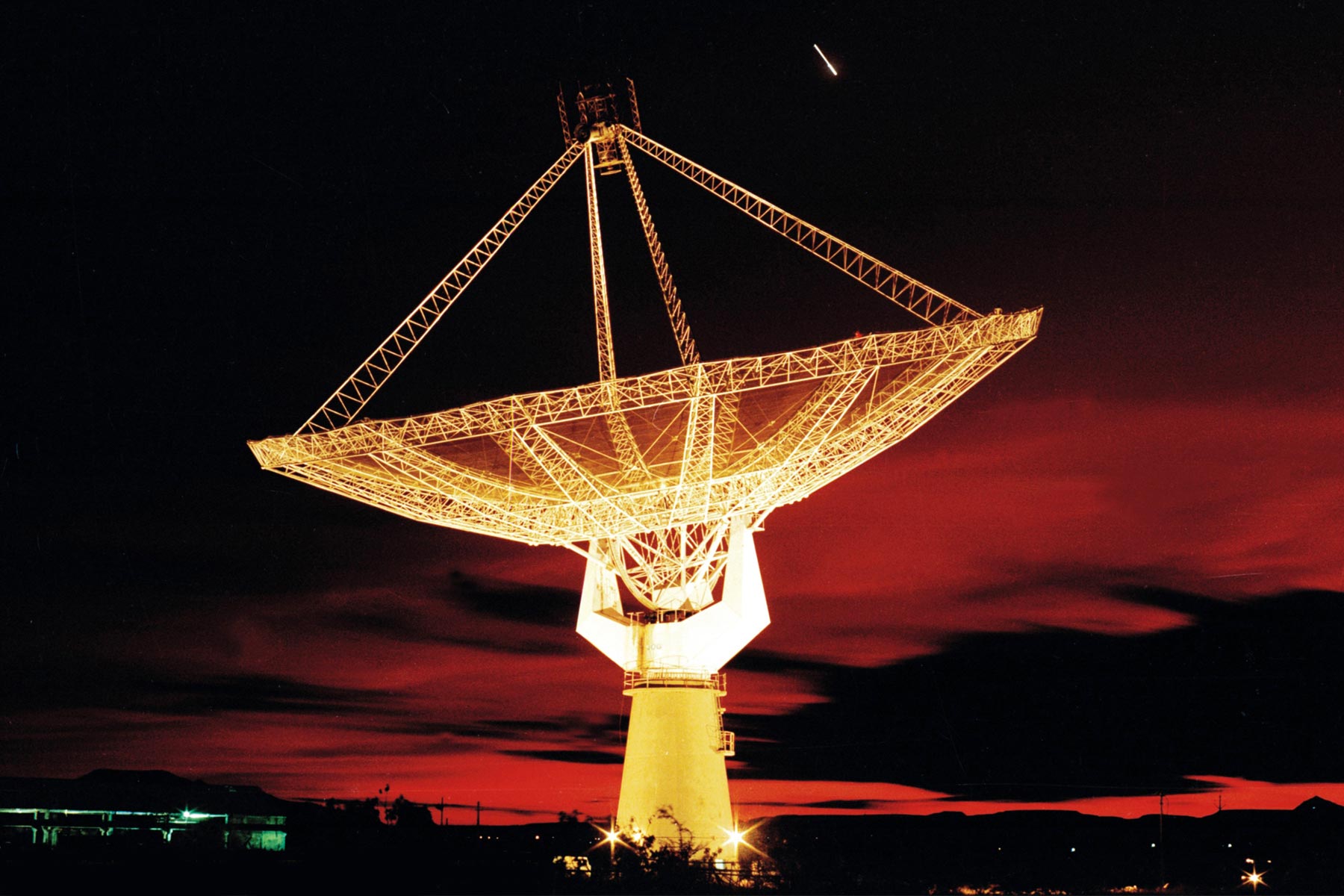
    Giant Metrewave Radio Telescope
    One of the dishes of the Giant Metrewave Radio Telescope (GMRT) near Pune, Maharashtra, India. Credit: National Centre for Radio Astrophysics

    Probing galaxies at much greater distances from Earth may now be within reach.

    How do stars form in distant galaxies? Astronomers have long been trying to answer this question by detecting radio signals emitted by nearby galaxies. However, these signals become weaker the further away a galaxy is from Earth, making it difficult for current radio telescopes to pick up.

    Now researchers from Montreal and India have captured a radio signal from the most distant galaxy so far at a specific wavelength known as the 21 cm line, allowing astronomers to peer into the secrets of the early universe. With the help of the Giant Metrewave Radio Telescope in India, this is the first time this type of radio signal has been detected at such a large distance.
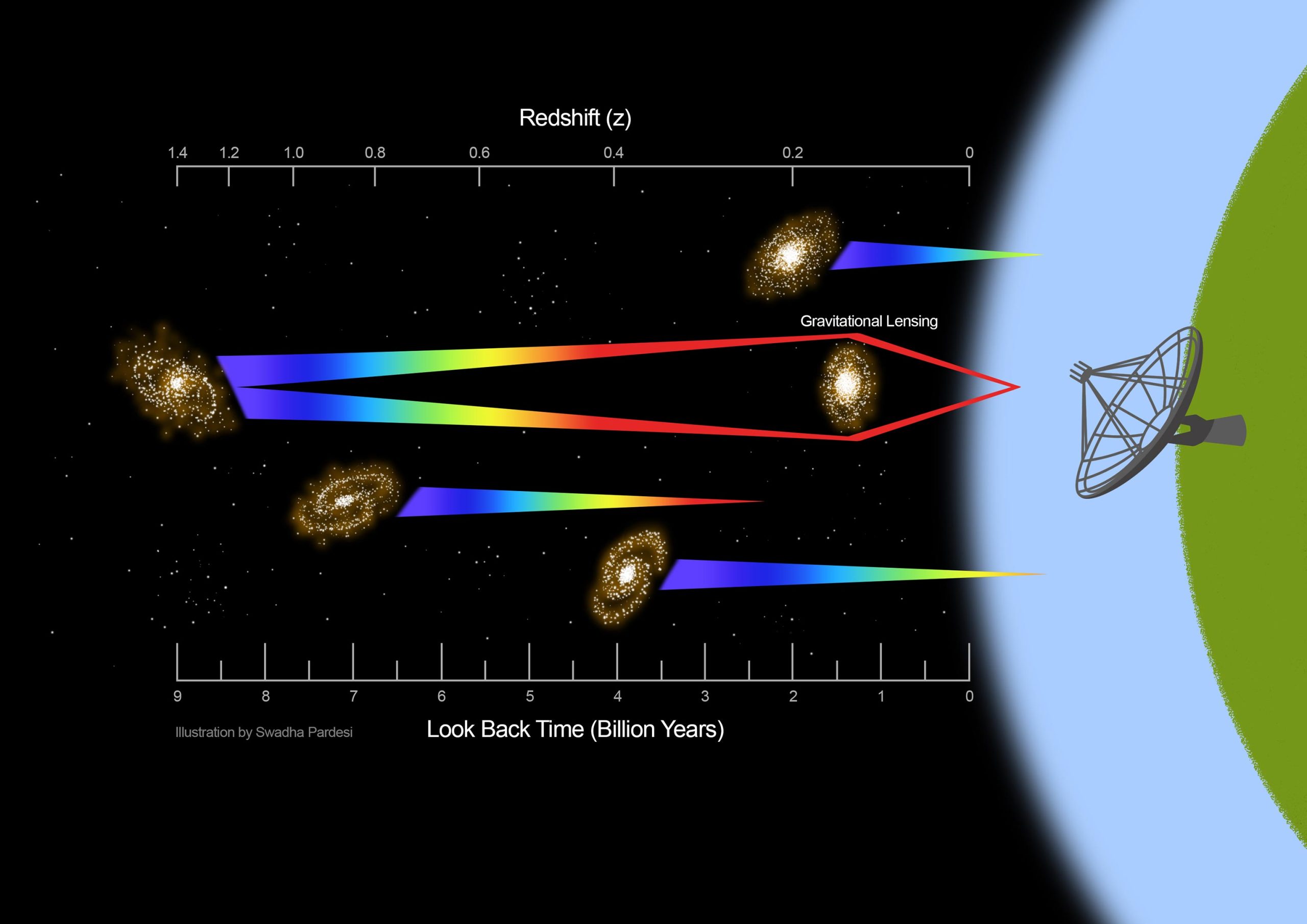
    Signal Detection From Distant Galaxy
    Illustration showing detection of the signal from a distant galaxy. Credit: Swadha Pardesi

    “A galaxy emits different kinds of radio signals. Until now, it’s only been possible to capture this particular signal from a galaxy nearby, limiting our knowledge to those galaxies closer to Earth,” says Arnab Chakraborty, a Post-Doctoral Researcher at McGill University under the supervision of Professor Matt Dobbs.

    “But thanks to the help of a naturally occurring phenomenon called gravitational lensing, we can capture a faint signal from a record-breaking distance. This will help us understand the composition of galaxies at much greater distances from Earth,” he adds.

    A Look Back in Time to the Early Universe

    For the first time, the researchers were able to detect the signal from a distant star-forming galaxy known as SDSSJ0826+5630 and measure its gas composition. The researchers observed the atomic mass of the gas content of this particular galaxy is almost twice the mass of the stars visible to us.
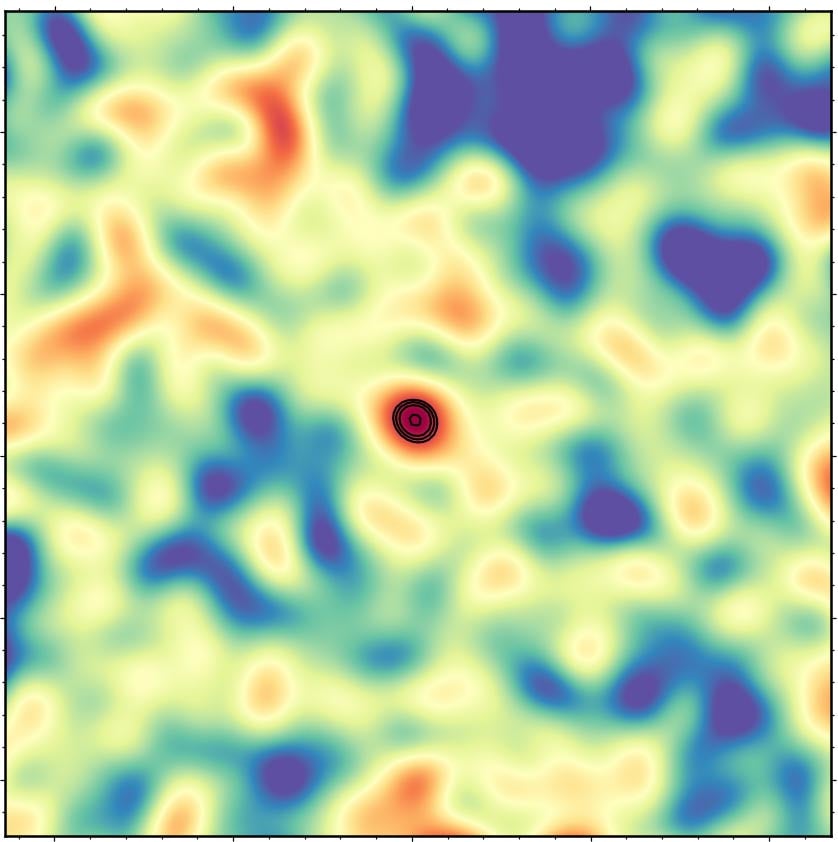
    Radio Signal From Distant Galaxy
    Image of the radio signal from the galaxy. Credit: Chakraborty & Roy/NCRA-TIFR/GMRT

    The signal detected by the team was emitted from this galaxy when the universe was only 4.9 billion years old, enabling the researchers to glimpse into the secrets of the early universe. “It’s the equivalent to a look-back in time of 8.8 billion years,” says Chakraborty, who studies cosmology at McGill’s Department of Physics.

    Picking Up the Signal From a Distant Galaxy

    “Gravitational lensing magnifies the signal coming from a distant object to help us peer into the early universe. In this specific case, the signal is bent by the presence of another massive body, another galaxy, between the target and the observer. This effectively results in the magnification of the signal by a factor of 30, allowing the telescope to pick it up,” says co-author Nirupam Roy, an Associate Professor in the Department of Physics at the Indian Institute of Science.

    According to the researchers, these results demonstrate the feasibility of observing faraway galaxies in similar situations with gravitational lensing. It also opens exciting new opportunities for probing the cosmic evolution of stars and galaxies with existing low-frequency radio telescopes.

    Reference: “Detection of H I 21 cm emission from a strongly lensed galaxy at z ∼ 1.3” by Arnab Chakraborty and Nirupam Roy, 23 December 2022, Monthly Notices of the Royal Astronomical Society.
    DOI: 10.1093/mnras/stac3696

    The Giant Metrewave Radio Telescope was built and is operated by NCRA-TIFR. The research was funded by McGill University and the Indian Institute of Science.

    Never miss a breakthrough: Join the SciTechDaily newsletter.
    Follow us on Google and Google News.

    Astronomy Astrophysics McGill University Popular
    Share. Facebook Twitter Pinterest LinkedIn Email Reddit

    Related Articles

    Fast Radio Bursts Explained? Scientists Zero In on Their Mysterious Origins

    The Universe on Repeat: Doubling the Number of Repeating Fast Radio Burst Sources

    Mysterious Fast Radio Bursts Include Lower Frequency Radio Waves Than Previously Detected

    Fiery Hot Lava Planet Weather Forecast: Supersonic Winds and Rocky Rains

    Massive Hunt for Extraterrestrial Life Completed: What Astronomers Found in Search of 10 Million Star Systems for Alien Technology

    Closing In on Source of Fast Radio Bursts: VLBA Makes First Direct Distance Measurement to Magnetar

    A White Dwarf’s Surprise Planetary Companion: First-of-Its-Kind Exoplanet Detected Around Dead Star

    The Evolving Volatile Chemistry of Protoplanetary Disks

    How Fast Is the Universe Expanding? Measuring Cosmic Expansion With Radio Astronomy and Gravitational Waves

    1 Comment

    1. Antonio Martins on January 19, 2023 12:50 am

      The people that don’t know nothing about astronomy think by reading the headline the news is about an extra terrestrial form of life signal!

      Reply
    Leave A Reply Cancel Reply

    • Facebook
    • Twitter
    • Pinterest
    • YouTube

    Don't Miss a Discovery

    Subscribe for the Latest in Science & Tech!

    Trending News

    Collapsing Plasma May Hold the Key to Cosmic Magnetism

    This Breakthrough Solar Panel Generates Power From Both Sunlight and Raindrops

    Scientists Uncover New Metabolic Effects Beyond Weight Loss of Mounjaro

    Scientists Discover Cancer Tumors Are “Addicted” to This Common Antioxidant

    1,800 Miles Down: Scientists Uncover Mysterious Movements at the Edge of Earth’s Core

    Scientists Discover Hidden “Good Fats” in Green Rice That Could Transform Nutrition

    Your Child’s Clothes Could Contain Toxic Lead, Study Finds

    Researchers Break a 150-Year-Old Math Law With a Surprising Donut Discovery

    Follow SciTechDaily
    • Facebook
    • Twitter
    • YouTube
    • Pinterest
    • Newsletter
    • RSS
    SciTech News
    • Biology News
    • Chemistry News
    • Earth News
    • Health News
    • Physics News
    • Science News
    • Space News
    • Technology News
    Recent Posts
    • The Mystery of the Notes: Why No One Knows How This 120-Year-Old Song Should Sound
    • Scientists Discover 132-Million-Year-Old Dinosaur Tracks on South Africa’s Coast
    • Scientists Uncover the Secret Ingredient Behind the Spark That May Have Started Life on Earth
    • Natural Oils vs. Antibiotics: The Swine Study That Could Change Farming
    • The Biggest Volcanic Event in Earth’s History Transformed an Entire Oceanic Plate
    Copyright © 1998 - 2026 SciTechDaily. All Rights Reserved.
    • Science News
    • About
    • Contact
    • Editorial Board
    • Privacy Policy
    • Terms of Use

    Type above and press Enter to search. Press Esc to cancel.