
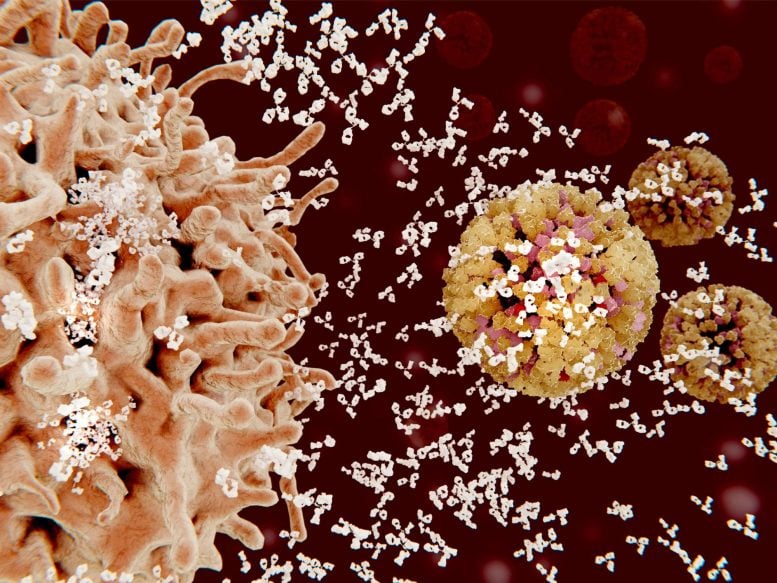
Rutgers researchers have identified mucosal-associated invariant T cells (MAITs) as critical protectors against cognitive decline.
Could the underproduction of poorly understood immune cells contribute to Alzheimer’s disease and other forms of cognitive decline? A recent study published in the journal Nature Immunology conducted by Rutgers University researchers suggests it may – and that increasing these cells could reverse the damage.
Rutgers researchers conducted an experiment in which they deactivated the gene that produces mucosal-associated invariant T cells (MAITs) in mice and compared the cognitive function of normal mice and mice deficient in MAIT cells. Initially, both groups performed identically, but as the mice aged, the genetically altered mice began to have difficulty forming new memories.
Researchers then injected the genetically altered mice with MAITs, and their performance in learning and memory-intensive tasks such as swimming through a water maze returned to normal.
The study authors believe this is the first work to link MAITs to cognitive function and hope to follow it up with research that compares MAIT numbers in healthy humans and those with cognitive diseases such as Alzheimer’s.
“The MAIT cells that protect the brain are located in the meninges, but they are also present in the blood, so a simple blood test should let us compare levels in healthy subjects and those with Alzheimer’s disease and other cognitive disorders,” said Qi Yang, senior author of the study and associate professor at the Child Health Institute of New Jersey at Rutgers Robert Wood Johnson Medical School.
MAIT cells, which were discovered in the 1990s, were already known to be the most abundant innate-like T cells in humans and to be particularly numerous in the liver and skin. The Rutgers study was the first to detect these cells, which are not fully understood when it comes to fighting disease, in the meninges, the membrane layers that cover the brain.
Protection Against Reactive Oxidative Species
MAITs nested in the meninges appear to protect against cognitive decline by creating antioxidant molecules that combat toxic byproducts of energy production called reactive oxidative species. Without MAITs, the reactive oxidative species accumulate in the meninges and cause meningeal barrier leakage. When the meningeal barrier leaks, potentially toxic substances enter and inflame the brain. This accumulation eventually disrupts brain and cognitive function.
Genetic alteration prevented the experimental mice from producing any MAIT cells, but humans can probably increase MAIT cell production by altering their diets or making other lifestyle changes, said Yuanyue Zhang, the lead author of the study and a postdoctoral researcher at the Child Health Institute of New Jersey.
“MAIT cell production is connected to the bacteria in your gut microbiome,” Zhang said. “People who grew up in relatively sterile environments or took antibiotics frequently make fewer of them than people who grew up in more rural areas, where there is more exposure to beneficial bacteria. But everyone may improve their microbiota by changing their diet or living environment. This is just one more reason to pursue a natural and healthy lifestyle.”
Reference: “Mucosal-associated invariant T cells restrict reactive oxidative damage and preserve meningeal barrier integrity and cognitive function” by Yuanyue Zhang, Jacob T. Bailey, En Xu, Kunal Singh, Marieke Lavaert, Verena M. Link, Shanti D’Souza, Alex Hafiz, Jian Cao, Gaoyuan Cao, Derek B. Sant’Angelo, Wei Sun, Yasmine Belkaid, Avinash Bhandoola, Dorian B. McGavern and Qi Yang, 21 November 2022, Nature Immunology.
DOI: 10.1038/s41590-022-01349-1
Never miss a breakthrough: Join the SciTechDaily newsletter.
Follow us on Google and Google News.