
Close Menu
    Facebook X (Twitter) Instagram
    SciTechDaily
    • Biology
    • Chemistry
    • Earth
    • Health
    • Physics
    • Science
    • Space
    • Technology
    Facebook X (Twitter) Pinterest YouTube RSS
    SciTechDaily
    Home»Science»Unexpected Discovery: Chemists Find Fungal Shrapnel in the Air
    Science

    Unexpected Discovery: Chemists Find Fungal Shrapnel in the Air

    By University of California - IrvineJanuary 22, 2020No Comments2 Mins Read
    Facebook Twitter Pinterest Telegram LinkedIn WhatsApp Email Reddit
    Share
    Facebook Twitter LinkedIn Pinterest Telegram Email Reddit
    Tiny Fragments of Fungal Cells in Air
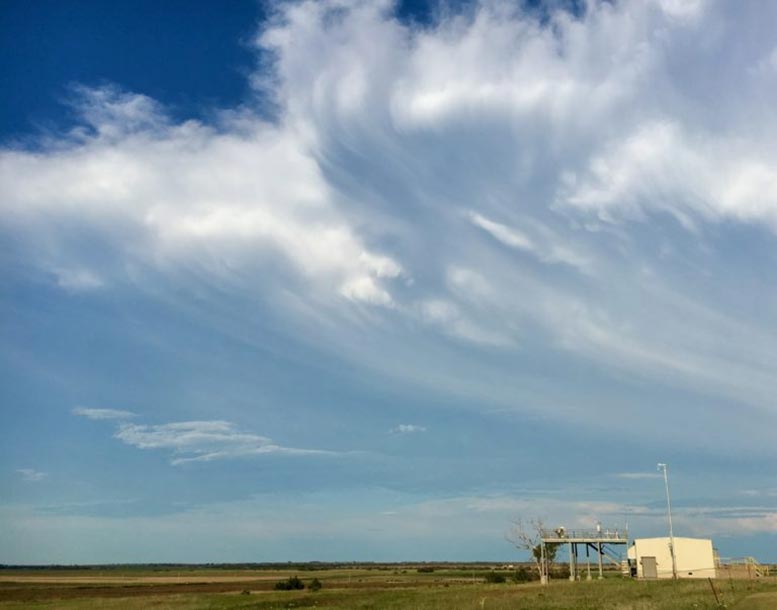
    The tiny fragments of fungal cells could contribute to asthma, allergic reactions, and ice cloud formation. Credit: Michael Lawler / UCI

    In a discovery that has implications for our understanding of the air we breathe, University of California, Irvine (UCI) chemists report that they’ve found nanoscale fragments of fungal cells in the atmosphere. The pieces are extremely small, measuring about 30 nanometers in diameter, and much more abundant than previously thought, the researchers say in a study published on January 15, 2020, in Science Advances.

    “These fragments are most likely bits of fungal spores that have burst after swelling with water,” said lead author Michael Lawler, assistant project specialist in the Ultrafine Aerosol Laboratory headed by co-author James Smith, UCI professor of chemistry. “It was unexpected to identify them as fungal fragments. The appearance of large numbers of atmospheric nanoparticles is usually ascribed to reactions of gases in the atmosphere, growing up from molecules rather than breaking down from larger particles.” He said these lofted bits of fungus are easier to inhale deep into the lungs than intact cells, which can be thousands of nanometers in diameter. This means they may contribute to fungus-related allergic reactions and asthma among susceptible people.

    The study also explored how these tiny crumbs of biological matter might aid in the creation of ice clouds, as some such cells have been found to facilitate ice formation in the sky. “Large, intact biological cells are extremely rare in the atmosphere, but we’ve identified fungal nanoparticles in orders-of-magnitude higher concentrations, so if some or all of these are good ice nuclei, they could play a role in ice cloud formation,” Lawler said.

    To make these observations, the researchers drew air into an inlet that size-selected ambient particles to take in only those measuring 20 to 60 nanometers in diameter. The samples were collected onto a thin platinum filament for 30 minutes and then vaporized; the resulting gases were detected using a high-resolution mass spectrometer.

    Danielle Draper, a UCI Ph.D. student in chemistry, also co-authored the study, which was funded by the U.S. Department of Energy’s Office of Science.

    Reference: “Atmospheric fungal nanoparticle bursts” by Michael J. Lawler, Danielle C. Draper and James N. Smith, 15 January 2020, Science Advances.
    DOI: 10.1126/sciadv.aax9051 

    Never miss a breakthrough: Join the SciTechDaily newsletter.
    Follow us on Google and Google News.

    Fungus Nanoparticles UC Irvine
    Share. Facebook Twitter Pinterest LinkedIn Email Reddit

    Related Articles

    Fungal-Plant Symbiosis: Boosting Crop Resilience and Paving the Way for Sustainable Agriculture

    Hospitals Are at Risk: Smartphone Attacks Could Release Deadly Microbes

    Why Does Love Feel Magical? Science Reveals an Evolutionary Advantage

    Scientists “Magically” Mine Metals From Water

    Scientists Discover Protein in Fungus That Allows It To Bypass Plant Defenses

    A “Greener” Way To Clean Wastewater Treatment Filters With Reusable Nanoparticle Catalysts

    Scientists Discover Design Secrets of Nearly Indestructible Insect That Can Survive Being Run Over by a Car

    Study Finds New Method to Accelerate Nanoparticles

    Fake News Can Lead to False Memories

    Leave A Reply Cancel Reply

    • Facebook
    • Twitter
    • Pinterest
    • YouTube

    Don't Miss a Discovery

    Subscribe for the Latest in Science & Tech!

    Trending News

    Your Blood Pressure Reading Could Be Wrong Because of One Simple Mistake

    Astronomers Stunned by Ancient Galaxy With No Spin

    Physicists May Be on the Verge of Discovering “New Physics” at CERN

    Scientists Solve 320-Million-Year Mystery of Reptile Skin Armor

    Scientists Say This Daily Walking Habit May Be the Secret to Keeping Weight Off After Dieting

    New Therapy Rewires the Brain To Restore Joy in Depression Patients

    Giant Squid Detected off Western Australia in Stunning Deep-Sea Discovery

    Popular Sugar-Free Sweetener Linked to Liver Disease, Study Warns

    Follow SciTechDaily
    • Facebook
    • Twitter
    • YouTube
    • Pinterest
    • Newsletter
    • RSS
    SciTech News
    • Biology News
    • Chemistry News
    • Earth News
    • Health News
    • Physics News
    • Science News
    • Space News
    • Technology News
    Recent Posts
    • Hidden Warm Water Beneath Antarctica Could Rapidly Raise Global Sea Levels
    • Scientists Revive Ancient Chemistry Trick To Engineer Next-Generation Glass
    • Scientists Use AI To Supercharge Ultrafast Laser Simulations by More Than 250x
    • Scientists Just Found a Surprising Way To Destroy “Forever Chemicals”
    • Popular Supplement Ingredient Linked to Shorter Lifespan in Men
    Copyright © 1998 - 2026 SciTechDaily. All Rights Reserved.
    • Science News
    • About
    • Contact
    • Editorial Board
    • Privacy Policy
    • Terms of Use

    Type above and press Enter to search. Press Esc to cancel.