
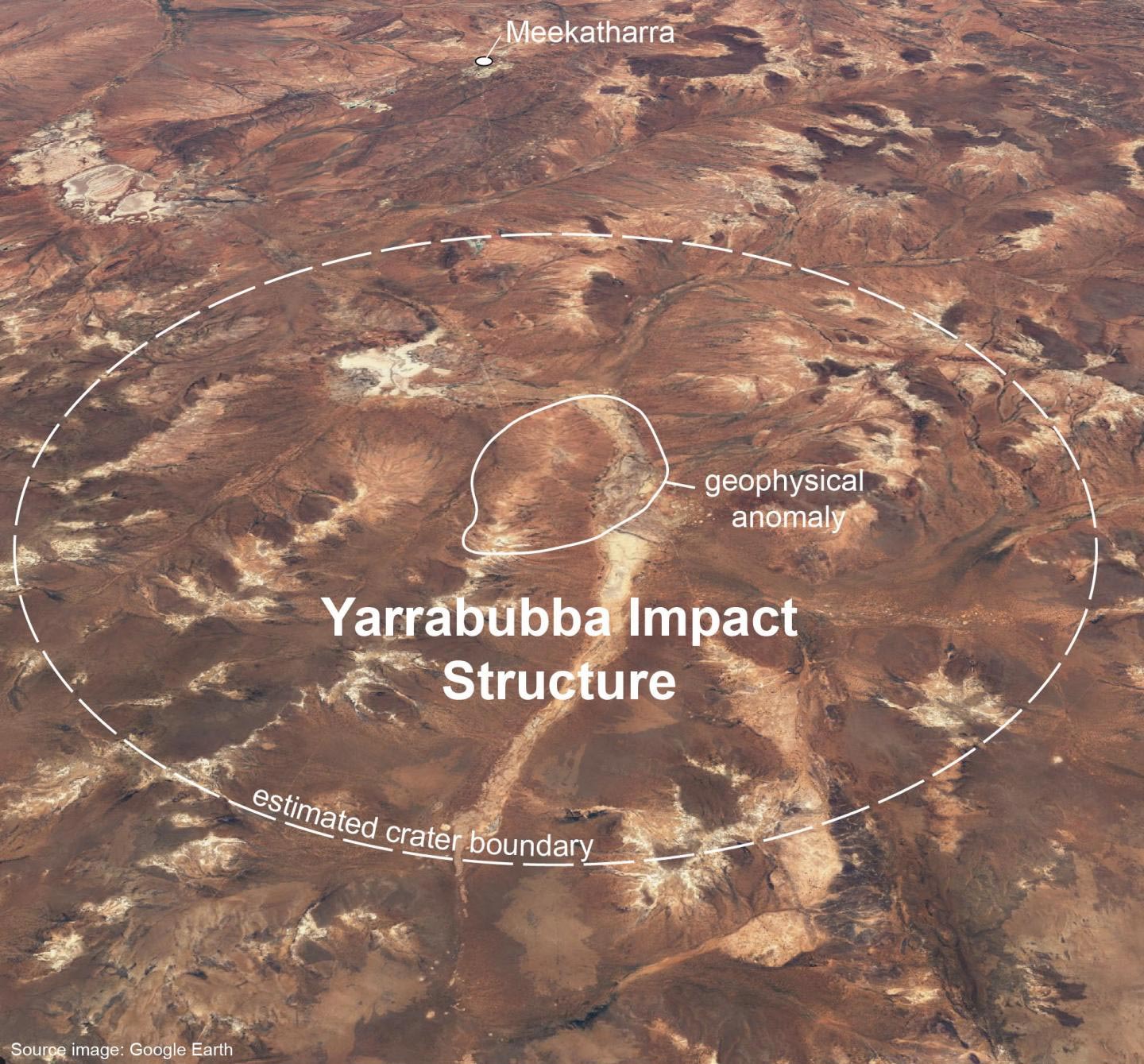
New Research Finds Earth’s Oldest Asteroid Strike Linked to ‘Big Thaw’
Curtin University scientists have discovered Earth’s oldest asteroid strike occurred at Yarrabubba, in outback Western Australia, and coincided with the end of a global deep freeze known as a Snowball Earth.
The research, published in the leading journal Nature Communications on January 21, 2020, used isotopic analysis of minerals to calculate the precise age of the Yarrabubba crater for the first time, putting it at 2.229 billion years old — making it 200 million years older than the next oldest impact.
Lead author Dr. Timmons Erickson, from Curtin’s School of Earth and Planetary Sciences and NASA’s Johnson Space Center, together with a team including Professor Chris Kirkland, Associate Professor Nicholas Timms, and Senior Research Fellow Dr. Aaron Cavosie, all from Curtin’s School of Earth and Planetary Sciences, analyzed the minerals zircon and monazite that were ‘shock recrystallized’ by the asteroid strike, at the base of the eroded crater to determine the exact age of Yarrabubba.
The team inferred that the impact may have occurred in an ice-covered landscape, vaporized a large volume of ice into the atmosphere, and produced a 70km (43 mi) diameter crater in the rocks beneath.
Professor Kirkland said the timing raised the possibility that the Earth’s oldest asteroid impact may have helped lift the planet out of a deep freeze.
“Yarrabubba, which sits between Sandstone and Meekatharra in central WA, had been recognized as an impact structure for many years, but its age wasn’t well determined,” Professor Kirkland said.
“Now we know the Yarrabubba crater was made right at the end of what’s commonly referred to as the early Snowball Earth – a time when the atmosphere and oceans were evolving and becoming more oxygenated and when rocks deposited on many continents recorded glacial conditions”.
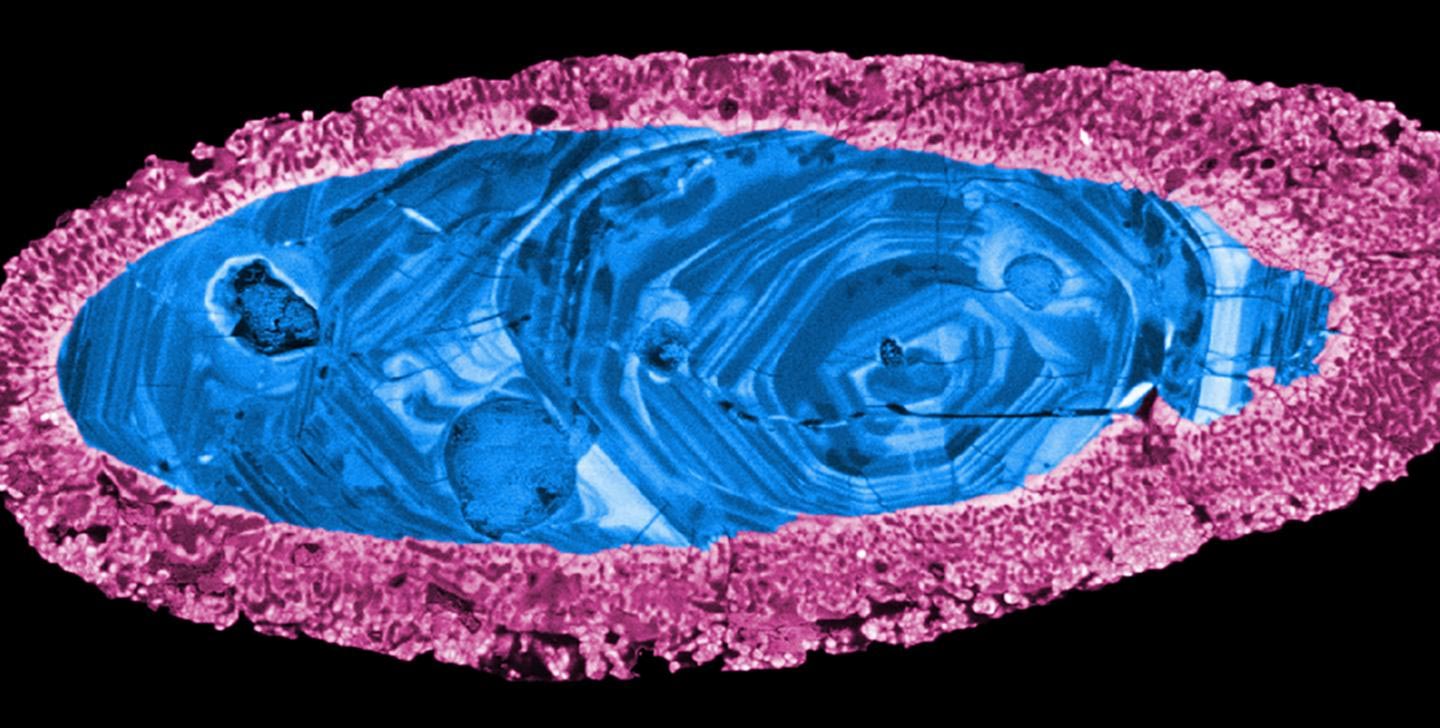
Associate Professor Nicholas Timms noted the precise coincidence between the Yarrabubba impact and the disappearance of glacial deposits.
“The age of the Yarrabubba impact matches the demise of a series of ancient glaciations. After the impact, glacial deposits are absent in the rock record for 400 million years. This twist of fate suggests that the large meteorite impact may have influenced global climate,” Associate Professor Timms said.
“Numerical modeling further supports the connection between the effects of large impacts on ice and global climate change. Calculations indicated that an impact on an ice-covered continent could have sent half a trillion tons of water vapor — an important greenhouse gas — into the atmosphere. This finding raises the question of whether this impact may have tipped the scales enough to end glacial conditions.”
Dr. Aaron Cavosie said the Yarrabubba study may have potentially significant implications for the future impact crater discoveries.
“Our findings highlight that acquiring precise ages of known craters is important — this one sat in plain sight for nearly two decades before its significance was realized. Yarrabubba is about half the age of the Earth and it raises the question of whether all older impact craters have been eroded or if they are still out there waiting to be discovered,” Dr. Cavosie said.
Read Australian Meteor Crater Is the Oldest Known According to NASA for more on this study.
Reference: “Precise radiometric age establishes Yarrabubba, Western Australia, as Earth’s oldest recognised meteorite impact structure” by Timmons M. Erickson, Christopher L. Kirkland, Nicholas E. Timms, Aaron J. Cavosie and Thomas M. Davison, 21 January 2020, Nature Communications.
DOI: 10.1038/s41467-019-13985-7
Never miss a breakthrough: Join the SciTechDaily newsletter.
Follow us on Google and Google News.
1 Comment
Glaciers have been around the place, including as ice caps, for a good while since the last Ice Age but they don’t constitute a “Snowball Earth”. What other evidence is there for a snowball Earth a couple of billion years ago?
The earliest evidence I learnt for Snowball Earth at around 750-650 Ma was when a geophysicist presented a palaeomagnetic result during the Gondwana 8 Conference showing that at that time Australia lay across the Equator when tillites were being deposited near Adelaide and Darwin on either side of Australia.