
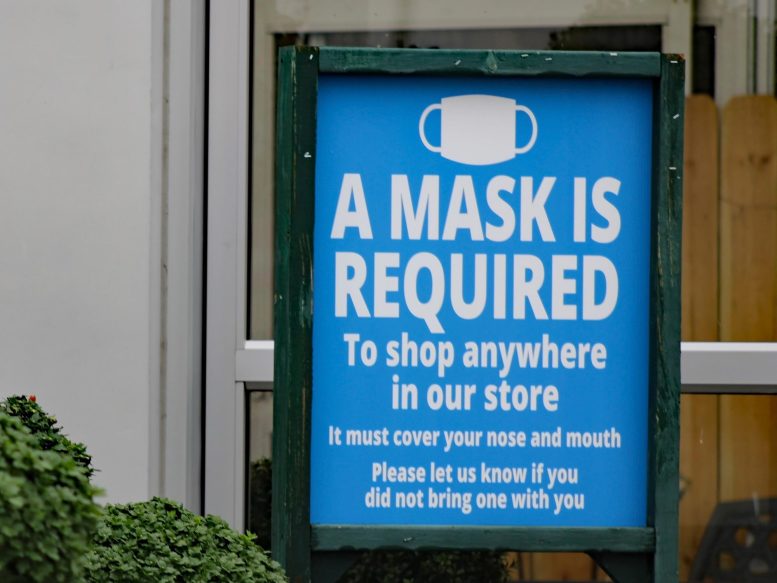
Following the mask mandate in Bangladesh, public mobility increased and was linked to a surge in COVID-19 cases. The research, involving the University of Leeds, demonstrated the “risk compensation” effect, where safety measures like mask-wearing can lead to riskier behaviors, thereby diluting their effectiveness.
When officials in Bangladesh announced a legal requirement for masks to be worn outside the home, there was an associated rise in the number of journeys people made, not only to go to work but to visit shops, parks, transport hubs, and recreation centers – and a drop in the amount of time people stayed at home.
That increased mobility was linked with a rise in COVID-19 cases, with the researchers noting: “…daily mobility had a statistically significant association on daily new cases.”
Efficacy and Challenges of Mask Wearing
Dr. Zia Wadud, Associate Professor at the University of Leeds’s School of Chemical and Process Engineering, who led the study, said there is increasing evidence from laboratory and observational studies that face coverings when worn properly can reduce the spread of the virus that causes COVID-19.
But those benefits could be diminished or lost entirely if the messaging around compulsory mask wearing is not clear and the rules are not properly implemented.
He said: “In Bangladesh, the evidence indicated that people may have regarded the announcement that they would be required to wear a mask as a signal that it would enable them to return to a normal way of life as long as they adhered to the rules over face coverings.
“And that was not the case. People needed to be told — and reminded constantly — that mask wearing was an additional measure alongside limiting travel and close interaction with others.”
Risk Compensation Phenomenon
The study, involving scientists from the University of Leeds and the Bangladesh University of Engineering and Technology, shines a light on what is known as “risk compensation,” where people adopt riskier behavior if they feel an intervention is making them safer – for example, motorcyclists may go faster if they are wearing a crash helmet.
The study – Face mask mandates and risk compensation: an analysis of mobility data during the COVID-19 pandemic in Bangladesh – is published today (January 10, 2022) in the journal BMJ Global Health.
Analysis of Mobility and COVID-19 Spread
Around 160 countries have introduced measures involving the compulsory wearing of masks. Although the study involved data collected in Bangladesh, the findings apply more broadly.
From mid-March 2020, Bangladesh began to shut down as the number of COVID-19 cases began to rapidly increase. Educational institutions closed, followed in quick succession by shopping centers, workplaces, and transport hubs. The mandatory requirement to wear a mask or other face covering when outside of the home was imposed on 21 July 2020.
The Bangladesh study involved an analysis of Google community mobility data collected by mobile phones and other Android devices.
The data provided aggregated generic location information. People were recorded as either being at home; at work; in a retail or recreation setting; at a grocery or pharmacy store; in a park; or at a transport hub.
The analysis found “statistically significant evidence” that in the days after compulsory mask wearing was introduced, activity at specific locations increased during a 7-day period:
- 5.8% in retail and recreation areas; 4.2% in parks; 5.9% in transport hubs; and 2.6% in workplaces.
It took about ten days from when someone was infected for their case to be reflected in the official figures. Analyzing the time-lagged data enabled the scientists to confirm that the increase in mobility was linked with a rise in the number of COVID cases, confirming an observation seen in other scientific studies.
Dr. Sheikh Mokhlesur Rahman, co-author from the Bangladesh University of Engineering and Technology, added: “The research shows that the mandatory requirement for masks could result in a risk compensation effect, which could reduce the intended effectiveness of wearing masks. It is important that policymakers recognize this possibility to better design their COVID-19 mitigation measures.”
Reference: “Face mask mandates and risk compensation: an analysis of mobility data during the COVID-19 pandemic in Bangladesh” by Zia Wadud, Sheikh Mokhlesur Rahman and Annesha Enam, 1 January 2022, BMJ Global Health.
DOI: 10.1136/bmjgh-2021-006803
Never miss a breakthrough: Join the SciTechDaily newsletter.
Follow us on Google and Google News.
1 Comment
check the blood that’s all you gotta do now. sniffs wiping my nose eating fast food last night still wearing a mask as I don’t trust anyone these days.