

Physicists present a nanometer-sized light antenna with electrically modulated surface properties – a breakthrough that could pave the way for faster computer chips.
Advances in plasmonic resonators could lead to computer chips that are up to 1000 times faster, thanks to collaborative efforts between German and Danish universities. These teams have successfully modulated light antennas electrically and integrated quantum mechanics into classical physics models, promising profound technological impacts.
Pushing Computational Speeds
Today’s computers reach their physical limits when it comes to speed. Semiconductor components usually operate at a maximum usable frequency of a few gigahertz – which corresponds to several billion computing operations per second. As a result, modern systems rely on several chips to divide up the computing tasks because the speed of the individual chips cannot be increased any further. However, if light (photons) were used instead of electricity (electrons) in computer chips, they could be up to 1000 times faster.
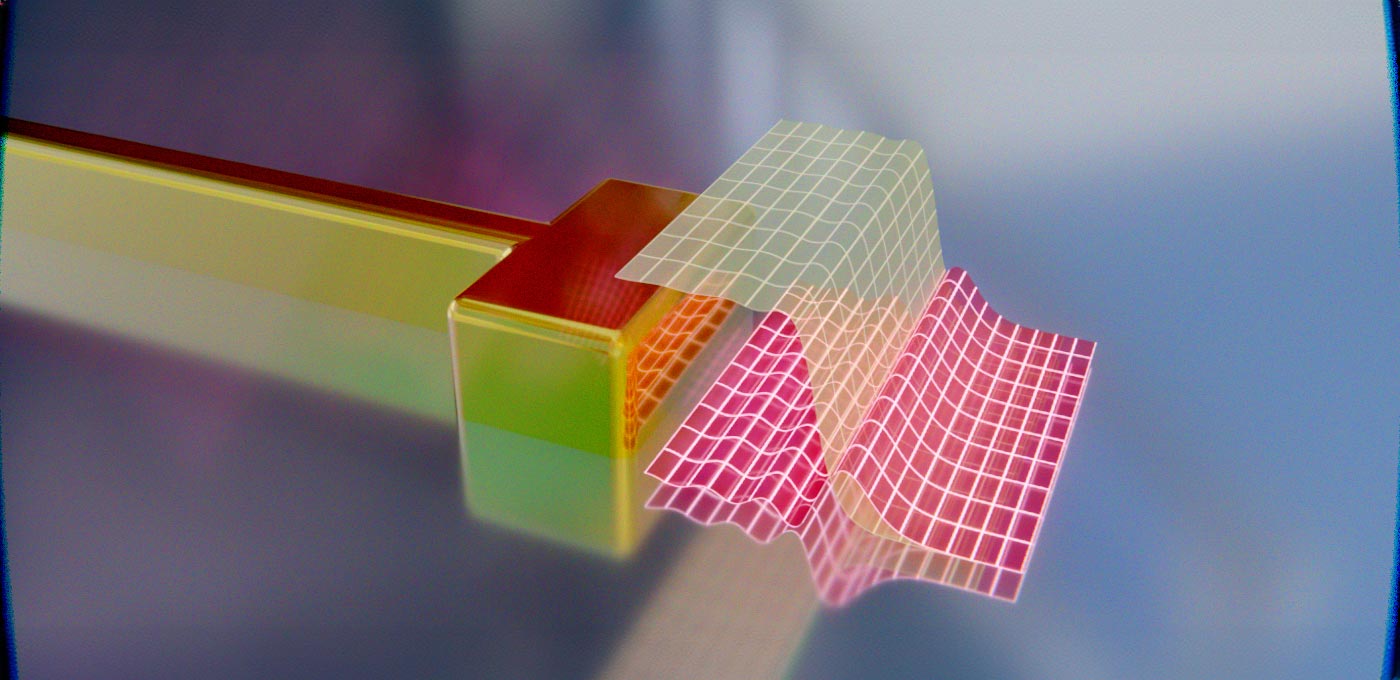
Plasmonic resonators, also known as “antennas for light,” are a promising way of achieving this leap in speed. These are nanometer-sized metal structures in which light and electrons interact. Depending on their geometry, they can interact with different light frequencies.
Breakthrough in Modulation Technology
“The challenge is that plasmonic resonators cannot yet be effectively modulated, as is the case with transistors in conventional electronics. This hinders the development of fast light-based switches,” says Dr. Thorsten Feichtner, physicist at Julius-Maximilians-Universität (JMU) Würzburg in Bavaria, Germany.
A JMU research team in collaboration with the Southern Denmark University (SDU) in Odense has now taken a significant step forward in the modulation of light antennas: It has succeeded in achieving electrically controlled modulation that points the way to ultra-fast active plasmonics and thus to significantly faster computer chips. The experiments have been published in the journal Science Advances.
Enhancing Resonator Surfaces for Faster Computing
Instead of trying to change the entire resonator, the team focussed on changing its surface properties. This breakthrough was achieved by electrically contacting a single resonator, a nanorod made of gold – an idea that is conceptually simple, but could only be realized with the help of sophisticated nanofabrication based on helium ion beams and gold nanocrystals. This unique fabrication method has been established at the JMU Chair of Experimental Physics (Biophysics) under the direction of Professor Bert Hecht. Sophisticated measurement techniques with a lock-in amplifier were crucial for detecting the small but significant effects on the surface of the resonator.
Study leader Dr. Thorsten Feichtner explains: “The effect we are making use of is comparable to the principle of the Faraday cage. Just as the electrons in a car struck by lightning collect on the outside and the occupants inside are safe, additional electrons on the surface influence the optical properties of the resonators.”
Surprising Quantum Effects
Until now, optical antennas could almost always be described classically: the electrons of the metal simply stop at the edge of the nanoparticle, like water at a harbor wall. However, the measurements taken by the Würzburg scientists revealed changes in the resonance that can no longer be explained in classical terms: the electrons “smear” across the boundary between metal and air, resulting in a soft, graduated transition, similar to a sandy beach met by the sea.
To explain these quantum effects, theorists at SDU Odense developed a semi-classical model. It incorporates the quantum properties into a surface parameter so that the calculations can be carried out using classical methods. “By perturbing the response functions of the surface, we combine classical and quantum effects, creating a unified framework that advances our understanding of surface effects,” explains JMU physicist Luka Zurak, first author of the study.
Establishing a New Field of Quantum Research
The new model can reproduce the experiments, but exactly which of the many quantum effects are involved at the metal surface is not clear at the moment. “But with this study, it is now possible for the first time to specifically design new antennas and exclude or amplify individual quantum effects,” says Thorsten Feichtner.
In the long term, the researchers envisage even more applications: Smaller resonators promise optical modulators with high efficiency, which could be used technologically. In addition, the influence of surface electrons in catalytic processes can also be investigated with the system presented. This would provide new insights into energy conversion and energy storage technologies.
Reference: “Modulation of surface response in a single plasmonic nanoresonator” by Luka Zurak, Christian Wolf, Jessica Meier, René Kullock, N. Asger Mortensen, Bert Hecht and Thorsten Feichtner, 6 September 2024, Science Advances.
DOI: 10.1126/sciadv.adn5227
Never miss a breakthrough: Join the SciTechDaily newsletter.
Follow us on Google and Google News.
2 Comments
Sorry, nothing new here, we are commercializing this after being in stealth for 12 years.
Given how each technology in use right now – including AI, LEDs, LiIon batteries and solar cells – took five to six decades on average to mature to this level, I wouldn’t hold my breath for this “miracle” tech that hasn’t even gotten out of the lab yet.