
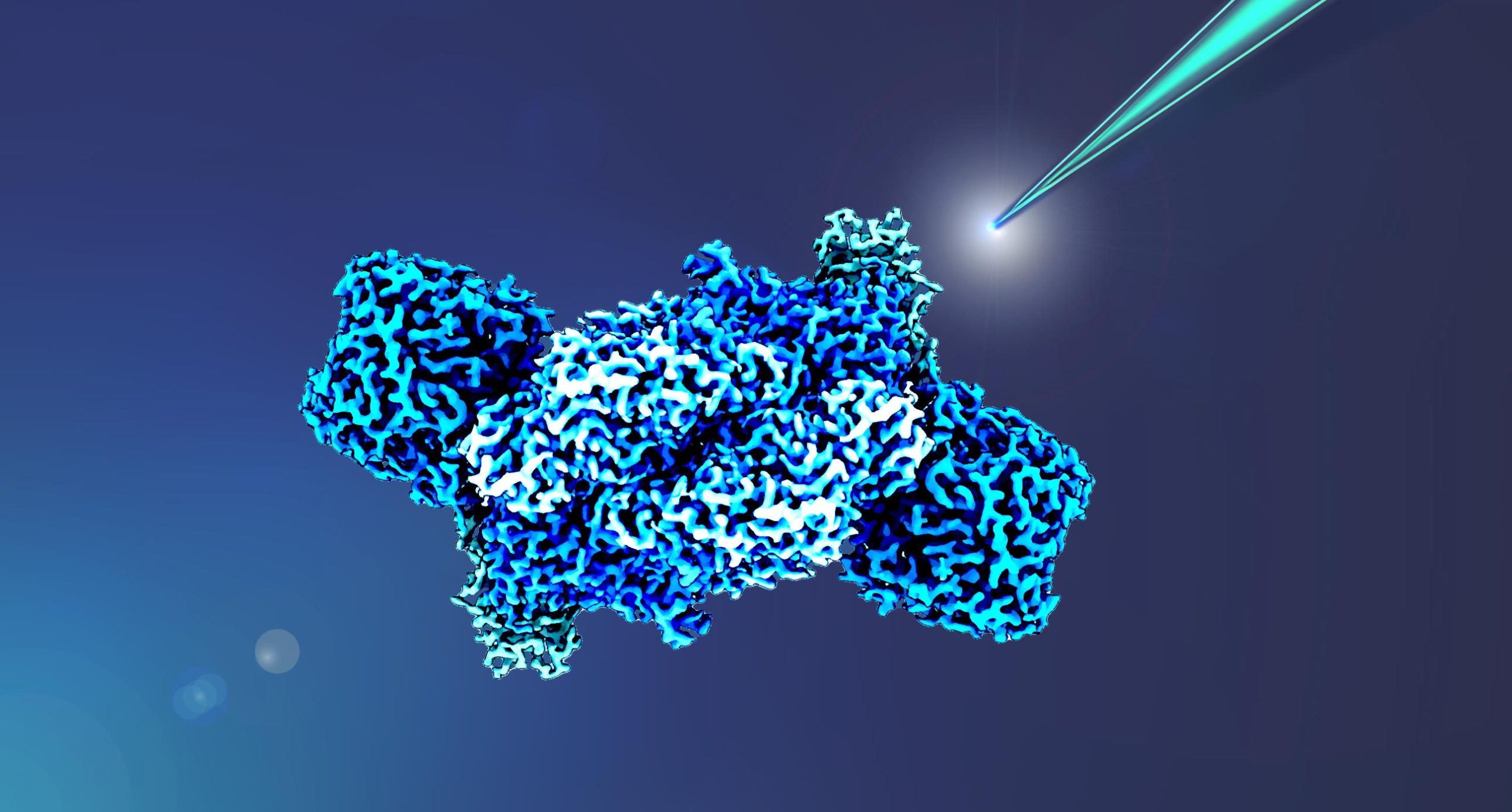
Discovering essential electron carriers in nitrogenases opens new paths for eco-friendly chemical production, addressing a long-standing research bottleneck.
Nitrogenases are considered promising candidates for the sustainable enzymatic production of ammonia and carbon compounds. Unfortunately, one bottleneck in this complex process, the supply of electrons to the enzymes, has remained a mystery until now. Now a team at the Max Planck Institute for Terrestrial Microbiology in Marburg has discovered two essential electron carriers that play a key role in determining the performance of iron (Fe) nitrogenase, thus opening up new possibilities for elucidating and maximizing nitrogenase’s potential.
Nitrogenases are catalysts for several industrially relevant reactions, the most important of which is the chemical fixation and conversion of nitrogen to ammonia, a raw material for fertilizers. Their industrial production is currently carried out using the environmentally harmful Haber-Bosch process.
Enzymatically and sustainably produced fertilizers could save around one percent of the energy consumed globally and the associated carbon dioxide released, which is why many research labs and start-ups are focusing on the topic. However, nitrogenase research is challenging because nitrogenases are a highly complex metalloenzymes and many aspects of their reactivity and catalysis are still poorly understood.
Iron nitrogenase not only fixes nitrogen, but also carbon dioxide
Researchers led by Johannes Rebelein at the Max Planck Institute for Terrestrial Microbiology in Marburg, Germany, have now gained first insights into the energy supply of the enzyme complex, i.e. its electron supply.
Their results are important not only for industrial nitrogen, but also for industrial carbon dioxide fixation, because the same team recently showed that iron nitrogenases are also capable of converting carbon dioxide into short-chain hydrocarbons. The researchers characterized the electron transport to the iron nitrogenase in the model bacterium Rhodobacter capsulatus and showed that two different electron transport proteins, called ferredoxins, are essential for nitrogen fixation.
The energy bottleneck opens up new approaches for optimization
“We wanted to find out which ferredoxins are crucial for nitrogenase catalysis. Since all cells harbor multiple ferredoxins, with our model bacterium R. capsulatus producing six different ferredoxins, we also wanted to find out whether several of these ferredoxins can perform the same task or whether they have strictly specific functions,” explains first author Holly Addison. “When two specific ferredoxins were knocked out, the others could not take over their functions. We concluded that these ferredoxins were essential and likely performed distinct roles in nitrogen fixation.”
The supply of electrons is considered a bottleneck in catalysis. With the two ferredoxins, the researchers have now identified clear targets to influence the electron flow and thus the performance of nitrogenases as biocatalysts. “Our results are an important prerequisite for the optimization of R. capsulatus as a model system for the enhanced conversion of nitrogen or carbon dioxide into ammonia or short-chain hydrocarbons,” adds Johannes Rebelein. “The aim now is to further investigate and engineer nitrogenases and their associated proteins to expand our understanding and enable the production of industrial bulk chemicals.”
The next steps of the project will focus on better understanding the role of ferredoxins as well as using synthetic biology methods to modify them and accelerate the turnover of the nitrogenase enzyme by providing electrons more efficiently.
Reference: “Two distinct ferredoxins are essential for nitrogen fixation by the iron nitrogenase in Rhodobacter capsulatus” by Holly Addison, Timo Glatter, Georg K. A. Hochberg and Johannes G. Rebelein, 20 February 2024, mBio.
DOI: 10.1128/mbio.03314-23
Never miss a breakthrough: Join the SciTechDaily newsletter.
Follow us on Google and Google News.