
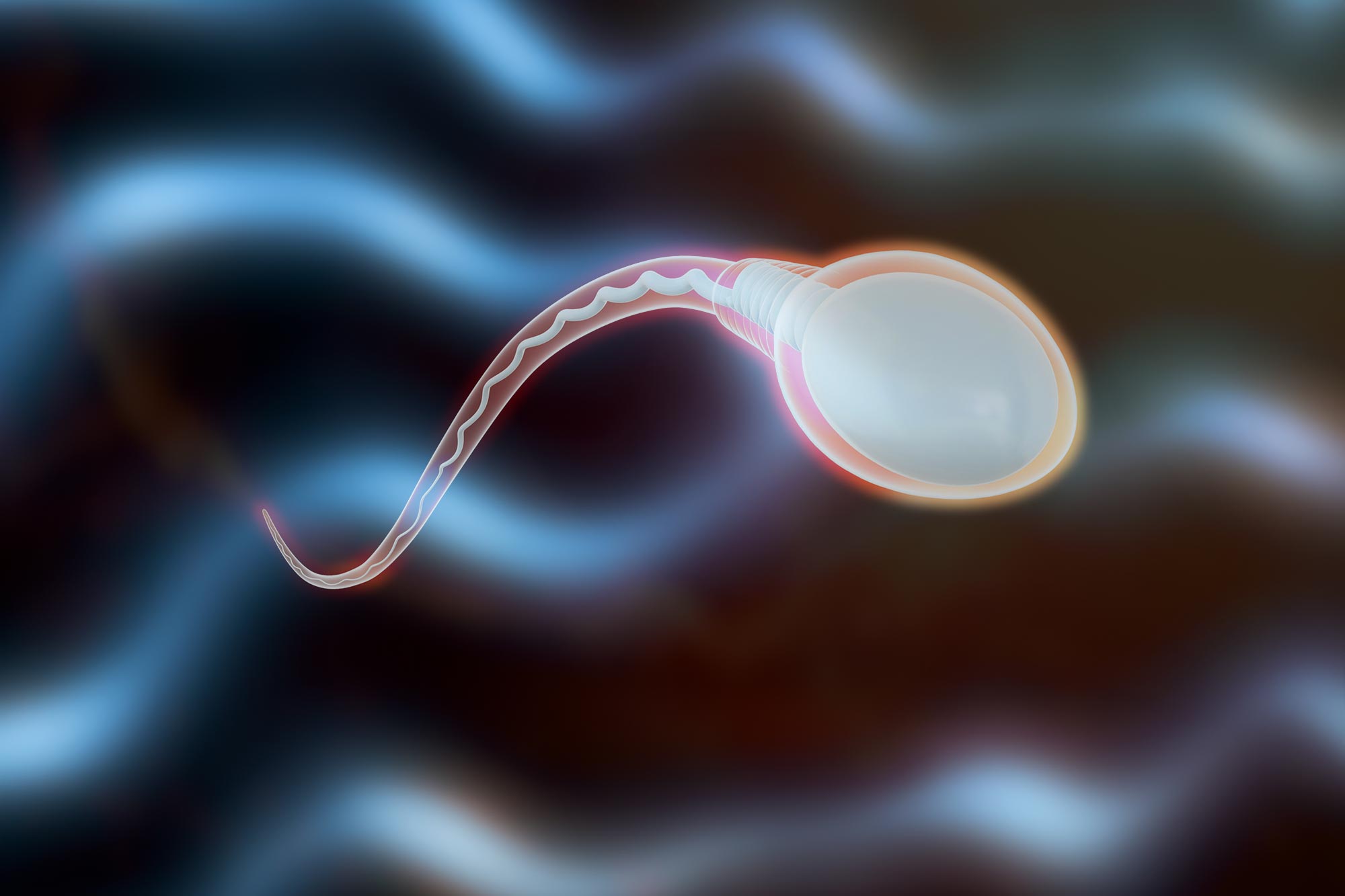
A new study reveals that targeting the STK33 protein can induce safe, reversible infertility in male mice, offering hope for nonhormonal male contraceptives.
Researchers have discovered that an inhibitor targeting the kinase STK33—a crucial protein for male fertility in both humans and mice—successfully causes reversible infertility in male mice. This occurs without any toxic side effects or harm to reproductive functions. The study highlights STK33 as a viable target for drug development, pointing to a promising pathway for creating nonhormonal, reversible male contraceptives.
Contraception is crucial for family planning, allowing individuals to choose if and when to conceive and how many children to have. However, advancements in contraception have been limited in recent decades, particularly for men. Currently, there are no effective oral contraceptives for men. Although hormonal-based approaches for male contraception are being investigated in clinical trials and have shown some promising results, none have been approved for general use.
Nonhormonal Alternatives in Contraception
Nonhormonal targets present a promising avenue with potentially fewer side effects. However, few small-molecule nonhormonal inhibitors have been developed, and even fewer have demonstrated contraceptive efficacy in preclinical models. The homozygous serine/threonine kinase 33, also called STK33, is essential to male fertility. Previous studies have shown that mutations to STK33, in both mice and men, result in infertility due to defective sperm motility and morphology without other significant health issues, suggesting STK33’s use as a viable target for male contraception.
To identify STK33-specific inhibitors, Angela Ku and colleagues performed a large-scale drug screening using a multibillion-compound collection of DNA-encoded chemical libraries. After uncovering several potent STK33-specific inhibitors, Ku et al. obtained crystal structures of STK33 with some of the identified compounds and used the information to assist in structure-guided molecule design. One of the most promising compounds – CDD-2807 – was shown to reduce fertility in vivo in male mice. According to the findings, CDD-2807 exhibited no toxicity, efficiently crossed the blood-testis barrier, did not accumulate in the brain, and induced a contraceptive effect that mirrored genetic STK33 perturbations without altering testis size.
Importantly, Ku et al. found that the inhibitor’s contraceptive effects were reversible, and mice recovered their fertility soon after the treatment was discontinued. “Any potential contraceptive drug must undergo extensive testing to show very high efficacy and rule out adverse effects on hormone levels, overall reproductive function, and impact on offspring. Additionally, long-term studies are necessary to evaluate potential risks associated with prolonged use,” write Jerrett Holdaway and Gunda Georg in a related Perspective. “Nevertheless, the findings substantiate the essential role of STK33 in male fertility and provide compelling evidence that this target is druggable and results in reversible male infertility.”
Reference: “Reversible male contraception by targeted inhibition of serine/threonine kinase 33” by Angela F. Ku, Kiran L. Sharma, Hai Minh Ta, Courtney M. Sutton, Kurt M. Bohren, Yong Wang, Srinivas Chamakuri, Ruihong Chen, John M. Hakenjos, Ravikumar Jimmidi, Katarzyna Kent, Feng Li, Jian-Yuan Li, Lang Ma, Chandrashekhar Madasu, Murugesan Palaniappan, Stephen S. Palmer, Xuan Qin, Matthew B. Robers, Banumathi Sankaran, Zhi Tan, Yasmin M. Vasquez, Jian Wang, Jennifer Wilkinson, Zhifeng Yu, Qiuji Ye, Damian W. Young, Mingxing Teng, Choel Kim and Martin M. Matzuk, 23 May 2024, Science.
DOI: 10.1126/science.adl2688
Never miss a breakthrough: Join the SciTechDaily newsletter.
Follow us on Google and Google News.