

Curiosity-driven basement experiments led Eric J. Nestler to become one of the world’s most influential neuroscientists, reshaping how researchers understand addiction, stress, and resilience.
His discoveries—especially the long-lasting molecular switch ΔFosB—revealed how experiences rewrite the brain, sparking global advances in psychiatry.
A Long View of How Brain Chemistry Shapes Behavior
In a newly released Genomic Press Interview published today (December 9) in Brain Medicine, Dr. Eric J. Nestler discusses how a simple fascination with brain chemistry grew into a global effort to understand the biological roots of mental illness. As the Anne and Joel Ehrenkranz Dean of the Icahn School of Medicine at Mount Sinai, he reflects on nearly forty years spent investigating how drugs and stress alter human behavior at the molecular level. What began with questions about protein signaling in the laboratory of Nobel laureate Paul Greengard eventually expanded into a detailed picture of how life experiences influence the brain’s genetic activity.
Early Curiosity and the Road to Yale
Dr. Nestler’s scientific path started far from a traditional research setting, in the basement of his family’s home in Nassau County, Long Island. Guided by his father, a high school biology teacher in the New York City public school system, he carried out experiments that evolved into award-winning science fair projects. These early experiences shaped his approach to inquiry and set the stage for an academic journey through Yale University, where he completed his BA, PhD, and MD while working in Dr. Greengard’s lab.
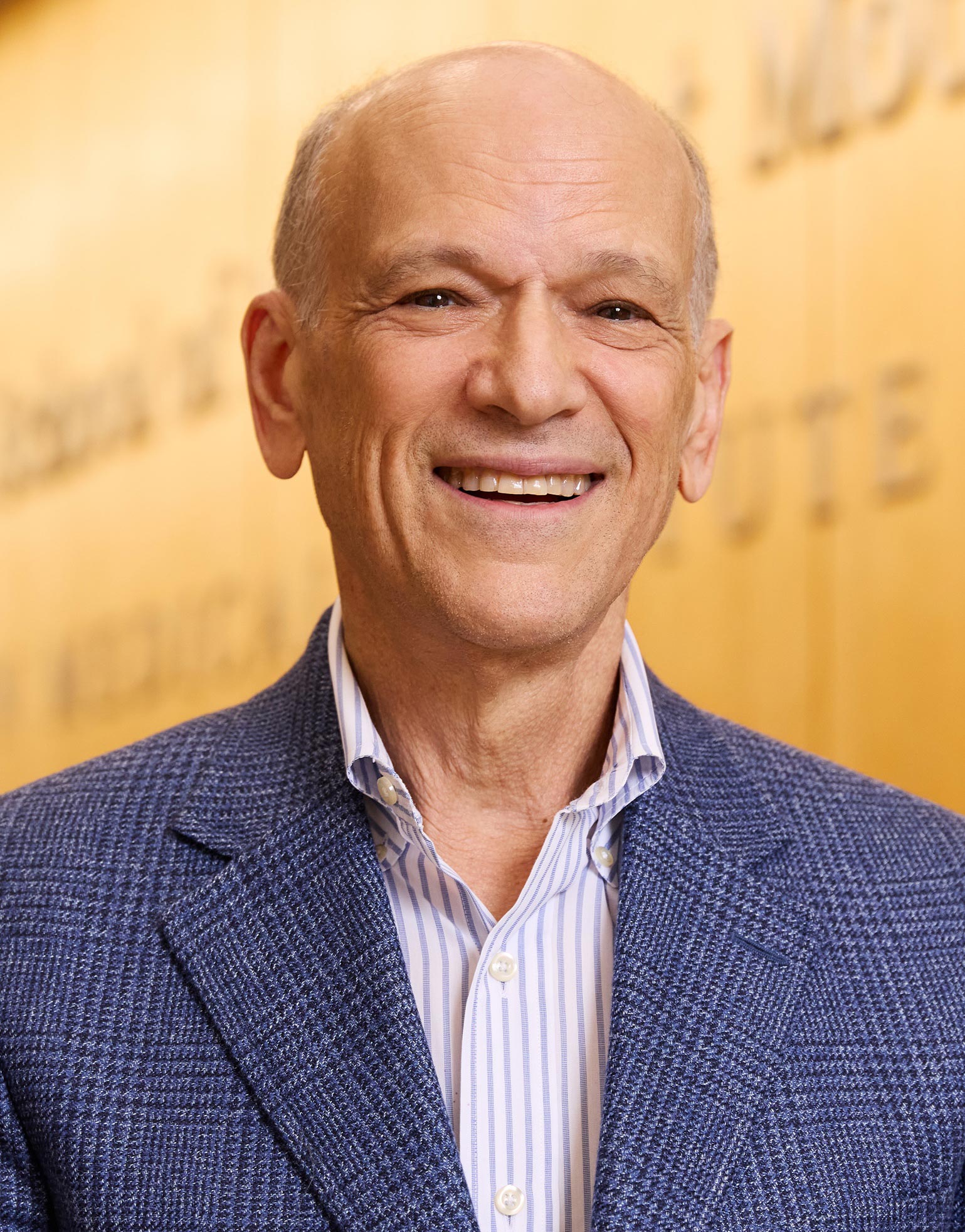
His decision to establish a research group at Yale Medical School under the name “The Laboratory of Molecular Psychiatry” proved ahead of its time. The idea of applying molecular biology to psychiatric disorders was considered bold, yet Dr. Nestler and colleague Dr. Ron Duman believed the field was ready for that leap. The name reflected real scientific ambition. Within a few years, Dr. Nestler became the Founding Director of the Division of Molecular Psychiatry at Yale, a role made possible when the current Director, Dr. George Heninger, voluntarily stepped aside. Dr. Nestler often recalls this moment as a defining lesson in generosity and mentorship, one he has carried forward throughout his career.
ΔFosB and the Biology of Lasting Brain Change
A central example of Dr. Nestler’s influence is his research on the transcription factor ΔFosB. This protein accumulates in brain reward pathways during repeated drug exposure and chronic stress, altering gene expression in ways that persist long after the initial experience. While most proteins break down quickly, ΔFosB remains active for weeks or months, helping explain why short-term experiences can produce long-lasting behavioral effects. Scientists around the world now view ΔFosB as a key factor in understanding vulnerability to addiction.
The interview highlights the type of deep scientific dialogue featured in Genomic Press’s open-access journals, which reach researchers across the globe. The organization’s dedication to free access has made it a significant force in advancing the dissemination of medical research.
Shifting the Focus From Signals to Genes to Single Cells
Over the past four decades, the focus of Dr. Nestler’s work has shifted significantly. Early studies emphasized intracellular signaling pathways. Over time, this evolved into an investigation of transcription factors and their gene targets in specific brain regions. About twenty years ago, his team began studying epigenetic regulation, the chromatin modifications that allow environmental experiences to leave long-term marks on brain function. As new technologies emerged, the research progressed from analyzing entire brain regions to examining individual cell types and, eventually, to single-cell methods that reveal hidden biological diversity. These advances raise an important question: could single-cell insights one day enable treatments tailored to specific neuronal populations in individual patients?
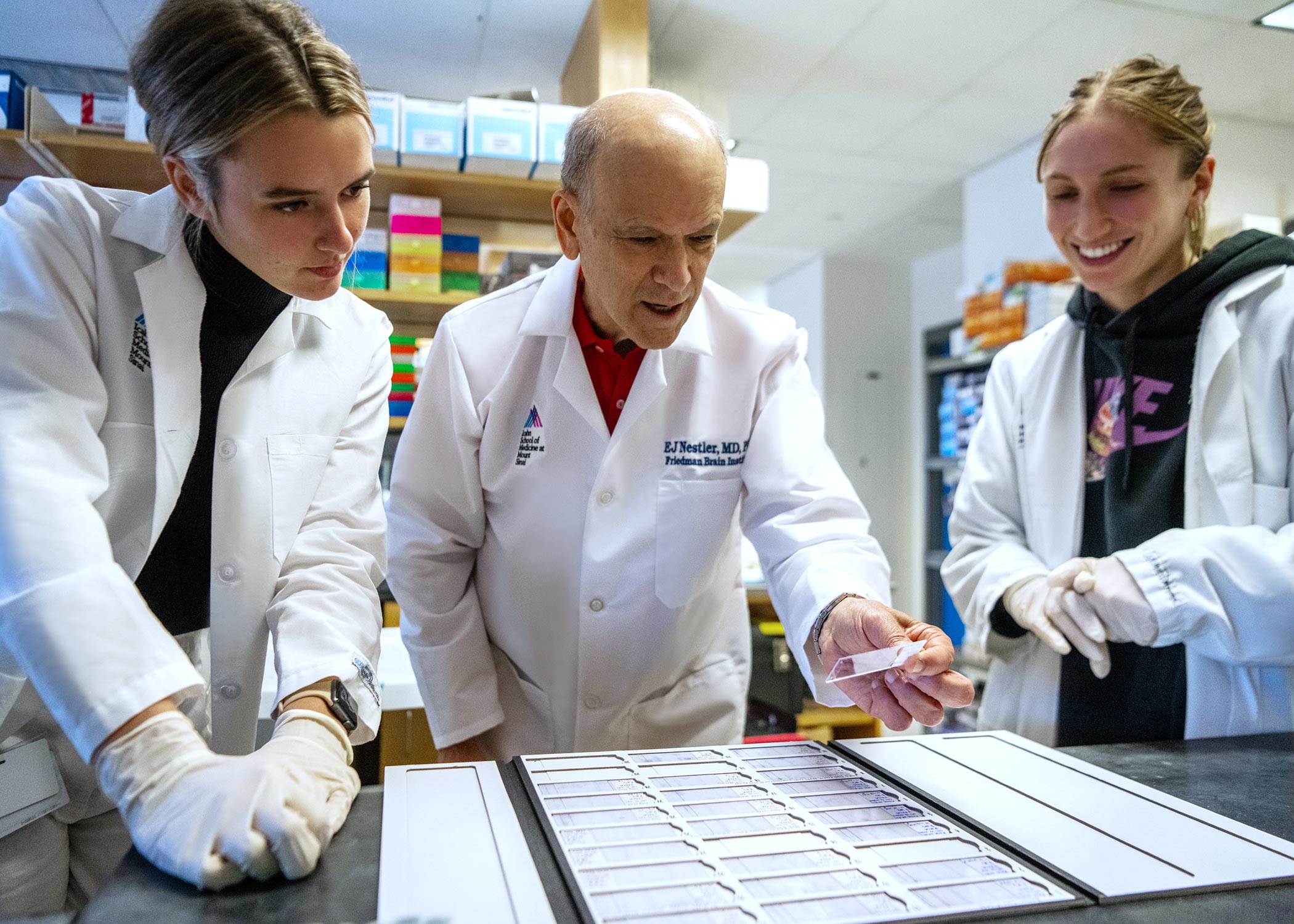
Resilience as a New Lens for Psychiatry
One of Dr. Nestler’s most notable contributions is his focus on resilience rather than disease. His laboratory identified unique molecular, cellular, and circuit-level features in animals that continue to function normally despite exposure to drugs or stress. These resilient animals appear to possess biological buffers that protect them from harm. This idea has broad clinical implications, suggesting that understanding natural resilience could lead to entirely new treatment strategies.
“In addition to seeking ways to reverse the deleterious effects of drug or stress exposure, it is possible to develop treatments that promote mechanisms of natural resilience in individuals who are inherently more susceptible,” Dr. Nestler explains in the interview. Several of these resilience-promoting mechanisms are now being tested in clinical trials for depression, offering one of the clearest pathways from basic research to patient care. The potential impact of these treatments raises important questions about how psychiatry may evolve over the next decade.
Cross-Species Validation and a Call to Protect Science
Findings from rodent studies have been confirmed in postmortem human brain tissue from individuals with addiction and stress-related conditions, reinforcing the translational value of this line of research. Dr. Nestler has authored more than 800 publications, including influential textbooks on the neurobiology of mental illness and molecular neuropharmacology, and his work has been cited over 177,000 times. With an h-index of 210, he ranks among the most influential scientists worldwide.
When asked about his greatest concern, he voices a warning that resonates globally: “My greatest fear is that science becomes politicized, whereas science must never be political. People in blue and red states get the same illnesses.” His statement underscores the importance of preserving objectivity in biomedical research. Genomic Press’s mission to support open-access medical science closely reflects this principle, emphasizing research that benefits people regardless of geography or political identity.
The Personal Side of a Scientific Career
Outside the research environment, Dr. Nestler values time with his wife Susan of 45 years, their three children David, Matt, and Jane, their spouses, and five grandchildren ranging in age from eighteen months to four years. He describes his defining traits as hard work and generosity. He considers organization and discipline to be his strongest skills, though he acknowledges a desire to cultivate more patience and to be more willing to confront unkind behavior.
Despite receiving honors such as the Julius Axelrod Prize for Mentorship, the Gold Medal Award from the Society of Biological Psychiatry, election to the National Academy of Sciences and National Academy of Medicine, and honorary doctorates from Uppsala University and Concordia University, he cites the success of his former students and postdoctoral fellows as his greatest source of pride. Additional information about Dr. Nestler and other scientific leaders is available on the Genomic Press website: https://genomicpress.kglmeridian.com/
His guiding philosophy comes from Theodore Roosevelt, who wrote that credit belongs to “the man who is actually in the arena, whose face is marred by dust and sweat and blood.” For nearly four decades, Dr. Nestler has remained in that arena, producing discoveries that have significantly changed our understanding of how the brain responds to challenge and adversity.
Reference: “Eric J. Nestler: Navigating a career in molecular psychiatry” by Eric J. Nestler MD, PhD, 9 December 2025, Brain Medicine.
DOI: 10.61373/bm025k.0143
Never miss a breakthrough: Join the SciTechDaily newsletter.
Follow us on Google and Google News.
1 Comment
Parta