

In a groundbreaking study, researchers have developed optical spring tracking to enhance signal clarity in gravitational-wave detectors, such as aLIGO.
This innovation could dramatically increase our understanding of cosmic events like black hole mergers, potentially unlocking secrets of the universe’s formation.
Revolutionary Advances in Gravitational Wave Detection
Researchers have shown that optical spring tracking is a promising way to improve the signal clarity of gravitational-wave detectors. The advance could one day allow scientists to see farther into the universe and provide more information about how black holes and neutron stars behave as they merge.
Large-scale interferometers such as the Advanced Laser Interferometer Gravitational-Wave Observatory (aLIGO) detect subtle distortions in spacetime, known as gravitational waves, generated by distant cosmic events. By allowing scientists to study phenomena that do not emit light, gravitational wave measurements have opened a new window for understanding extreme astrophysical events, the nature of gravity, and the origins of the universe.
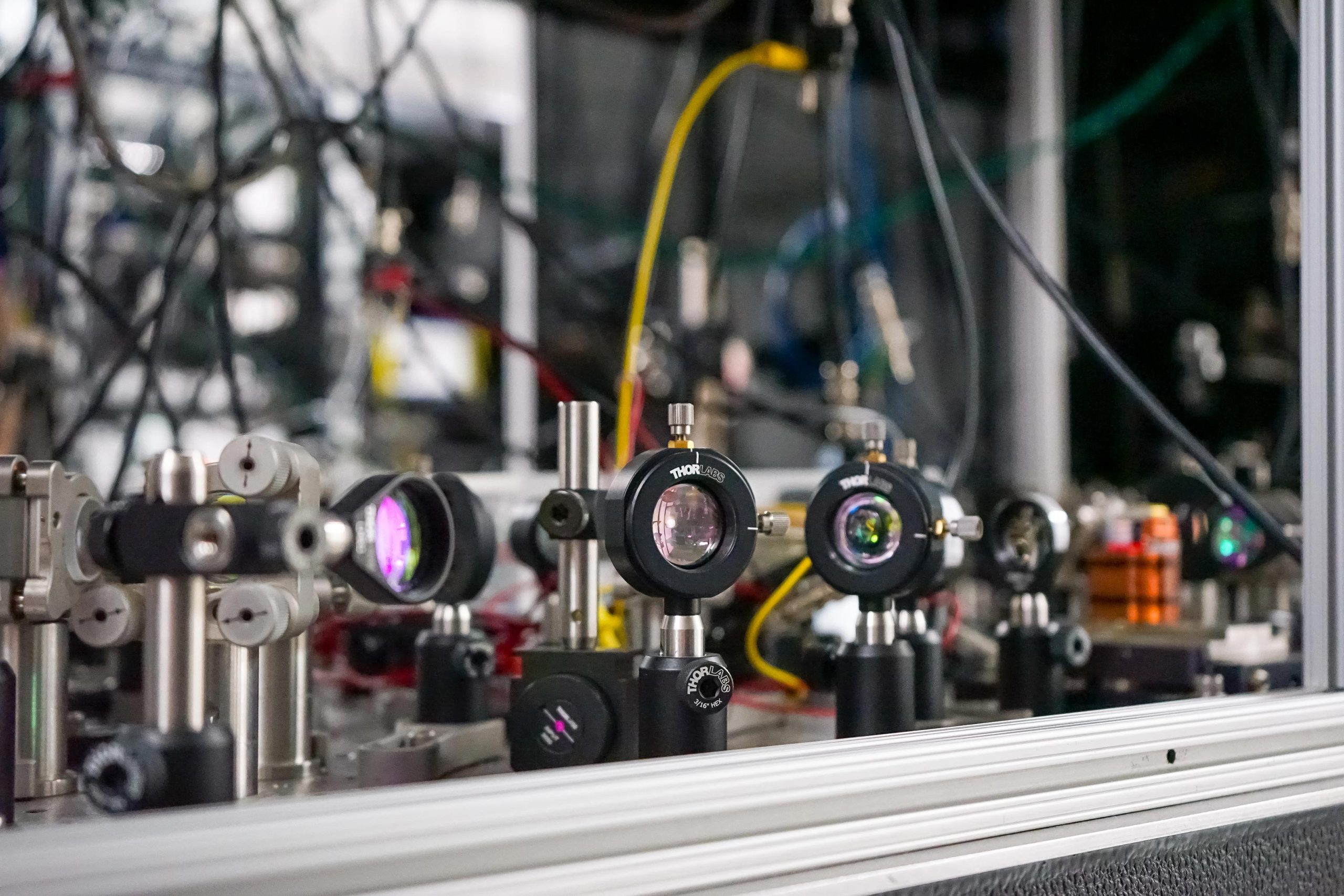
Reducing Quantum Noise with Optical Springs
“Quantum noise has become a limiting noise source when measuring gravitational waves,” said Scott M. Aronson, a member of the research team from Louisiana State University. “By tuning the system to respond at a desired frequency, we show that you can reduce this noise by using an optical spring to track a signal coming from a compact binary system. In the future, this binary system could be two black holes orbiting each other – within our galaxy or beyond.”
In the Optica Publishing Group journal Optics Letters, researchers led by Thomas Corbitt at Louisiana State University in collaboration with the LIGO Laboratory at the California Institute of Technology (Caltech) and Thorlabs Crystalline Solutions report a proof-of-concept experiment showing that dynamic tracking could help reduce noise in a gravitational-wave detector.
“This is the first measurement of an optical spring tracking a target signal over time,” said Aronson, first author of the paper. “This dynamic tracking technique is a strong candidate for quantum noise reduction in the future. Whether in current interferometers such as LIGO, or future detectors such as Cosmic Explorer, optical spring tracking is worth investigating to improve sensitivity and further our ever-growing population of gravitational wave events.”
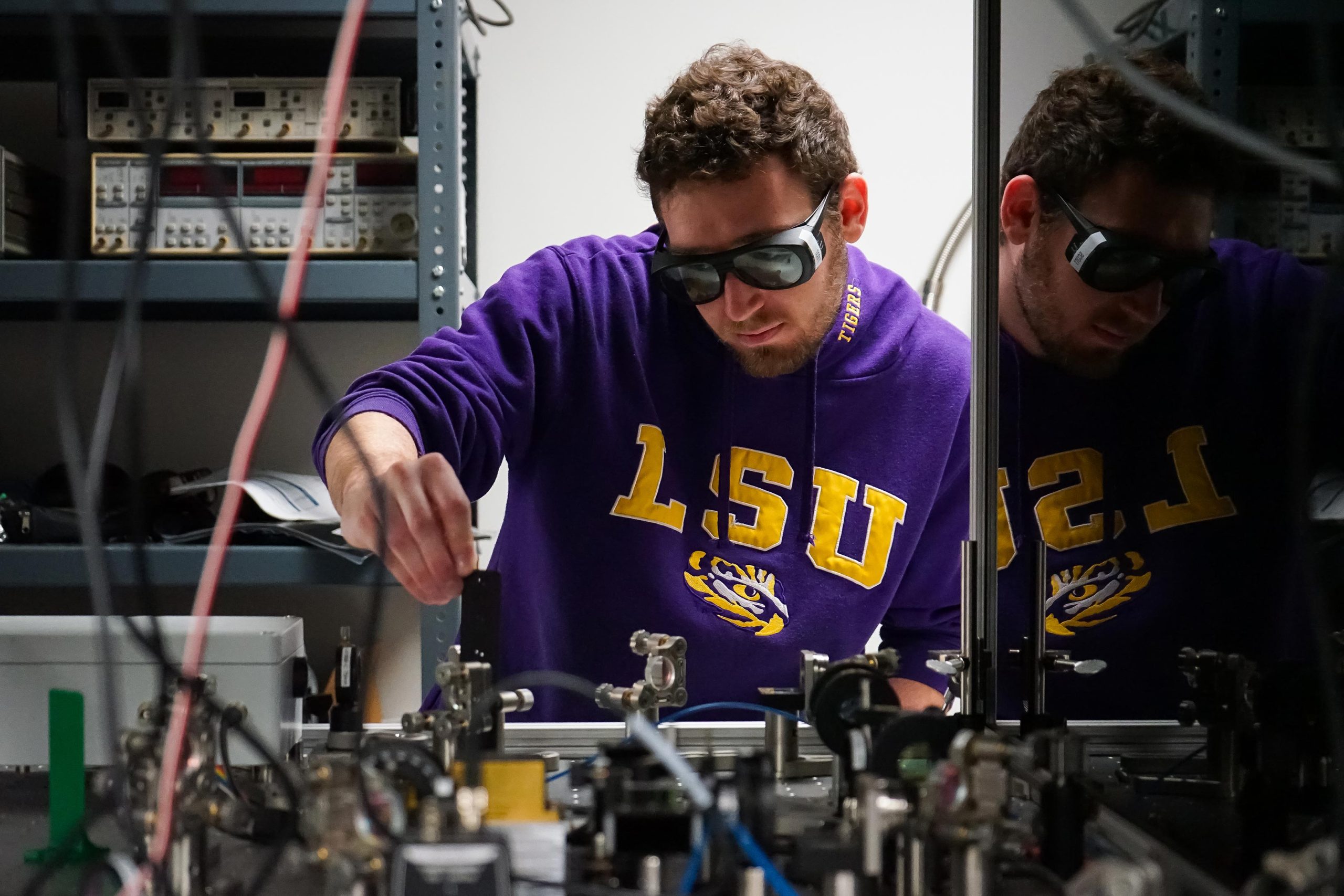
Experimenting with Optical Spring Dynamics
When two orbiting objects such as black holes emit gravitational waves, their rotational frequency increases creating what is known as a chirp. It has been proposed that matching the frequency of this chirp with a tunable optical spring could reduce noise and improve the signal clarity of a gravitational wave observatory.
Although this idea is being investigated for future interferometer configurations, Aronson and colleagues decided to carry out a proof-of-concept experiment to demonstrate the potential of dynamic tracking in larger-scale systems, such as a gravitational-wave observatory. The work was conducted as part of the LIGO scientific collaboration and the larger LIGO/Virgo/KAGRA (LVK) collaboration.
To accomplish this, co-author Garrett D. Cole from Thorlabs Crystalline Solutions constructed a cantilever that weighs just 50 nanograms using layers of aluminum gallium arsenide and gallium arsenide. The cantilever acts as a mirror that can “feel” the radiation pressure imparted by a laser beam, creating an optical spring that allows the researchers to investigate the interplay of the radiation pressure from the laser light with the cantilever’s motion.
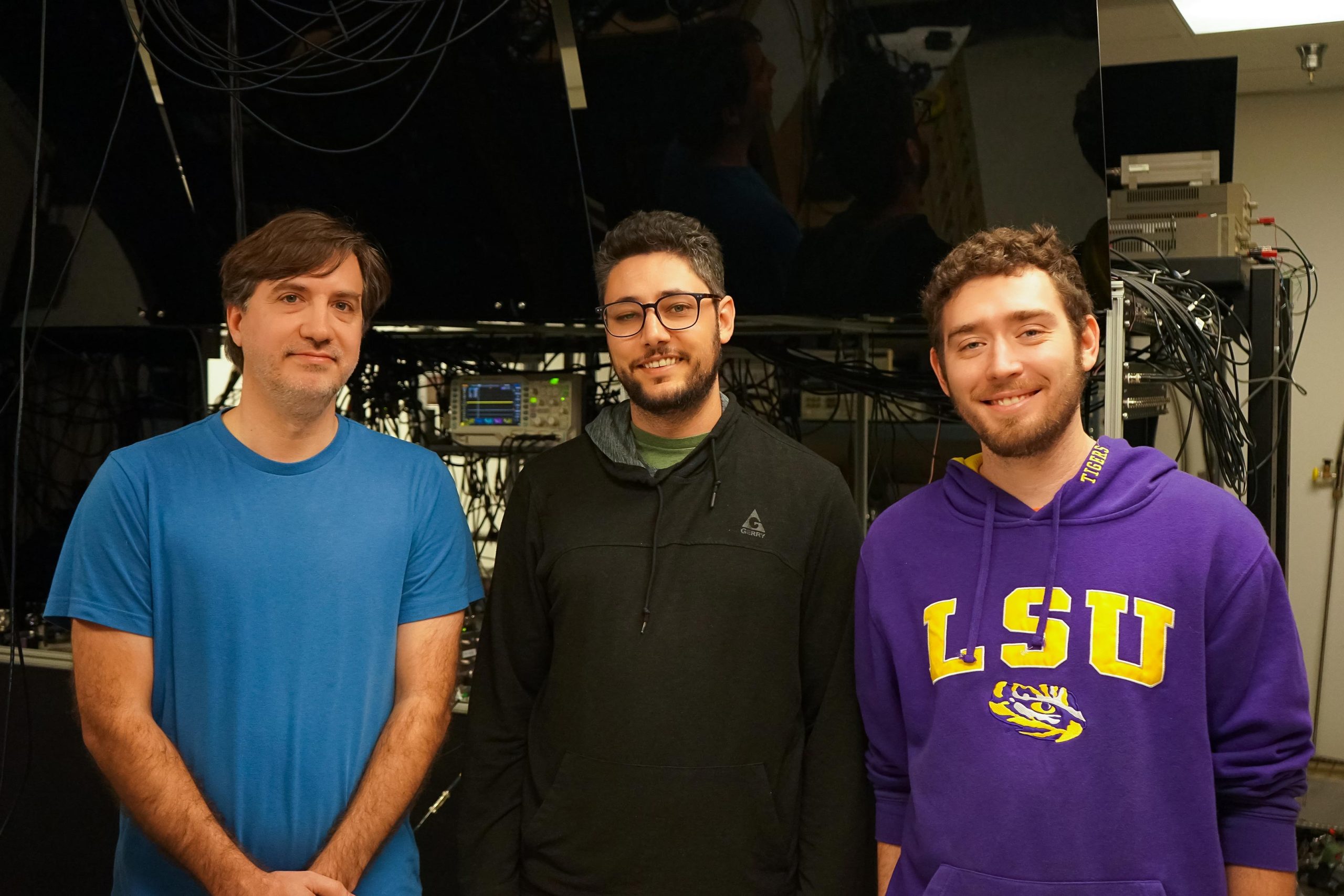
Enhancing Signal Clarity Through Dynamic Tracking
To test the tracking system, the researchers simulated an incoming gravitational wave by embedding a target signal into the phase of a laser beam. They used an alternate signal to control the position of a larger movable mirror within an optical cavity. The optical spring frequency could be tuned by adjusting the distance between the mirror and a cantilever.
During the experiment, the researchers moved the mirror to “track” the target signal as its frequency shifted from 40 kHz to 100 kHz over 10 seconds. Comparing this approach to keeping the mirror stationary, they demonstrated that tracking the signal with the movable mirror increased the signal-to-noise ratio by up to 40 times, producing a clearer measurement.
The researchers note that implementing the dynamic tracking technique in a large-scale interferometer would require highly robust feedback control of all optical components. This can be particularly challenging because as power levels increase, radiation pressure becomes critical in maintaining the precise positioning of mirrors. The technique also requires prior information about an incoming gravitational wave, which could be obtained using proposed space-based detectors like LISA.
“This dynamic tracking technique represents a significant step toward enhancing the sensitivity of gravitational-wave detectors, bringing us closer to unlocking the mysteries of the universe’s earliest moments,” said Aronson. “With future generations of gravitational-wave detectors, we will have the possibility of learning about the merger of compact objects formed by the first generation of stars, or even more exotic objects such as primordial black holes formed shortly after the Big Bang.”
Reference: “Optical spring tracking for enhancing quantum-limited interferometers” by Scott Aronson, Thomas Corbitt, Torrey Cullen, Garrett D. Cole and Ronald Pagano, 14 December 2024, Optics Letters.
DOI: 10.1364/OL.540195
Never miss a breakthrough: Join the SciTechDaily newsletter.
Follow us on Google and Google News.
2 Comments
Nikola Tesla
“If you want to discover the secrets of the universe think in terms of energy, frequency, and vibration.” Nikola Tesla 123 trivial thinking