
Close Menu
    Facebook X (Twitter) Instagram
    SciTechDaily
    • Biology
    • Chemistry
    • Earth
    • Health
    • Physics
    • Science
    • Space
    • Technology
    Facebook X (Twitter) Pinterest YouTube RSS
    SciTechDaily
    Home»Technology»Unmasking the Illusion: AI-Generated Faces Challenge Perceptions
    Technology

    Unmasking the Illusion: AI-Generated Faces Challenge Perceptions

    By University of WaterlooMarch 10, 2024No Comments3 Mins Read
    Facebook Twitter Pinterest Telegram LinkedIn WhatsApp Email Reddit
    Share
    Facebook Twitter LinkedIn Pinterest Telegram Email Reddit
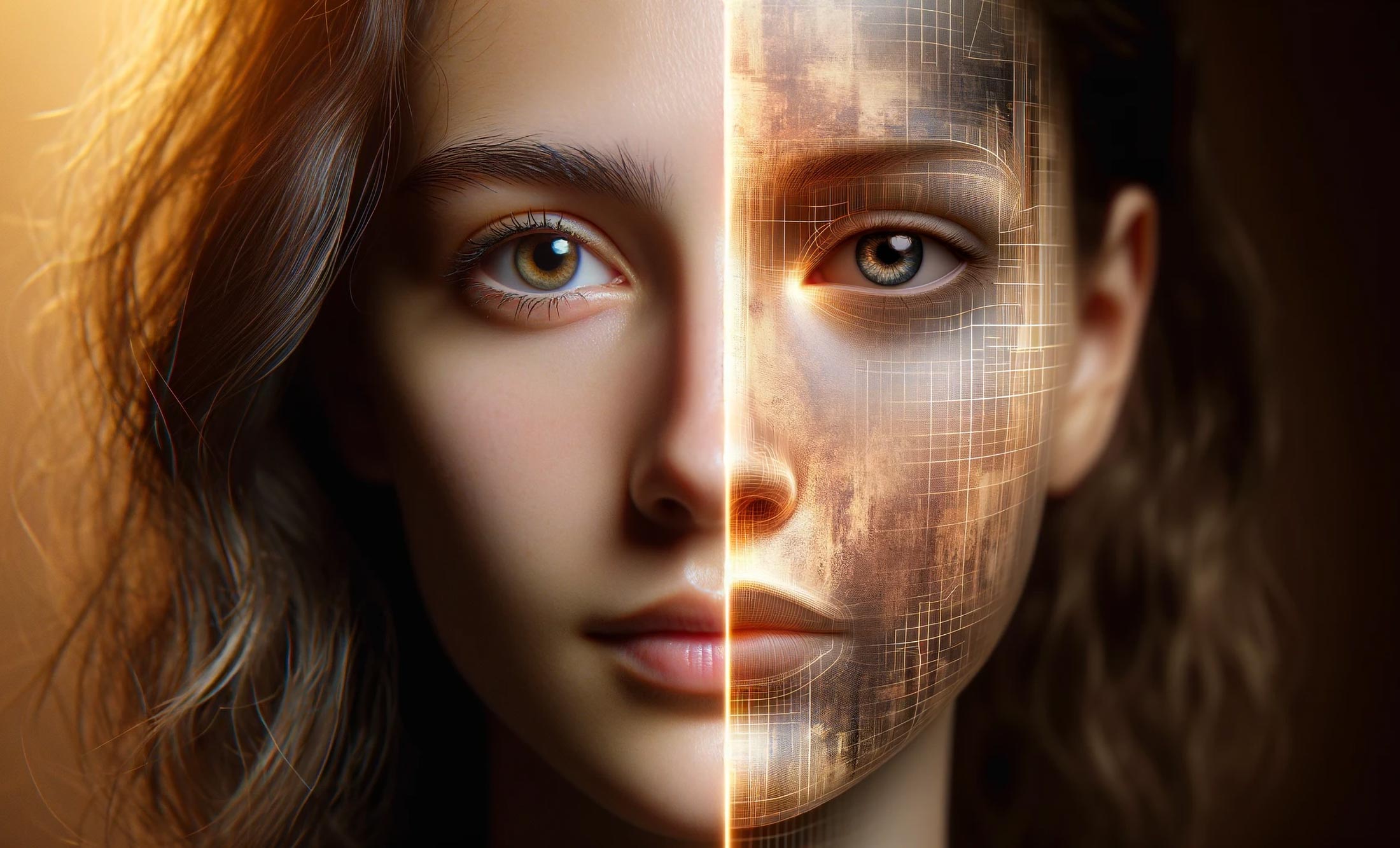
    AI-Generated Human Face
    A University of Waterloo study found that people struggle to differentiate between real and AI-generated images, with only 61% accuracy, prompting concerns about the reliability of visual information and the need for tools to identify AI-generated content. Credit: SciTechDaily.com

    Research shows survey participants duped by AI-generated images nearly 40 percent of the time.

    If you recently had trouble figuring out if an image of a person is real or generated through artificial intelligence (AI), you’re not alone.

    A new study from University of Waterloo researchers found that people had more difficulty than was expected distinguishing who is a real person and who is artificially generated.

    The Waterloo study saw 260 participants provided with 20 unlabeled pictures: 10 of which were of real people obtained from Google searches, and the other 10 generated by Stable Diffusion or DALL-E, two commonly used AI programs that generate images.

    Participants were asked to label each image as real or AI-generated and explain why they made their decision. Only 61 percent of participants could tell the difference between AI-generated people and real ones, far below the 85 percent threshold that researchers expected.

    AI-Generated Pictures
    Three of the AI-generated pictures used in the study. Credit: University of Waterloo

    Misleading Indicators and Rapid AI Development

    “People are not as adept at making the distinction as they think they are,” said Andreea Pocol, a PhD candidate in Computer Science at the University of Waterloo and the study’s lead author.

    Participants paid attention to details such as fingers, teeth, and eyes as possible indicators when looking for AI-generated content – but their assessments weren’t always correct.

    Pocol noted that the nature of the study allowed participants to scrutinize photos at length, whereas most internet users look at images in passing.

    “People who are just doomscrolling or don’t have time won’t pick up on these cues,” Pocol said.

    Pocol added that the extremely rapid rate at which AI technology is developing makes it particularly difficult to understand the potential for malicious or nefarious action posed by AI-generated images. The pace of academic research and legislation isn’t often able to keep up: AI-generated images have become even more realistic since the study began in late 2022.

    The Threat of AI-Generated Disinformation

    These AI-generated images are particularly threatening as a political and cultural tool, which could see any user create fake images of public figures in embarrassing or compromising situations.

    “Disinformation isn’t new, but the tools of disinformation have been constantly shifting and evolving,” Pocol said. “It may get to a point where people, no matter how trained they will be, will still struggle to differentiate real images from fakes. That’s why we need to develop tools to identify and counter this. It’s like a new AI arms race.”

    The study, “Seeing Is No Longer Believing: A Survey on the State of Deepfakes, AI-Generated Humans, and Other Nonveridical Media,” was published in the journal Advances in Computer Graphics.

    Reference: “Seeing Is No Longer Believing: A Survey on the State of Deepfakes, AI-Generated Humans, and Other Nonveridical Media” by Andreea Pocol, Lesley Istead, Sherman Siu, Sabrina Mokhtari and Sara Kodeiri, 29 December 2023, Advances in Computer Graphics.
    DOI: 10.1007/978-3-031-50072-5_34

    Never miss a breakthrough: Join the SciTechDaily newsletter.
    Follow us on Google and Google News.

    Artificial Intelligence
    Share. Facebook Twitter Pinterest LinkedIn Email Reddit

    Related Articles

    Neuromorphic Chips: Microchips that Imitate the Brain

    “Cheetah-Cub Robot” Runs Like a Cat

    AI Framework Predicts Better Patient Health Care and Reduces Cost

    Algorithm Analyzes Information From Medical Images to Identify Disease

    Halide, A New and Improved Programming Language for Image Processing Software

    New Algorithm Enables Wi-Fi Connected Vehicles to Share Data

    Algorithm Enables Robots to Learn and Adapt to Help Complete Tasks

    New Approach Uses Mathematics to Improve Automated Security Monitoring

    Mathematical Framework Formalizes Loop Perforation Technique

    Leave A Reply Cancel Reply

    • Facebook
    • Twitter
    • Pinterest
    • YouTube

    Don't Miss a Discovery

    Subscribe for the Latest in Science & Tech!

    Trending News

    Scientists Recreate a Nuclear Fireball and Uncover Fallout’s Hidden Chemistry

    These Tiny Gut Particles Could Be Accelerating Aging Throughout the Body

    Doctors Changed One Thing and Weight Gain Stopped

    Magnetic Fields May Solve a Longstanding Binary Star Mystery

    The Probiotic Breakthrough for Natural Anxiety Relief and Better Mental Health

    Animal vs. Plant Protein: Scientists Found a Surprising Nutritional Difference

    According to Scientists, This Simple Dietary Change Is Linked to Lower Depression Scores

    Researchers Discover a Hidden Vitamin D Problem That Persists Year-Round

    Follow SciTechDaily
    • Facebook
    • Twitter
    • YouTube
    • Pinterest
    • Newsletter
    • RSS
    SciTech News
    • Biology News
    • Chemistry News
    • Earth News
    • Health News
    • Physics News
    • Science News
    • Space News
    • Technology News
    Recent Posts
    • The Strange “Spacetime Crystal” That Can Suddenly Turn Into a Black Hole
    • A Hidden Gut Signal May Be Driving Sleep Apnea’s Deadly Heart Risks
    • This AI-Designed “Universal Vaccine” Could Stop Future Pandemics Before They Start
    • Scientists Unveil Powerful New Diabetes Pill That Cuts Weight and Lowers Blood Sugar
    • Rising Seas Could Turn Mangroves From Climate Heroes Into Carbon Sources
    Copyright © 1998 - 2026 SciTechDaily. All Rights Reserved.
    • Science News
    • About
    • Contact
    • Editorial Board
    • Privacy Policy
    • Terms of Use

    Type above and press Enter to search. Press Esc to cancel.