
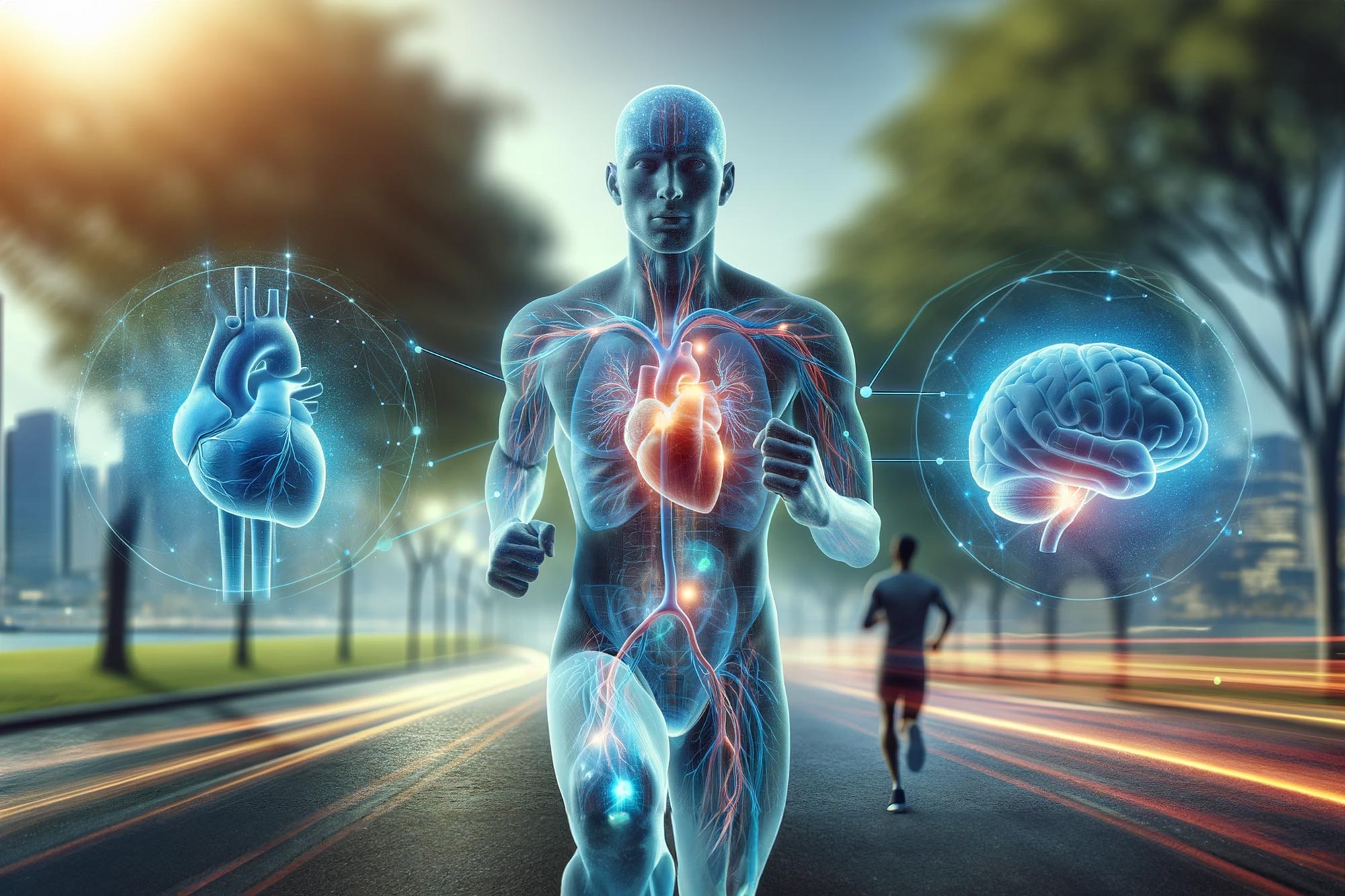
Prolonged physical activity in rats results in profound changes to RNA, proteins, and metabolites in nearly all tissues, providing clues to many human health conditions.
The health benefits of exercise are well known but new research shows that the body’s response to exercise is more complex and far-reaching than previously thought. In a study on rats, a team of scientists from across the United States found that physical activity causes many cellular and molecular changes in all 19 of the organs they studied in the animals.
Exercise lowers the risk of many diseases, but scientists still don’t fully understand how exercise changes the body on a molecular level. Most studies have focused on a single organ, sex, or time point, and only include one or two data types.
Comprehensive Molecular Analysis
To take a more comprehensive look at the biology of exercise, scientists with the Molecular Transducers of Physical Activity Consortium (MoTrPAC) used an array of techniques in the lab to analyze molecular changes in rats as they were put through the paces of weeks of intense exercise. Their findings were published on May 1 in the journal Nature.
The team studied a range of tissues from the animals, such as the heart, brain, and lungs. They found that each of the organs they looked at changed with exercise, helping the body to regulate the immune system, respond to stress, and control pathways connected to inflammatory liver disease, heart disease, and tissue injury.
Potential Health Implications
The data provide potential clues into many different human health conditions; for example, the researchers found a possible explanation for why the liver becomes less fatty during exercise, which could help in the development of new treatments for non-alcoholic fatty liver disease.
The team hopes that their findings could one day be used to tailor exercise to an individual’s health status or to develop treatments that mimic the effects of physical activity for people who are unable to exercise. They have already started studies on people to track the molecular effects of exercise.
Broader Research Collaboration
Launched in 2016, MoTrPAC draws together scientists from the Broad Institute of MIT and Harvard, Stanford University, the National Institutes of Health, and other institutions to shed light on the biological processes that underlie the health benefits of exercise. The Broad project was originally conceived of by Steve Carr, senior director of Broad’s Proteomics Platform; Clary Clish, senior director of Broad’s Metabolomics Platform; Robert Gerszten, a senior associate member at the Broad and chief of cardiovascular medicine at Beth Israel Deaconess Medical Center; and Christopher Newgard, a professor of nutrition at Duke University.
Co-first authors on the study include Pierre Jean-Beltran, a postdoctoral researcher in Carr’s group at Broad when the study began, as well as David Amar and Nicole Gay of Stanford. Courtney Dennis and Julian Avila, both researchers in Clish’s group, were also co-authors on the manuscript.
“It took a village of scientists with distinct scientific backgrounds to generate and integrate the massive amount of high quality data produced,” said Carr, a co-senior author of the study. “This is the first whole-organism map looking at the effects of training in multiple different organs. The resource produced will be enormously valuable, and has already produced many potentially novel biological insights for further exploration.”
The team has made all of the animal data available in an online public repository. Other scientists can use this site to download, for example, information about the proteins changing in abundance in the lungs of female rats after eight weeks of regular exercise on a treadmill, or the RNA response to exercise in all organs of male and female rats over time.
Whole-Body Analysis
Conducting such a large and detailed study required a lot of planning. “The amount of coordination that all of the labs involved in this study had to do was phenomenal,” said Clish.
In partnership with Sue Bodine at the Carver College of Medicine at the University of Iowa, whose group collected tissue samples from animals after up to eight weeks of training, other members of the MoTrPAC team divided the samples up so that each lab — Carr’s team analyzing proteins, Clish’s studying metabolites, and others — would examine virtually identical samples.
“A lot of large-scale studies only focus on one or two data types,” said Natalie Clark, a computational scientist in Carr’s group. “But here we have a breadth of many different experiments on the same tissues, and that’s given us a global overview of how all of these different molecular layers contribute to exercise response.”
In all, the teams performed nearly 10,000 assays to make about 15 million measurements on blood and 18 solid tissues. They found that exercise impacted thousands of molecules, with the most extreme changes in the adrenal gland, which produces hormones that regulate many important processes such as immunity, metabolism, and blood pressure. The researchers uncovered sex differences in several organs, particularly related to the immune response over time. Most immune-signaling molecules unique to females showed changes in levels between one and two weeks of training, whereas those in males showed differences between four and eight weeks.
Some responses were consistent across sexes and organs. For example, the researchers found that heat-shock proteins, which are produced by cells in response to stress, were regulated in the same ways across different tissues. But other insights were tissue-specific. To their surprise, Carr’s team found an increase in acetylation of mitochondrial proteins involved in energy production, and in a phosphorylation signal that regulates energy storage, both in the liver that changed during exercise. These changes could help the liver become less fatty and less prone to disease with exercise, and could give researchers a target for future treatments of non-alcoholic fatty liver disease.
Novel Biological Insights
“Even though the liver is not directly involved in exercise, it still undergoes changes that could improve health. No one speculated that we’d see these acetylation and phosphorylation changes in the liver after exercise training,” said Jean-Beltran. “This highlights why we deploy all of these different molecular modalities — exercise is a very complex process, and this is just the tip of the iceberg.”
“Two or three generations of research associates matured on this consortium project and learned what it means to carefully design a study and process samples,” added Hasmik Keshishian, a senior group leader in Carr’s group and co-author of the study. “Now we are seeing the results of our work: biologically insightful findings that are yielding from the high quality data we and others have generated. That’s really fulfilling.”
Other MoTrPAC papers published on May 1 include deeper dives into the response of fat and mitochondria in different tissues to exercise. Additional MoTrPAC studies are underway to study the effects of exercise on young adult and older rats, and the short-term effects of 30-minute bouts of physical activity. The consortium has also begun human studies, and are recruiting about 1,500 individuals of diverse ages, sexes, ancestries, and activity levels for a clinical trial to study the effects of both endurance and resistance exercise in children and adults.
For more on this research, see Scientists Decode the Molecular Impact of Exercise.
Reference: “Temporal dynamics of the multi-omic response to endurance exercise training” by MoTrPAC Study Group, Lead Analysts and MoTrPAC Study Group, 1 May 2024, Nature.
DOI: 10.1038/s41586-023-06877-w
This work was supported by the National Institutes of Health.
Never miss a breakthrough: Join the SciTechDaily newsletter.
Follow us on Google and Google News.