
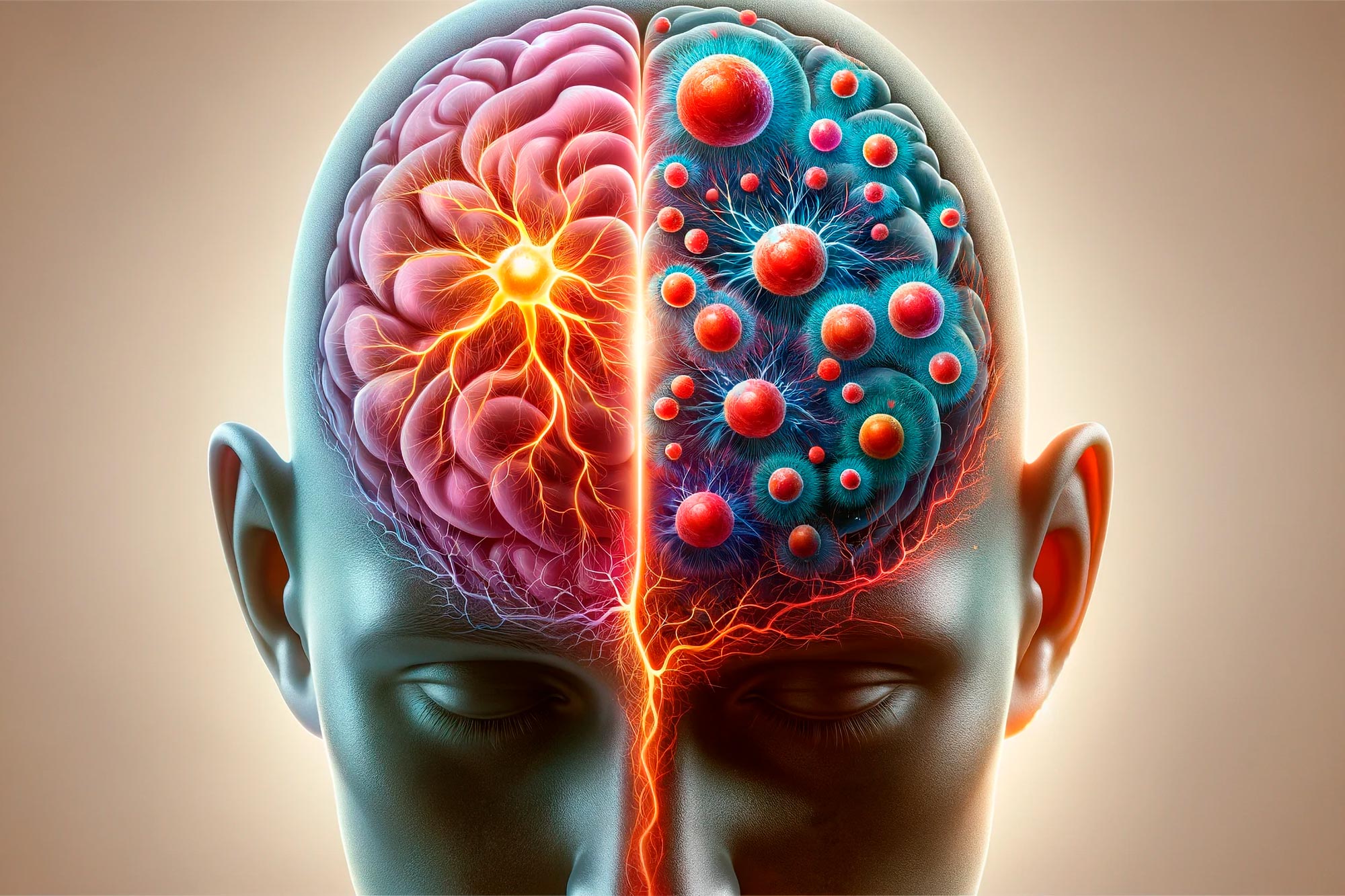
Findings identify molecular signaling pathway that could enhance current MS treatments.
For decades, scientists have noted an intriguing similarity between a deficiency in vitamin B12 – an essential nutrient that supports healthy development and functioning of the central nervous system (CNS) – and multiple sclerosis (MS), a chronic disease in which the body’s immune system attacks the CNS and which can produce neurodegeneration.
Both vitamin B12 (also known as cobalamin) deficiency and MS produce similar neurological symptoms, including numbness or tingling in hands and feet, vision loss, difficulty walking or speaking normally and cognitive dysfunction, such as problems with memory.
New Study Reveals Molecular Link
In a new study, published online on December 8, 2023, in Cell Reports, researchers at Sanford Burnham Prebys, with collaborators elsewhere, describe a novel molecular link between vitamin B12 and MS that takes place in astrocytes – important non-neuronal glial cells in the brain.
The findings by senior study author Jerold Chun, M.D., Ph.D., professor and senior vice president of neuroscience drug discovery, and Yasuyuki Kihara, Ph.D., research associate professor and co-corresponding author, and colleagues suggest new ways to improve the treatment of MS through CNS-B12 supplementation.
“The shared molecular binding of the brain’s vitamin B12 carrier protein, known as transcobalamin 2 or TCN2, with the FDA-approved MS drug fingolimod provides a mechanistic link between B12 signaling and MS, towards reducing neuroinflammation and possibly neurodegeneration,” said Chun.
“Augmenting brain B12 with fingolimod or potentially related molecules could enhance both current and future MS therapies.”
Study Details and Implications
In their paper, the team at Sanford Burnham Prebys, with collaborators at University of Southern California, Juntendo University in Japan, Tokyo University of Pharmacy and Life Sciences and State University of New York, focused on the molecular functioning of FTY720 or fingolimod (Gilenya®), a sphingosine 1-phosphate (S1P) receptor modulator that suppresses distribution of T and B immune cells errantly attacking the brains of MS patients.
Working with an animal model of MS as well as human post-mortem brains, the researchers found that fingolimod suppresses neuroinflammation by functionally and physically regulating B12 communication pathways, specifically elevating a B12 receptor called CD320 needed to take up and use needed B12 when it is bound to TCN2, which distributes B12 throughout the body, including the CNS. This known process was newly identified for its interactions with fingolimod within astrocytes. Importantly, the relationship was also observed in human MS brains.
Of particular note, the researchers reported that lower levels of CD320 or dietary B12 restriction worsened the disease course in an animal model of MS and reduced the therapeutic efficacy of fingolimod, which occurred through a mechanism in which fingolimod hitchhikes by binding to the TCN2-B12 complex, allowing delivery of all to the astrocytes via interactions with CD320, with component losses disrupting the process and worsening disease.
These new findings further support to the use of B12 supplementation – especially in terms of delivering the vitamin to astrocytes within the brain – while revealing that fingolimod can correct the impaired astrocyte-B12 pathway in people with MS.
The scientists said it is possible that other S1P receptor modulators on the market, such as Mayzent®, Zeposia® and Ponvory®, may access at least parts of this CNS mechanism. The study supports B12 supplementation with S1P receptor modulators with the goal of improving drug efficacy for this class of medicines.
The study also opens new avenues on how the B12-TCN2-CD320 pathway is regulated by sphingolipids, specifically sphingosine, a naturally occurring and endogenous structural analog of fingolimod, toward improving future MS therapies, Chun said.
“It supports creating brain-targeted B12 formulations. In the future, this mechanism might also extend to novel treatments of other neuroinflammatory and neurodegenerative conditions.”
Reference: “FTY720 requires vitamin B12-TCN2-CD320 signaling in astrocytes to reduce disease in an animal model of multiple sclerosis” by Deepa Jonnalagadda, Yasuyuki Kihara, Aran Groves, Manisha Ray, Arjun Saha, Clayton Ellington, Hyeon-Cheol Lee-Okada, Tomomi Furihata, Takehiko Yokomizo, Edward V. Quadros, Richard Rivera and Jerold Chun, 7 December 2023, Cell Reports.
DOI: 10.1016/j.celrep.2023.113545
Additional authors on the study include Deepa Jonnalagadda, Manisha Ray, Clayton Ellington and Richard Rivera, all at Sanford Burnham Prebys, Aran Groves, Sanford Burnham Prebys and UC San Diego; Arjun Saha, University of Southern California; Hyeon-Cheol Lee-Okada and Takehiko Yokomizo, Juntendo University; Tomomi Furihata, Tokyo University of Pharmacy and Life Sciences; Edward V. Quadros, SUNY-Downstate Medical Center.
The study was supported by a grant from the National Institute of Neurological Disorders and Stroke at the National Institutes of Health (R01NS103940), Novartis, MEXT/JSPS KAKENHI (18H02627, 19KK0199, 21H04798, 18K16246 and 21K08565 ). Further support was provided by the Uehara Memorial Foundation, Kanae Foundation for the Promotion of Medical Science, Mochida Memorial Foundation for Medical and Pharmaceutical Research and the Human Frontier Science Program, plus the Medical Scientist Training Program and Pharmacology Training Grant at UC San Diego (T32GM007752).
Never miss a breakthrough: Join the SciTechDaily newsletter.
Follow us on Google and Google News.